MONROVIA, Liberia
Liberia's escalating war on drug trafficking arrived at the doorstep of the country's political establishment this week, when security forces stopped former Vice President Jewel Howard-Taylor from boarding an international flight, detained her for questioning, and ultimately charged her with drug trafficking and money laundering in connection with the largest cocaine seizure in the country's history. The case has split Liberia's political class along starkly partisan lines, with a former president accusing the sitting government of seeking to "rule as a tyrant" and opposition figures describing the prosecution as a witch hunt, even as the government insists it is simply following evidence wherever it leads in a corruption and narcotics crackdown that has already forced out senior security officials.
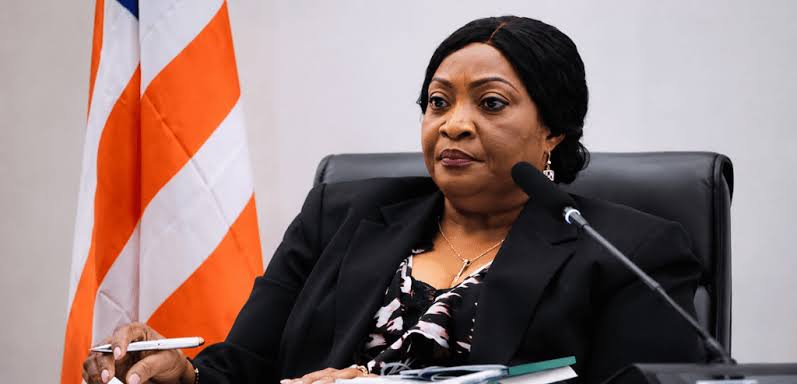
Howard-Taylor, the ex-wife of former President Charles Taylor, a former Liberian senator and the country's vice president from 2018 to 2024 under President George Weah, was stopped from leaving Liberia on the morning of Aug. 19 at Roberts International Airport as she prepared to travel to Accra, Ghana, to attend a women's forum. In a statement she released that day, Howard-Taylor confirmed the development herself: "To all, please be informed that I was about to travel to Accra to attend a women's forum when I was informed that I am not allowed to leave the country. I have been asked to report to the police station. I am on my way there now." She was taken to Liberia National Police headquarters for questioning and detained for several hours.

Two days later, Justice Minister N. Oswald Tweh announced at a press conference that Howard-Taylor had been formally charged under multiple provisions of Liberia's Controlled Drug and Substance Act of 2023, along with the country's Penal Law and its Anti-Money Laundering and Terrorist Financing Law. According to Tweh, the charges include unlicensed importation of controlled drugs or substances under Section 14.83 of the 2023 act, unlicensed sale, trading, transportation and distribution of controlled substances under Section 14.85, and illicit trafficking under Section 14.93, along with allegations of criminal solicitation, criminal facilitation, criminal conspiracy and money laundering. Tweh emphasized that the charges remain allegations and that Howard-Taylor is presumed innocent until proven guilty by a competent court. Three foreign nationals were also charged in absentia in connection with the same alleged offenses, according to the justice minister.
Liberia National Police Inspector General Gregory Coleman, who joined Tweh at the press conference, tied Howard-Taylor's charges directly to a massive cocaine bust made in July at a warehouse in the VOA Community area of Paynesville, on the outskirts of Monrovia. That seizure — nearly four tonnes of suspected cocaine valued at roughly $317 million — is being described as the largest drug bust in Liberian history. Notably, however, the connection between the two cases has been disputed even within the government's own ranks: while Coleman said Howard-Taylor's charges are linked to the Paynesville seizure, other Liberian authorities have said the cocaine seizure and the case against her are not connected, an inconsistency that has fueled skepticism among her supporters about the strength of the government's case.
The political reaction was immediate and, in the case of former President Weah, sharply personal. In a statement, Weah said the allegations against Howard-Taylor — a former ally within the National Patriotic Party (NPP) coalition that governed Liberia before President Joseph Boakai's 2023 election victory — were politically motivated by Boakai's administration, which he accused of seeking to "rule as a tyrant." Weah went further, accusing the government of fabricating connections between former officials and the drug investigation while giving what he called a "slap on the wrist" to individuals connected to its own administration who have faced scrutiny in the same probe. His comments reflect a broader argument circulating among NPP supporters: that the crackdown, whatever its merits in specific cases, is being applied selectively to damage opposition figures ahead of future political contests.
The scene outside Liberia National Police headquarters on the day of Howard-Taylor's questioning captured how quickly the case became a flashpoint. Former Montserrado County District 8 Representative Moses Acarus Gray arrived at the compound to show solidarity with Howard-Taylor while she was being questioned by investigators; security officers instructed him to leave, and when he did not immediately comply, he was escorted out through the gate as partisans of the opposition Congress for Democratic Change, journalists and other onlookers gathered outside. The National Patriotic Party subsequently issued a statement calling for Howard-Taylor to receive humane custody and a fair trial, stopping short of directly disputing the substance of the charges but making clear the party views the manner of her arrest as troubling. In Bong County, Howard-Taylor's home region, residents have rallied publicly behind her as she has reportedly remained hospitalized while in police custody, according to Liberian press accounts, underscoring the degree to which the case has become as much a regional and personal cause as a legal one.
The Howard-Taylor case did not emerge in isolation. It is the latest and highest-profile turn in an anti-drug campaign that President Boakai's government has pursued aggressively since taking office in January 2024, following a July seizure of over $300 million in cocaine — described at the time as the largest in Liberian history — and a separate, roughly $50 million cache uncovered by joint security forces around the same period. In response to those seizures and mounting allegations that drug cartels had infiltrated Liberia's security apparatus, Boakai ordered the suspension and dismissal of several senior officials across multiple security agencies and ports of entry, in what was described as the most extensive personnel shake-up yet in the investigation. He subsequently named retired Gen. Daniel Ziankahn — who served as defense minister under Weah and now advises Boakai — to lead Liberia's Drug Enforcement Agency at what officials called a defining moment for the anti-narcotics campaign.
That shake-up has generated its own political friction, independent of the Howard-Taylor case. Sen. Amara Konneh, a Boakai ally who backed his 2023 campaign, has publicly warned against what he called selective justice in the anti-drug campaign, arguing there is a "double standard" in which junior security officers have been dismissed "without due process or the opportunity to defend themselves" while senior officials implicated in the same investigations have faced comparatively little consequence. Konneh's criticism, coming from within Boakai's own political coalition, suggests the president faces pressure not only from the opposition but from allies concerned that the crackdown's application has been uneven — a dynamic that adds credibility to some of the concerns Weah and Howard-Taylor's supporters have raised, even as it does not resolve the underlying question of whether the specific allegations against the former vice president are substantiated.

The Restoration Baptist Ministries International, a prominent Liberian religious institution, waded into the controversy this week as well, warning against using the drug fight as a political weapon while pledging pastoral care for Howard-Taylor — a sign of how the case has drawn in constituencies well beyond the immediate political class.
What happens next will test both Liberia's judicial institutions and Boakai's political management of a campaign he has staked considerable capital on. If prosecutors can present clear, credible evidence linking Howard-Taylor to the Paynesville seizure or a broader trafficking network, the case could bolster the government's credibility on an anti-corruption and anti-narcotics agenda that has so far produced mostly seizures and personnel changes rather than high-profile convictions. If the case falters — particularly given the government's own inconsistent statements about whether it is tied to the July seizure — it risks validating opposition claims of selective prosecution and handing Weah's NPP a potent grievance heading into the next electoral cycle. Either outcome will likely be shaped as much by how transparently the case proceeds through Liberia's courts as by the facts eventually presented, given how thoroughly the arrest has already been absorbed into the country's partisan battle lines.
For now, Howard-Taylor remains in custody, her case emblematic of a wider reckoning in Liberia over how deeply narcotics trafficking has penetrated the country's institutions — and how far a government elected on promises of accountability is willing, or able, to go in prosecuting figures from the political era it replaced.
Published By | News Editor