Background
The war now consuming Iran and its Gulf neighbors did not begin this week, or even this year. Its roots lie in the collapse of nuclear negotiations in Geneva and a shorter, twelve-day air war between Israel and Iran in 2025 that ended without resolving the underlying dispute over Tehran's uranium enrichment program. On February 28, 2026, the United States and Israel launched a coordinated bombing campaign codenamed Operation Epic Fury, striking Iranian nuclear facilities, military command sites and senior leadership targets. Among the dead was Iran's Supreme Leader, Ali Khamenei, killed in the war's opening strikes — an outcome that reshaped Iran's political hierarchy and installed his son, Mojtaba Khamenei, as his successor.
Days later, on March 4, Iran declared the Strait of Hormuz "closed" and threatened to attack any vessel attempting passage. The strait is one of the most consequential chokepoints in the global economy: before the war, roughly a quarter of the world's seaborne oil trade and a fifth of global liquefied natural gas shipments passed through it. A ceasefire brokered in mid-June, formalized in a memorandum of understanding on June 17, briefly halted the fighting, but it proved fragile from the outset. Iranian strikes on cargo vessels, contested American troop movements, and mutual accusations of bad faith punctuated the weeks that followed, and by mid-July the truce had unraveled entirely. President Trump, speaking at a NATO summit in Turkey, declared the ceasefire "over" and said further negotiation with Tehran was "a waste of time." He also dropped an earlier demand that commercial ships pay a fee for U.S. naval protection while transiting Hormuz.
Key Developments
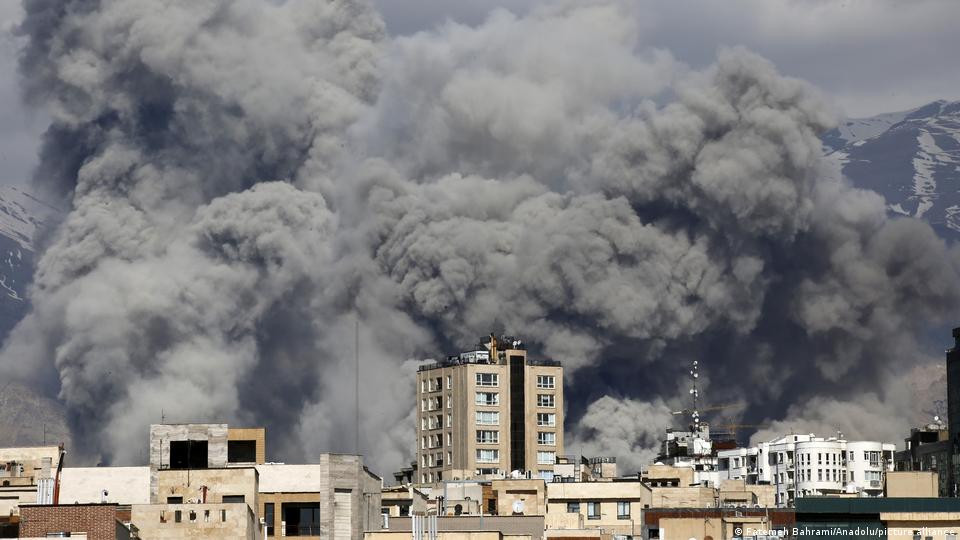
Over the past week the conflict has escalated sharply in both scale and character, shifting from strikes on military and nuclear-linked sites toward infrastructure that millions of civilians depend on for power and drinking water. On the night of July 17, U.S. forces carried out their seventh consecutive night of strikes on Iranian territory, hitting bridges, railway junctions and power lines connecting Bandar Abbas — Iran's principal port — to the interior, including the route toward Tehran. American forces also destroyed a maritime control tower at the port of Chabahar on the Gulf of Oman, another key node for commercial shipping. Iranian state media reported at least seven people killed and twenty wounded in that round of strikes; the campaign, according to U.S. officials, is intended to strip Tehran of its ability to threaten shipping through the Strait of Hormuz by severing the logistics that support it.
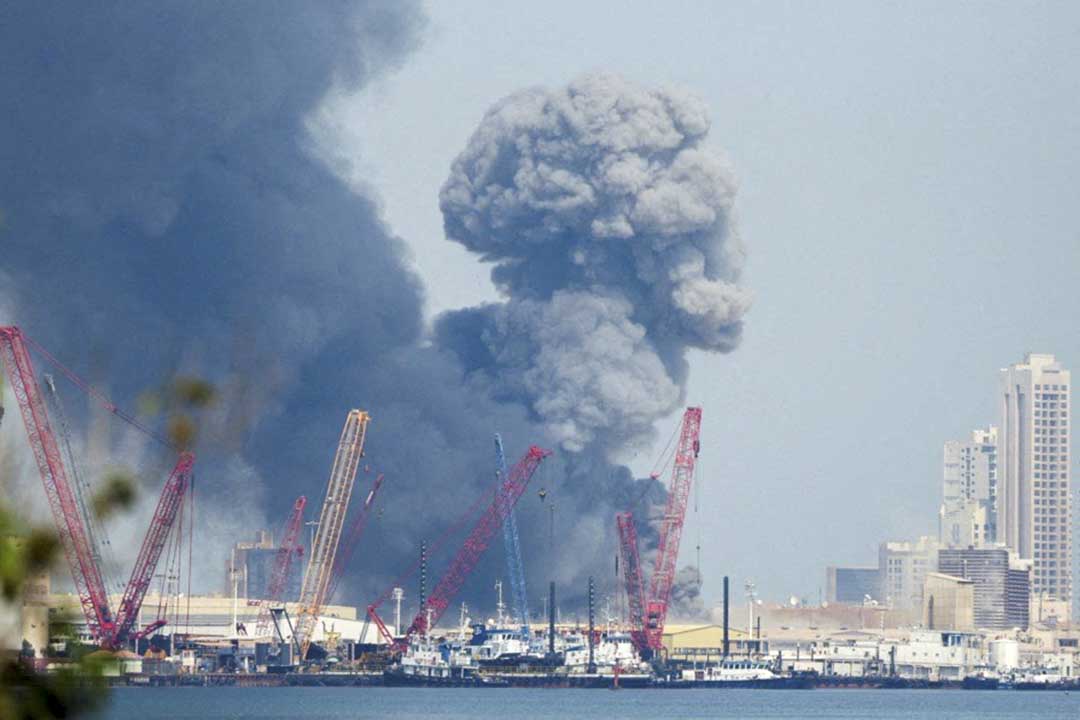
Iran has responded with its own expanding target list. On July 18, Iranian drones struck Kuwaiti military facilities, injuring several soldiers, in an attack that followed a Friday strike on a Kuwaiti power-generation and water-desalination plant that sparked a fire and damaged a large number of generating units. The significance of that strike is difficult to overstate in a region where fresh water is scarce: roughly 90 percent of Kuwait's drinking water comes from desalination, and hundreds of similar plants line the Gulf coast, supplying cities including Doha, Dubai, Abu Dhabi and Jeddah. Many of these facilities are physically combined with power stations as co-generation plants, meaning a strike on the electrical grid can just as easily cripple the water supply. Kuwait had already reported damage to its Doha West desalination plant earlier in the war from debris tied to intercepted drones.
Iran's Revolutionary Guard also said it targeted Bahrain and Oman with missiles and drones in the same period, and air-raid sirens have sounded in Bahrain five times over roughly twelve hours, according to reporting from the region. Jordan, Qatar, Saudi Arabia and the United Arab Emirates have all reported raising alert levels or intercepting incoming fire in recent days as the conflict spreads beyond the two principal combatants. Oil markets have registered the escalation: benchmark crude prices climbed through the week, with U.S. West Texas Intermediate trading near $75 a barrel and international Brent crude near $79, up from about $69 and $72 respectively just days earlier.
The most alarming statement of the week came from Mohsen Rezaei, a senior official in Iran's Revolutionary Guard Corps and a military adviser to the new Supreme Leader. Rezaei warned that Iran could launch a "full-scale offensive" within days if American strikes continued, telling Iran's state broadcaster that "if U.S. attacks continue for another two or three days, we will enter a phase of full-scale offensive operations." It remains unclear precisely what such an offensive would entail, but the warning has heightened concern among Gulf governments already absorbing Iranian strikes despite having no direct role in the U.S. campaign.

Reactions
The United Nations has responded with growing alarm. Secretary-General António Guterres has repeatedly urged Iran and the United States to "urgently resume negotiations," warning the Security Council of the risk of a wider Middle East conflict and calling attacks on civilian infrastructure "unacceptable." The Security Council itself adopted Resolution 2817 by a vote of 13 in favor, none against, and two abstentions — China and Russia — condemning "in the strongest terms" Iran's attacks on Bahrain, Kuwait, Oman, Qatar, Saudi Arabia, the UAE and Jordan, and specifically condemning strikes on residential areas and civilian objects. Notably, the resolution also demanded that Tehran halt actions aimed at interfering with maritime trade. A competing Russian-drafted resolution framed as an "impartial" call for de-escalation was rejected, garnering only four votes in favor against nine abstentions.
France's representative to the Security Council said the war "poses grave risks to regional security" and "must end now," while also stating that "Iran bears a heavy responsibility for the current escalation" — a framing that reflects the difficulty Western governments have had in balancing criticism of Iran's retaliatory strikes against the fact that it was the U.S. and Israeli campaign that reignited the war in February. Gulf governments, for their part, have largely avoided directly blaming Washington even as their own infrastructure absorbs Iranian fire, instead emphasizing their role as bystanders caught between two larger powers. Oman and Qatar, which mediated the original ceasefire, have continued quiet diplomatic efforts to revive talks, though neither government has publicly detailed what a renewed off-ramp might look like.
What's Next
The immediate question is whether Rezaei's warning of a "full-scale offensive" translates into a genuine escalation or is largely rhetorical pressure aimed at forcing a pause in American strikes. Iran's options are constrained: its air force and much of its senior military leadership were degraded in the February strikes, and its economy — already strained by sanctions — is now absorbing direct damage to export and energy infrastructure. But its demonstrated willingness to strike Gulf desalination and power plants shows it retains the capacity to inflict real hardship on neighboring states without directly engaging the U.S. military, a strategy that could pressure Washington indirectly by souring relations between the United States and the Gulf partners hosting American forces and interests.
For the Gulf states, the coming days will likely be defined by air-defense readiness and quiet appeals to Washington and Tehran alike to keep their territory out of the crossfire. Kuwait, Bahrain and Oman in particular face a genuine humanitarian dimension if desalination capacity is further degraded, given how directly it ties to drinking-water access for millions of residents. Oil markets will remain sensitive to any signal of a durable ceasefire or, conversely, of an Iranian move to make good on threats against Hormuz shipping — a scenario that would have global economic repercussions far beyond the region. Diplomatically, watch for further UN Security Council action, any signal from Oman or Qatar of a resumed back channel, and whether the Trump administration signals a willingness to pause the infrastructure campaign in exchange for concrete guarantees on the strait. For now, both the military trajectory and the diplomatic one point toward continued volatility rather than resolution.
Published By | News Editor