Written By | Business Experts
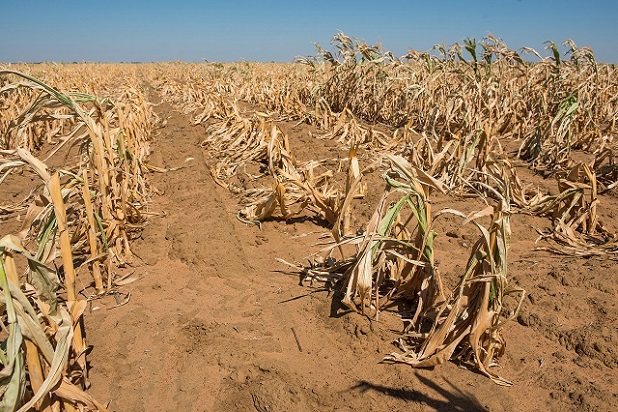
In Amuru and across Northern Uganda, the first planting season is now effectively lost for many households.
Agriculture
Pascal Osire has walked the same 50-acre stretch of his maize farm in Amuru District every week since April, watching the crop he borrowed against turn from green promise to brittle straw. He put Shs47 million into cultivating roughly 100 acres of maize this season, expecting a harvest of about 1,800 kilograms per acre — nearly 90,000 kilograms in total — that would have brought in close to Shs250 million. Instead, after rains that started in early April gave way to nearly two months of near-total dryness, Osire now doubts he will recover even Shs20 million.
"It is a painful moment for me as a farmer. The maize got burnt very badly by the sunshine that came," he said, adding that he and his neighbours had planted in good faith, relying on government seasonal guidance. "We heavily depended on the government advice."
Osire's story is being repeated across Northern Uganda this month, and in different forms as far away as the cattle corridor and the Rwenzori foothills, as a dry spell forecast by the Ministry of Water and Environment back in May has settled in exactly as predicted — and, in the eyes of many farmers, far more punishingly than the warnings suggested.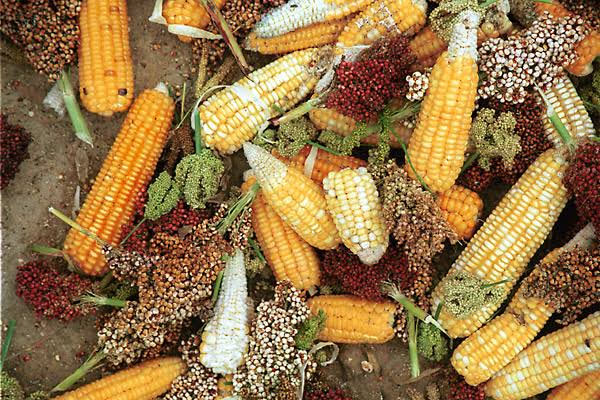
A season foretold, and then some
At the end of May, the Directorate of Meteorological Services briefed the country that the June-July-August season would bring drier and warmer-than-normal conditions to most of Uganda, driven by warmer-than-usual sea surface temperatures in the equatorial Pacific associated with an El Niño tendency. Permanent Secretary Dr Alfred Okot Okidi did not mince words at the time: "A bigger part of the country will get below, or is projected to get below-average rainfall. This is going to cause stress, especially to crops, animals and human beings. We therefore need to take precautions, and those involved in livestock should ensure they conserve water."
The ministry's regional breakdown reads, in hindsight, like a map of where the damage is now landing. Central Uganda — Kampala, Wakiso, Mpigi, Mityana and Kalangala — was expected to see isolated showers only until mid-June before turning predominantly dry through August, with the cattle-corridor districts of Sembabule, Lyantonde, Mubende, Kiboga and Nakasongola following the same pattern. Western Uganda, including Kabale, Kisoro, Rukungiri, Isingiro, Mbarara and Ibanda, was projected to stay dry through the entire forecast window. Northern and eastern Uganda were expected to fare only marginally better, with near-normal to below-normal rainfall.
Government's advice at the time was to plant drought-tolerant varieties, invest in irrigation and water storage, and reduce dependence on rain-fed farming. Six weeks on, that advice looks prescient — and, for farmers who had already planted before the warning fully sank in, largely unactionable.
Maize, sorghum and soybean wither in the north
In Amuru and across Northern Uganda, the first planting season is now effectively lost for many households. Soybean farmer Charity Lamunu had expected to harvest around 40 bags; she now reckons she will get no more than 10. Osire, who also grows sorghum, wants President Yoweri Museveni to personally investigate the Meteorology Department's forecasting accuracy. "Do they have the right machines, are they guessing in their work, or should the UPDF take over? Those are the questions they will need to answer for us the farmers because the entire Northern and parts of Eastern Uganda sunshine has burnt crops and there is hardly any food," he said.
The knock-on effects are reaching towns as well as farms. In Arua City, residents have faced intermittent water shortages over the past month after levels in River Enyau — the main source for the National Water and Sewerage Corporation's local supply — dropped sharply. "We've experienced water shortage because the National Water and Sewerage Corporation relies mainly on River Enyau to pump and supply water to the residents of this city, and every time there is a prolonged dry spell, the water levels drop and it affects supply," resident Walter Akena said.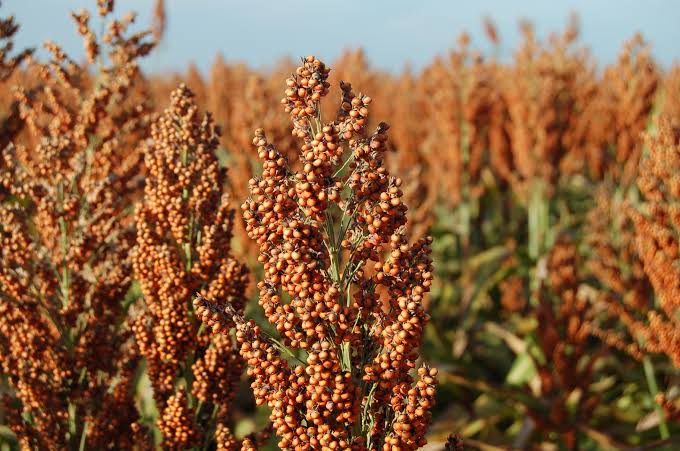
The West Nile Development Association is warning that without long-term adaptation, the region's food security will keep sliding. Its executive director, Moses Akuma Odims, is pushing for expanded afforestation and irrigation investment, alongside a shift toward more drought-tolerant cash crops. "People planted in the first season but it was a disappointment. Our appeal to government is that the region is turning to cocoa and coffee growing. Continue supporting the region with drought-resistant crops and water for production, meaning irrigation schemes," he said, while also urging traders not to exploit food shortages by hiking prices.
Cattle dying in Kasese, herds sold at a loss
Further south, in Kasese District's Nyakatonzi Sub-county, the crisis has taken a starker form. A drought that has persisted for nearly six months without meaningful rain has killed close to 300 cattle and left thousands more dangerously weakened, according to local livestock farmers. The Basongora pastoralist community that dominates the area depends almost entirely on cattle for its livelihood, and milk production has collapsed alongside herd health.
"Our animals are dying because there is neither pasture nor water. Every day we lose more cattle, and those still alive are extremely weak. We fear many families will lose everything if the rains delay further," said livestock farmer Ham Natuhwera. Fellow farmer Jacob Muzoora said the collapse in milk output has stripped many households of their main income source, forcing distress sales: "We have no option but to sell some animals cheaply because we cannot feed them. Even the few cows that survive are producing very little milk, making it difficult to support our families."
Valley dams built roughly five years ago specifically to buffer communities through dry spells have themselves dried up, according to residents, who are now trekking long distances in search of water with animals collapsing en route. Kenneth Muyambi, chairperson of the Nyakatonzi Cattle Keepers Cooperative, has asked the Uganda Wildlife Authority to allow temporary, controlled grazing inside the adjacent national park — "a temporary arrangement that would allow controlled grazing in designated areas of the park," he said, arguing it "would save thousands of animals without compromising conservation efforts."
Kasese's District Agricultural Officer, Julius Rukara, is urging a longer-term fix: micro-scale irrigation to keep pasture growing year-round rather than relying purely on rainfall. "Climate change is making droughts more frequent. Farmers should gradually invest in pasture production through micro-irrigation so they have reliable feed even during prolonged dry seasons," he said.
What it means for the wider economy
Agriculture employs roughly two-thirds of Uganda's workforce and remains the backbone of rural household income, so a dry spell severe enough to wipe out maize, sorghum, soybean and cattle simultaneously in different regions carries implications well beyond the farms directly affected. Reduced harvests in the north threaten local food security in a region already sensitive to price shocks, while distress sales of cattle in the west risk permanently eroding the asset base that pastoralist households rely on to recover from the next shock. Economists who track rural livelihoods note that when farmers sell breeding stock rather than surplus animals, recovery after a drought breaks can take years rather than months.
There are also fiscal implications. Parliament has approved Shs9 billion for the Meteorology Department in the 2026/27 financial year, part of a Shs1.013 trillion overall budget for the Ministry of Water and Environment — an allocation that will be scrutinised closely if farmers continue to question forecast accuracy and timeliness. Whether that money translates into better early warning, more localised advisories, or faster-reaching irrigation support may determine how much of the next dry spell's damage is preventable rather than merely predictable.
For now, both the meteorologists who called this season correctly and the farmers who felt its full force agree on one thing: droughts that used to arrive once every five years are increasingly showing up every two to three, and Uganda's rain-fed farming model is being tested in ways it was not built to withstand.



