Written By | Business Experts
How Central Africa's largest economy is using a deep-sea port, a record cocoa harvest, and a stubborn debt overhang to reposition itself for AfCFTA.
How Central Africa's largest economy is using a deep-sea port, a record cocoa harvest, and a stubborn debt overhang to reposition itself for AfCFTA.
Cameroon rarely makes international headlines next to its higher-profile neighbors, but the country anchoring CEMAC is in the middle of a deliberate economic repositioning. A newly launched industrial zone at the Port of Kribi, a record cocoa season, and an IMF fiscal program are converging in 2026 to test whether Cameroon can convert trade-corridor geography and commodity windfalls into durable growth.
Growth Recovering, but From a Lower Base
The IMF's February 2026 mission found growth slowed to roughly 3.1 percent in 2025, down from 3.5 percent in 2024, due to post-election unrest. The IMF projects a recovery to 3.3 percent in 2026, with growth exceeding 4 percent from 2028 as energy bottlenecks ease. The African Development Bank is more optimistic at 4.0 percent.
The budget deficit widened from 1.5 percent of GDP in 2024 to roughly 2 percent in 2025, with the IMF backing a 2026 tightening to 1.7 percent. Public debt sits at about 36 percent of GDP, but debt sustainability analysis flags high overall risk of distress — moderate ratios can mask vulnerability when revenue bases are narrow.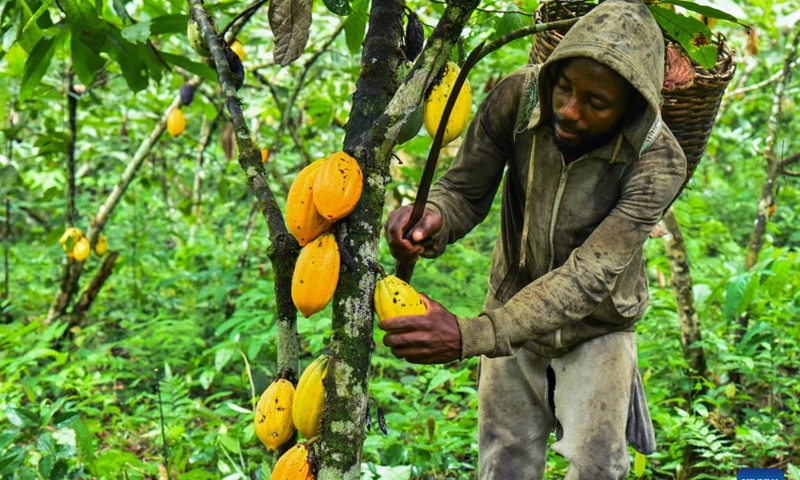
Kribi: From Container Port to Industrial Gateway
The most concrete infrastructure ambition sits at Kribi, Cameroon's only deep-sea port and the largest in Central Africa — one of only five Sub-Saharan ports capable of berthing ultra-large container ships. It serves as the primary gateway for landlocked Chad and the CAR.
On February 26, 2026, the government launched the Kribi Port Industrial Zone, aiming to convert the port from pure export conduit into an integrated production hub. The AfDB has committed to mobilize €411 million in public financing and support €384 million in private investment. The 4,000-hectare project is projected to generate 50,000 direct and 150,000 indirect jobs. UNECA is also working on a parallel push for a next-generation special economic zone — reflecting a multilateral bet that Cameroon's advantage lies in its position as a logistics chokepoint.
A Record Cocoa Season Lifts Export Earnings
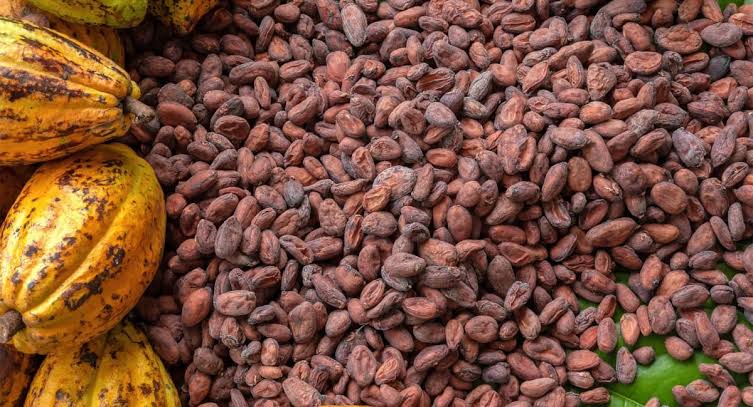
Cameroon produced 309,000 tonnes of cocoa in 2024-2025, with a record 109,431 tonnes processed domestically — a 27.7 percent jump in local processing. That pushed Cameroon to the world's fourth-largest cocoa producer, with government targets aiming for 300,000 metric tons by end of 2026.
Export revenues rose 14.44 percent year-on-year in the first half of 2025, with cocoa sales up CFA 377.2 billion. The ONCC launched the 2025-2026 season with prices between CFA 3,200 and 5,400 per kilogram — the highest farmer remuneration ever recorded. The EU's deforestation-free regulation (effective December 2025) and a shift toward transferring sustainability premiums back to origin countries both reward the kind of domestic processing Cameroon is building.
Human Capital and Regional Trade: The Harder Half
Social indicators complicate the story: 23.0 percent live below the extreme poverty line, and poverty reduction has stagnated, with roughly four in ten below the national poverty line. Human Capital Index scores vary sharply from 0.31 to 0.46 across regions.
Regionally, CEMAC applies a gradual 0.77 percent annual tariff reduction toward zero by 2033. Cameroon's AfCFTA Guided Trade Initiative implementation is underway, but uptake remains limited. CEMAC has folded human-capital development into its reform program, with a regional university under construction — a long-horizon bet.
What to Watch
Three threads will determine if 2026 marks an inflection point: first, whether the Kribi zone attracts private capital rather than stalling at public-financing stage; second, whether cocoa gains translate into broader rural income rather than concentrating among larger processors; third, whether fiscal tightening holds without choking public investment needed to sustain growth above 4 percent. None are foregone conclusions, but together they make Cameroon a useful bellwether for whether Central Africa's resource economies can use ports and processing — not just raw exports — as their next growth engine.



