Written By | International News Agencies
Understanding Ethiopia in October 2026 means reading both columns at once
Economic & Social Transformation
A Reform Story with Two Columns
Few African economies have changed as much, as quickly, as Ethiopia since mid-2024. In July of that year the government floated the birr, abandoned a rigid exchange-rate regime that had fuelled a thriving parallel market, and secured a four-year, US$3.4 billion Extended Credit Facility (ECF) from the International Monetary Fund. Two years on, the headline numbers look remarkable: real GDP growth estimated at about 9.2 to 9.3 percent for fiscal year 2025/26, inflation down from a peak of roughly 29 percent in 2023/24 to a forecast of around 12 percent, exports above US$5.2 billion in 2025, and tax receipts climbing sharply.
Yet this is a ledger with two columns. On one side sit the credits of reform: a liberalised currency, a widening tax base, restored access to concessional finance and debt relief from official creditors. On the other sit the debits: a defaulted US$1 billion Eurobond that remains unresolved, a nominal GDP that shrank in dollar terms after the float, renewed insecurity in parts of the country, and a population whose purchasing power has been squeezed by fuel and food prices. Understanding Ethiopia in October 2026 means reading both columns at once.
This article, the first on Ethiopia in this series, examines how far the stabilisation has gone, what it has cost households, and what the unfinished debt agenda means for the country's ambition of becoming a diversified, middle-income economy.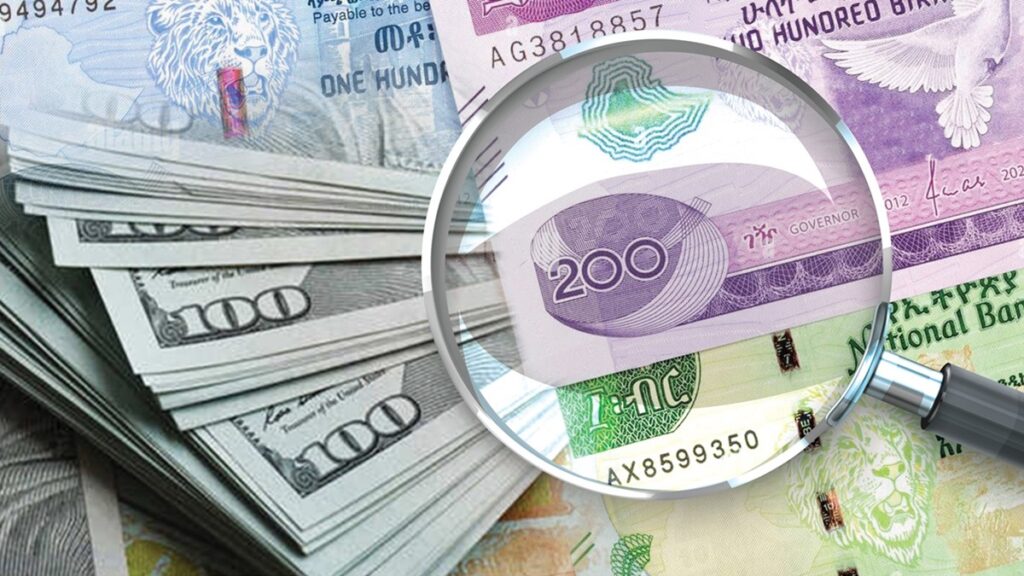
The Growth Engine and the IMF Anchor
The IMF programme has been the scaffolding for the transition. Of the US$3.4 billion facility approved on 29 July 2024, roughly US$2.65 billion has been released across five reviews; the fourth review in January 2026 cleared about US$261 million, and a staff-level agreement on the fifth review in June 2026 paved the way for a further disbursement of about US$468 million, subject to Executive Board approval. That leaves approximately US$750 million undisbursed. Importantly, the Fund has described the economy as broadly resilient even in the face of external shocks linked to Middle East conflict, while warning that a prolonged shock would call for a stronger policy response.
Growth has been broad rather than narrow. Agriculture, which still employs the majority of Ethiopians, benefited from improved harvests and better access to imported inputs once foreign-exchange rationing eased. Industrial parks, construction and services have expanded, and the export basket has gained a new anchor in gold. During the programme's early months, combined gold and coffee earnings reached US$2.3 billion against US$1.56 billion a year earlier, with coffee alone bringing in about US$1.87 billion and beating volume targets by well over 100 percent. Trade data also show Ethiopian goods finding European buyers: EU imports from Ethiopia rose 53.7 percent to EUR 1.3 billion in 2025, while EU exports to Ethiopia fell 6.1 percent to EUR 1.4 billion, narrowing the bilateral deficit.
Fiscal repair has been equally notable. Tax receipts in the first half of 2024/25 reached about US$3.08 billion, an 83 percent increase in dollar terms on the year before, and the IMF projected the revenue-to-GDP ratio rising from 7.3 percent in 2024 toward 8.5 percent in 2025. Ethiopia's tax take remains among the lowest in Africa, so even these gains leave large room for improvement, but the direction of travel is clear.
Foreign-exchange reserves have also strengthened, though from a very low base. The IMF cites reserves of about US$4.7 billion, equivalent to roughly 2.3 months of import cover, up from US$3.4 billion and 1.6 months at an earlier point in the programme. Two months of cover is still thin for an import-dependent economy, a reminder that the buffer against shocks remains modest.
What the Float Did to Prices and Incomes
Liberalising the exchange rate was the single most consequential decision of the reform period, and its social costs were front-loaded. The birr moved from about 57 per US dollar in June 2024 to roughly 125 by February 2025, and the EU Chamber's August 2026 analysis puts cumulative depreciation against the dollar at as much as 165 percent over 2024 to 2026, with the currency stabilising near 175 per dollar in May 2026. The parallel-market premium, which had widened to around 20 percent in early 2025, was the symptom the float was meant to cure.
One consequence was a statistical one that startled observers: nominal GDP fell from nearly US$160 billion in 2023 to about US$109 billion in 2025, a drop of roughly US$50 billion in dollar terms, allowing Kenya's economy temporarily to overtake Ethiopia's at about US$136.5 billion. The IMF projects Kenya holding that lead until around 2028. This is largely an accounting effect of a weaker currency rather than a contraction in real output, but it matters for debt ratios, for investor perceptions and for national pride.
Prices are the more tangible pressure. Headline inflation, which had been falling, ticked back up to 11.7 percent in April 2026 from 9.4 percent in March, with food inflation at 13.5 percent year on year. Government fuel price increases since March have pushed gasoline up 27 percent and diesel 29 percent, feeding transport and food costs. For urban households living on fixed wages, the arithmetic is uncomfortable even as macro indicators improve. World Bank analysis has warned that poverty rose sharply in the years surrounding the shocks of conflict, drought and currency adjustment, and that restoring real incomes will take longer than restoring macro stability.
The Debt Question: Official Creditors Agreed, Bondholders Did Not
Ethiopia became Africa's third country to default during the pandemic era, in December 2023, and its restructuring has been one of the slowest under the G20 Common Framework. Progress with official creditors has nonetheless been real. A deal with the Official Creditor Committee was agreed in March 2025 and set out in a memorandum concluded on 2 July 2025, covering roughly US$3.5 billion. China finalised its treatment in April 2026, France signed in February 2026, and bilateral agreements now cover about US$8.4 billion of debt, delivering around US$2.5 billion of debt-service relief over 2023 to 2028.
The sticking point is the US$1 billion Eurobond, which carried a 6.625 percent coupon and matured in December 2024. After a long dispute over a value-recovery instrument that official creditors initially rejected, the government tabled a revised offer during negotiations on 6 to 27 May 2026: US$880 million in new bonds, a 12 percent principal haircut, a 4.25 percent coupon, amortising in four instalments through July 2029 (US$180 million in each of 2026 and 2027, US$260 million in each of 2028 and 2029), plus US$99.375 million of past-due interest and a 0.5 percent consent fee. Official creditors judged this consistent with comparability of treatment. The bondholders' ad hoc committee rejected it, talks collapsed on 27 May, and investors have signalled readiness to litigate.
The cost of the standoff is not abstract. Ethiopia remains formally in default on the instrument, which closes the door to international capital markets and raises the risk premium on any future borrowing or foreign investment that relies on contract enforceability. Debt servicing already absorbs about 43 percent of recurrent government expenditure, according to the EU Chamber report, limiting room for health, education and social protection. The government has chosen to lean on development banks and bilateral finance rather than commercial borrowing, which is prudent but concentrates dependence on a handful of lenders.
Security, Red Sea Ambitions and the Risks Ahead
The reform narrative faces a serious external test. Analysts tracking the economy since mid-2026 point to renewed conflict as a threat across four channels: fiscal (security spending rising as revenue falls), external (exports, tourism and remittances), investment (retreat of foreign direct investment from mining and energy) and debt (higher borrowing costs that could complicate disbursements and creditor coordination). The IMF itself flags that future review completions are the critical signal, since programmes elsewhere in the region have slowed through missed performance criteria and delayed reviews.
Ethiopia's long-term ambition for sea access, a subject of diplomatic discussions in September 2026, adds a geopolitical dimension that could affect trade corridors with Djibouti and neighbours. The country remains landlocked and heavily reliant on the Djibouti route, a vulnerability for an export target of US$10 billion a year that is still unmet at roughly half that level.
Finally, growth quality matters. With around 70 percent of the population under 30, Ethiopia needs formal jobs on a large scale. Industrial parks, agro-processing and the services sector must absorb new entrants faster than agriculture sheds them, and that depends on reliable power, foreign exchange for inputs, and investor confidence that contracts will be honoured.
Outlook: Converting Stabilisation into Transformation
Ethiopia's reforms have delivered what many sceptics doubted: a functioning exchange-rate system, a disciplined programme with the IMF, and restored relations with official creditors. The priorities for the next phase are clear. First, close the Eurobond chapter on terms that satisfy comparability of treatment without a prolonged legal fight. Second, protect social spending as fuel subsidies are removed, so that macro gains reach households. Third, deepen revenue mobilisation and export diversification beyond coffee and gold. Fourth, secure peace, because no reform programme can offset a sustained security shock.
If those pieces fall into place, the 2026 numbers may prove the start of a durable convergence story. If they do not, Ethiopia risks being remembered as a country that stabilised its macro-economy and still failed to deliver broad-based gains. For now, the ledger is open, and both columns are growing.