Written By | Agencies
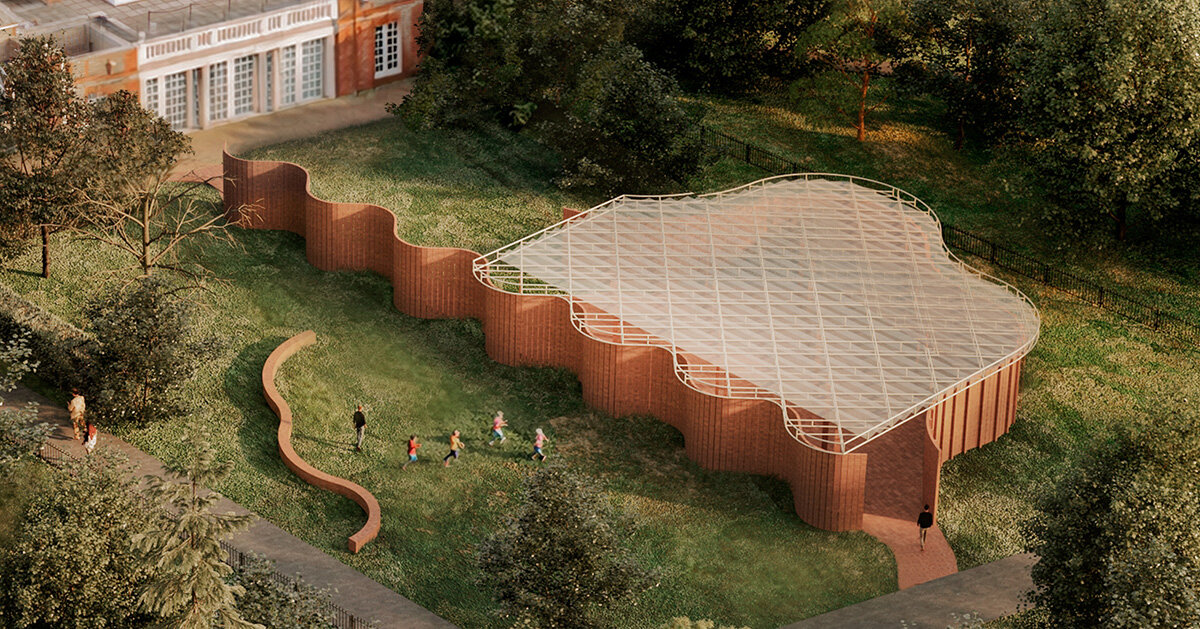
The 2026 Serpentine Pavilion — opened June 6 in Kensington Gardens — is the work of LANZA atelier, a Mexico City studio founded by Isabel Abascal and Alessandro Arienzo
LONDON
It curves. That is the first thing you notice. Not dramatically, but with the quiet confidence of something that has been curving for a very long time and knows, structurally and aesthetically, exactly why.
The 2026 Serpentine Pavilion — opened June 6 in Kensington Gardens — is the work of LANZA atelier, a Mexico City studio founded by Isabel Abascal and Alessandro Arienzo. It is perhaps the most genuinely surprising commission the gallery's celebrated annual program has produced in years. Surprising not because it is outlandish, but because it is built from brick. Handmade brick. Orange, earthy, warm, ancient brick.
In 25 years of commissioning pavilions from Zaha Hadid, Frank Gehry, Rem Koolhaas, and Francis Kéré, the Serpentine Gallery has never before given the commission to someone who would build in brick. LANZA atelier has taken all of those associations and turned them inside out.
The Crinkle-Crankle: An Ancient Idea, Newly Understood
The key to understanding the pavilion lies in the crinkle-crankle wall — a technique whose history stretches from ancient Egypt through Dutch engineering to the Suffolk countryside.
A crinkle-crankle wall is built not in a straight line but in a continuous undulation of alternating curves. The apparent paradox: this wavy wall, despite being only a single brick thick, is structurally stronger than a straight wall. The curves provide lateral stability. The serpentine form does more structural work than the direct path would.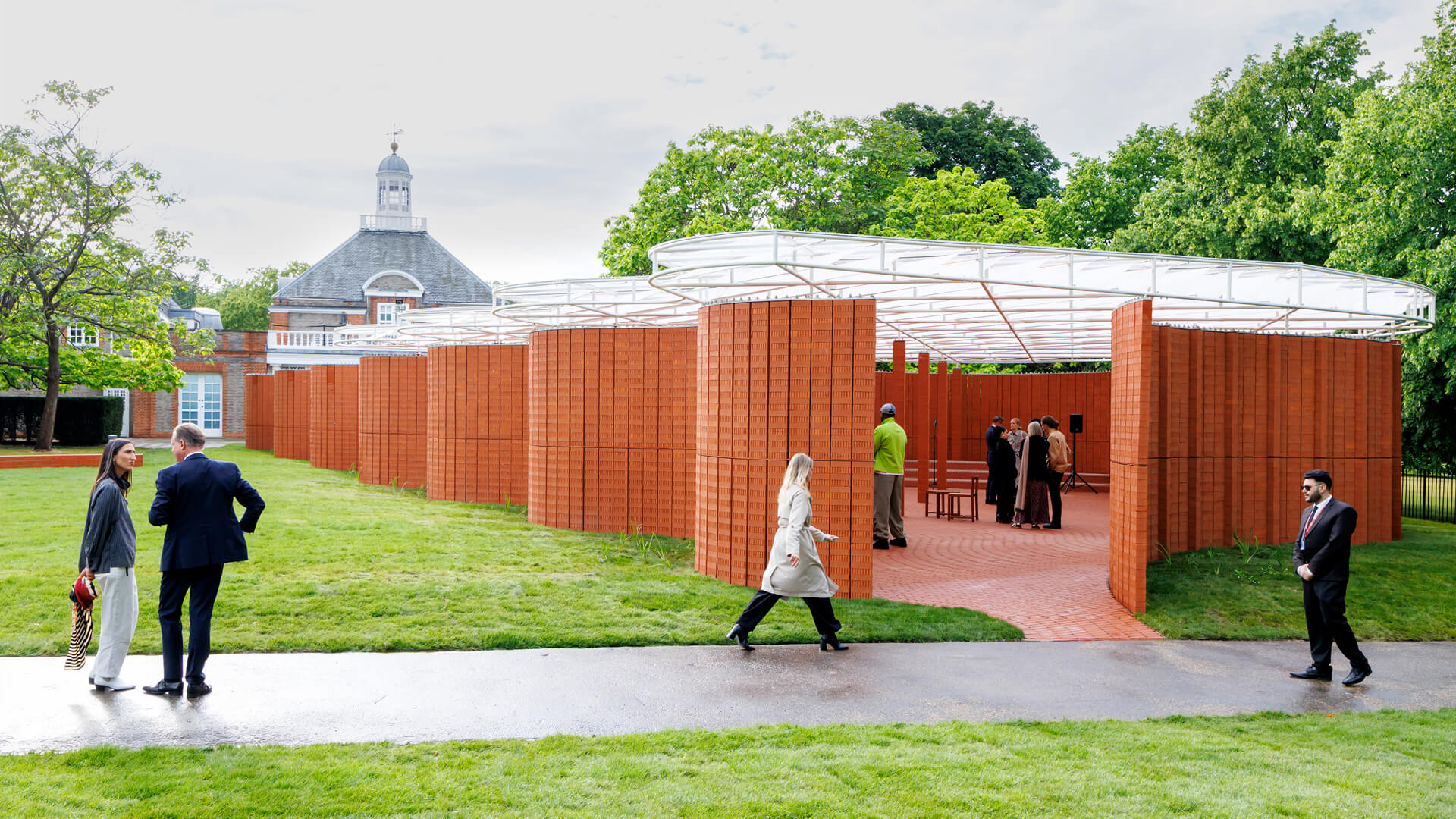
A crinkle-crankle wall is built not in a straight line but in a continuous undulation of alternating curves
There is also historical economy. In 18th and 19th century England, brick was taxed by the unit. The crinkle-crankle wall used fewer bricks per linear foot than a standard straight wall — a design solution that emerged from constraint.
LANZA atelier took this logic and translated it into a contemporary language. The pavilion's walls are not continuous bonded brickwork but a chain of narrow brick columns held between metal plates. Steel rods do the structural work, freeing the crinkle-crankle to become a reference rather than a method.
30,000 Bricks, Made By Hand, In South London
The decision to use handmade brick from a South London manufacturer was central to what the pavilion argues.
The bricks — approximately 30,000 of them, in a gorgeous earthy orange-sienna shade — are Sienna bricks, one of the most historically common construction materials in the UK. By sourcing them from a traditional maker, LANZA insists that there is wisdom in how things have been made for a very long time.
The bricks carry the irregularity of handwork — slight variations in color, texture, and dimension that no machine-made equivalent can replicate. Under the pavilion's translucent roof (spatial steel grid, polycarbonate panels, and Eco-Bau fabric fins), those warm orange surfaces glow with a quality that is unmistakably alive.
"We wanted brick to be the primary material and the primary argument," Abascal has said. "Not decorative. Not nostalgic. But brick understood as a technology that still has things to teach us."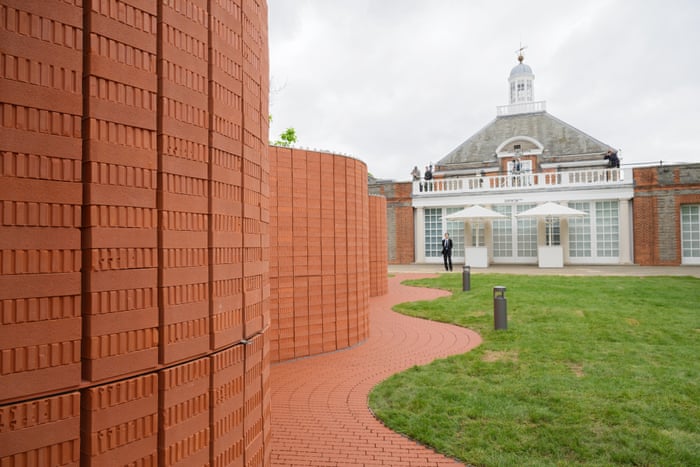
The bricks — approximately 30,000 of them, in a gorgeous earthy orange-sienna shade — are Sienna bricks, one of the most historically common construction materials in the UK
Space That Breathes: Architecture Of Encounter
What is most remarkable about the pavilion is how it manages to be simultaneously enclosed and open. The walls dissolve into rhythmic assemblies of slender brick columns separated by narrow gaps — surfaces that function as filters rather than barriers. You can see through them. Light passes through. Voices carry.
LANZA describes this as an "architecture of encounter." The pavilion creates semi-defined spaces within the larger curving whole, each with its own character. You are never fully separate from others, and never fully absorbed into a crowd.
From June through October 2026, the structure will serve as the setting for Serpentine's public programme — talks, performances, screenings, and Park Nights.
LANZA Atelier: The Practice Behind The Pavilion
Isabel Abascal and Alessandro Arienzo are not among the most recognizable names in international architecture. Their Mexico City practice is relatively young. The Serpentine commission changes that.
Their work is characterized by genuine engagement with where buildings come from — materially and culturally — and a resistance to signature formal gestures that announce themselves before they think. This pavilion does not look like a building trying to win an Instagram competition. It looks like a building that has thought carefully about what it is.
In a decade when architecture has been susceptible to the attention economy's distortions, that quality of thoughtfulness feels not just valuable but radical.
Why This Pavilion Matters
For the general visitor — the summer tourist, the Hyde Park regular, the parent with children — the 2026 Serpentine Pavilion offers something simpler: a beautiful place to be.
The warm brick catches the London summer light in a way that feels almost Mediterranean. The filtered daylight creates an interior that is neither fully outside nor fully inside — exactly the condition the best summer architecture tries to achieve.
For those with a deeper interest, the pavilion argues for:
The 2026 Serpentine Pavilion will remain in Kensington Gardens until October 25. It is free to visit. It is, by all available evidence, unmissable.



