World Politics
Background
Berlin's Christopher Street Day, Germany's largest and most prominent Pride festival, has for decades stood as a symbol of the country's embrace of LGBTQ rights and its post-war commitment to tolerance and pluralism. Each summer the event draws hundreds of thousands of participants from across Germany and Europe, culminating in a parade through the city center and a closing celebration in the sprawling Tiergarten park, historically one of Berlin's most treasured public spaces. This year's festival, held over the weekend of July 25-26, 2026, had drawn enormous crowds for its closing party, part of a summer season in which Pride events across Germany have served as both celebration and, increasingly, a source of anxiety about public safety.
Germany has spent the past decade grappling with a string of vehicle-based and knife attacks carried out by Islamist extremists, beginning most infamously with the December 2016 truck attack on a Christmas market near Berlin's Kaiser Wilhelm Memorial Church that killed twelve people. Since then, German domestic intelligence services have repeatedly warned about the radicalization of young men, often German-born or long-term residents, through online propaganda distributed by the Islamic State and similar networks. Officials have also increasingly flagged the difficulty of monitoring individuals who have already served time for terrorism-related offenses, particularly when sentences are short and release comes with limited restrictions. It is against this backdrop — a country proud of its LGBTQ-friendly reputation but also on edge after years of Islamist-linked violence — that Saturday night's attack unfolded. Germany's domestic security agencies had already been warning through 2026 that the threat picture from lone-actor Islamist extremism was rising, pointing to a string of smaller knife and vehicle incidents earlier in the year, including attacks near a Holocaust memorial and in the Swiss city of Winterthur, both of which investigators also linked to Islamist motives. That pattern had fed a broader European debate over how to balance civil liberties with more aggressive monitoring of individuals flagged for extremist sympathies, a debate that Saturday's attack has now thrust back to the center of German politics.
Key Developments
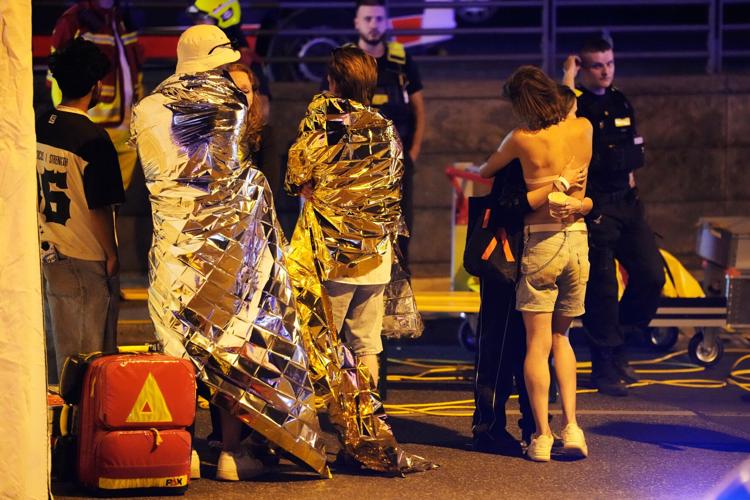
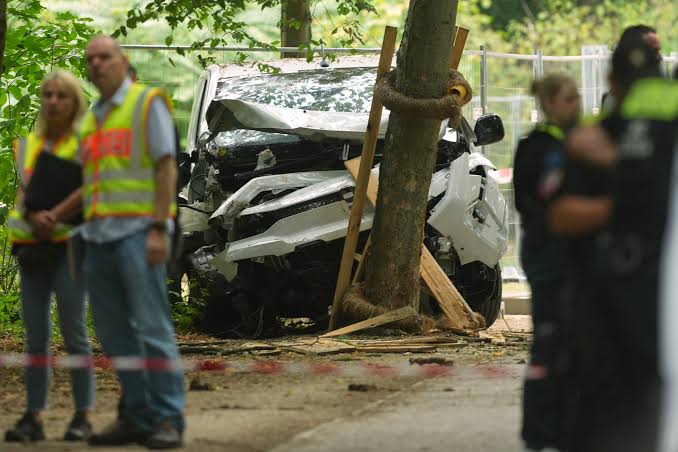
Just before 10 p.m. on July 25, a van was driven directly into the crowd gathered for the CSD closing party in Tiergarten park. Witnesses described chaos as the vehicle plowed through revelers before the driver got out and allegedly continued the assault with a bladed weapon, described by several outlets as a machete. One woman was killed and at least 29 other people were injured, several critically. The festival, which had drawn crowds numbering in the hundreds of thousands over the weekend, was called off in the immediate aftermath.
Police quickly identified a suspect: 21-year-old Abdul Ballout, a German citizen of Lebanese descent. Investigators said Ballout had a documented history of radicalization. According to Berlin prosecutors, he shared ISIS propaganda on Instagram as early as 2024 and traveled to Lebanon in 2025 with the stated intention of continuing on to Syria to join ISIS. He was arrested on that earlier occasion; reporting on the length of his resulting sentence varies — some outlets cite a term of less than two years, while others describe a considerably shorter three-month sentence — a discrepancy that had not been resolved in initial reporting. He returned to Germany in November 2025 and was arrested again in May 2026 on suspicion of preparing a serious act of subversive violence, though he was evidently not in custody, or was no longer in custody, by the time of Saturday's attack — a fact likely to draw significant scrutiny in the days ahead.
In the hours after the attack, German Interior Minister Alexander Dobrindt said "everything we see here indicates that this was an Islamist terror attack," a characterization federal prosecutors subsequently adopted as they took over the investigation. Berlin police launched a manhunt Sunday, warning the public that Ballout was likely armed and dangerous. The search ended nearly 24 hours after the attack when officers located him in an allotment garden complex in the western Berlin district of Spandau at around 6 p.m. Sunday. According to police accounts, Ballout ran toward officers while brandishing a bladed weapon, and they opened fire, killing him at the scene. Federal prosecutors have since taken formal control of the investigation, a procedural step reserved for cases classified as terrorism, and are working to reconstruct exactly how Ballout evaded closer surveillance despite his documented history, including whether the May 2026 arrest resulted in any conditions of release, such as electronic monitoring or reporting requirements, that might have failed to prevent Saturday's attack.
Reactions
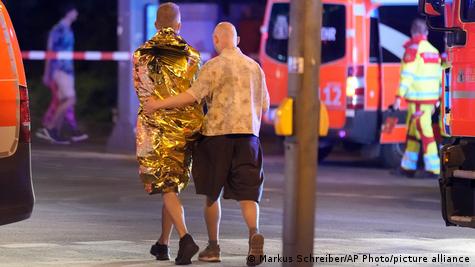
Berlin's Mayor, Kai Wegner, condemned the attack as a "brutal attack" on what he described as a gathering meant to celebrate "a tolerant and peaceful Berlin." The city's LGBTQ affairs commissioner, Alfonso Pantisano, addressed the community directly on social media, writing: "To you, my dear community: I know that many of you are afraid right now. I won't sugarcoat it — I am, too. But you are not alone in this fear, in your grief, and in your anger." German rapper Ikkimel, who had performed at the festival's opening events, urged solidarity, writing that it is important that people "stay strongly together, now more than ever." Community vigils were quickly organized, including one planned by the D-Dur Dykes, a Berlin-based LGBTQ choir.
The attack has also become an immediate political flashpoint, arriving just months ahead of several key state-level elections in Germany. CDU interior-affairs politician Günter Krings called for longer prison sentences for people convicted of Islamist terrorism offenses, tighter citizenship rules, and expanded use of preventive detention and deportation. Fellow CDU lawmaker Alexander Throm urged parliament to fast-track all pending security legislation as soon as it returns from summer recess. Because Ballout was a German citizen, however, deportation-focused proposals would not have applied to him directly, a tension that underscores the complexity of the policy debate now underway. Commentators have noted that the far-right Alternative for Germany is likely to seize on the attack to bolster its arguments on immigration and security ahead of the elections, intensifying an already polarized national conversation. Opposition and coalition voices alike have so far avoided directly blaming Chancellor Friedrich Merz's government for the attack itself, but pressure is building on the interior ministry to explain gaps in the monitoring of individuals with known extremist ties, a line of questioning likely to intensify once the Bundestag returns from recess.
What's Next
In the immediate term, German authorities face pointed questions about how Ballout — a man twice flagged for terrorism-related conduct, including an arrest just two months before the attack — remained free to carry it out. That question is likely to dominate parliamentary oversight hearings and public debate in the coming weeks, alongside renewed scrutiny of how German intelligence and law enforcement agencies share information about individuals released after terrorism convictions or arrests. Government ministers have already begun discussing a security response, and CDU lawmakers are pushing for expedited passage of stalled legislation once the Bundestag reconvenes after its summer break.
The attack is also expected to reshape the political landscape ahead of Germany's autumn state elections, with security and migration policy likely to move even further to the center of campaign debates. Analysts expect the AfD to use the episode to argue for stricter immigration and citizenship policies, while mainstream parties face pressure to respond without appearing to cede ground on either security or the country's commitment to LGBTQ rights and pluralism. Meanwhile, Berlin's LGBTQ community is grappling with how to balance continued public visibility — which advocates argue is essential — against heightened anxiety about safety at future Pride and community events, both in Berlin and at similar gatherings elsewhere in Europe, where organizers are likely to reassess security planning for large public celebrations in the attack's wake.
Published By | News Editor