NEW YORK
At exactly 10 a.m. ET on July 24, Juicy Couture and Stoney Clover Lane pressed go on their second limited-edition collaboration, and the internet — or at least the sizable, terminally online corner of it that never stopped mourning low-rise tracksuits — noticed immediately. Within hours, product pages were flooded, resale listings had appeared for pieces still technically in stock, and fashion commentators were once again asking the question that's defined the back half of this decade in style: is Y2K nostalgia a cycle that's about to peak, or has it quietly become a permanent fixture of how an entire generation shops?
What's Actually in the Collection
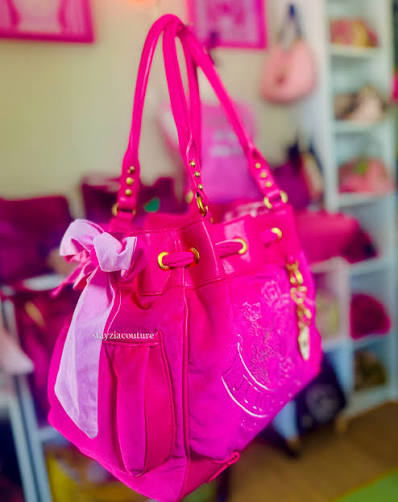
The drop centers on a summer-ready lineup of bags, pouches, vanity cases, patches and bag charms — accessories explicitly designed, according to the brands, to be "collected, curated, and loved" rather than simply worn once and forgotten. That framing matters: both Juicy Couture and Stoney Clover Lane have built their followings less around single hero items and more around the collector's impulse, the same instinct that drives sneakerheads and trading-card enthusiasts, applied to velour and charm bracelets instead.
Visually, the collection leans hard into its source material. Juicy Couture's signature pink terrycloth — the fabric that, in the early 2000s, turned a tracksuit into a status symbol on Paris Hilton, Britney Spears and half of the paparazzi's favorite subjects — anchors the palette, with Stoney Clover Lane reworking some of Juicy's most recognizable motifs into its own maximalist, patch-heavy aesthetic. The result reads less like a straightforward reissue and more like two distinct design languages, a decade apart in origin, meeting in the middle.
This isn't the labels' first attempt at this alchemy. Their original collaboration built enough of a following to make a sequel commercially obvious, and the July 24 drop leans into that history, positioning itself explicitly as a continuation of "the playful glamour, self-expression and nostalgia that continue to define Y2K style" rather than a one-off gimmick.

Why Y2K Keeps Winning
Fashion has always run on roughly 20-year nostalgia cycles — the theory being that a generation rediscovers the aesthetic of its childhood right around the time it gains real purchasing power. By that math, the early 2000s were always going to have their moment sometime in the mid-2020s. What's surprised even close industry watchers is how long that moment has lasted, and how many different brands have found ways to keep it commercially fresh rather than let it curdle into costume-y irony.
Part of the answer is that Y2K was never really a single aesthetic to begin with — it spanned everything from Juicy's velour maximalism to minimalist slip dresses to butterfly clips and rhinestone everything, giving brands a wide menu of specific sub-trends to revive one at a time rather than exhausting the well in a single season. Juicy Couture, in particular, occupies a uniquely potent lane within that revival: unlike references to, say, 1990s grunge, its aesthetic is inseparable from a very specific, very online mythology of early-2000s celebrity culture that platforms like TikTok have spent years re-litigating, memeing and ultimately re-glamorizing for an audience too young to have lived through it the first time.
The Bigger Trend Behind the Drop
The Juicy x Stoney Clover collaboration also fits into a broader pattern reshaping how fashion brands, especially heritage or formerly dormant ones, approach growth: rather than relying solely on splashy runway relaunches or celebrity ambassador deals, brands are increasingly using tightly scoped, limited-run collaborations to test demand, generate hype cycles and re-engage lapsed customers without the risk of a full brand repositioning. It's a lower-stakes, higher-frequency strategy — and one that rewards brands with genuinely recognizable visual DNA, which is precisely what both Juicy Couture and Stoney Clover Lane have in spades.
It also reflects a shift in how younger shoppers relate to nostalgia itself. Where past revivals often arrived filtered through irony — Y2K-as-costume, a wink at how dated the aesthetic seemed — much of the current wave treats the era with something closer to sincerity, or at least a knowing appreciation that doesn't require the eye-roll. For shoppers who grew up watching "Legally Blonde" reruns and scrolling through paparazzi archives on Pinterest, the terrycloth tracksuit isn't a punchline; it's simply cool, full stop.
What This Means for Your Closet
If you've been eyeing the Y2K resurgence from the sidelines, collaborations like this one are a lower-commitment entry point than committing to a full head-to-toe throwback look. A bag charm or a small vanity case lets you dip a toe into the aesthetic without needing to fully recreate a 2003 red carpet. And because pieces from limited collaborations like this tend to hold or increase in resale value once they sell out — as the original Juicy x Stoney Clover run demonstrated — there's a reasonable case for buying sooner rather than waiting to see if the hype holds.
For those newer to the trend, the appeal lies partly in what it isn't: unlike some of fashion's more headline-grabbing recent moments — plastic "trash bag" purses, deliberately distressed luxury basics — this is nostalgia you can actually wear to brunch without irony doing most of the styling work for you.
The Bottom Line
Two brands, one shared aesthetic universe, and a drop that sold through key pieces within hours: the Juicy Couture x Stoney Clover Lane collaboration is a small collection with an outsized signal. Y2K fashion isn't cresting — if anything, the speed and intensity of this drop suggests the trend has settled into something sturdier and more durable than a passing moment, a genuine style language that a new generation has adopted as its own rather than borrowed as a costume. Expect more heritage brands to follow this exact playbook: smaller drops, tighter scarcity, and a straight-faced embrace of an era fashion once approached only with a smirk.
Published By | Features Editor