Written By | Health News Agencies
Drug after drug transformed kidney care for people with type 2 diabetes. People with type 1 were left outside the door, watching.
HEALTH
The last time American regulators approved a genuinely new way to protect the kidneys of somebody living with type 1 diabetes, Bill Clinton had been president for ten months, the World Wide Web had just been released into the public domain, and the drug in question was a blood pressure tablet called captopril.
That was November 1993. Edmund Lewis and the Collaborative Study Group had just published a landmark paper in the New England Journal of Medicine showing that 409 people with type 1 diabetes and protein leaking into their urine did measurably better on an ACE inhibitor than on placebo. The rate of doubling of creatinine — the crude yardstick of a kidney giving up — fell from 21.3 per cent to 12.1 per cent. It was a real result. It became the standard of care. And then, for thirty-three years, almost nothing else arrived.
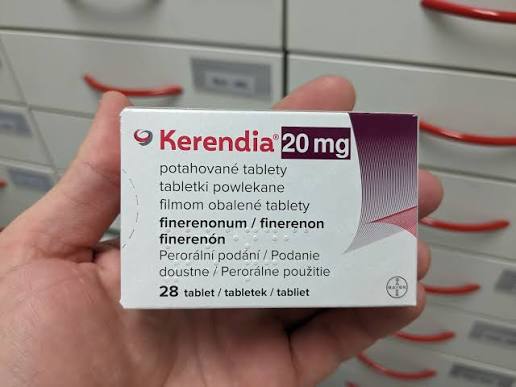
On Thursday 17 September 2026, that finally changed. The US Food and Drug Administration approved Bayer's Kerendia — generic name finerenone — for adults with chronic kidney disease associated with type 1 diabetes. It is a once-daily tablet, 10 milligrams or 20 milligrams. It is the first new treatment approved for this population in more than three decades.
"For more than three decades, people with chronic kidney disease and type 1 diabetes have had limited options to address the risk of kidney disease progression," said Dr Janet McGill, professor of medicine in the division of endocrinology, metabolism and lipid research at Washington University School of Medicine in St Louis, and co-chair of the trial's executive committee.
That is the polite version. The blunt version is that an entire patient population spent a generation watching from the sidelines while everyone else got the good stuff.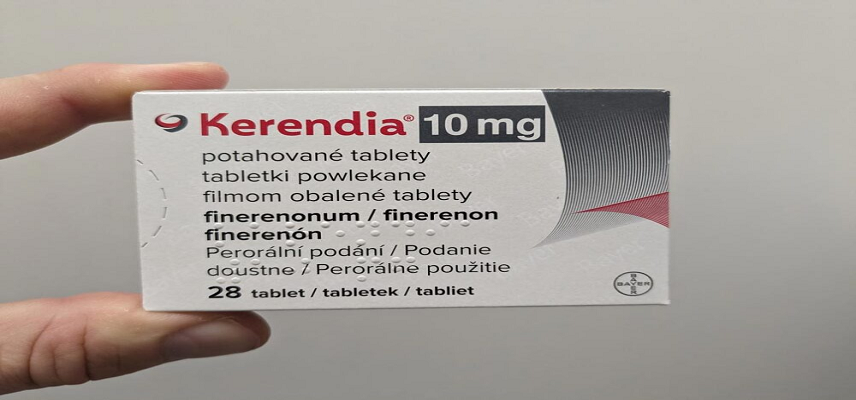
THE PEOPLE MEDICINE FORGOT
Here is the uncomfortable arithmetic at the heart of this story. Type 2 diabetes accounts for more than 85 per cent of everyone diagnosed with diabetes. Drug companies build trials where the patients are. So when the great wave of kidney-protective medicines arrived over the past decade — the SGLT2 inhibitors, the GLP-1 receptor agonists, the non-steroidal mineralocorticoid receptor antagonists — the trials that proved them were run almost entirely in people with type 2.
People with type 1 were, to put it plainly, excluded. Not out of malice, but out of maths and caution. There are roughly 1.4 million American adults aged 20 or over living with type 1 diabetes and using insulin — about 5.2 per cent of all US adults with diagnosed diabetes. Small numbers make trials expensive. And there was a genuine safety scare: when the SGLT2 inhibitor sotagliflozin was tested in type 1 diabetes, it caused diabetic ketoacidosis, a result published in the New England Journal in 2017 that cast a long shadow over the whole idea of borrowing type 2 drugs for type 1 patients.
Meanwhile the damage kept accumulating. Around 30 per cent of people with type 1 diabetes in the United States go on to develop chronic kidney disease. The global prevalence of CKD caused by type 1 diabetes was estimated at 32.5 cases per 100,000 people in 2017. Despite decades of guideline-recommended ACE inhibitors and ARBs, up to a quarter of those patients still progress all the way to end-stage kidney disease — dialysis, transplant, or death. Kidney disease is a leading cause of death in type 1 diabetes.
Chronic kidney disease is a quiet killer. It progresses silently and unpredictably. Most people feel completely fine until the disease is well advanced, which is precisely why it is so widely under-recognised — and why a treatment that works early matters so much.
WHAT THE FDA ACTUALLY SIGNED OFF ON
Read the approval carefully and you will notice something unusual about its wording. Finerenone is indicated "to reduce urinary albumin-to-creatinine ratio, which is expected to reduce the risk of sustained estimated glomerular filtration rate decline and end-stage kidney disease."
Expected to. Not shown to.
The urinary albumin-to-creatinine ratio, or UACR, is a measure of how much protein is escaping through the kidney's filters and into the urine. It is a marker of damage, not a hard outcome. Nobody goes on dialysis because of their UACR. They go on dialysis because their kidneys have failed.
The FDA accepted UACR as a surrogate here because of a large body of type 2 diabetes evidence that links the two. In the pooled analysis of the FIDELIO-DKD and FIGARO-DKD trials — two enormous studies in CKD associated with type 2 diabetes — more than 80 per cent of finerenone's kidney benefit was statistically explained by the reduction in UACR. A separate analysis published in the Annals of Internal Medicine put the figure as high as 84 per cent. The American Diabetes Association has established a 30 per cent reduction in UACR as a threshold associated with slower CKD progression.
So the regulatory logic runs: if we know a drop in albuminuria predicts kidney protection in type 2, and finerenone produces the same drop in type 1, it is reasonable to expect the same protection. It is an inference. A well-supported one. But an inference all the same.
THE TRIAL: 242 PEOPLE, SIX MONTHS
The study that won the approval is called FINE-ONE, published in the New England Journal of Medicine on 4 March 2026 and first presented in November 2025 as a Featured High-Impact Clinical Trial at the opening plenary of the American Society of Nephrology's Kidney Week.
Bayer screened 573 people across more than 80 sites in nine countries. Only 242 made it into the trial — 120 randomised to finerenone, 122 to placebo. Everyone had type 1 diabetes, an eGFR between 25 and 90, albuminuria between 200 and 5,000 mg/g documented for at least three months, an HbA1c below 10 per cent, and a potassium level at or below 4.8. Everyone was already on a stable dose of an ACE inhibitor or ARB.
Over six months, UACR fell by 34 per cent in the finerenone group and by 12 per cent on placebo — a 25 per cent greater reduction with the drug (geometric mean ratio 0.75; 95 per cent confidence interval 0.65 to 0.87; P less than 0.001). At three months the gap was 22 per cent; by six months it had widened to 28 per cent. At some point after baseline, 68.1 per cent of people on finerenone hit that 30 per cent UACR reduction threshold, against 46.6 per cent on placebo.
Discontinuation was low: 6.7 per cent on the drug, 8.2 per cent on placebo. Blood pressure barely moved. Blood sugar control and body weight did not change. Strikingly, hypoglycaemia was actually less common on finerenone than on placebo, though the numbers were small.
The main safety signal was the one everybody expected. Hyperkalaemia — dangerously high blood potassium, the classic hazard of blocking the mineralocorticoid receptor — occurred in 12 participants on finerenone, or 10.1 per cent, compared with four, or 3.3 per cent, on placebo. Two people, 1.7 per cent, stopped the drug because of it. There were no deaths in the finerenone arm during the trial.
THE CATCH NEPHROLOGISTS ARE ALREADY NAMING
Not everyone is popping champagne. Writing for NephJC, the nephrology journal club whose summaries are read by kidney doctors worldwide, Dr Akshaya Jayachandran published a review under a headline that says it all: "Fine, but doesn't reach the Finish Line?"
Her list of caveats is worth reading in full, because it is exactly what a patient should ask their doctor.
First, the endpoint. "This is a trial built around albuminuria, and not kidney failure, long term eGFR decline, or dialysis," the review notes. "Just albuminuria."
Second, an odd wrinkle in the kidney function data. eGFR actually fell further in the finerenone group over six months — by about 5.6 millilitres per minute versus 2.7 on placebo, a between-group difference of minus 2.9. That looks alarming until you learn it appeared early, then stabilised, and reversed when the drug was washed out. Kidney specialists recognise this pattern; it is a haemodynamic effect seen with other kidney drugs, and it is usually the price of admission for longer-term protection. But six months is not long enough to prove that.
Third, the people who did not get in. Of 573 screened, more than half were turned away. The criteria were strict: potassium had to be low, glycaemic control reasonable, blood pressure in a narrow band, no recent cardiovascular events, and crucially no recent use of SGLT2 inhibitors or GLP-1 drugs — which some people with type 1 diabetes are in fact prescribed off-label. As NephJC puts it, this "limits generalisability and does not mirror most of the type 1 diabetes patients seen in nephrology practice."
And fourth, the honest structural problem: with this few patients available, a proper outcomes trial measuring dialysis and death may simply never be feasible. This may be the best evidence that will ever exist.
The review's verdict is nonetheless a yes. "Given the lack of other options in this patient population, that is a very sweet suggestion."
THE MONEY
Finerenone is not a new molecule. It has been on the US market since 2021 for chronic kidney disease associated with type 2 diabetes, and since 2025 for symptomatic chronic heart failure with an ejection fraction of 40 per cent or above. This is its third US indication, and it is already approved for the type 2 indication in more than 100 countries, marketed as Kerendia or, in some markets, Firialta.
That means the price is already set and already known. A 30-day supply of Kerendia carries a list price of roughly $908, or about $13,200 a year. Bayer operates a savings programme under which eligible commercially insured patients can pay as little as $0 a month, capped at $3,000 of savings a year, and a patient assistance programme that can bring the cost to around $70 a month for those who qualify.
Whether any given American with type 1 diabetes and early kidney damage actually gets it will come down, as ever, to their insurer's formulary and their prior authorisation paperwork. And note the geography: with this approval, the United States is currently the only country on earth where finerenone is licensed for chronic kidney disease associated with type 1 diabetes.
WHAT THE EXPERTS ARE SAYING
Bayer, predictably, is delighted. "Today's approval in the US marks an important advance for people living with chronic kidney disease associated with type 1 diabetes — a serious and often under-recognised condition," said Christine Roth, executive vice president of global product strategy and commercialisation and a member of Bayer's pharmaceuticals leadership team.
More telling is the reaction from the patient side. Breakthrough T1D — the organisation formerly known as JDRF — was a strategic collaborator on the FINE-ONE trial itself.
"Today, there are few treatments available for chronic kidney disease, a common complication of type 1 diabetes," said Dr Jonathan Rosen, research director at Breakthrough T1D. "The approval of finerenone is a huge win for the T1D community. Breakthrough T1D thanks the FDA for its review and approval and Bayer for their commitment to giving people with T1D a new therapeutic option for chronic kidney disease."
The organisation framed the approval as a door opening rather than a finish line — evidence that the type 1 complications market is commercially viable enough for industry to invest in.
WHAT THIS MEANS FOR YOU
If you or someone you love lives with type 1 diabetes, here is the practical translation.
Ask about your UACR. Not your creatinine, not just your eGFR — your urinary albumin-to-creatinine ratio. It is a cheap urine test, it is the first sign of kidney damage, and it is the number this entire approval turns on. If you have never seen yours, that is a conversation to have at your next appointment.
Understand that this drug is an add-on, not a replacement. Every single person in FINE-ONE was already taking an ACE inhibitor or an ARB. Finerenone was layered on top of that, not substituted for it.
Know the main risk. Hyperkalaemia affected roughly one in ten people on the drug. That means blood potassium monitoring, and it means being honest with your doctor about potassium supplements, salt substitutes and any other medicines that push potassium up. The FINE-ONE entry bar was a potassium of 4.8 or below; if yours runs high, this may not be for you.
Do not expect to feel anything. This is a preventive medicine for a silent disease. You will not feel your albuminuria falling. The benefit, if it comes, arrives as something that does not happen years from now.
And be realistic about the evidence. Six months, 242 people, one surrogate marker. That is a real result, but it is not the same as a trial showing fewer people on dialysis.
WHAT HAPPENS NEXT
The obvious next question is whether the rest of the modern kidney toolkit can finally be tested in type 1 diabetes too. The SUGARNSALT trial, backed by a $9 million award from Breakthrough T1D alongside the Kidney Foundation of Canada, is a phase 3 study doing precisely that. As NephJC's reviewers put it, "ongoing testing of newer DKD agents in patients with type 1 diabetes is essential to evidence based care."
Bayer, for its part, says finerenone has now been studied in more than 20,000 patients across five pivotal phase 3 studies, spanning heart failure, CKD with type 2 diabetes, CKD with type 1 diabetes and CKD without diabetes at all. Applications for the non-diabetic CKD indication have been filed in China and Japan; nowhere in the world has approved it yet.
For the 1.4 million American adults living with type 1 diabetes, though, the significance of last Thursday is simpler than any of that. After thirty-three years of being told that the trial data did not exist for people like them, somebody finally ran the trial.
It is a small trial. It is a short trial. It measures a marker rather than a catastrophe. And it is, by an enormous distance, the best thing to happen to their kidneys since 1993.



