World Politics
Background
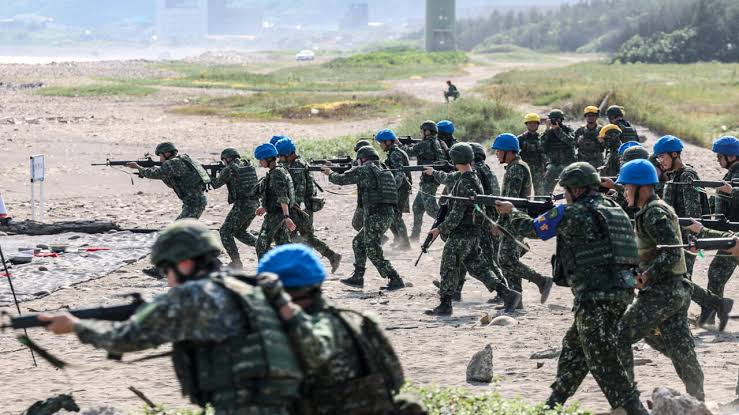
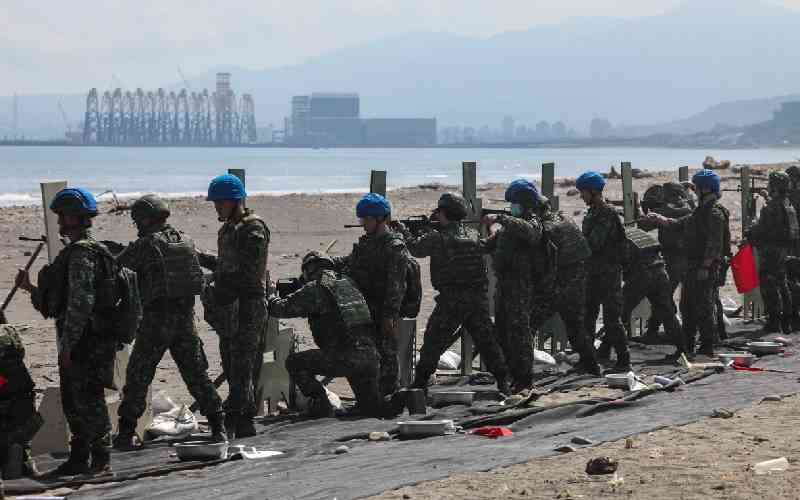
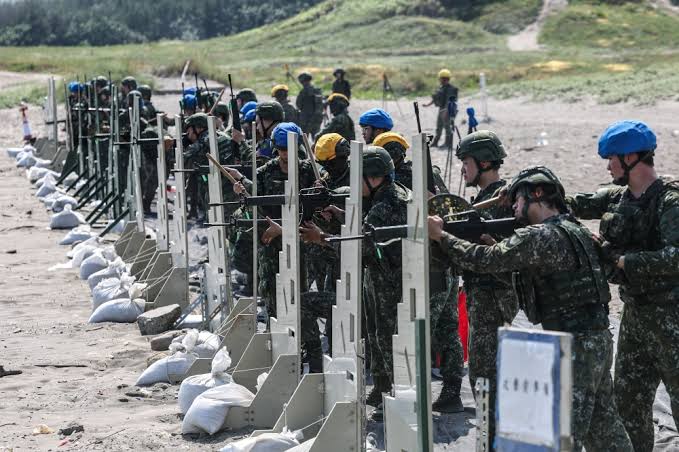
Taiwan has held the Han Kuang exercises every year since 1984, but the 2026 edition, the 42nd in the series, has drawn unusually intense international attention because of how closely it mirrors what defense planners believe a real Chinese assault on the island would look like. The drills unfolded in two phases: a computerized command-post simulation held April 11 to 24, followed by a live-fire phase that ran from August 5 through August 14. Beijing has never renounced the use of force to bring Taiwan under its control, and the ruling Chinese Communist Party regards the self-governing island, home to roughly 23 million people, as a breakaway province that must eventually be reunified with the mainland, by peaceful means if possible and by force if necessary.
The stakes extend well beyond cross-strait politics. Taiwan produces the overwhelming majority of the world's most advanced semiconductors through its national champion, TSMC, chips that power everything from smartphones to fighter jets and artificial intelligence data centers around the globe. Any military conflict in the Taiwan Strait, one of the busiest shipping corridors on Earth, would almost certainly disrupt global trade and technology supply chains on a scale not seen in decades. That economic reality has made the question of Taiwan's defense readiness a matter of concern not just for Washington and Tokyo but for capitals worldwide.
Tensions have been building steadily since President Lai Ching-te of the pro-sovereignty Democratic Progressive Party took office in 2024. Lai has repeatedly rejected Beijing's political framework for unification and cast his administration as the defender of Taiwan's democratic system against an authoritarian mainland. China has responded over the past two years with a rising tempo of military activity around the island, including near-daily incursions by fighter jets and warships into Taiwan's air defense identification zone, large-scale encirclement drills, and what Taiwanese officials describe as 'gray zone' coercion, actions that fall short of open war but are designed to exhaust Taiwan's military, economy and public morale. Some U.S. and regional defense officials have pointed to 2027 as a symbolically significant year, the centenary of the People's Liberation Army's founding, that Chinese leader Xi Jinping has been said to want his forces prepared for a potential Taiwan contingency by, though Beijing has never confirmed any such deadline and analysts caution against treating it as a firm prediction.
Washington's relationship with Taiwan sits inside a decades-old framework of deliberate ambiguity. Under the 1979 Taiwan Relations Act, the United States maintains no formal diplomatic recognition of Taiwan but is committed to helping the island maintain a sufficient self-defense capability, while stopping short of an explicit promise to intervene militarily if China attacks, a posture successive administrations have preserved even as arms sales and informal political contacts have grown more visible. That balancing act has become harder to sustain as China's military modernization has narrowed the gap with Taiwan's own forces, pushing Taipei toward the kind of asymmetric weapons, mobile missile systems, sea mines, and drones, that defense planners argue would make any invasion costlier for the People's Liberation Army even without matching it ship for ship or jet for jet.
Key Developments
This year's Han Kuang exercises were designed to be less scripted and more decentralized than in the past, responding to years of criticism that the drills were too heavily choreographed to offer a realistic test of Taiwan's armed forces. For the first time, the military introduced a communications protocol modeled on U.S. practice in which subordinate commanders must explain back to their superiors exactly how they intend to carry out an assigned mission, rather than simply confirming receipt of orders, a change meant to build the kind of independent battlefield judgment that Taiwan's military has historically lacked. Live convoys of CM-21 armored vehicles and M60A3 tanks moved through northern Taiwan toward Yilan County, rehearsing the kind of rapid reinforcement of Hualien that would be needed if Chinese forces attempted a landing on the island's less-defended eastern coast.
The exercises also tested Taiwan's ability to keep functioning under attack rather than just its ability to fight. On August 7, President Lai boarded an armored personnel carrier and was moved from his offices in Taipei to a fortified command center in a drill simulating a Chinese 'decapitation strike' aimed at Taiwan's political leadership, part of a broader test of continuity-of-government procedures, inter-agency coordination and emergency response mechanisms. Authorities also staged deliberate mobile internet slowdowns in parts of northern Taiwan for the first time, simulating what communications might look like if China moved to disrupt the island's networks, while air raid sirens sounded and streets were ordered cleared during civil defense drills. At the newly opened Danjiang Bridge, troops rehearsed blocking the crossing entirely, a scenario aimed at slowing any Chinese advance toward the cluster of government buildings in Taipei's central district. The live-fire portion also tested the military's capacity to sustain defensive operations around the clock and to counter the gray zone tactics Beijing has increasingly relied on short of full-scale war.
The drills came against the backdrop of a major expansion in Taiwan's defense spending. The government has advanced a supplementary defense budget of roughly $40 billion aimed at improving combat readiness by 2027, on top of a separate $11.1 billion arms package from Washington that was itself followed by large Chinese live-fire drills around the island in protest. The United States has continued to press Beijing to show restraint and to pursue dialogue rather than military pressure, even as it keeps approving new weapons sales to Taipei under its long-standing, deliberately ambiguous policy of supporting Taiwan's self-defense without formally committing to its independence.
Reactions
Beijing's response to this year's drills, and to President Lai's rhetoric surrounding them, was sharp. During the exercises Lai declared that Taiwan is 'not subordinate to the People's Republic of China' and vowed that his Democratic Progressive Party would never allow 'a democratic Taiwan' to regress into what he called 'China Taiwan.' China's Taiwan Affairs Office spokeswoman, Zhang Han, fired back that Lai's remarks 'exposed his unchanging "Taiwan independence" stance' and had 'recklessly challenged the one-China principle,' the long-standing diplomatic position, adhered to in varying forms by Beijing, Washington and Taipei, that there is only one Chinese state, though each side interprets what that means differently. Lai, for his part, argued that China's expanding military activity and coercive posture threaten not just Taiwan but wider regional stability, telling reporters that Beijing's actions were adding 'significant uncertainty and risk' to global shipping, trade and peace.
Within Taiwan, the drills triggered the familiar mix of public anxiety and pragmatic acceptance that has come to define life on the island under the shadow of a much larger neighbor. Disruptions to daily life, closed roads, blaring sirens, throttled internet access, were felt by ordinary residents in the areas where drills were staged, a deliberate choice by planners who argue that civil society, not just the armed forces, needs to be able to function under attack. Defense analysts broadly welcomed the shift toward less scripted, more decentralized exercises as a meaningful step toward real combat readiness, though some cautioned that a single annual drill cycle, however improved, cannot by itself close the wide gap between Taiwan's forces and the much larger People's Liberation Army. Regional neighbors, including Japan, have also watched closely given that any crisis in the Taiwan Strait would likely draw in nearby U.S. and Japanese forces and disrupt trade routes on which their own economies depend.
What's Next
With the live-fire phase of Han Kuang now concluded, attention turns to whether Beijing responds with its own show of force, as it has after previous perceived provocations, including large-scale encirclement exercises or further incursions into Taiwan's air defense identification zone. Both Washington and Beijing are said to be trying to manage the risk that Taiwan Strait tensions could derail planned high-level exchanges between the U.S. and Chinese governments later in the year, even as the underlying military buildup on both sides continues largely without pause. Taiwan's $40 billion supplemental defense package still requires further legislative steps, and how quickly the funds translate into deployed capability, from asymmetric weapons like mobile missile batteries and drones to reserve-force training, will be closely watched by allied defense planners as a gauge of how seriously Taipei is preparing for the 2027 window some in the region see as a potential moment of maximum danger.
Domestically, President Lai faces the challenge of sustaining public support for an expensive, disruptive defense buildup while managing an opposition-controlled legislature that has at times slowed defense appropriations, and while looking ahead to Taiwan's 2026 local elections later this year, a contest that will serve as a barometer of how much public patience remains for the DPP's confrontational posture toward Beijing. Internationally, the durability of U.S. support for Taiwan, amid competing global priorities including wars in the Middle East and Europe and a packed diplomatic calendar between Washington and Beijing, will remain a central variable. For now, the message from Taipei's latest war games is that the island's military and civilian institutions are trying, however imperfectly, to prepare for a scenario that officials on all sides say they hope never arrives, but that fewer and fewer regional strategists are willing to rule out.
Published By | News Editor