A 28-year-old technician at a Soviet-era plague research lab is dead. Hospitals are sealed, an aluminum plant has ordered masks, Washington and the CDC are watching closely, and Moscow's official line keeps shifting. Here's what we know, what we don't, and why experts say it matters.
IRKUTSK, RUSSIA
The death that Russia won't explain
She was 28 years old, and she worked with some of the most dangerous germs on Earth.
Now she is dead, close to 200 people who came into contact with her have been put under medical watch, a hospital in a Siberian town has slammed its doors to new patients, and governments from Washington to Moscow are trading careful statements about a word nobody in authority wants to say out loud: plague.
The young woman, named by local media as laboratory technician Darya Shipilova, was employed at the Irkutsk Anti-Plague Research Institute of Siberia and the Far East, a state research body that studies plague control and works with some of the world's most dangerous bacterial and viral infections. According to reports compiled by the infectious disease news site Contagion Live, she was admitted to hospital on September 29 with severe pneumonia and died overnight between October 1 and October 2. Independent local outlet People of Baikal reported that she died at the district hospital in Shelekhov, a small industrial town outside the regional capital of Irkutsk, roughly 3,000 miles east of Moscow and north of the Mongolian border.
What killed her is the question at the center of a fast-moving international mystery. Some regional officials and local journalists say it was pneumonic plague, the deadliest form of the disease that wiped out a huge share of Europe's population in the Black Death of the 1300s. Russia's federal health watchdog says it was "pneumonia of unknown etiology," doctors' language for a lung infection whose cause has not been identified.
Those two accounts cannot both be the whole truth. And the more officials say, the more the story seems to shift.
A governor's post, quietly edited
The first hint that something unusual was happening came in a burst of posts on Telegram, the messaging app that many Russian officials use as their main channel to the public.
On October 1 and 2, Maxim Modin, the mayor of the Shelekhov district, told worried residents that a quarantine was in place at the Shelekhov District Hospital. Admissions and discharges were suspended and laboratory operations stopped, though the outpatient clinic stayed open. His posts did not mention a death.
On October 2, Irkutsk regional governor Igor Kobzev announced he was hosting an "extraordinary meeting of the regional sanitary and anti-epidemic commission" after information emerged "about a suspected case of a regional resident with a particularly dangerous infection." Sitting at the table was Anna Popova, the head of the federal watchdog Rospotrebnadzor and Russia's chief sanitary doctor, who had flown in from Moscow. Kobzev said the situation was "under strict control."
That same day, Alexei Tsydenov, the head of the neighboring Republic of Buryatia, went further. Responding to rumors that the woman had travelled through his region, he wrote that the woman who died of "the plague" had not visited Buryatia, and that "there are no plague outbreaks in the republic, including in the area bordering Mongolia." According to PBS NewsHour, which cited reporting by CBS News and The Guardian, Tsydenov later edited his post to add one crucial word: "possibly."
Then, on October 4, Rospotrebnadzor gave its official verdict to the state news agency TASS. The employee had been "diagnosed with pneumonia of unknown etiology." The agency said it had expanded testing of her samples and found no microorganisms associated with her professional work. It said there had been "no emergency situations involving pathogenic microorganisms" at the institute, and that the sanitary and epidemiological situation in Irkutsk and Shelekhov was "stable." The statement did not mention that she had died.
On Monday, October 5, Governor Kobzev repeated the watchdog's wording, this time describing it as her cause of death. He said that "microorganisms associated with her professional activities were not detected in the patient's samples," that no other institute employees had sought medical help in recent days, and that none of her identified contacts had symptoms. All of their tests, he said, were negative.
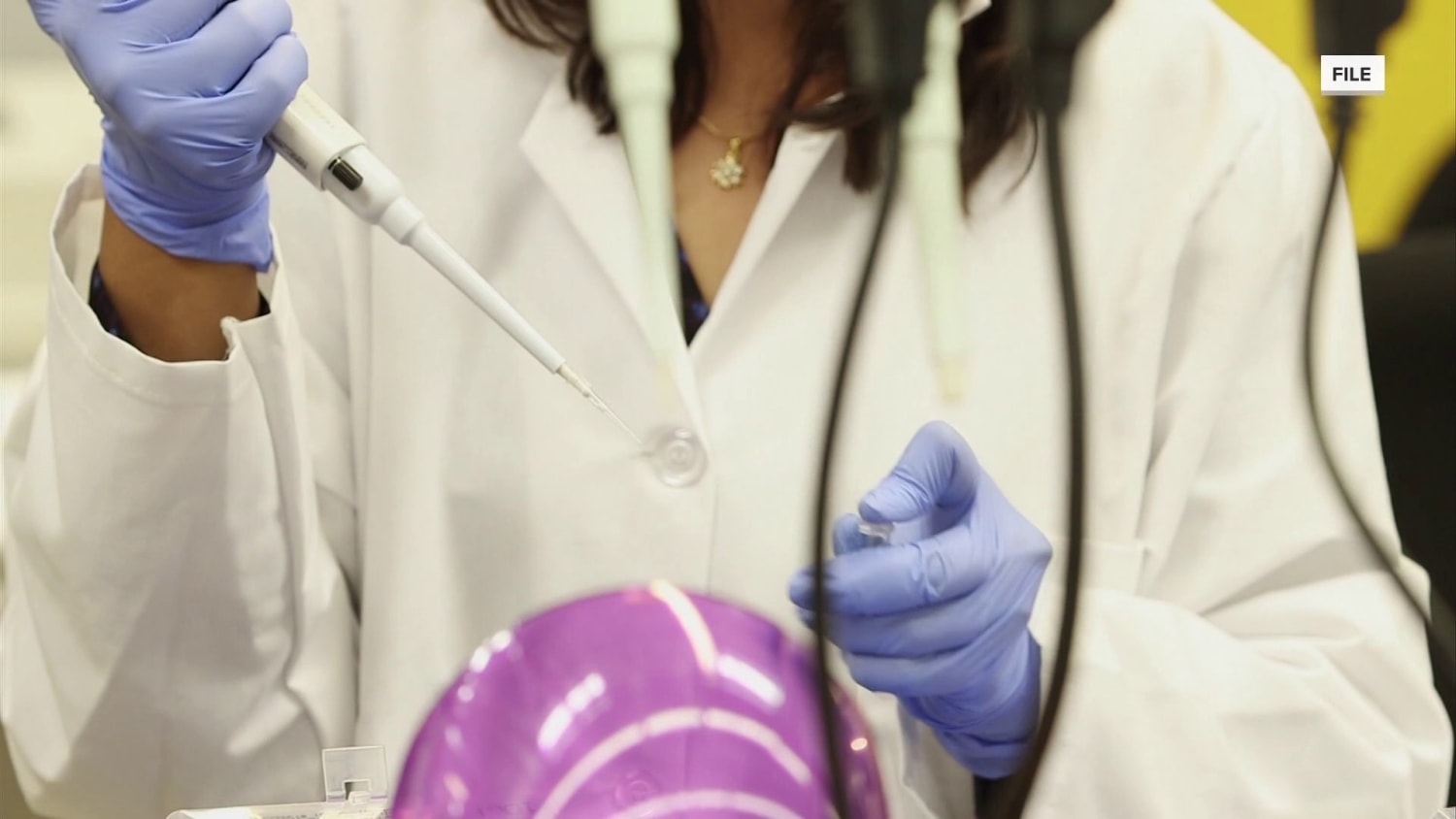
The test tube story
If the official version is right, it was a tragic but ordinary death from a lung infection. So why did it trigger an emergency meeting chaired by Russia's top sanitary doctor, hospital quarantines, and mass monitoring of contacts?
Local reporters say they know why. People of Baikal, citing local journalist Pavel Stepanov, reported that the technician became infected after she broke a test tube containing the plague bacterium, Yersinia pestis, and that she died of pneumonic plague. A competing account circulating in Russian media claimed she had been admitted with pneumonic plague after returning from a trip to Thailand. Neither version has been confirmed by authorities, and Rospotrebnadzor has flatly denied that any lab accident took place.
What has been confirmed is the scale of the response. According to the independent Moscow Times, health authorities hospitalized 189 people who had been in contact with the lab worker. The newspaper Izvestia put the number under observation at 197 as of October 2. People of Baikal reported that quarantine was imposed in at least one maternity ward.
The precautions spread beyond hospitals. Artem Fominykh, director of the Irkutsk Aluminum Plant in Shelekhov, ordered staff to wear masks. "Better safe than sorry," he wrote on Telegram, urging workers to seek medical attention immediately if they felt unwell and acknowledging that conflicting information was circulating around town. Local outlet IrCity reported that a city cleanup event was cancelled "due to the unfavorable epidemiological situation."
There have also been signs of information being pulled back. According to People of Baikal, local officials posted a warning telling people not to visit Shelekhov, then deleted it. The same outlet reported that a state television channel deleted five articles it had published about the incident.
Washington is watching
The case quickly drew attention far beyond Siberia. On October 4, the US State Department confirmed it was aware of reports of "a fatal case of suspected pneumonic plague in Irkutsk Oblast, Russia."
"We are monitoring the situation closely with the CDC and our other interagency partners," a spokesperson said. "Many details have not been confirmed. We encourage Russian authorities to share accurate information quickly and openly." The statement added a note of reassurance: "Plague is a known disease and is treatable with common antibiotics, especially when treatment starts early. Cases occur naturally in many parts of the world."
The US Centers for Disease Control and Prevention said it was also "monitoring the situation closely," adding: "The safety and security of U.S. citizens is our highest priority."
On Monday, Secretary of State Marco Rubio struck a measured tone when asked by reporters. "I don't think it's cause for alarm, but it is cause for focus," he said.
What is pneumonic plague?
Plague is caused by the bacterium Yersinia pestis, which normally lives in small mammals such as rodents and in the fleas that feed on them. People usually catch it from flea bites, from handling infected animals, or, much more rarely, by breathing in infected respiratory droplets.
It comes in three main forms. Bubonic plague, the most common, attacks the lymph nodes, causing the swollen, painful "buboes" that gave it its name; it is the form most associated with the Black Death. Septicemic plague spreads through the bloodstream. Pneumonic plague infects the lungs, either directly when someone breathes in the bacteria or as a complication of untreated bubonic plague.
Pneumonic plague is the most dangerous of the three, and it is the only one that can pass from person to person, through droplets when an infected patient coughs. The CDC describes fever, headache and weakness followed by rapidly worsening pneumonia, with shortness of breath, chest pain, cough, and sometimes bloody or watery mucus. Left untreated, it is almost always fatal, often within days.
The good news is that it is treatable. The CDC tells doctors to start antibiotics as soon as plague is suspected, without waiting for lab confirmation. First-line drugs in the US include gentamicin and fluoroquinolones such as ciprofloxacin and levofloxacin, usually given for 10 to 14 days. People who have had close, sustained contact with a pneumonic plague patient, within about six feet, are given a seven-day course of preventive antibiotics. That is the kind of contact tracing and monitoring Russian authorities appear to have carried out.
Plague is not a disease of the past. The CDC records an average of seven human cases a year in the United States, mostly in rural parts of the West, and more than 80 percent of them are bubonic. Russia itself has 11 natural plague zones under continuous surveillance, and national reporting has described the human plague situation as stable since 2017. A laboratory-acquired infection, if that is what happened, would fall entirely outside those natural patterns.
Expert perspective: "Not the posture of a routine outbreak"
For biosecurity specialists, the details that most worry them are not medical but institutional.
Dr. Ashish Jha, a biosecurity expert and former White House COVID-19 response coordinator, said he was "concerned" after gathering the facts available. He pointed to unconfirmed reports that national security services had escorted ambulances. "If accurate, that's not the posture of a routine natural outbreak, even a normal lab accident," Jha wrote on X on Sunday.
Jha urged Russian authorities to be more transparent, and warned that the problem is bigger than one lab. "The number of labs working on dangerous pathogens is growing worldwide," he said. "That means incidents like this will happen more often in the months and years ahead."
Investigative journalist Annie Jacobsen, author of "Biological War: A Scenario," told PBS NewsHour that the institute where the woman worked had been used for biological weapons engineering during the Soviet era, and noted that the US State Department believes Russia's illegal biological weapons program has continued. She said Moscow was "working very hard to close down all information about this," and questioned the broken-test-tube explanation, raising the possibility that the facility was working on an airborne form of the bacterium. These are her claims; there is no public evidence that the woman's death is linked to weapons work, and Russia denies running any such program.
The suspicion has deep roots. Russia's anti-plague institutes were part of a vast Soviet network originally set up to fight natural plague outbreaks. In 1979, an accidental release of anthrax spores from a military facility in the Soviet city of Sverdlovsk killed dozens of people, and Soviet officials blamed contaminated meat for more than a decade before Russia admitted the truth in the 1990s. That history is a big reason why Western officials are now asking Moscow to "share accurate information quickly and openly."
Lab infections with plague bacteria are rare but not unheard of. In 2009, a University of Chicago scientist died after being exposed to a weakened laboratory strain of Yersinia pestis, a case that prompted a review of lab safety rules in the US.
What this means for you
For the overwhelming majority of readers, the direct risk from this case is extremely low. Here is why, and what is worth knowing:
- No spread has been reported. Russian officials say all of the woman's identified contacts have tested negative and none have symptoms. Pneumonic plague spreads through close, face-to-face contact with a very sick person, not through casual exposure.
- It is treatable. Unlike some of the scariest new viruses, plague responds to common, cheap antibiotics if treatment starts quickly. The danger comes from delays.
- Travelers should stay informed. If you are planning a trip to the Irkutsk region or the Lake Baikal area, check your government's latest travel advice before you go. No official travel ban has been announced.
- Know the symptoms. Plague still occurs naturally in parts of the US West, Africa and Asia. If you develop a sudden high fever, chills, painful swollen glands, or a fast-worsening cough with chest pain, especially after contact with rodents, fleas, or sick pets such as cats in plague areas, see a doctor immediately and mention possible exposure.
- Protect your pets and home. In plague areas, use flea control on cats and dogs, don't handle dead rodents, and keep woodpiles and rubbish away from your house.
The questions that remain
A week after a young woman died in a Siberian hospital, the most basic facts are still disputed. Was it plague? If so, how did she catch it? Why were nearly 200 people hospitalized or put under watch for what officials say was an ordinary pneumonia? Why were posts edited, warnings deleted and articles taken down?
Russia's official answer is that there is nothing to see. The US government's answer is that it would like to see more. And the local people of Shelekhov, wearing masks at the aluminum plant and watching their hospital lock its doors, are left somewhere in between.
Until Moscow releases the results of its own tests, the world will have to rely on a patchwork of Telegram posts, local journalism and official statements that keep changing. As Rubio put it, it may not be cause for alarm. But for a disease with a history like plague's, and a lab with a history like this one's, it is certainly cause for focus.
Published By | Features Editor