Written By | Sports Desk
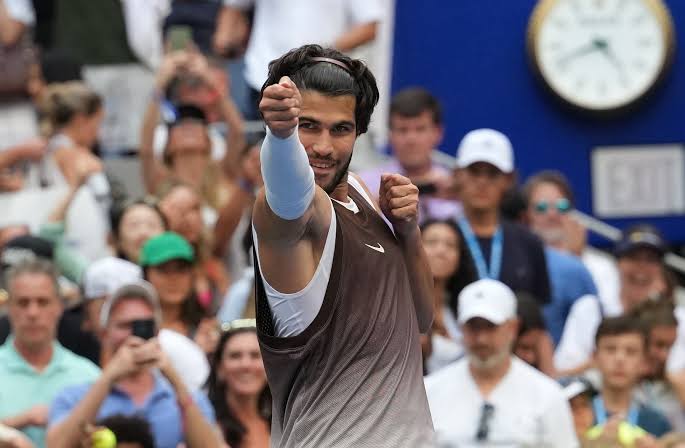
The defending US Open champion hasn't played a competitive match since April. On Sunday afternoon at Arthur Ashe, he meets the one American in the draw built to punish rust.
NEW YORK
There is a particular silence inside Arthur Ashe Stadium in the seconds before a match, when 23,000 people have found their seats and the umpire has not yet spoken. On Sunday afternoon, some time after 2 p.m. Eastern, Carlos Alcaraz will stand in it as the defending champion of the United States Open, having played competitive tennis for barely a week in the past five months.
Across the net will be Tommy Paul: American, Olympic bronze medallist, a hard-court player whose whole game is built on making other people uncomfortable. He arrives having just survived a five-set knife fight with Alexander Bublik — 6-4, 3-6, 6-7 (4), 6-1, 6-3 — the kind of match that leaves a player either broken or dangerous.
It is, on paper, the best story of the middle Sunday. In practice it is the first real examination of whether a four-month absence from professional tennis is a wound or a rest.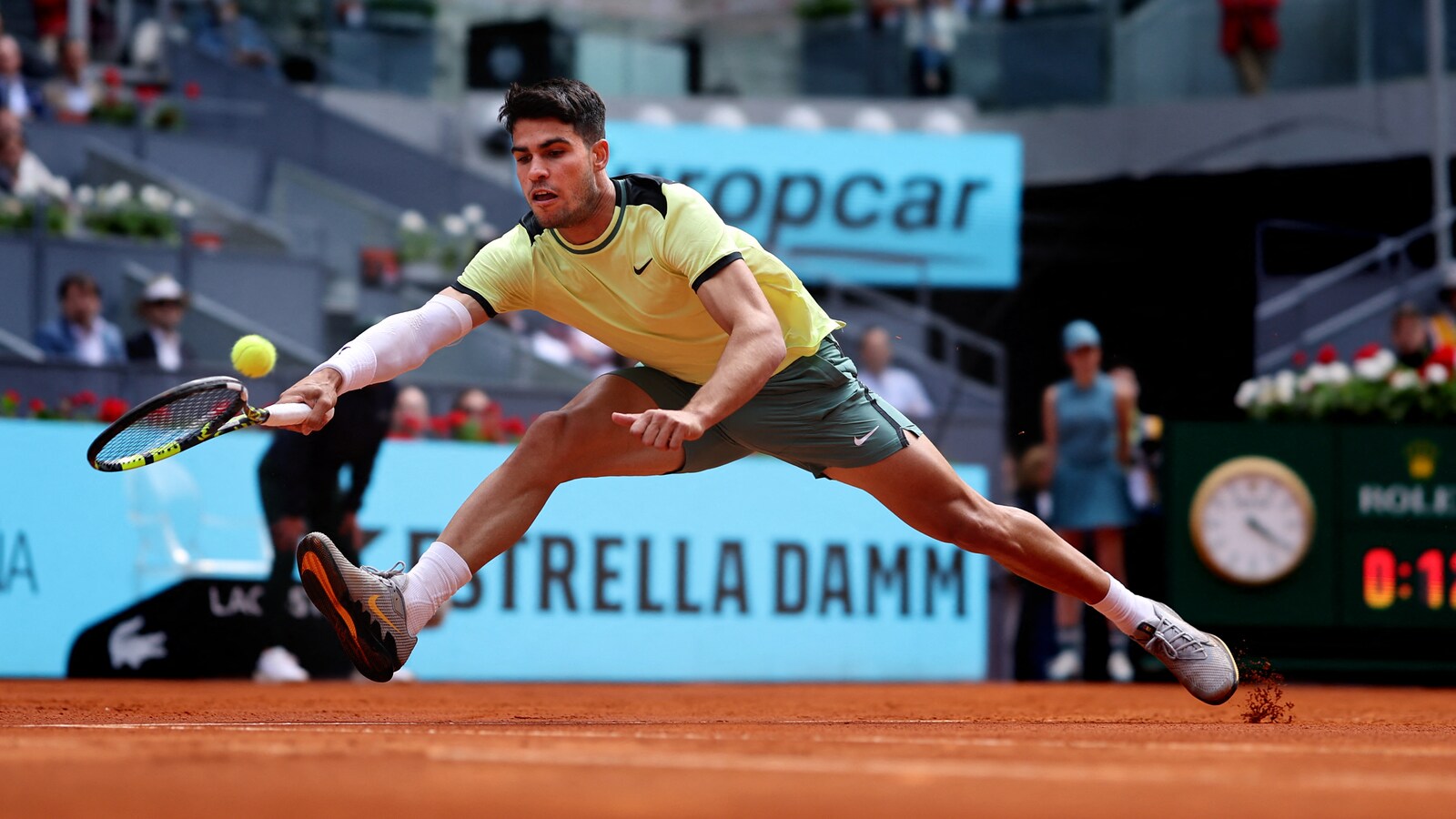
The wrist, and the decision
Alcaraz has not played a tour-level event since April, when a right wrist injury took him off the calendar. For a player whose forehand is essentially a controlled explosion — whip, snap, absurd racquet-head speed — a wrist problem is not an inconvenience. It is an attack on the mechanism.
The layoff swallowed the clay season, the grass season and the American hard-court swing, along with every tune-up event players use to find their timing before a Grand Slam. Alcaraz arrived in New York with no match play, no form line and a title to defend.
"My team and me, [we] believe that I'm ready," he said before the tournament began. "It wasn't an easy decision."
That last clause is the honest one. Coming back at a Grand Slam is the highest-variance choice available to an injured player. Lose early and the narrative writes itself: rushed, unready, a title surrendered without a fight. Smaller, safer doors were available. Alcaraz walked through the largest one in the sport.
Better than he expected
Three matches in, the gamble looks less reckless than it did a week ago. On Friday he dismissed Wu Yibing 6-3, 6-4, 6-1, a scoreline that tightened rather than loosened as the match went on — the mark of a player finding rhythm in real time rather than losing it.
What has surprised him most is the absence of the thing every returning athlete dreads: the body that will not cooperate under pressure, the arm that tightens on the big point.
"It didn't happen to me," Alcaraz said of the expected nerves and tension. "I am feeling better and better after every match. It feels like I have been competing the whole time."
He has also changed how he thinks about the calendar. Feeling good in the return, Alcaraz has said he now plans to take more long breaks from tennis — an unusual public position in a sport whose economics reward relentless presence. A generation of players has been ground down by an eleven-month season. Alcaraz, forced into rest, appears to have discovered that he likes it.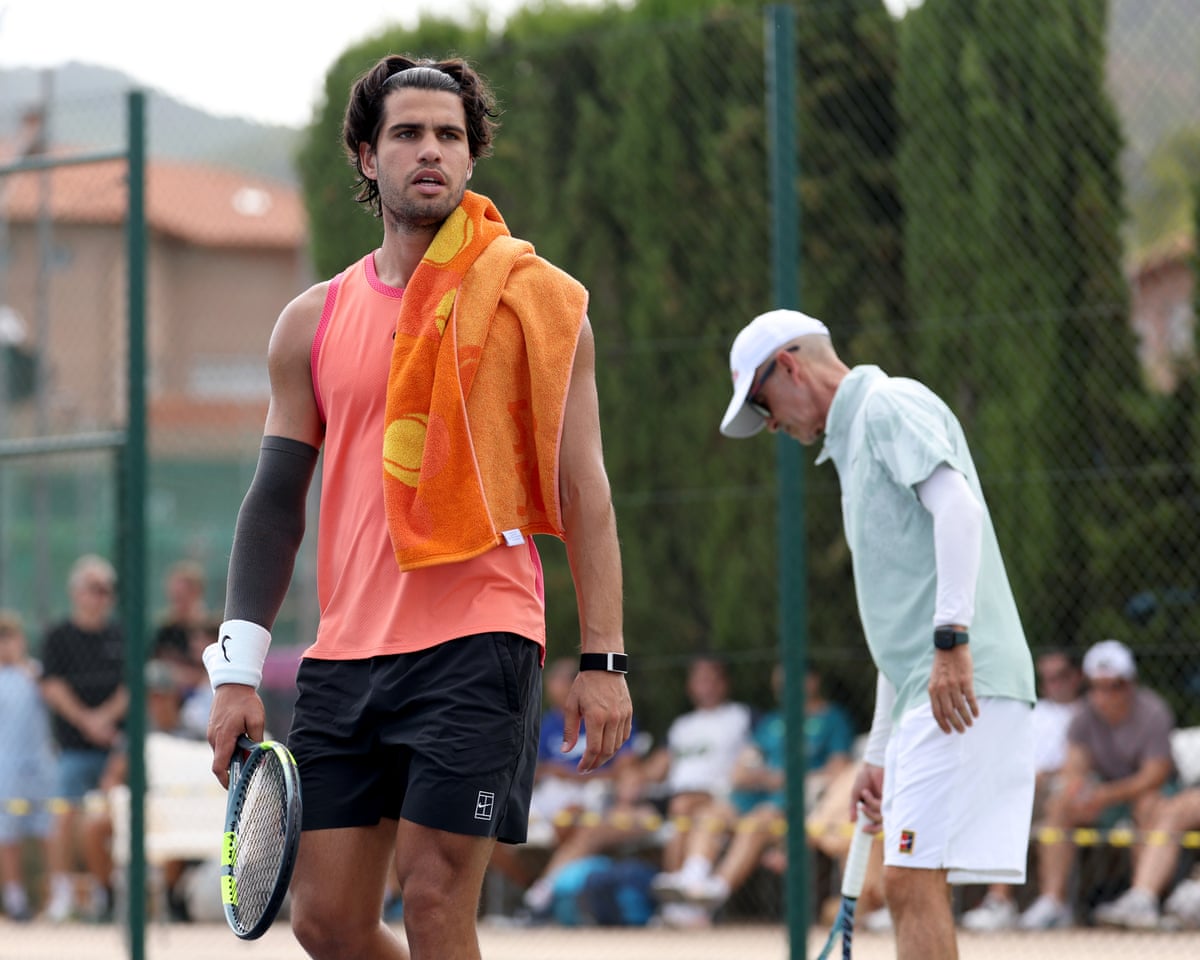
Why Tommy Paul is the wrong opponent to meet right now
The head-to-head is lopsided. Alcaraz leads 6-2 and has won their past five meetings. On raw numbers, this should not be a contest.
But Paul is a specific problem for a player carrying rust. He does not miss cheaply. He absorbs pace and redirects it. He is at his best on American hard courts, in American crowds, in September. And after five sets against Bublik, he has the confidence of a man who has already been to the edge this week and come back.
Alcaraz, for his part, is not pretending otherwise. He has called Paul "dangerous" and, more revealingly, has admitted he is still not at his best — a rare thing to say out loud with a quarter-final place on the line. The gap between where his tennis is and where it needs to be is exactly the gap Paul is built to exploit.
The bracket has been shaken hard, too. Novak Djokovic is already gone, beaten in the first round. Daniil Medvedev, the 2021 champion, faces Frances Tiafoe; Ben Shelton meets Stefanos Tsitsipas. The pieces have not settled.
The other match on Ashe
Before Alcaraz walks out, Aryna Sabalenka will have played Taylor Townsend at 11:30 a.m. — the world No. 1 chasing a third consecutive US Open title against an American hunting a first Grand Slam singles quarter-final.
Townsend, a three-time major doubles champion, said she was "pumped" for it. That is not false bravado. Her doubles instincts — aggressive net position, touch, a willingness to shorten points — make her one of the few players who can genuinely disrupt Sabalenka's baseline geometry. Elsewhere, Jessica Pegula, a former finalist here, plays the retiring Sorana Cîrstea. Finals weekend does not arrive until September 12-13.
What this means for anyone who has come back from an injury
Strip away the seeding and the prize money and the Alcaraz story is recognisable. You get hurt. You stop doing the thing that organises your life. You spend months measuring progress in millimetres. And then someone has to decide you are ready — a decision never made with certainty, only with enough evidence to justify the risk.
The instructive part is not that Alcaraz came back. It is what he came back believing: not that he must make up for lost time, but that rest is a legitimate part of a career rather than an interruption to one. "It feels like I have been competing the whole time" is the sentence of an athlete who has stopped treating time off as debt to be repaid.
Most people returning from a long absence do the opposite. They sprint to prove the gap did not matter. It rarely works.
The next four hours
By Sunday evening one of two things will be true. Either Alcaraz will be in the quarter-finals, and the four-month absence will be recast as shrewd management. Or Paul will have found the seam, and the same absence will be recast as a miscalculation — the same facts, the same wrist, the same decision, filed under a different heading.
That is the arithmetic of a Grand Slam. Nothing about the preparation changes. Only the result does. Alcaraz has said he is not at his best; six wins at less than his best would still be a remarkable title defence. He needs four more of them.



