Written By | International News Agencies
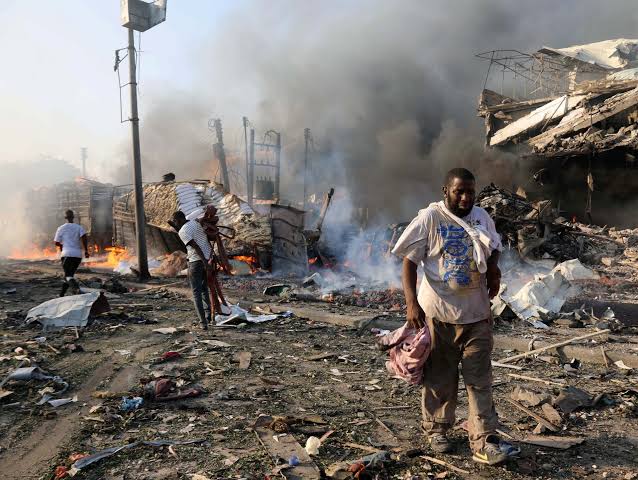
Somalia
MOGADISHU
Somalia's federal government and its opposition are within days of signing the first written agreement either side has produced since the country's constitutional order lapsed in the spring, according to a negotiator involved in the talks. The accord would create a body called the Democratic Transition Task Force, charged with managing an electoral process that has been the subject of nearly a year of collapsed negotiations, mutual delegitimisation and, in the past week, an air strike on the home of a general aligned with the president's opponents.
The proximity of those two facts — a settlement described as imminent, and a missile attack that no authority in the country will claim — captures where Somalia stands as this week begins. The political class is closer to a formula than at any point since May. The conditions on the ground for implementing that formula have arguably never been worse.
How Somalia Ran Out of Constitutional Time
The crisis is, at its root, a dispute about the calendar. Under the terms set out by opposition leaders in a communiqué issued after a three-day conference in Kismayo in December 2025, Somalia's parliamentary mandate expired on April 14, 2026, and the presidential mandate on May 15, 2026. That reading of the 2012 Provisional Constitution was endorsed at Kismayo by former presidents, former prime ministers, declared presidential candidates and the sitting leaders of Puntland and Jubaland. The communiqué gave President Hassan Sheikh Mohamud until Jan. 20, 2026, to convene stakeholders on an inclusive electoral process, and warned that failure would entitle the opposition to "pursue alternative arrangements" — language widely read in Mogadishu as a threat to constitute a parallel administration.
The president disputes the arithmetic. On May 15 — the day the opposition said his term ended — Mohamud told a gathering marking Somali Youth League Day that constitutional amendments recently approved by parliament had extended the presidential term from four years to five, and that his mandate therefore runs to May 15, 2027. He presented the extension as an institutional decision rather than a personal one. His opponents call the amendments unilateral and void.
That declaration came hours after four rounds of talks over three days collapsed at the fortified Halane compound in Mogadishu, where American and British diplomats had attempted to broker a compromise. Puntland President Said Abdullahi Deni, who took part alongside former President Sharif Sheikh Ahmed, said afterwards that the president had entered the room with little intention of conceding. The opposition delegation had pressed for a return to indirect, clan-mediated elections, arguing that Somalia possesses neither the security nor the institutional capacity for the universal-suffrage vote the federal government insists upon. Within hours of the collapse, opposition leaders announced that they no longer recognised Mohamud as president.
The government's counter-argument is that one-person, one-vote balloting represents a historic break from three decades of clan-brokered indirect selection. The counter-counter-argument, pressed hard by Deni and by Jubaland's Ahmed Mohamed Islam, is that the federal government's writ does not extend far enough to make such a vote meaningful: Somaliland lies wholly outside Mogadishu's control, Puntland and Jubaland reject the federal electoral process outright, relations with Galmudug have deteriorated, and al-Shabaab retains influence or outright control across much of southern and central Somalia.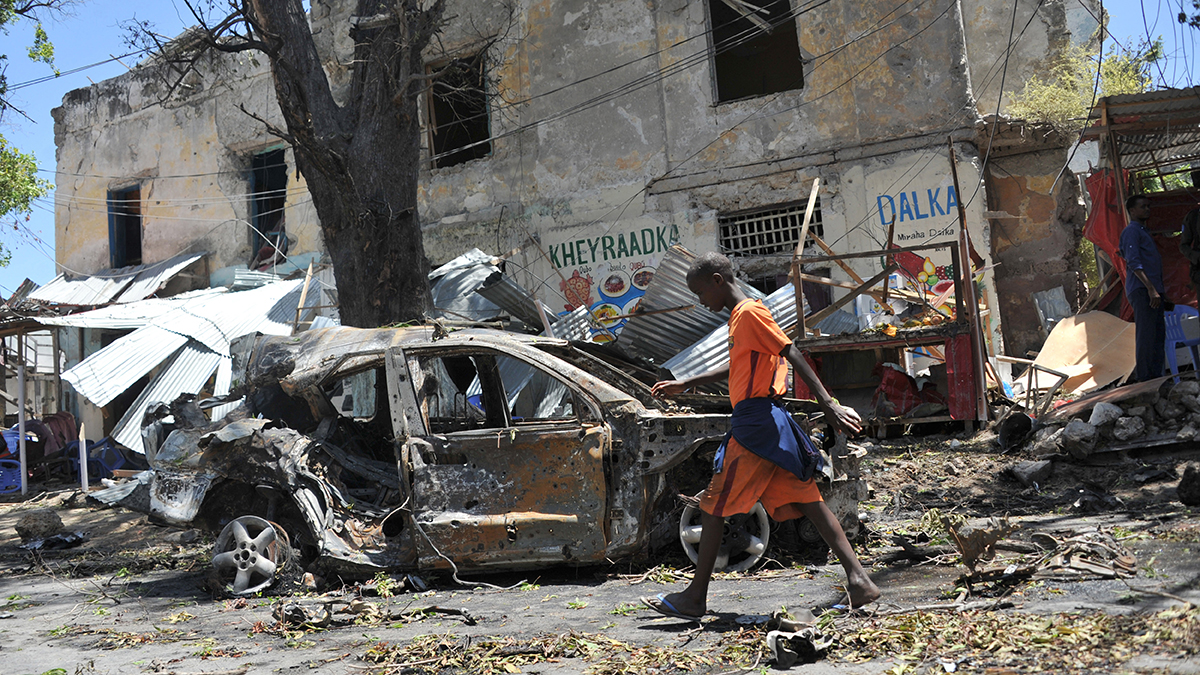
The Week of Sept. 1
The past seven days compressed most of that argument into a series of concrete events.
On Sept. 1, Somali Stream reported that Mohamud had accepted, in principle, that elections should be held within seven months. It was the clearest softening of his position since May, and observers attributed it to sustained pressure from international partners and neighbouring states, compounded by the financial strain on his administration following reduced donor support. The concession, however, came with careful edits. In his written response to the opposition's demands, Mohamud changed the description of the international partners' role from "mediation" to "facilitation." He struck the demand that the international community act as guarantors of the talks and substituted the word "observers," a role limited to monitoring whether legal procedures are followed. He retained the phrase "election of the federal government." And he removed the specific wording committing him to hold the presidential election within the seven-month window, even while accepting the general proposition that elections would occur inside it. No technical matters have been agreed. Neither side has settled the size of the proposed task force or a timetable for its work.
The same day, 60 members of parliament filed a motion of no confidence against Interior Minister Ali Yusuf Hosh, citing failures on internal security, recurrent clan conflict and the defence of the federal system, and accusing him of replacing officially recognised traditional elders with newly appointed figures. It was the first such motion since parliament elected a new speaker, and it was referred to a parliamentary committee for review before any vote can be scheduled.
On Sept. 2, armed militias seized centres designated for voter registration in Beledweyne, the Hiiraan capital, after the electoral commission set Sept. 30 for Hirshabelle's municipal and parliamentary elections. Militia members told local media they would not accept a vote in which a single favoured candidate is permitted to contest. Hawadle clan politicians have separately objected to the Hirshabelle process and are pressing for their turn at the regional presidency. The federal government has taken no action against the militias.
On the night of Sept. 3, an air strike hit a house in Doolow, in Gedo region near the Ethiopian border, where Gen. Mahad Abdirahman Adan — universally known as Taliye Shub, the former commander of Somalia's Correctional Service — was staying. He and his wife were evacuated to Nairobi for treatment. Jubaland's administration accused Turkish military aircraft of firing two missiles and said the general had been targeted over his political differences with the federal leadership; the accusation has not been independently verified and no evidence has publicly established which aircraft or authority was responsible. The federal government categorically denied responsibility, saying preliminary security-agency information indicated the explosions came from explosive materials being prepared inside the house. Gen. Mahad is a son-in-law and close ally of former South West State President Abdiaziz Hassan Mohamed Laftagareen, and was dismissed from his federal post in March as relations between Mogadishu and the former South West administration deteriorated.
On Sept. 5, Mohamed Abdirizak Mohamud, who represents the Nabad iyo Nolol group founded by former President Mohamed Abdullahi Farmaajo in the negotiations, said on X that the parties were close to finalising the Democratic Transition Task Force agreement and expected to sign within days. He did not disclose which points had been settled, which remained open, or when the signing would occur. He linked his announcement directly to the Doolow strike, questioning whether the timing was intended to derail the talks and asking how the president can be taken seriously at the table while opponents are targeted with lethal force. The federal government has issued no statement on the signing date, the task force's composition, or the allegation connecting Doolow to the negotiations.
The Clock Behind the Clock
Even a signed agreement would run against a second deadline that Somali politicians do not control. In July 2026, the United States formally notified the UN Security Council that it would block any authorisation permitting the UN Support Office in Somalia to use UN-assessed contributions to fund the African Union Support and Stabilization Mission in Somalia past Dec. 31, 2026. UNSOS supplies transport, fuel, rations and other non-lethal support to roughly 12,000 African troops and police. On Aug. 6, it issued a call for expressions of interest in an asset sale covering vehicles, generators, IT and office equipment, shipping containers, security watchtowers, wastewater treatment plants, prefabricated accommodation, medical and laboratory equipment and heavy construction machinery. Ten civilian personnel serving with the joint AU-UN Information Support Team were told their contracts terminate on Sept. 10. Leaders of troop-contributing countries have warned that a premature drawdown risks opening a security vacuum.
Analysis: A Settlement Racing a Vacuum
The shape of the emerging deal tells its own story. Mohamud has conceded the principle — elections, within a defined period, managed by a joint body — while retaining control over the two variables that determine whether the principle binds him: the timing of the presidential vote specifically, and the enforcement authority of outside actors. Downgrading guarantors to observers is not a semantic adjustment. It removes the only mechanism by which the opposition could hold him to the text once the cameras leave.
The opposition's leverage, meanwhile, is real but blunt. Puntland and Jubaland can refuse to participate, as they have; clan militias can seize registration centres, as they did in Beledweyne; and the coalition can revive the parallel-government threat first floated at Kismayo. None of these produces a legitimate national election. All of them raise the cost of the president's preferred course.
What has changed is the money. The financial strain cited by observers as driving Mohamud's Sept. 1 shift is the same strain the UNSOS withdrawal will deepen. A government whose security architecture depends on externally funded peacekeepers has limited room to defy the partners funding them — but a government facing a security vacuum in January also has a ready-made argument for why elections must wait.
Three things to watch. First, whether the task force agreement is actually signed, and whether its text specifies a presidential polling date or merely a process. Second, Sept. 30 in Hirshabelle: if a regional election proceeds in Beledweyne over militia objections, it becomes the template for the national vote; if it collapses, it becomes the opposition's exhibit. Third, whether any independent investigation of the Doolow strike is established. Somalia's opposition coalition has called for one. A political settlement signed while the question of who fired two missiles at a general's house remains open will carry that question into every subsequent round.



