Written By | Health News Agencies
Cracked: Scientists Finally Solve the Bizarre Mystery of Why Bird Flu Attacked Cows' Udders Instead of Their Lungs
Cracked: Scientists Finally Solve the Bizarre Mystery of Why Bird Flu Attacked Cows' Udders Instead of Their Lungs
PITTSBURGH
When veterinarians in the Texas Panhandle started seeing dairy cows go off their feed, run fevers, and produce thick, discolored milk in early 2024, not one of them reached for a flu test. Bird flu does not behave this way. It drowns lungs, not udders. It kills birds by the tens of thousands and occasionally crosses into humans with devastating respiratory illness. It does not, by any textbook, cause mastitis in cattle.
That blind spot bought the virus weeks of cover. By the time someone finally tested the milk, H5N1 had already moved herd to herd across the Panhandle, eventually reaching more than a thousand herds across nineteen states. It was one of the stranger detective stories in the history of a virus that has spent two years rewriting the rules of where it can go and what it can do.
Now, a team at the University of Pittsburgh School of Public Health says it has finally solved the mystery—and built a tool that could help the world spot the virus's next disguise before it costs another two months.
The Outbreak That Made No Sense
"Mastitis is a classic disease in milk-production animals, and veterinarians were dutifully looking to all the usual suspects," said Dr. Suresh Kuchipudi, chair of infectious diseases at Pitt Public Health and senior author of the new study in Science Advances. "When the real culprit turned out to be bird flu, everyone was caught completely by surprise."
The strain, H5N1 clade 2.3.4.4b, has torn through wild birds, commercial poultry, and a startling list of mammals—foxes, sea lions, mink, cats, and now cattle. What made cattle different was not that they got infected. It was that their bodies decided to fight the virus in completely the wrong place.
Early studies deepened the puzzle: textbook flu receptors appeared present in cows' noses and lungs—exactly where a respiratory virus should set up shop. Yet the cows weren't getting pneumonia. They were getting mastitis. Something didn't add up.
Udders, Not Lungs: A Virus Playing by Different Rules
"Glycan biology is very complex," Kuchipudi said. "We realized we needed more innovative technologies to map the fine-detailed architecture that enables the virus to bind to cells."
Kuchipudi teamed with Dr. Lauren Pepi at Harvard Medical School, an expert in glycomics, along with collaborators at Penn State, North Dakota State, and Harvard. The team combined binding experiments, advanced staining, and ultra-high-resolution imaging to look at cow tissue in a way no one had managed before.
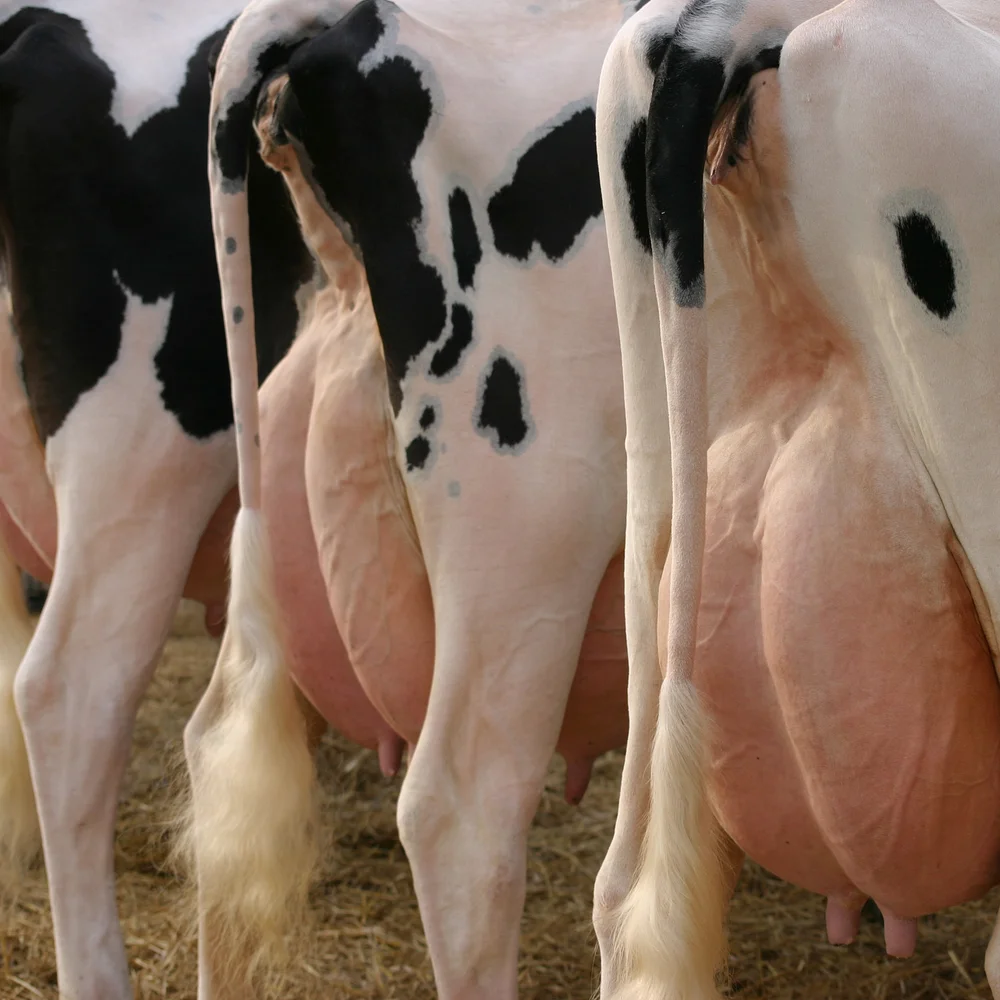
What they found rewrote the assumption that had misled everyone for two years. Only one specific subtype—N-linked sialic acid receptors—can bind to this strain of bird flu. When the team looked specifically for those receptors, the pattern flipped entirely. They were virtually absent in the cows' airway tissue. But in the udder, they were everywhere.
Using electron microscopy, the researchers watched the difference at the cellular level: a pseudovirus carrying H5N1's surface proteins simply would not attach to bovine respiratory tissue. But it stuck readily to the epithelial cells lining the mammary gland. The udder wasn't an unlucky bystander. It was, in Kuchipudi's words, a "perfect breeding ground."
That single discovery answers the question that nagged at officials since spring 2024: why did a virus famous for destroying lungs instead destroy udders? The virus followed the receptors—and in cows, they were in a tissue nobody was checking for avian flu.
There's an unsettling practical detail: infected cows shed enormous quantities of virus directly into their milk. "This raised concerns about occupational risk for farm workers," Kuchipudi said. "Also, there is a habit of feeding raw milk to domestic pets, like cats, and there have been instances of cats dying." Pasteurization reliably kills the virus—the danger sits specifically with raw, unpasteurized milk.
A Map for the Next Surprise
The real significance may not be the answer itself, but the method. Kuchipudi's team systematically mapped exactly which glycan subtypes are present in which tissues in which species—offering a way to get ahead of the virus instead of discovering its next move only after an outbreak is underway.
"We can preemptively screen different species and different tissues within them for susceptibility," Kuchipudi said. "The lessons learned could potentially help prevent us from being caught by surprise again."
That is not a small claim. H5N1 has already shown it doesn't play by old assumptions—respiratory in birds, mastitis in cows, neurological in cats. If receptor mapping can predict which tissue a virus will target before the first sick animal appears, it could shave weeks or months off the time to contain the next spillover.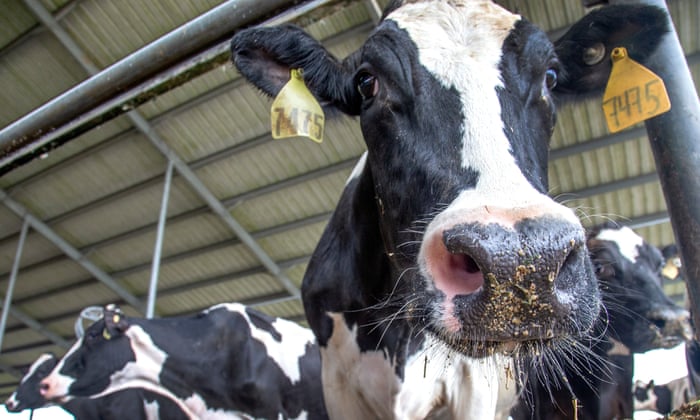
Where the Outbreak Stands Now
More than a thousand herds across nineteen states have tested positive since the outbreak began, and new cases continue to surface. The CDC has confirmed 71 U.S. human H5 cases since February 2024, the majority tied to dairy or poultry exposure, mostly mild conjunctivitis with no confirmed person-to-person spread. A second genotype, D1.1, has appeared in cattle in Nevada and Arizona, and lab studies suggest it may be somewhat better adapted to human airway tissue—a detail public health officials are watching closely.
Expert Perspective
For Kuchipudi, the udder mystery is a case study in how influenza keeps outmaneuvering assumptions. "We hadn't even remotely considered that cattle could be a host," he said—an admission that says as much about the virus's unpredictability as any data point in the paper. The tools that finally cracked the cattle mystery are now being positioned as a first line of defense against the version of H5N1 that has not yet shown its hand.
What This Means for You
If you drink milk, pasteurization works—there is no evidence of infectious H5N1 in pasteurized dairy products. The risk is concentrated in raw, unpasteurized milk—for people and especially for pets. If you own cats and have access to raw milk, this research is a direct warning: do not feed it to them. For farm workers, the virus sheds heavily into milk, and basic precautions remain the front line. For everyone else, the bigger takeaway is that a virus this adaptable can show up where nobody is looking—which is why research like this matters.
Conclusion
It took two years, a glycomics expert, electron microscopes, and co-authors across four institutions to answer a question that started with a few sick cows in the Texas Panhandle. H5N1 has already proven it can adapt to species nobody expected, cause symptoms nobody predicted, and travel further than the public health playbook anticipated. The next time it does something unprecedented—and researchers widely expect it will—the difference between catching it in weeks versus months may come down to exactly the kind of receptor map this team just built.



