Addis Ababa / Mekelle
Less than two weeks after African leaders met in Luanda and pledged to close the gap between early warning and early action, northern Ethiopia is presenting the African Union with exactly the case it said it was preparing for — and one of the world's largest human rights organizations is now publicly asking why the machinery has not been switched on.
Human Rights Watch, in a statement issued Sept. 9, warned that escalating tensions between Ethiopia's federal government and the Tigray People's Liberation Front are testing whether the continental body can convert its newly validated conflict-prevention tools into practice. "The AU should act before escalating tensions spiral out of control," the organization said, calling on it to intensify engagement with both parties and to require public reporting on compliance with the peace agreement it brokered nearly four years ago.
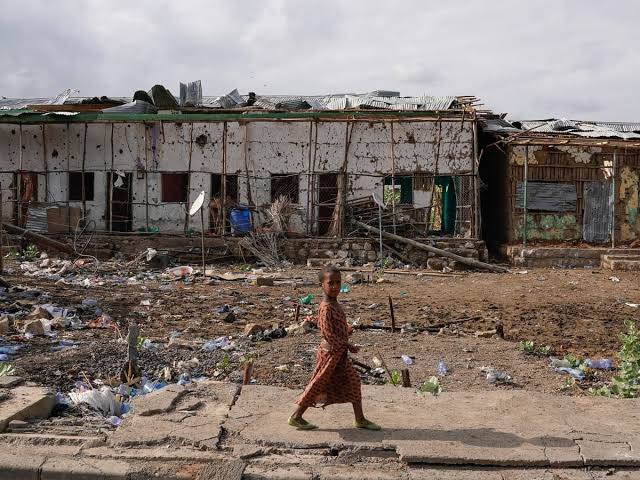
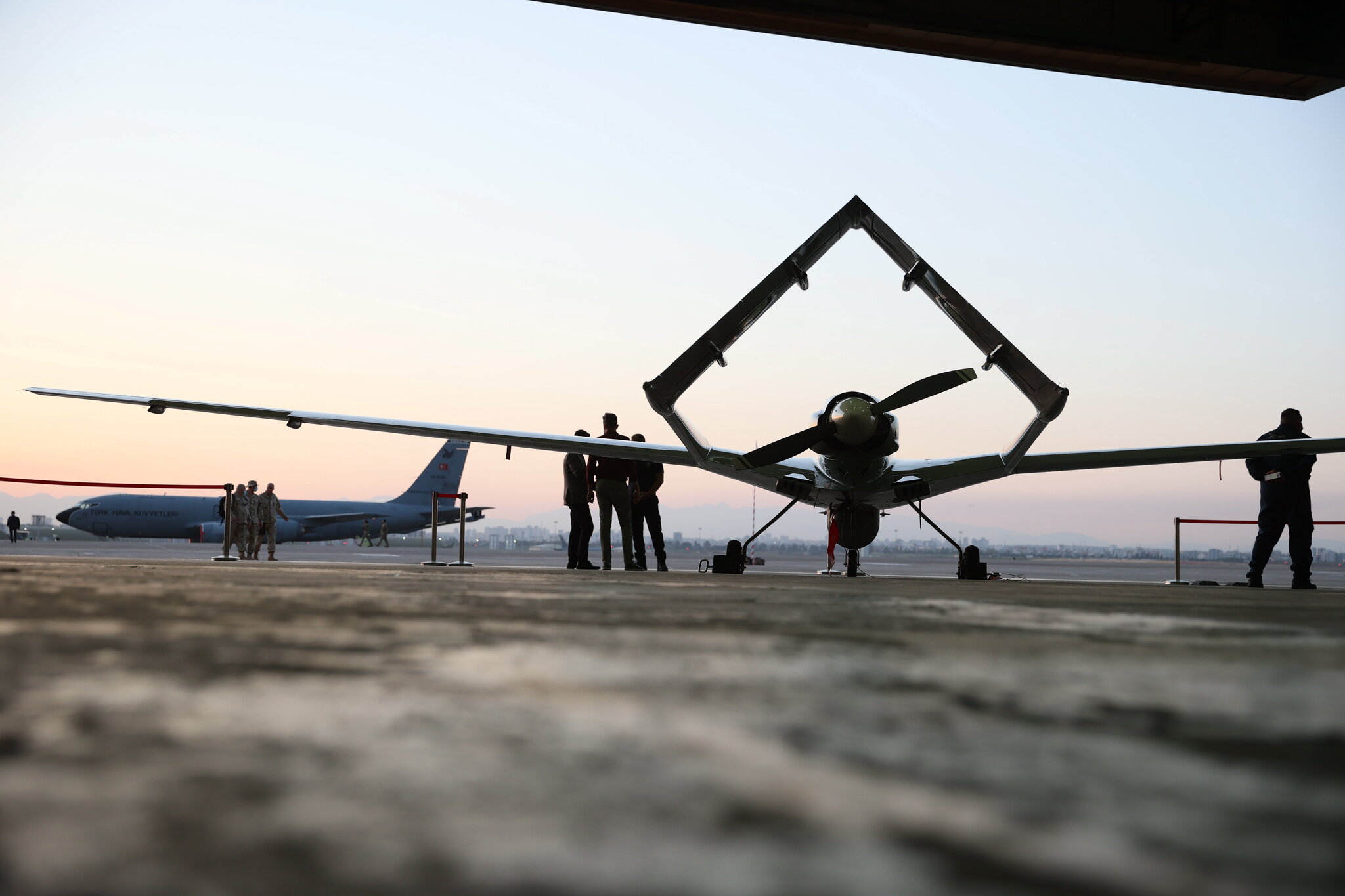
The warning came a day after a series of drone strikes reportedly killed three people, including a two-year-old child, and injured four others in the MyShumet area near Freweyni, in the Hintalo district of southeastern Tigray.
What happened on Sept. 8
The strikes began at around 2 a.m. and hit what the district administrator, Goytom Tesfay, described to Tigray Television as a civilian residential area. The district administration accused the Ethiopian government of deliberately targeting civilians, alleging that the strikes formed part of a continuing campaign against the people of Tigray.
Addis Standard, which reported the incident, said the allegations could not be independently verified and that there was no immediate statement from the Ethiopian government. That caveat applies to almost everything reported from Tigray at present: access is constrained, both parties are contesting the narrative, and the federal government has largely declined to respond publicly to specific allegations.
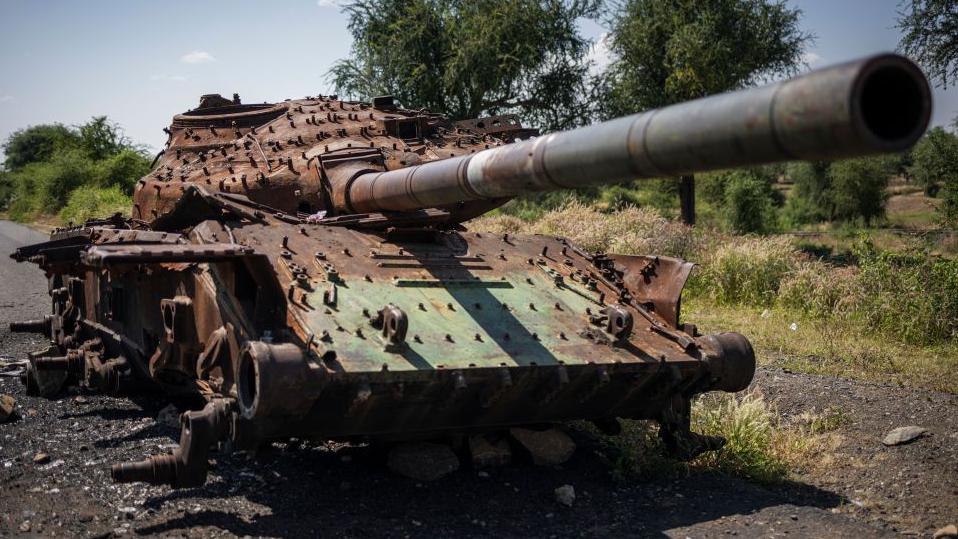
The strike is not isolated. It follows heavy fighting in August between Ethiopian federal forces and Tigrayan forces near the border with Sudan, with reports of artillery and drone strikes.
The Tigray Education Bureau, in a statement issued in Mekelle on Aug. 27, accused the federal government of intensifying attacks on the region's education sector as it prepared for the 2026/27 academic year. "The primary reason for intensifying airstrikes targeting schools and teachers specifically this week is that the registration period for the upcoming 2026/2027 academic year has arrived," the bureau said. It cited a January airstrike on Zalaqme Primary School in Kola Tembien woreda that it said destroyed four classrooms and prevented 432 enrolled students from returning; an Aug. 10 drone strike on Merewa General Secondary School in Raya Alamata woreda that damaged four classrooms and affected the planned return of more than 800 students; an Aug. 20 airstrike on teachers' housing in the Hawelti sub-city of Mekelle that it said injured more than 14 teachers and family members; and an Aug. 26 drone strike on Gejet General Secondary School in Seharti woreda, serving about 500 students, which it said destroyed classrooms and 35 computers supplied through the World Bank-supported General Education Quality Improvement Program for Equity. The allegations were not independently verified, and the federal government had not publicly responded to them.
The agreement that is coming apart
The November 2022 Cessation of Hostilities Agreement, signed in Pretoria under AU mediation, ended a two-year war that brought mass killings, displacement, sexual violence and the collapse of essential services across northern Ethiopia. It has held, in the narrow sense that full-scale war has not resumed. It has not held in almost any other sense.
Tensions have grown for more than a year over implementation. Both parties accuse the other of military mobilization. The core disputes the agreement deferred — the status of contested territories, above all Western Tigray; the safe return of displaced people; and the disarmament of Tigrayan forces — remain unresolved, millions displaced by the war have not gone home, and accountability for wartime abuses has been postponed indefinitely.
Human Rights Watch has documented abuses on both sides during that drift. In April 2026 it reported continuing abuses against Tigrayans by authorities and security forces in Western Tigray. In July 2026 it documented Tigrayan authorities forcibly recruiting civilians, including children as young as 15. The AU itself first expressed concern about rising tensions in Tigray as far back as March 2025.
The mediation channel has broken down
What distinguishes the present moment from earlier scares is that the process meant to absorb the tension is now itself a subject of dispute.
In a statement issued Sept. 6, the TPLF criticized the peace efforts of former Nigerian President Olusegun Obasanjo, who holds an African Union mandate, saying his mediation "lacks neutrality, concrete proposals" and any clear path toward meaningful dialogue. The front questioned whether the initiative is independent of the federal government and called for any process to be led by an impartial and independent mediator.
The TPLF's account is specific. It said Obasanjo visited Tigray in June 2026 and promised to return within one or two weeks but did not do so for nearly two months. It said he later explained that federal officials had asked him not to advance his initiative until Ethiopia's National Dialogue conference had concluded — which the TPLF took as evidence that his work was shaped by one of the parties. It said his visits have come at moments when the federal government wanted to demonstrate to the international community that it was pursuing peace, and that they lacked prior consultation, concrete proposals or transparent agendas.
The most recent visit illustrates the problem. Obasanjo traveled to Mekelle on Aug. 24 and met Tigray Regional President Debretsion Gebremichael — without a prior appointment, according to the regional president's press secretariat. Tigray authorities said afterward that the talks produced no new proposals or tangible progress from the federal government, and expressed disappointment at the lack of follow-up to June discussions in which five issues had been identified as possible entry points for dialogue.
The TPLF also said the agreement itself has failed to deliver meaningful change, arguing that inadequate monitoring by the AU High-Level Panel and international partners allowed implementation to fall largely under federal control. It accused the federal government of maintaining an economic blockade, military siege, political pressure and psychological warfare against Tigray, and alleged continued drone reconnaissance and attacks, troop and weapons deployments, and attacks on Tigray forces in Sheraro. It pointed to remarks Prime Minister Abiy Ahmed made in the House of Peoples' Representatives, which it read as indicating that the agreement no longer carries significance for his government. It further rejected what it described as the invocation of the Nigerian Civil War and the Biafra experience as a model for resolving the Tigray conflict, noting that Biafra involved siege, blockade and starvation before ending in the defeat of Biafran forces.
Despite all of it, the TPLF reiterated that it is ready to take part in a credible, reality-based and time-bound process aimed at a fair and lasting peace — provided the mediator is independent.
Washington, for its part, has backed Obasanjo. U.S. Ambassador to Ethiopia Ervin Massinga and Walter Parks, chargé d'affaires of the U.S. Mission to the African Union, welcomed his latest visit, said his role in carrying out his AU mandate remained critical, and expressed hope he would return to Tigray soon. They also urged leaders to prioritize the worsening drought and to ensure that displaced people can return home safely.
The AU's machinery, and its conflict of interest
The AU has spent 2026 building exactly the instruments this situation calls for. On Aug. 12, its Peace and Security Council called for strengthening the Continental Early Warning System to bridge the gap between early warning and early action. On Aug. 24, it validated a new Trigger Model for Early Warning and Response, designed to connect identifiable risks to timely preventive measures. Days later, at the 26th extraordinary session of the AU Executive Council in Luanda on Aug. 29, African leaders emphasized conflict prevention, mediation, and early warning and early action.
Human Rights Watch's argument is that northern Ethiopia is the concrete opportunity to use them. It urged the AU to assess whether the existing mediation arrangement needs strengthening, and to call for public reporting by the Monitoring, Verification and Compliance Mechanism established under the Pretoria agreement — including on allegations of remobilization and abuses against civilians.
That last recommendation is the pointed one. The mechanism exists and has produced no public compliance reporting that either party can be held to. In its absence, each side's claims about mobilization and violations circulate unadjudicated, which suits whichever party is closer to breaching the agreement at any given moment.
The obstacle is structural, and HRW named it in a single clause: Ethiopia is a member of the AU Peace and Security Council. It is also the AU's host state. A continental body headquartered in Addis Ababa and including the accused party on the very council that would authorize action is poorly designed to move quickly against a member state's air force.
Analysis: what a stalled ceasefire looks like before it fails
Ceasefires rarely collapse on a single day. They erode through exactly the sequence now visible in northern Ethiopia: unresolved territorial questions, a monitoring body that does not publish, a mediator one side no longer accepts, forced recruitment on one side, aerial strikes on the other, and a political discourse in which each party's core constituency is told the other is preparing to attack.
The commentary now emerging from Tigray reflects how far the political frame has shifted. Writing in Addis Standard on Thursday, Gebremichael Negash — a civil society figure displaced from Western Tigray — argued that Eritrea's independence should be read not as any single party's decision but as the outcome of decades of coercive centralization and failed attempts to settle self-determination by force, and warned that Ethiopia risks repeating it. "When justice disappears and force replaces consent, unity becomes increasingly fragile," he wrote, framing the central question as whether Ethiopia can build an order in which Tigrayans remain in the federation "by choice rather than fear." That such an argument now appears in a mainstream Addis Ababa outlet is itself a data point: nearly four years after Pretoria, the debate has moved from implementation to whether the federal arrangement is salvageable at all.
What to watch
Whether the AU Peace and Security Council convenes on northern Ethiopia specifically, and whether it invokes the Trigger Model it validated on Aug. 24 — the first practical test of whether that model is an instrument or a communiqué. Whether the Monitoring, Verification and Compliance Mechanism publishes anything at all. Whether Obasanjo returns to Mekelle, or the AU supplements him with a mediator the TPLF will accept. And, in November, the fourth anniversary of an agreement that both signatories increasingly describe in the past tense.
Published By | News Editor