Written By | International News Desk
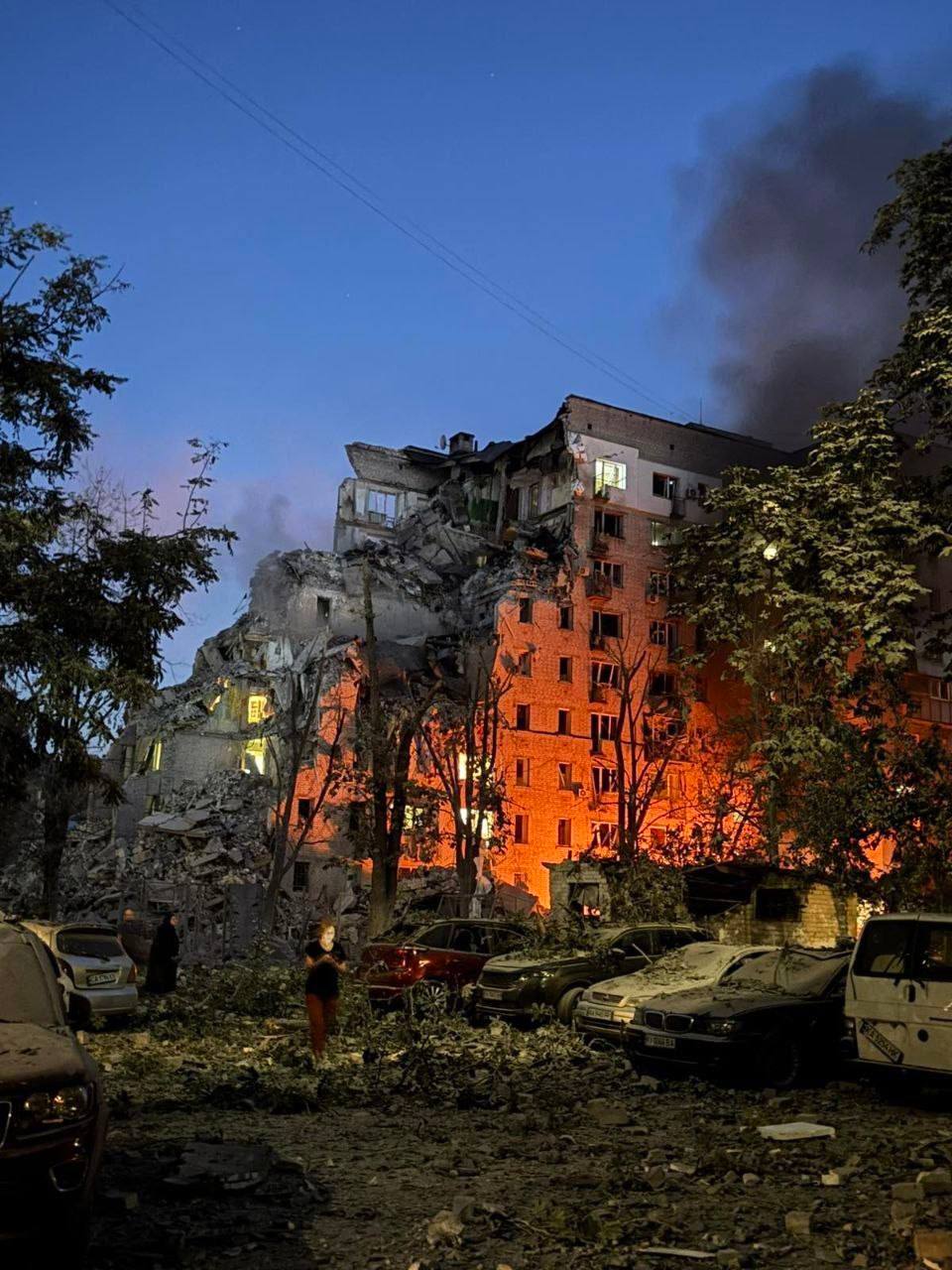
570 drones and missiles pound Ukraine’s capital hours after Zelensky’s warning, killing over a dozen and rattling NATO’s eastern flank
Background
Russia’s war on Ukraine entered its fifth year in 2026, and the summer has brought no sign of the conflict winding down despite months of on-and-off diplomacy. Earlier in the year, the Trump administration pressed both Kyiv and Moscow to reach a deal by the start of summer, and trilateral talks were floated, with Miami mentioned as a possible venue. Those efforts stalled by spring; the Kremlin cited competing American priorities, and by late June the two sides had settled into what analysts described as a “situational pause” in negotiations, punctuated mainly by prisoner exchanges rather than any movement on the core issues dividing them.
Russian President Vladimir Putin has periodically signaled openness to resuming talks on the basis of the 2022 Istanbul framework, but Ukrainian officials and Western observers have treated those overtures skeptically, viewing them as an attempt to buy time while Russian forces pressed a summer offensive aimed at seizing more Ukrainian-held territory around Kyiv-controlled areas. That offensive is widely reported to have fallen short of its objectives, and Ukraine has in recent weeks intensified its own long-range drone campaign against Russian oil refineries, military facilities and other targets deep inside Russian territory — a shift that Ukrainian officials have described as evidence the war’s momentum was turning in Kyiv’s favor.
It is against this backdrop that Russia carried out the strike that hit Kyiv in the early hours of July 2. The territorial dispute remains the central sticking point in any eventual settlement: Moscow continues to demand Ukraine cede land in the east and south, terms Kyiv has rejected as unrealistic, and the two sides remain far apart on questions of security guarantees, sanctions relief and the shape of any postwar arrangement.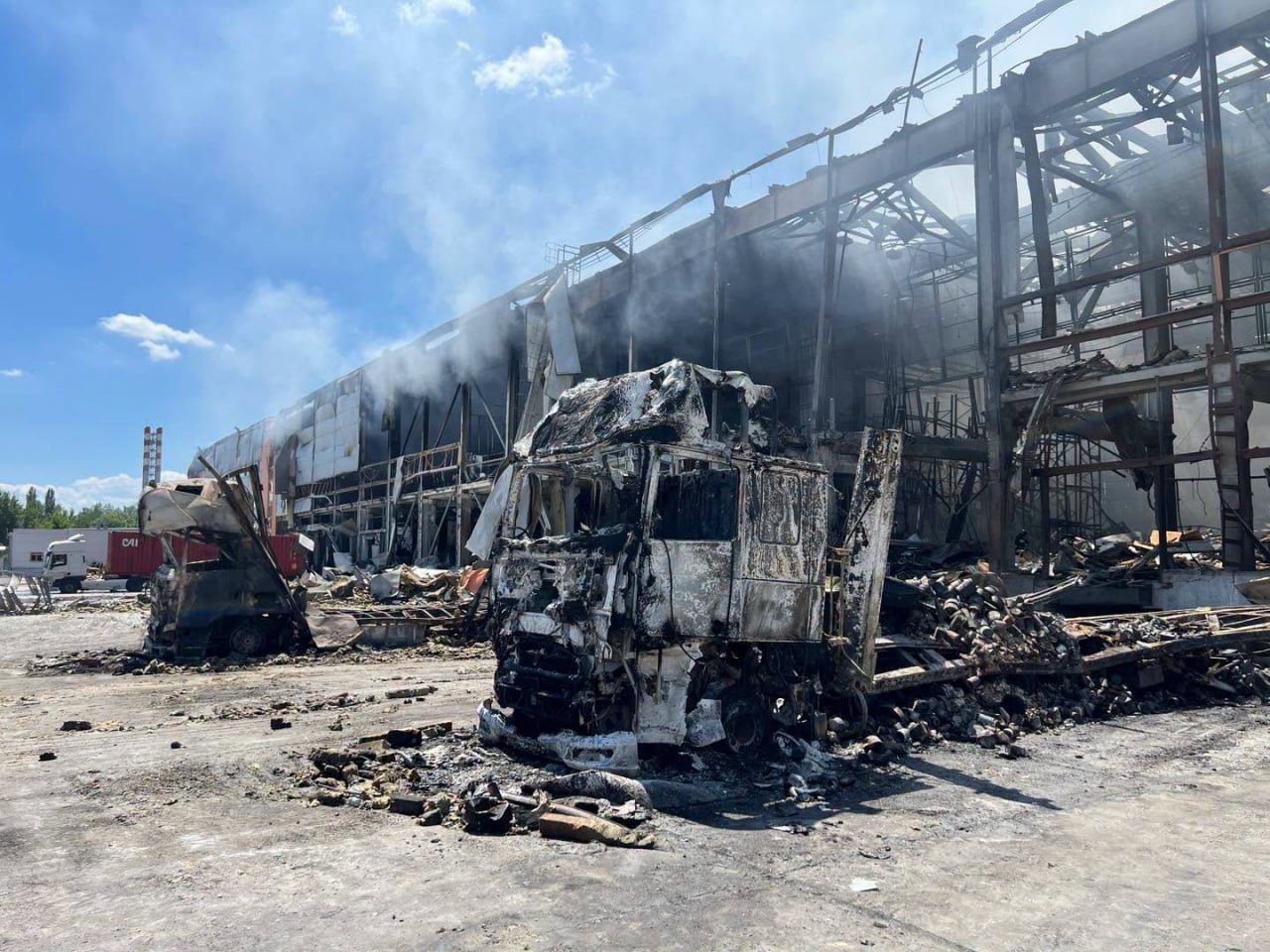
Key Developments
Ukrainian President Volodymyr Zelensky warned publicly, during a joint news conference in Dublin with Irish Taoiseach Micheal Martin on July 1, that Russia was preparing a “massive” strike, and said he was cutting his trip short to return to Ukraine. He accused Putin of refusing to end the war, saying that despite messages conveyed through both official and unofficial channels urging Moscow to stop, “he sees only further aggression against Ukraine and against other neighbors and Europe as a whole.” Hours later, his warning proved accurate.
Russia launched what Ukrainian and independent monitors described as one of the largest combined missile-and-drone barrages of the war: roughly 570 drones and missiles fired at targets across Ukraine overnight into July 2, with Kyiv absorbing the brunt of the attack. Ukraine’s air force said it intercepted 524 of the incoming targets, but the sheer scale of the assault — which combined ballistic missiles, cruise missiles and jet-powered attack drones launched from multiple directions over roughly 11 hours — overwhelmed air defenses in several districts of the capital.
Casualty figures varied somewhat by source as the picture developed through the day. Kyiv Mayor Vitali Klitschko put the toll at 13 killed and at least 86 injured in strikes on the capital; other early wire reports cited figures ranging from eight to more than a dozen dead, a discrepancy typical of the chaotic first hours after a mass-casualty strike, before official counts are finalized. Russia’s Defense Ministry described the operation as a “massive strike using long-range precision air, land and sea-based weapons and attack drones,” saying it targeted military-industrial facilities and fuel and energy infrastructure in Kyiv and the surrounding region, as well as military airfields in the Dnipropetrovsk, Poltava, Cherkasy and Chernihiv regions. Ukrainian officials disputed that characterization, pointing to fires and the destruction of residential apartment blocks across multiple city districts, with damage reported at roughly 30 locations.
The scale of the attack triggered precautionary responses beyond Ukraine’s borders. Poland, a NATO and EU member bordering Ukraine, briefly scrambled fighter jets and placed ground-based air defense and radar systems on heightened alert as a preventive measure; Warsaw later said no Polish airspace violation had occurred and stood the jets down. Finland separately imposed a temporary aviation restriction zone over the eastern Gulf of Finland before lifting it once the immediate risk passed. Neither country reported direct damage or incursions, but the scrambles underscored how a strike of this magnitude reverberates across NATO’s eastern flank even when it does not cross an alliance border.
Ukraine’s ambassador to the United States said residents across Kyiv had spent the night sheltering from the barrage, describing fires and the destruction of residential buildings in several districts. The attack came just days before Zelensky is due to attend a NATO gathering where he plans to press allies for additional air-defense support, specifically American-made Patriot PAC-2 and PAC-3 interceptor missiles, whose limited supply has repeatedly constrained Ukraine’s ability to shoot down the largest Russian barrages.
Beyond the immediate military picture, the strike underscores how thoroughly the war’s long-range strike campaigns have escalated on both sides in 2026. Where earlier phases of the conflict were dominated by grinding fighting along a relatively static front line, recent months have seen both Moscow and Kyiv devote growing resources to deep-strike capabilities aimed at each other’s energy infrastructure, defense industry and military logistics far from the front. That shift has raised the stakes for civilians in cities on both sides of the border, since these strikes routinely land in dense urban areas even when officials describe their targets as military or industrial in nature, and it has made large-scale civilian casualty events like Thursday’s strike on Kyiv a recurring rather than exceptional feature of the war.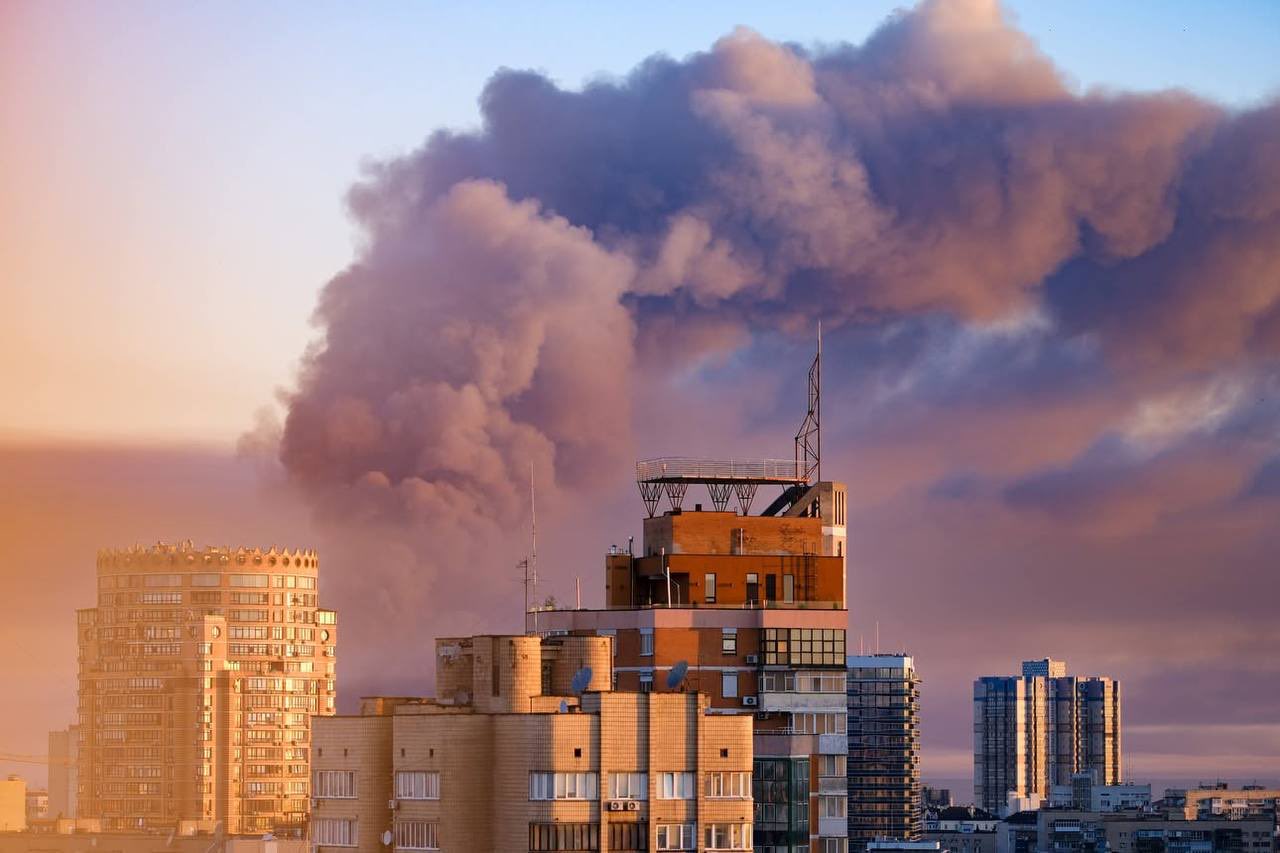
Reactions
Zelensky framed the strike as proof that Moscow has no genuine interest in ending the war, telling reporters that Russia’s leadership was “completely refusing to end the war” despite repeated Ukrainian and Western efforts to open a path to talks. He renewed his appeal for expanded Western air-defense assistance, describing US support as “absolutely necessary” if Ukraine is to blunt future attacks of this scale.
Western governments, still absorbing the details of the strike as the day progressed, largely echoed familiar lines of condemnation and solidarity, while NATO members Poland and Finland demonstrated through their scrambles that they remain on a hair-trigger footing given the unpredictability of Russian strike patterns near their airspace. Russian officials, for their part, defended the operation as a legitimate military response to Ukraine’s own escalating strikes on Russian energy and military infrastructure, framing it within the broader tit-for-tat logic that has characterized the war’s long-range strike campaigns on both sides in recent months.
Independent Ukrainian and Russian-language outlets covering the war, including the Kyiv Independent and Ukrainska Pravda, emphasized the unusual intensity and technical sophistication of the barrage — noting the simultaneous use of multiple weapon types launched from different directions as a deliberate tactic to saturate and overwhelm air defense networks, rather than simply a larger-than-usual volume of the same weapons used in prior strikes.
What’s Next
In the immediate term, attention turns to Zelensky’s planned appearance at the upcoming NATO conference, where the strike is likely to sharpen his case for accelerated delivery of interceptor missiles and other air-defense systems. Whether allies move quickly on that request, given competing demands on Western stockpiles from other theaters, will shape how well Ukraine can blunt the next large-scale barrage, which officials on both sides of the conflict increasingly treat as a matter of when rather than if.
On the diplomatic track, the strike is unlikely to revive the stalled trilateral talks in the near term; if anything, it illustrates why the “situational pause” described by the Kremlin this spring has produced little tangible progress. Putin’s stated willingness to negotiate on the basis of the 2022 Istanbul terms remains, in Kyiv’s view, effectively a demand for concessions Ukraine is not prepared to make, and Thursday’s attack will likely reinforce Ukrainian and Western skepticism that Moscow is negotiating in good faith. Meanwhile, Ukraine’s continued long-range strikes on Russian refineries and military sites suggest both sides currently see escalation, rather than de-escalation, as the more useful lever heading into the second half of 2026.
Humanitarian and reconstruction needs in Kyiv will also grow more urgent in the strike’s aftermath, with damaged residential blocks in several districts adding to a long list of housing and infrastructure that will need to be rebuilt or repaired regardless of how the wider war eventually resolves.



