HEALTH
The man didn't feel like he was carrying anything dangerous. A mild cough, some fatigue, the kind of thing you shrug off on vacation. He sought medical care in France anyway, almost as an afterthought. Days later, a lab result turned his casual European getaway into an international public health scramble: he was infected with Andes hantavirus, one of the deadliest and strangest viruses on Earth — the only hantavirus known to jump from person to person.
By the time the diagnosis came back, the French-Argentine national had already crossed into Spain, settling temporarily in the coastal region of Galicia. He was, mercifully, asymptomatic by then. Spanish and French health authorities immediately activated contact-tracing protocols, working to reconstruct every leg of his trip and identify everyone he'd been in close contact with along the way. As of this week, he remains isolated and, according to officials, is doing well.
It sounds like a strange, contained footnote. It isn't. This is the second time in three months that Andes virus — a pathogen normally confined to rural stretches of Argentina and Chile — has surfaced on European soil, and the second time health agencies across multiple countries have had to spring into action over it.
The Ghost Of The Hondius
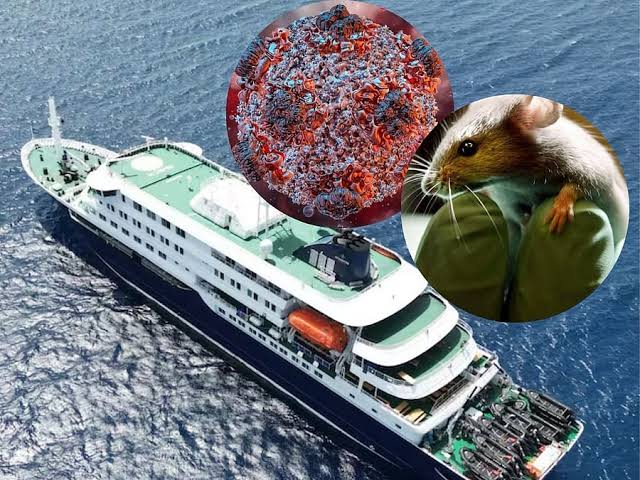
Flashback to May 2026: the Dutch-flagged expedition cruise ship MV Hondius was steaming through the Atlantic when passengers and crew started falling seriously ill with what looked, at first, like an aggressive respiratory bug. It wasn't the flu. It wasn't COVID. Laboratory testing confirmed hantavirus — specifically the Andes strain — coursing through a ship carrying travelers and staff representing 23 countries.
The World Health Organization was notified on May 2, 2026. Within a week, the numbers were already grim: eight cases, three deaths, a case fatality ratio of 38 percent. By the time the dust settled in mid-June, the tally stood at 13 cases — 12 confirmed, one probable — and three deaths, a fatality rate of 23 percent. More than 600 contacts were identified and monitored across 32 countries, territories, and areas, an almost absurd logistical exercise for a virus most Americans and Europeans had never heard of before that spring.
The U.S. Centers for Disease Control and Prevention deployed epidemiologists to the Canary Islands, where the Hondius was due to dock, to run exposure-risk assessments on American passengers one by one. Passengers came home. Headlines faded. On July 2, 2026, the WHO formally declared the outbreak over.
Now, just five weeks later, Andes virus is making news again — a separate, unrelated case, but proof that the virus behind that cruise-ship nightmare hasn't gone anywhere.
Why This Virus Is Different — And Scarier
Hantaviruses, as a family, are usually a one-way street: rodent to human, full stop. You get infected by breathing in dust contaminated with the urine, droppings, or saliva of an infected rodent — cleaning out a shed, opening up a dusty cabin, disturbing a nest in a barn. In the Americas, hantavirus pulmonary syndrome is most commonly associated with deer mice carrying Sin Nombre virus in the western United States. Once you're infected, that's typically where the chain stops. You don't give it to your spouse, your coworker, or the stranger next to you on a plane.
Andes virus breaks that rule. It is the only hantavirus documented to transmit from person to person, most likely through prolonged close contact via respiratory droplets or saliva. It's not casual — you're not going to catch it from someone coughing across a restaurant — but it is real, and it is why a single infected traveler can trigger contact-tracing operations spanning dozens of countries.
The precedent is chilling. Between November 2018 and February 2019, an outbreak in Chubut Province, Argentina, driven by person-to-person spread, produced 34 confirmed infections and 11 deaths — including cases traced to so-called "super-spreaders" who passed the virus to multiple people, according to a case series published in the New England Journal of Medicine. It remains one of the only documented instances anywhere in the world of sustained human-to-human transmission of a hantavirus.

A Disease That Turns On You Fast
Hantavirus pulmonary syndrome, the disease Andes virus causes, has an incubation period of roughly one to eight weeks after exposure. It starts deceptively mild: fatigue, fever, muscle aches, headache, nausea — indistinguishable from a bad flu or a bout of food poisoning. That's the trap. Within days, in serious cases, it can spiral into respiratory failure as the lungs fill with fluid, a phase so dangerous that health officials describe it as a call-911, get-to-an-ER-now emergency.
The numbers are brutal. Case fatality rates for Andes virus hantavirus pulmonary syndrome are generally estimated between 30 and 40 percent, with some hantavirus cardiopulmonary syndrome cases in the Americas historically carrying fatality rates as high as 50 percent among hospitalized patients. There is no approved antiviral treatment and no vaccine. Medicine's only real weapon is supportive care — supplemental oxygen, mechanical ventilation, intensive monitoring — buying the patient's own immune system time to fight the virus off.
Expert Perspective
When the Hondius outbreak was unfolding in May, U.S. health officials were careful to thread a needle between vigilance and alarm. The CDC told reporters at the time that the threat of a widespread outbreak in the general population remained low, emphasizing that Andes virus transmission — even the person-to-person variety — requires sustained, close contact rather than passing exposure. The WHO struck a similar tone with this week's Galicia case, formally assessing the risk to the broader public as low while still activating the full monitoring apparatus around the patient's contacts.
Infectious disease specialists who have studied Andes virus outbreaks caution against reading "low risk" as "no risk." The Chubut Province cluster proved that a single chain of transmission, left unchecked, can produce a two-digit death toll in a matter of months. What keeps these events from becoming true epidemics, researchers note, is aggressive, fast contact tracing — exactly the kind of response Spanish and French authorities mobilized within days of this latest diagnosis.
A Virus With A Short But Violent History
Hantaviruses as a whole have only been on medicine's radar for about three decades. The family first grabbed global attention in 1993, when a mysterious respiratory illness killed a cluster of otherwise healthy young adults in the Four Corners region of the American Southwest — an outbreak later traced to Sin Nombre virus and the deer mice that carried it. Andes virus, the South American cousin responsible for this week's Galicia case, was identified a few years later and named for the mountain range running through the Argentine and Chilean territory where it's endemic.
Its natural reservoir is the long-tailed colilargo, a small rodent common across the temperate forests and shrublands of Patagonia and central Chile. Unlike the deer mouse populations behind most U.S. hantavirus cases, colilargo populations can boom dramatically after wet seasons — a phenomenon locally linked to increased hantavirus spillover into humans, and one that regional health authorities in Argentina and Chile monitor closely every year, largely outside the notice of the rest of the world.
What's changed isn't the virus — it's the travel. A pathogen that once stayed largely contained to rural households near rodent burrows is now showing up on transatlantic cruise itineraries and connecting flights through European hubs. Global tourism, expedition cruising to remote destinations, and dense modern travel networks mean a virus that spent centuries as a regional curiosity can now, in theory, be three flights away from anywhere on Earth within 24 hours of someone falling ill.
What This Means For You
If you're not planning a trip to rural Argentina or Chile, or another Hondius-style excursion, your personal risk from this specific case is close to nil. But the broader hantavirus threat is not exclusively a South American import — it's already living in American backyards. In the western United States, deer mice carrying Sin Nombre virus remain the dominant hantavirus risk, and cases surface every year, including a rodent testing positive near a ranch house in San Diego County earlier in 2026.
Expedition and adventure cruising — the same niche that put the Hondius on international news tickers — deserves a specific mention. These itineraries often dock at remote ports and encourage shore excursions through exactly the kind of rural, rodent-dense terrain where hantavirus exposure happens. Travelers on such trips should ask operators about rodent-control measures in accommodations and avoid entering abandoned structures, sheds, or caves where droppings may have accumulated.
Practical precautions haven't changed: seal up gaps and holes that let rodents into homes, garages, and sheds; set traps rather than letting infestations grow; avoid stirring up dust in areas with rodent droppings without a mask and gloves; and air out enclosed spaces like cabins or storage sheds before cleaning them rather than sweeping dry debris. If you develop flu-like symptoms after any rodent exposure — or after travel through South America or contact with someone who has — and those symptoms progress to shortness of breath or breathing difficulty, treat it as a medical emergency, not a wait-it-out cold.
For international travelers generally, this case is also a reminder of how quickly a private health event can become a multi-country logistical operation in 2026. A single tourist's diagnosis in France triggered a monitoring effort in Spain within days — evidence that health authorities are moving faster than they used to, even for diseases most people can't spell.
The Bottom Line
Andes hantavirus is rare, it's regional, and — for now — it's contained to a single monitored patient in Galicia who is reportedly doing fine. But this is the second European hantavirus scare in a single summer, following a cruise ship outbreak that killed three people and forced a 32-country contact-tracing effort. Rare doesn't mean harmless, and a virus that can pass between people, even under narrow conditions, is a virus health agencies aren't going to stop watching closely. Neither should you — especially the next time you're clearing out a dusty cabin, or wondering why that mild cough on vacation won't quite go away.
Published By | Features Editor