Written By |
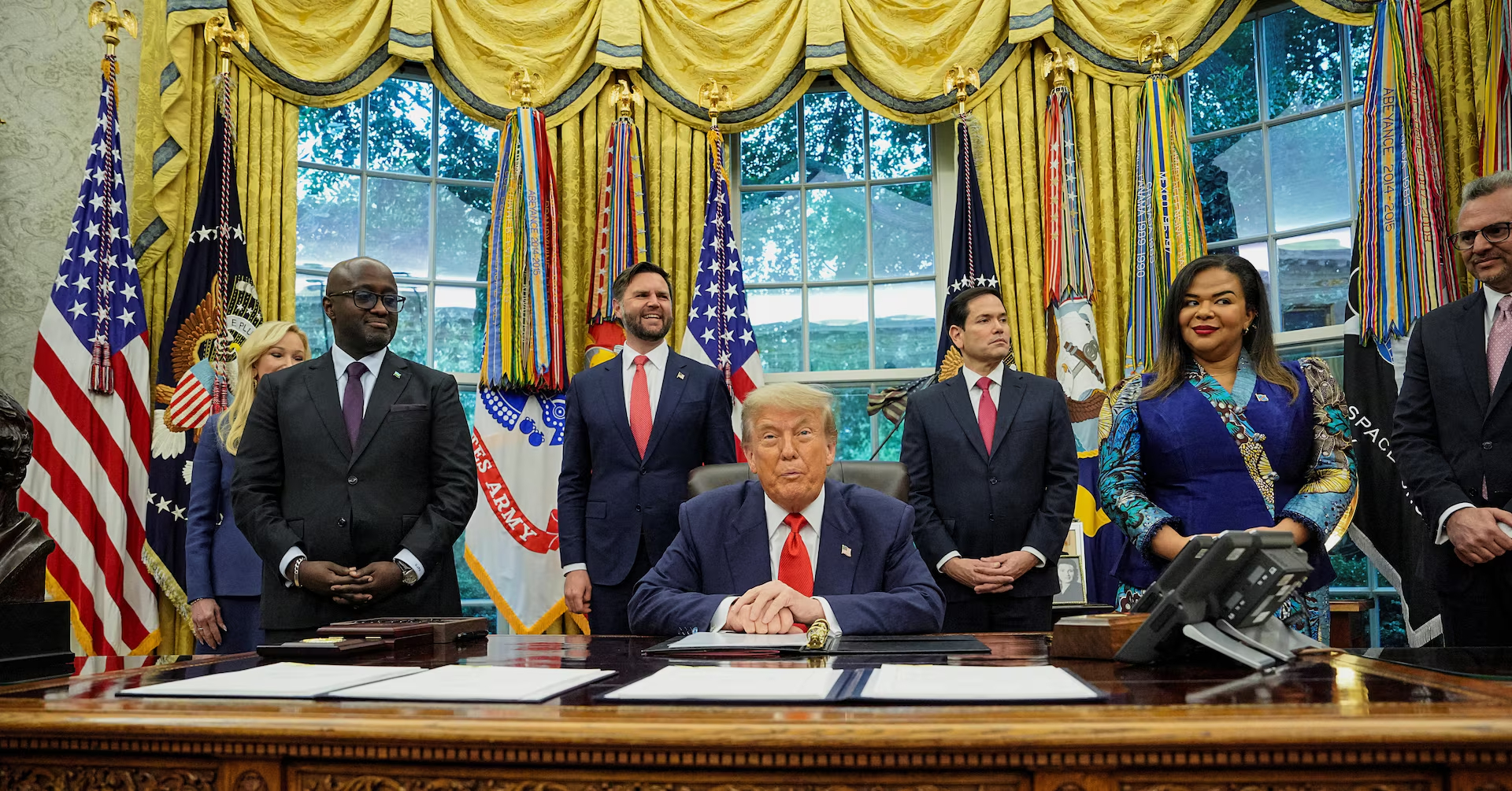
President Donald Trump says the deal gives the United States “a lot of the mineral rights” from Congo
A deal signed in Washington on Friday has been touted as a major step toward peace in the Democratic Republic of Congo, following decades of conflict that have killed millions, including thousands this year. The U.S.-mediated agreement is between Rwanda and the Democratic Republic of Congo, which has been battered by fighting involving more than 100 armed groups. The most powerful of these is backed by neighboring Rwanda — but it remains unclear whether it will abide by the deal, as the group was not part of the negotiations.
President Donald Trump says the deal gives the United States “a lot of the mineral rights” from Congo. His administration has pushed to gain access to minerals critical to much of the world’s technology and aims to counter China’s influence in the region, where U.S. presence and leverage have waned.
Both the Congolese and Rwandan presidents are expected in Washington in a few weeks to “finalize the complete protocol and agreement,” U.S. Secretary of State Marco Rubio said.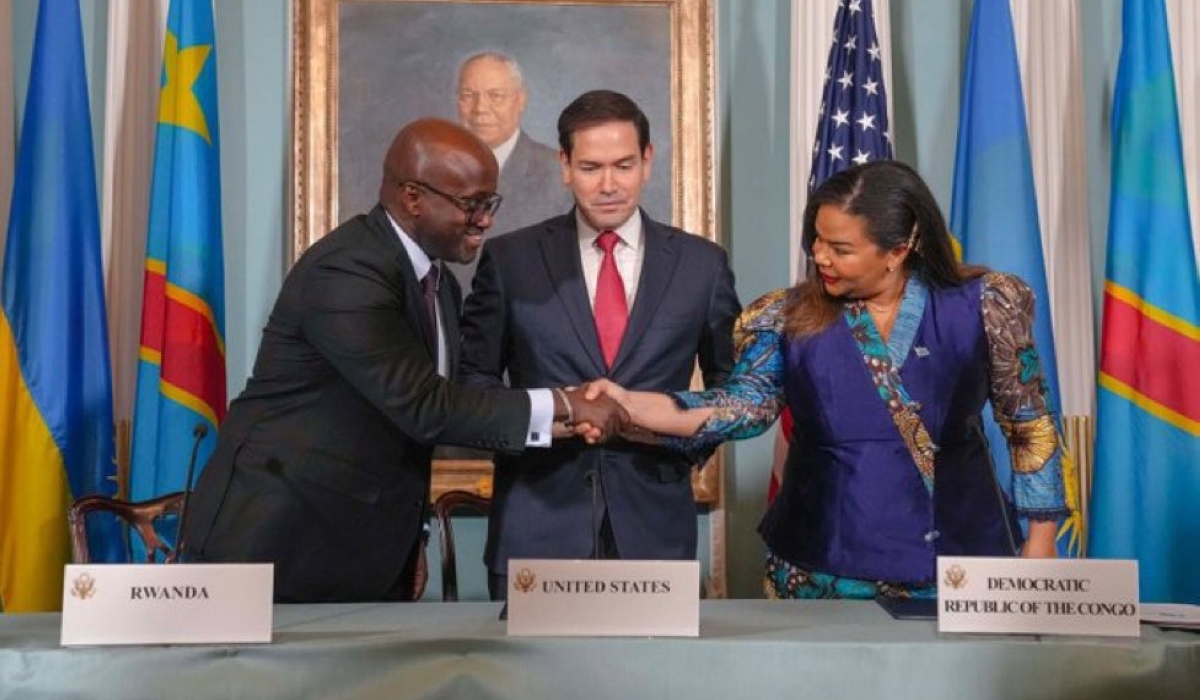
The terms of the deal
The agreement outlines general expectations but lacks detail on how it will be implemented — particularly regarding how the Rwanda-backed M23 rebels will be persuaded to lay down their arms, according to a copy seen by The Associated Press. The deal emphasizes both countries’ sovereignty, territorial integrity and peaceful coexistence, with a commitment to halt all hostilities and end support for armed groups.
Although Rwanda denies supporting the M23 rebels, it claims to be protecting its border and targeting ethnic Hutus whom it accuses of participating in the 1994 Rwandan genocide and later fleeing to Congo to join Congolese forces.
According to the agreement, armed groups involved in the conflict may be reintegrated into the Congolese security forces only after individual vetting based on loyalty, fitness and human rights records.
In what the U.N. has called “one of the most protracted, complex, serious humanitarian crises on Earth,” the deal includes a commitment to protect and facilitate humanitarian access for more than 7 million displaced people in Congo.
The two countries also pledged to create an economic framework “to expand foreign trade and investment derived from regional critical mineral supply chains,” including initiatives that link both countries, in partnership where appropriate with the U.S. government and U.S. investors.
Uncertainty remains over whether hostilities will end
Analysts say it will be difficult for the M23 rebels to withdraw from the cities they seized during their major offensive this year — and that any withdrawal could take a long time or even trigger renewed fighting.
Rwanda is estimated to have thousands of troops supporting the M23 rebels in eastern Congo. Even if Rwanda ends its backing, the M23 has been consolidating its hold on captured cities, setting up local administrative offices and enforcing new governing structures.
A team of U.N. experts said in a December report that Rwanda has been benefitting from minerals “fraudulently” exported from areas under M23 control — an accusation Rwanda denies.
The rebels were not directly involved in the U.S.-facilitated negotiations and have not publicly commented on the deal. Corneille Nangaa, leader of the Congo River Alliance — which includes the M23 — told the AP in March that “anything regarding us which is done without us is against us.”
Rwandan Foreign Minister Olivier Nduhungirehe pointed to separate talks happening in Qatar that aim to get both Congo and the M23 rebels to agree among themselves on how to end the fighting. He also said Rwanda has agreed to lift its “defensive measures,” though it remains unclear whether this means withdrawing troops that Rwanda says are defending its territorial interests.
Source: African News



