Written By | International News Agencies
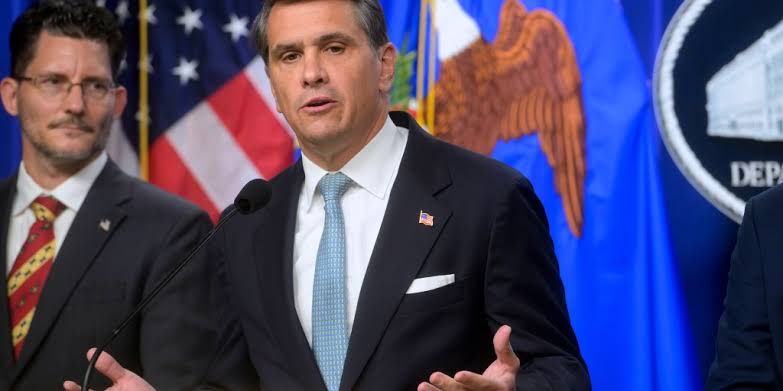
Blanche's path to the nation's top law enforcement post has been unusual
Background
In the early hours of Saturday, August 8, 2026, the United States Senate voted 50-49 to confirm Todd Blanche as the nation's chief law enforcement officer, ending a monthslong confirmation fight that exposed deep fissures within the Republican Party over the independence of the Justice Department under President Donald Trump. The vote came after an overnight session that ran past 4 a.m., timed to wrap up before senators departed for their August recess.
Blanche's path to the nation's top law enforcement post has been unusual. Born in Denver, Colorado, in 1974, he built a career as a federal prosecutor in the Southern District of New York, where he spent more than eight years, including a stint as co-chief of the White Plains division, handling organized crime and financial fraud cases. He later moved into private practice at firms including WilmerHale and Cadwalader, Wickersham & Taft, building a reputation as a capable, if unremarkable, white-collar defense attorney. That changed in 2023, when he resigned from Cadwalader to become Donald Trump's lead defense attorney in the Manhattan hush-money criminal case, in which Trump was ultimately convicted on 34 felony counts of falsifying business records related to a payment to adult-film actress Stormy Daniels. Blanche also represented Trump in the federal cases brought by special counsel Jack Smith over efforts to overturn the 2020 election and the handling of classified documents, both of which were resolved more favorably for Trump.
That personal-lawyer relationship became the central controversy of Blanche's rise through the Justice Department. After Trump's return to the White House in January 2025, he nominated Blanche to be deputy attorney general, the department's No. 2 position, and the Senate confirmed him in March 2025. Blanche, who had previously been aligned with the Democratic Party before formally joining the Republicans in 2024, was elevated further in April 2026, when Trump abruptly fired Attorney General Pam Bondi — who had herself been confirmed only in February 2025 — amid growing frustration over her handling of the Jeffrey Epstein files. Blanche stepped in as acting attorney general on April 2, 2026, and was formally nominated for the permanent post soon after, beginning what would become one of the longest stretches in the department's modern history without a Senate-confirmed leader.
Key Developments
Blanche's nomination hearing before the Senate Judiciary Committee, held July 15, quickly became a flashpoint. Senators pressed him on three fronts that would dog his nomination for weeks: the Justice Department's chaotic handling of the Epstein files, a proposed 'Anti-Weaponization Fund,' and Trump's $10 billion lawsuit against the IRS over the leak of his personal tax returns. On the Epstein matter, Blanche acknowledged that 'mistakes were made' in the document release — which faced criticism both for missing deadlines and, once published, for failing to properly redact victims' personal information and photographs — and apologized to survivors, though he declined to commit to meeting with them personally.
The IRS settlement proved even more damaging to his nomination. Under a deal reached while Blanche led the department, Trump's lawsuit over the leaked tax filings was resolved through a $1.8 billion Anti-Weaponization Fund and a settlement that granted Trump, his family and his businesses effective immunity from IRS audits of past tax returns — this despite the Trump Organization's prior criminal conviction for tax fraud. The arrangement drew a scathing rebuke from federal judge Kathleen Williams, who found in a related case that the government had acted in bad faith, sanctioned DOJ attorneys involved, referred Trump's outside lawyer Alejandro Brito to the Florida Bar, and forwarded findings to disciplinary boards reviewing conduct at the department, including Blanche's own tenure as acting attorney general. Facing a near-revolt among Senate Republicans, including Sens. John Cornyn and Thom Tillis, the department formally rescinded the Anti-Weaponization Fund and narrowed the settlement's scope on August 2 — a concession that allowed the Senate Judiciary Committee to advance Blanche's nomination to the full chamber two days later.
Even with that concession, Blanche's confirmation was never assured on the floor. With Republicans holding only a narrow Senate majority, he could afford very few defections. In the end, two Republicans broke ranks, and combined with unanimous Democratic opposition, the vote landed at 50-49 — the narrowest possible margin by which a nominee can be confirmed without a tie-breaking vote from the vice president.
Reactions
The two Republican defectors, Sens. Susan Collins of Maine and Lisa Murkowski of Alaska, both cited concerns about Blanche's independence from Trump rather than his legal competence. Collins said in a statement that while she believes Blanche 'is a capable lawyer,' she is troubled that 'the Department of Justice has become increasingly political.' Murkowski was more pointed, saying, 'The country needs an Attorney General who will check the worst impulses of this administration. I hope Mr. Blanche is able to achieve that, if confirmed, but I simply do not have confidence that will be the case.'
Democrats were unanimous and unsparing in their opposition. Senate Judiciary Committee member Adam Schiff of California argued ahead of the committee vote that 'the problem with confirming Todd Blanche is that he has never been able to shed his role as criminal defense lawyer for Donald Trump.' California Sen. Alex Padilla echoed that theme after the floor vote, telling NPR that 'Todd Blanche claims he was Donald Trump's personal attorney but is continuing to act as if he's still Donald Trump's personal attorney. The American people deserve better.' In the days since the vote, Senate Democrats have continued to press the point, with members of the chamber's recently formed anti-corruption working group citing Blanche's confirmation as further evidence that institutional checks on the administration are eroding.
The White House, by contrast, hailed the vote as vindication. Trump had publicly pushed for Blanche's confirmation for weeks, framing the fight over the IRS settlement as Senate obstruction rather than a legitimate ethics concern, and administration officials described Blanche as a loyal, capable leader who would finally bring 'stability' to a department that had spent a year cycling through Bondi's firing, Blanche's extended stint as acting attorney general, and continued controversy over Epstein-related records.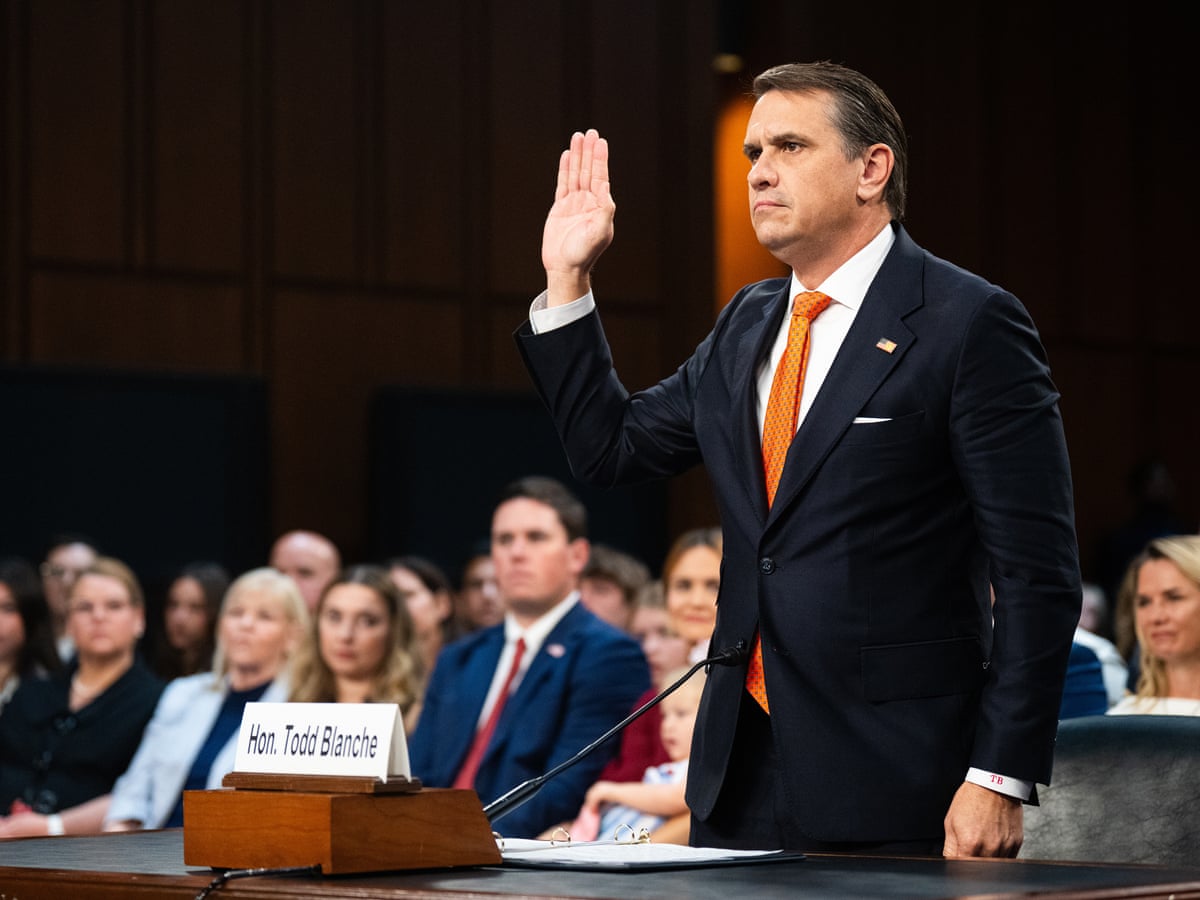
What's Next
Blanche now inherits a Justice Department still working through several unresolved controversies. Judge Williams' bad-faith findings in the IRS case remain under review by state and federal disciplinary bodies, and it is not yet clear whether any of those referrals will ultimately touch Blanche himself, given his role overseeing the settlement as acting attorney general. Congressional Democrats have signaled they intend to use oversight hearings and document requests to keep pressure on the department over both the Epstein files and the IRS settlement, betting the issues will resonate with voters ahead of the November midterms.
Blanche will also have to manage a department stretched thin by an unusually turbulent year, including fallout from earlier special counsel investigations, immigration enforcement disputes, and the department's role in implementing several of Trump's more aggressive executive actions, including efforts to end birthright citizenship that remain tied up in litigation after the Supreme Court's June ruling upholding the practice. Separately, the Senate Homeland Security Committee's early-August contempt referral against Dr. Anthony Fauci, over his refusal to answer questions about COVID-19's origins, now sits on Blanche's desk as one of his first prosecutorial decisions as permanent attorney general — a case that will test both his independence and his relationship with a Republican conference still divided over how aggressively to wield DOJ's power against the administration's perceived adversaries.
For now, Blanche is expected to be sworn in within days, formally closing out more than four months in which the country's chief law enforcement post was held on an acting basis. Washington will be watching closely to see whether the concerns raised by Collins and Murkowski — that the department has become an extension of the president's personal legal team rather than an independent check on his power — prove prescient in the months ahead.



