Written By | Health News Agencies
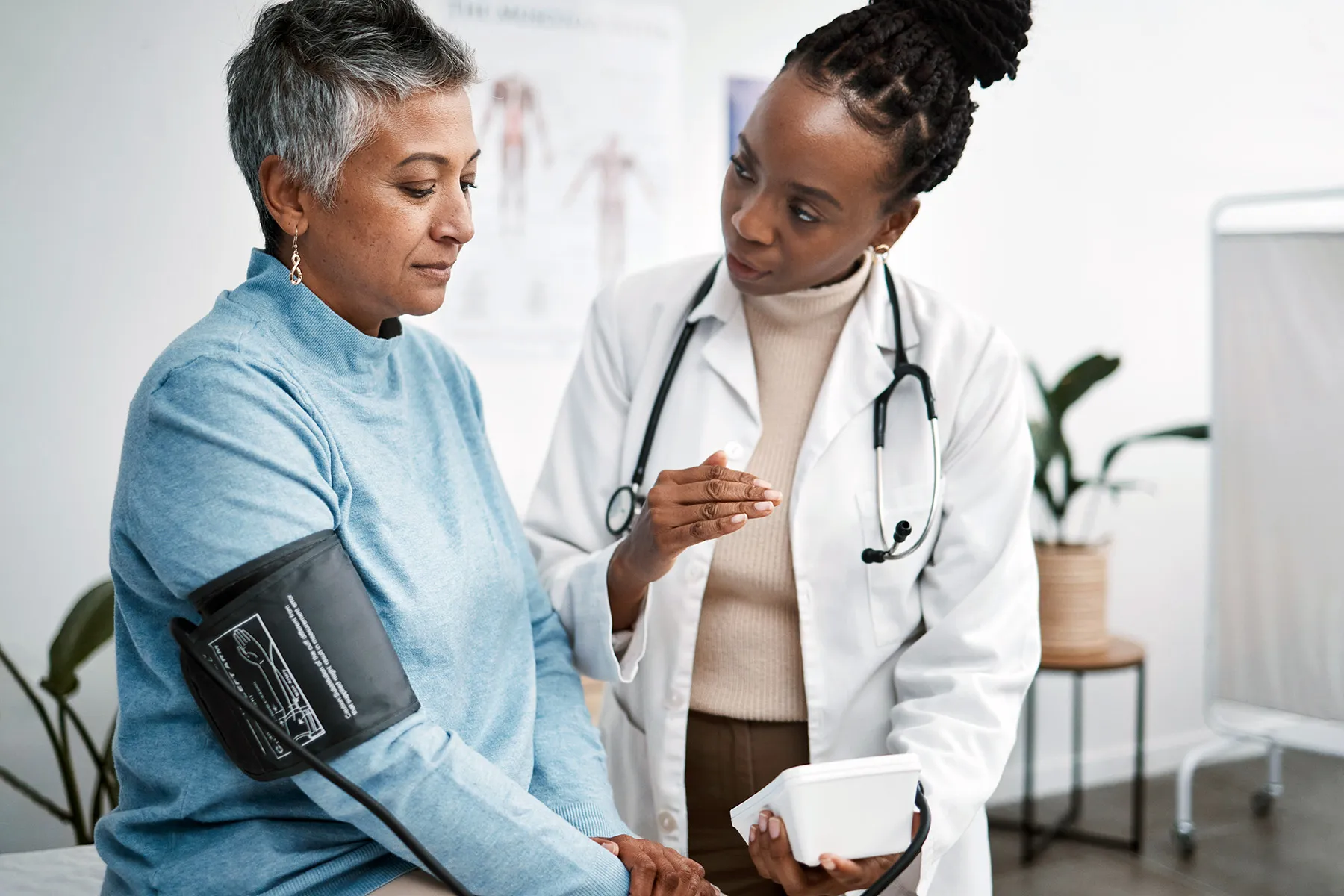
The biggest blood pressure check-up England has ever seen measured more than 1.3 million arms
HEALTH
You feel fine. You sleep, you work, you walk the dog. There is no headache, no dizziness, no warning at all. And yet, inside your arteries, the pressure is quietly doing damage that could end in a stroke or a heart attack.
For millions of adults in England, that is not a hypothetical. It is their life right now, and they do not know it.
A huge new study from the University of Oxford, published this week in BMJ Public Health, has put hard numbers on what doctors have long feared. Of every ten people with high blood pressure, about six have never been diagnosed and are taking nothing for it. And among those who have been diagnosed and are on tablets, half still have blood pressure that is too high.
The lead author, Oxford medical statistician Wenyu Liu, did not mince words. Hypertension is largely a "silent killer," Liu said, and "the current approach to detecting and treating high blood pressure is not fit for purpose."
THE BIGGEST CHECK-UP OF ALL
What makes this study different is its sheer size, and the fact that nobody was asked to guess.
The data comes from Our Future Health, the UK's largest health research programme. Between 2022 and 2025, volunteers across England walked into more than 200 enrolment centres, where staff measured their blood pressure in person. Participants also answered questions about their health, lifestyle and medicines.
After removing unreliable readings and people with serious illnesses such as kidney failure, heart failure, liver failure and cancer, the Oxford team was left with 1,312,551 adults. For comparison, the government's regular national health surveys typically cover only around 4,000 households a year.
The researchers used the World Health Organization's definition of high blood pressure, or hypertension: a reading of 140/90 mmHg or higher, or already taking blood pressure-lowering medicine.
THE NUMBERS THAT SHOULD WORRY EVERYONE
Here is what they found.
Broken down further, among men the rate rose from 23% in the youngest group to 73% in the oldest. Among women it rose from 10% to 69%.
Some press coverage, including the university's own headline, rounded the undiagnosed figure up to "two-thirds." The study's precise number is 58.8%, closer to six in ten. That is still a shocking figure, and the authors call it "the most striking finding" of the whole study.
"NOT CONFINED TO A PARTICULAR GROUP"
It would be comforting to think this is a problem for somebody else: the elderly, the overweight, people with a family history. The study says otherwise.
Yes, older age, being male, carrying extra weight and having a personal or family history of heart disease or diabetes all raised the odds. Black participants had higher odds of hypertension than white participants once age was taken into account.
But the researchers stressed that there was no demographic group where high blood pressure wasn't a widespread problem. Even among younger, leaner adults with no family history, the numbers were too high to ignore.
"This isn't a problem confined to a particular group; it's substantial across almost every demographic we examined," Liu said. Liu also pointed out that more than 15% of younger adults already had high blood pressure, even though they are not yet eligible for an NHS Health Check, which is offered to people aged 40 to 74.
Worse still, the authors say, progress has stalled. Detection and control improved significantly during the 2000s, but have largely flatlined since around 2011, with signs that things got worse after the Covid-19 pandemic disrupted routine care.
WHY IS THE SYSTEM LEAKING?
The researchers describe what is happening as a "leaky cascade of care." People start with high blood pressure, and at every stage (getting diagnosed, getting treated, getting it under control) a big share fall through the cracks.
They point a finger at current NICE guidelines. Before a diagnosis is confirmed, those rules usually require more than one reading, often including home monitoring or a 24-hour monitor, and they recommend lifestyle advice before tablets for many patients. The idea is sensible: to avoid labelling people with "white coat" hypertension, whose pressure only spikes because they are nervous in a clinic.
But the Oxford team argues this careful, step-by-step approach may be adding delays and letting too many people slip away before they are ever diagnosed or treated. They say the rules on confirming a diagnosis before starting medication should be reconsidered.
The study also looked at a common worry among doctors, especially with older patients: that blood pressure pills cause dizziness and falls. In this data, they found no clear link between taking the medicine and a history of falls.
WHAT THE EXPERTS SAY
Dr Iain Turnbull, a GP, Deputy Chief Medical Officer at Our Future Health and a clinical research fellow at Oxford, said the findings "reflect what we see day to day in general practice." He called for a more proactive approach to finding high blood pressure, and for doctors to consider starting treatment based on a person's overall predicted risk of heart disease, not just their blood pressure number.
Turnbull was careful not to blame patients or their doctors for the 50% who are treated but still too high. Blood pressure varies a lot between people, he explained, and some need a different dose or two or more medicines before it comes under control. Side effects, complicated regimens and the pressures of daily life can make pills hard to take consistently. Weight, diet, salt, alcohol and exercise all play a part too.
He also flagged the study's limits. Medication use was self-reported rather than checked against prescribing records, and a single day's reading doesn't necessarily reflect someone's usual blood pressure. Even so, he said, he would not regard 50% as a satisfactory figure.
Professor Bryan Williams, Chief Scientific and Medical Officer at the British Heart Foundation, said the research "paints a concerning picture." High blood pressure, he said, is the leading modifiable risk factor for cardiovascular disease and is linked to around half of heart attacks and strokes in the UK. Better detection and treatment could help tens of thousands of people avoid a preventable heart attack or stroke, but that will require a rethink of how at-risk people are found, treated and supported.
THE SMALL PRINT
Like any study, this one has limits, and the authors spell them out.
The research was funded by Cancer Research UK. One author, David John Hunter, disclosed that he was the founding Chief Scientific Advisor of Our Future Health and is now its Deputy Chief Medical Officer.
WHAT THIS MEANS FOR YOU
The most important takeaway is also the simplest: you cannot feel high blood pressure. The only way to know is to measure it.
And if you have a parent, partner or friend over 40 who hasn't had a check in years, this is a good week to nudge them.
THE BOTTOM LINE
This is not a story about a rare disease or a miracle drug. It is about something far more ordinary, and far more deadly: a cheap, painless, two-minute test that millions of people have never had, and a condition that doctors already know how to treat.
More than one in three adults in this huge study had high blood pressure. Most of them did not know. Half of those being treated still weren't protected.
The Oxford researchers say it is time to rethink how England hunts down the silent killer. Until that happens, the most powerful tool in the fight may be the simplest one of all: rolling up your sleeve.



