Written By | Sports Desk
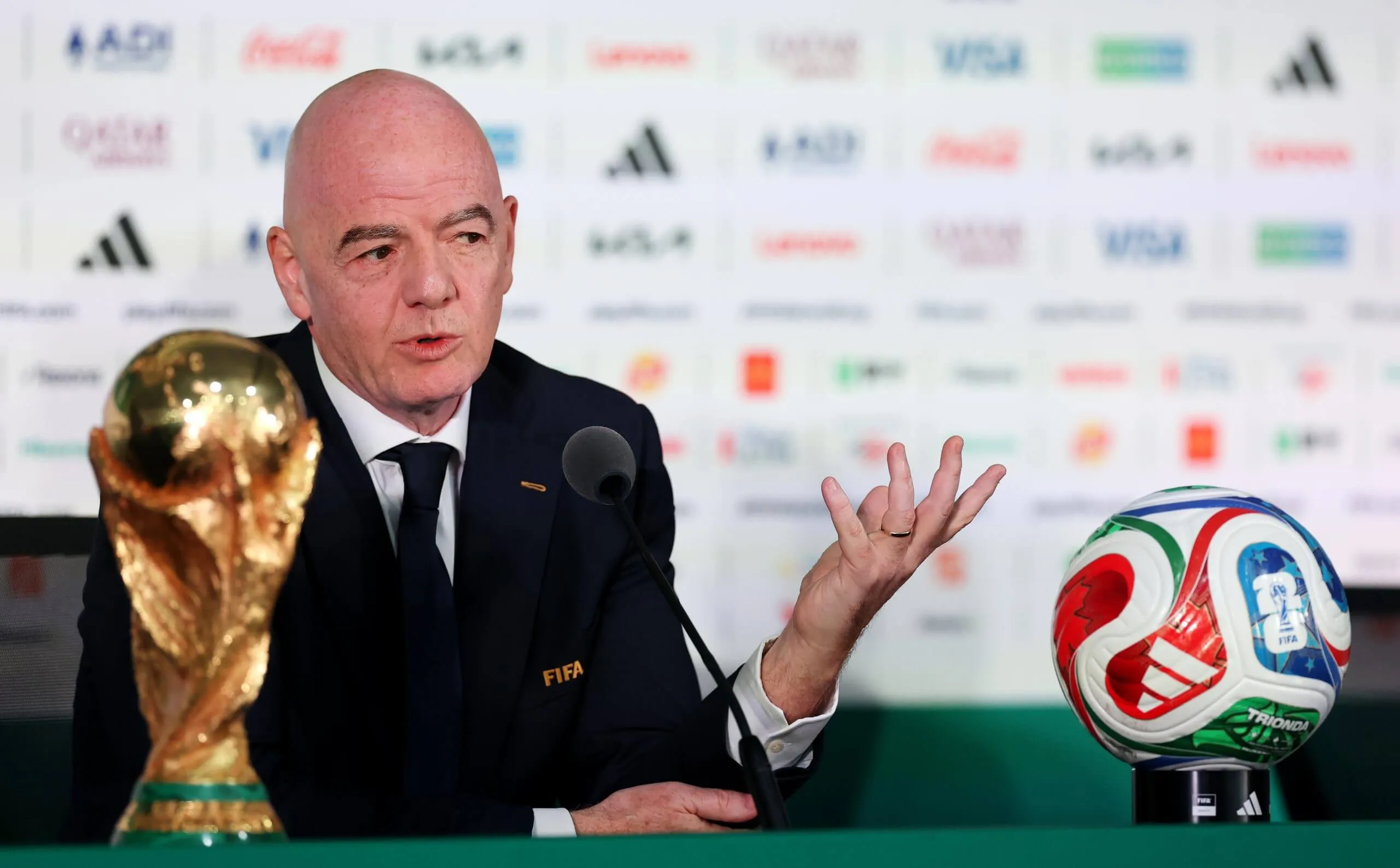
Two weeks after a record-breaking home tournament, soccer's governing body has put the 2030 and 2034 U.S. television rights up for grabs.
NEW YORK
The biggest sports-media auction of the next few years officially began this week. FIFA has launched a tender for U.S. and Puerto Rico media rights to the 2030 men's World Cup, with the 2034 tournament offered as an option, and it wants offers in by midday Eastern time on November 19. Industry reporting, including CNBC, says FIFA intends to pick a winner before the end of the year.
The timing is no accident. The 2026 tournament, staged across North America, left behind audience numbers that U.S. soccer had never seen, and FIFA is moving while the afterglow is still bright.
What is actually on the table
According to Inside World Football, the tender covers the United States and Puerto Rico and is open to broadcasters and streaming platforms alike. FIFA has not said whether English- and Spanish-language rights will be bundled or sold separately, and it may appoint more than one rights holder. Fox, which carried English-language coverage of the last three men's World Cups in the U.S., and Telemundo, its Spanish-language counterpart, are the incumbents. Industry reporting named ESPN, Netflix, YouTube and Amazon Prime Video as potential challengers.
FIFA Secretary General Mattias Grafström said the governing body wants a partner able to reach fans "wherever and however they choose to watch." The tender, the organization says, is open to "innovative approaches" to reach larger audiences, which reads as an invitation to streaming giants to bid aggressively.
The numbers that set the stage
The 2026 tournament gives bidders plenty to point to. Inside World Football reports an average U.S. audience of 13.5 million across linear and streaming over 104 matches, up 166 percent on Qatar 2022. Every U.S. national team match drew more than 20 million viewers, and the final averaged 63 million, the largest American audience ever recorded for a soccer match.
Front Office Sports reported in July that Fox had averaged a record 26.4 million viewers for the U.S. win over Bosnia-Herzegovina on July 1, the most-watched English-language soccer telecast ever. The tournament also created a new kind of inventory: hydration breaks that opened extra in-game advertising slots and, by Inside World Football's account, handed Fox an advertising windfall of $250 million to $330 million.
All of that makes the price of the previous deal look quaint. Front Office Sports reported that Fox's English-language rights for the 2026 event went for $485 million, a figure the outlet called a bargain.
How big could the bids get?
Nobody outside the room knows, but the estimates are eye-catching. Front Office Sports reported in July that bidding for the 2030 rights could start at $1 billion, more than double the current deal. Octagon media adviser Daniel Cohen told the outlet that FIFA "can go to market in the U.S., package the next 2 cycles together, and achieve a $3 billion result." Inside World Football now puts the estimated combined value of both tournaments at up to $4 billion.
Sports Media Advisors chief executive Doug Perlman was more cautious about specifics but not about direction: "There's no question that FIFA is going to get a huge increase for its U.S. rights."
The time-zone problem
There is a catch, and every bidder knows it. The 2030 tournament will be hosted by Spain, Portugal and Morocco, with three centenary matches in Argentina, Paraguay and Uruguay, and the 2034 edition is headed to Saudi Arabia. Kick-off times are expected to be far less convenient for American audiences. Front Office Sports noted that 2030 matches will be at least five hours ahead of U.S. East Coast time, producing more daytime windows and fewer prime-time slots.
Nielsen's Brian Fuhrer has argued that time zones matter even more than the calendar. "I think the time zones have an even bigger impact than comparing November to now," he told Front Office Sports. Star power is another question mark: the same report noted that Neymar and Cristiano Ronaldo, and possibly Lionel Messi, may not play in 2030, leaving Kylian Mbappé, Erling Haaland and Folarin Balogun as possible draws. FIFA has also not confirmed whether hydration breaks will be mandatory in 2030, which affects advertising value.
Who wants it, and why
For Fox, the rights are a matter of identity as much as economics; it has built its soccer brand around the World Cup. Telemundo is expected to want to keep its Spanish-language rights. Netflix already holds U.S. and Canadian rights to the 2027 and 2031 Women's World Cups, and Amazon was named by Front Office Sports as having a strong appetite for marquee sports. NBC Sports was reported to be eyeing a combined English and Spanish package, while ESPN has wanted the event back since it last broadcast it in 2014.
For streamers, a World Cup is a rare thing: a global live event that reliably draws large, mixed audiences, including viewers who rarely tune in to anything live.
What this means for you
If you watch soccer in the United States, this auction will decide where you watch it for the next two World Cups. A streaming-heavy outcome could mean new subscriptions, while a Fox-and-Telemundo renewal would keep the tournament on familiar channels. A split of English and Spanish rights could mean different homes for different audiences.
More broadly, the bidding is a test of how much American money soccer can command now that the home tournament has proved the audience is there. The result will also hint at how much the next generation of sports media is willing to pay for appointment viewing, even when the games kick off at breakfast time.
The bottom line
FIFA has a strong hand: record numbers, hungry bidders and a deadline less than four weeks away. The unknowns are real, from kick-off times to star power, but the sport has never had a better argument for its American value. By the end of the year, we will know how much that argument is worth.



