Written By | Business Experts
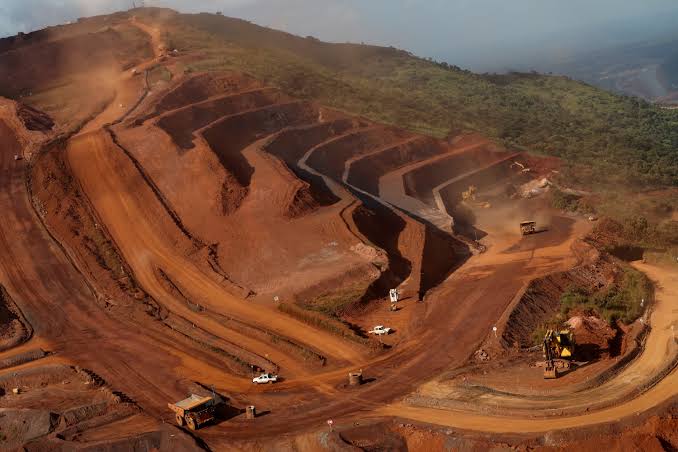
Simandou holds an estimated three billion tonnes of reserves, is served by a 650-kilometre railway, and required infrastructure spending reported at more than $20 billion
Economic & Social Transformation
A boom with a narrow base
Guinea is currently forecast to be the fastest-growing economy in Africa. The World Bank projects growth of 8.8 percent in 2026 and 11.6 percent in 2027, against an African median of about 4.3 percent. The government's own target is more ambitious still, at 9.5 percent for 2026, and S&P Global has spoken of growth close to 10 percent a year across 2026 to 2029. For a country whose average growth between 2019 and 2023 was roughly 5.1 percent, and whose 2024 growth was about 5.7 percent, this is a step change of a kind that few economies ever experience.
The cause is easy to name. On 2 December 2025 the first cargo of iron ore, some 200,000 tonnes, left the Simandou mines in the southeast of the country, after decades of delay, and it reached China in January 2026. Simandou holds an estimated three billion tonnes of reserves, is served by a 650-kilometre railway, and required infrastructure spending reported at more than $20 billion. Its two operating consortia, Simfer (led by Rio Tinto with Chinese partners including Chinalco) and Winning Consortium Simandou (Singaporean and Chinese investors including China Baowu Steel Group), are ramping up towards a combined capacity often quoted at 120 million tonnes a year, with the state holding a 15 percent stake in both projects.
Yet the boom is better described as deep than broad. This article examines what Simandou does to Guinea's public finances, its household welfare, its export structure and its social contract, and asks whether the country's new institutions are ready for the money. The central argument is that Guinea's challenge has shifted from creating a resource windfall to managing one: growth is now nearly guaranteed by geology and logistics, but development is not.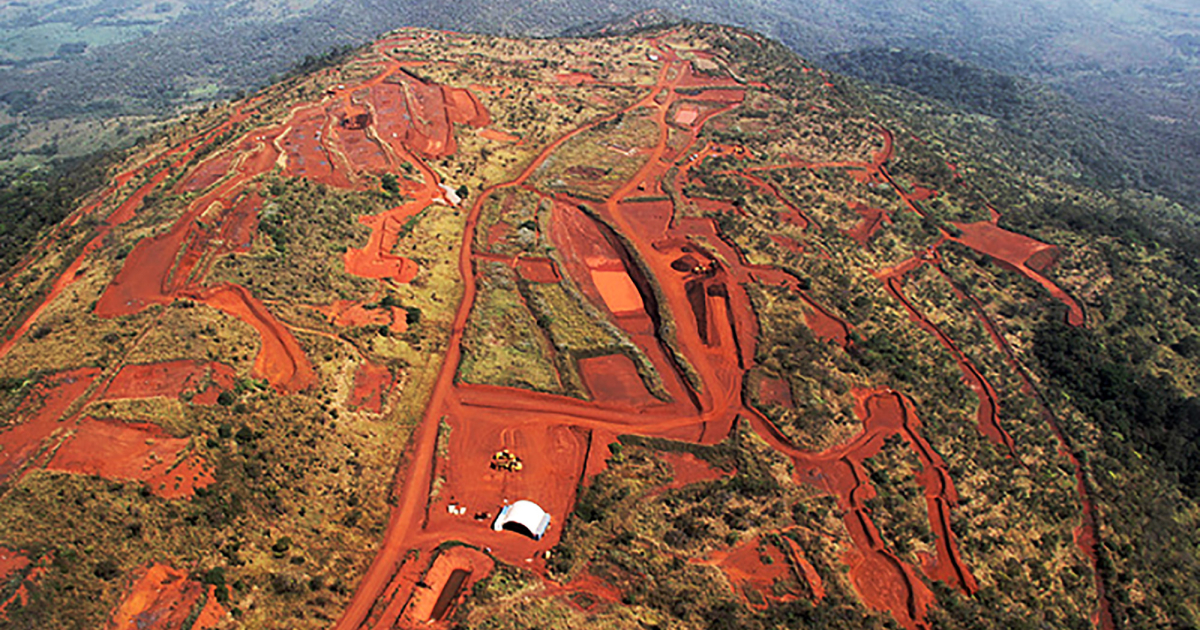
What the numbers say: rebasing, revenue and rating
Guinea's statistics have themselves been transformed. After adopting the UN's 2008 System of National Accounts, the authorities rebased GDP, and the economy was reported to have expanded by 51.2 percent on paper, to about $40 billion, making Guinea the second-largest francophone economy in West Africa, ahead of Senegal. Rebasing changes no one's income, but it changes the denominators for debt, deficit and revenue ratios, and it changes how investors read the country. In September 2025 S&P assigned Guinea a B+ rating with a stable outlook, opening the door to a possible debut international bond.
The 2026 budget, adopted on 1 April 2026, reflects the new confidence. Total spending is set at 64,181 billion Guinean francs, about $7.3 billion, an increase of 18.3 percent. Revenue is projected at 55,858 billion francs, 27.06 percent above the revised 2025 outturn, and the fiscal deficit is targeted at 2.6 percent of GDP, down from 4.8 percent in 2024. Eleven ministries have been selected to pilot programme-based budgeting under the government's Simandou 2040 development framework, an attempt to tie spending to outcomes rather than to line items.
The fiscal design matters because Guinea is a price-taker and a volume-taker at the same time. The revenue forecast presumes that iron ore ships on schedule and that the state captures its share through royalties, taxes and dividends on its 15 percent stake. Civil-society groups such as Action Mines Guinée have said they cannot form a judgment on the contracts because the texts have not been published in full. A large share of the projected revenue increase therefore rests on documents the public cannot read.
The IMF returns: managing a windfall, not a crisis
In a sign of how much the macroeconomic story has changed, Guinea is negotiating a new IMF arrangement not to escape distress but to prepare for abundance. Following discussions in Conakry from 16 to 29 June 2026, IMF staff and the authorities reached an understanding on a 41-month Extended Credit Facility worth $425 million, equal to 145 percent of Guinea's quota, with the Executive Board expected to consider approval in September 2026. The programme's stated goals are to improve liquidity management, increase exchange-rate flexibility, rebuild foreign-exchange reserves and strengthen preparedness for shocks. The IMF mission chief, Izabela Karpowicz, and Finance Minister Mariama Ciré both framed the moment as an important juncture as Simandou enters production. Bloomberg reported in August that Guinea hopes the programme will help it capture a bigger share of the mining revenue surge.
This is a very different programme from Guinea's previous Extended Credit Facility, approved in December 2017 at about SDR 120 million (roughly $170 million), or from the emergency Rapid Credit Facility financing of about $71 million approved in May 2024. Those were instruments for a country short of foreign exchange. The new one is designed for a country that may soon have too much of it, with the attendant risks of currency appreciation, import surges and a squeeze on non-mining sectors, the classic symptoms of Dutch disease.
For readers tracking the programme, the board decision is the next milestone to watch, alongside publication of the first Simandou revenue receipts and any move by the government towards a sovereign bond issue supported by the B+ rating.
The poverty paradox
The most sobering figure in Guinea's national accounts is not growth but poverty. About 52 percent of the population lives in poverty, and gross national income per capita is below $2,000. Growth in Guinea has historically translated weakly into poverty reduction, in part because mining is capital-intensive and employs few people relative to its share of output. Simandou fits the pattern. Construction employed some 60,000 people at its peak, but reporting indicates that operational employment will fall below 15,000 once the build phase ends. Mining is projected to represent around a quarter of GDP in 2026, and the IMF has suggested the project could raise GDP by about 25 percent by 2030, yet the majority of Guineans still work in agriculture and informal trade.
The gap between headline growth and household welfare is therefore the core policy question. If the state spends its new revenue on rail, roads and power that connect farmers to markets, and on schools and clinics that reach beyond Conakry, then a mining boom can be a foundation for structural change. If it is absorbed by recurrent expenditure, large-scale procurement and security, the boom will show up in the statistics and little else.
A monoculture in the export basket
Guinea's growth is highly concentrated in a single product family. Bauxite exports reached about 183 million tonnes in 2025, a 25 percent rise on the previous year, with roughly 149 million tonnes going to China out of China's total imports of about 201 million tonnes. Yet bauxite prices have fallen by roughly half since January 2025, to about $32 to $38 a tonne, a reminder that volume growth and value growth are different things. Alumina exports remain minor, at only 78,000 tonnes in the third quarter of 2025, showing how little of the bauxite chain is processed at home.
Afreximbank data put Guinea's total trade at about $14.5 billion, of which 84.9 percent is external and 55.7 percent is directed to Asia. Trade with China alone is worth about $4.5 billion, with India at $1.9 billion; Ghana, the largest African partner, accounts for $1.4 billion. Intra-African commerce is only 13.3 percent of the total, and one analysis gave Guinea an export diversification score of zero. Simandou will deepen this concentration: iron ore is sold to a small number of Chinese steelmakers, and demand from China's property-linked steel sector is not guaranteed for the life of the project.
For a continent that is implementing the African Continental Free Trade Area, Guinea illustrates its promise and its limits. The agreement can help build regional markets for processed and manufactured goods, but only if countries with resource windfalls use them to build capabilities such as refining, logistics and agro-processing rather than simply to import more. The government's stated ambition to expand refining capacity is the test.
Communities, environment and the licence to operate
The social side of Simandou is not only about jobs. Reporting from the Kérouané and Beyla areas has documented around 17 impacts, including waterway pollution, farmland damage and downstream contamination, as well as effects on wildlife, including chimpanzees affected by blasting and runoff. Rio Tinto has proposed a compensation fund, though the scale of the sums involved has drawn criticism from local advocates. Campaigners have alleged intimidation, and one community leader was detained on charges of inciting residents, according to Mongabay's January 2026 investigation.
These concerns matter economically as well as ethically. A project of this scale relies on a licence to operate, and grievances that go unresolved raise the cost of delay, disruption and reputational damage for both investors and the state. The governance test is whether Guinea's institutions can enforce environmental standards against the country's largest taxpayers while remaining welcoming to investment. President Mamady Doumbouya, elected in December 2025 after a period of transition, has framed Simandou as a national project; how it handles local dissent will shape that claim.
What would success look like?
Three tests will show whether Guinea converts a record growth rate into development. The first is transparency: publication of Simandou contracts, revenue flows and the use of state dividends, so that the projected 27 percent jump in revenue is visible and auditable. The second is spending quality: whether programme-based budgeting spreads beyond the eleven pilot ministries and whether capital spending goes into electricity, rural roads, water and schools that raise productivity outside the mining enclave. The third is diversification: whether refining, agro-processing and services grow fast enough that Guinea's export diversification score rises above zero.
Guinea has real advantages. It has iron ore, bauxite, gold, hydropower potential and a young population, a rebased and better-measured economy, a returning IMF partnership, and a credit rating that gives it options. The historical record for resource-rich African states is mixed, but it is not deterministic. For Guinea, the coming two years, as Simandou moves from first shipments to full capacity, will show whether the ore builds a ledger that Guineans can read and benefit from, or only a ledger that foreign creditors and mining companies can



