Written By | International News Agencies
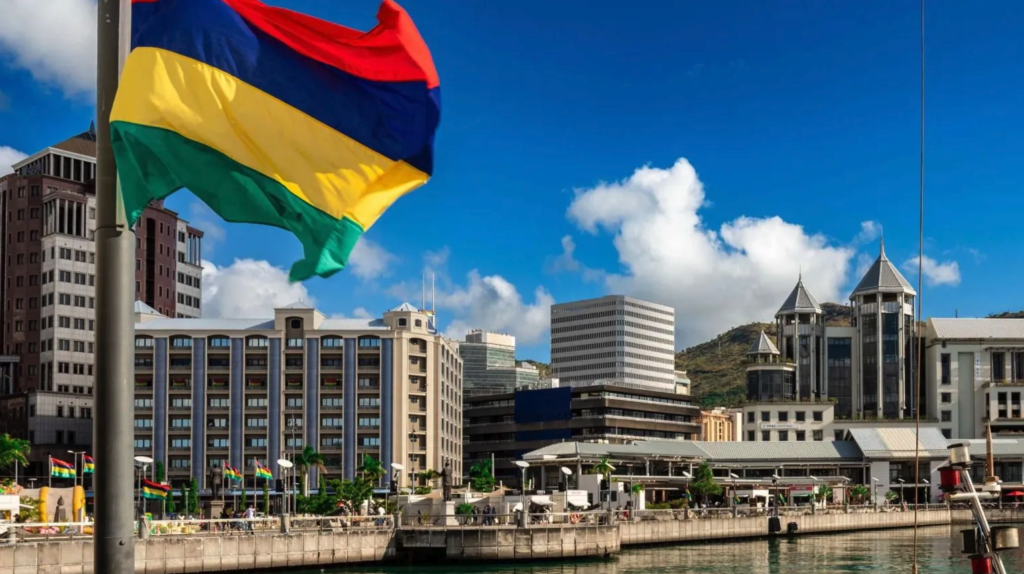
Mauritius gained independence from Britain in 1968 and has moved from sugar into tourism, textiles and financial services.
WORLD NEWS
Mauritius, long marketed as one of Africa's most stable and prosperous democracies, spent this week under a night curfew covering about a third of the island. Protests that began over water shortages and the cost of living escalated after a police officer shot and wounded a young woman, and the government has responded with mass arrests, the threat of terrorism charges and a proposal to prosecute children as young as 12. Reports from several outlets describe the violence as the worst since 1999.
The crisis tests a government that won office less than two years ago in a landslide. It also raises a hard question for a small island economy that has built its reputation on calm: how a drought-and-prices grievance turned into attacks on police stations, and whether the state's answer will cool or inflame it.
How it unfolded
According to a timeline published by Briefs Finance, protests began on Oct. 7 in the island's interior, where residents blocked roads with broken furniture and mattresses. The grievances were weeks of water-use restrictions during a drought and higher living costs, with fuel more expensive because of the war in the Middle East.
On Oct. 9, police shot and wounded Elodie Thomas, 27. Witnesses told AFP the officer fired without warning and hit her in the neck. A team of Indian surgeons flown to Mauritius operated on Oct. 12 to remove the bullet, local media reported, and she remained in hospital. The officer was arrested and brought before the courts, according to AFP.
By Oct. 12, protesters had burned a police station in Rose Hill, south of Port Louis, and set up roadblocks across the country. Looting followed, notably at two supermarkets, and police stations were attacked, leaving several officers injured. On Tuesday, Oct. 13, police said roads were passable and the situation was under control, and banks and the stock exchange were open. The government nonetheless imposed a curfew over roughly a third of the island, covering 10 administrative regions, mostly on the outskirts of towns.
On Wednesday, the Cabinet met in special session and extended the curfew through Friday morning. According to the Eastern Herald, the hours are 8:30 p.m. to 5 a.m. on Wednesday and Thursday nights. Public buses stopped at 6 p.m. on Wednesday, according to Xinhua as relayed by the Eastern Herald. The education ministry suspended classes at all nursery, primary and secondary schools on Thursday and Friday.
The numbers and the government's response
The government said 84 people were arrested on Tuesday, bringing the total to 94 since the unrest began. Sixteen of those detained are minors, and the Eastern Herald reports that one police officer is among them. Seven officers have been wounded. These are police counts relayed by ministers and have not been independently verified.
The government's statement cited looting, arson and damage to public property, including police stations, traffic lights and CCTV cameras. The Cabinet said arrested people "will be charged under the Prevention of Terrorism Act, where applicable," the Eastern Herald reported. It also set up a fast-track mechanism for lodging and hearing cases, after consulting the Chief Justice, the Director of Public Prosecutions and the Police Commissioner. Regulations are being prepared to ban retail sales of petrol, and the police Cybercrime Unit is monitoring social media for hate speech and incitement.
The most contentious proposal concerns minors. Given the number of children arrested, the government will consider lowering the age for detention and prosecution of minors from 14 to 12, AFP reported. The Eastern Herald noted that the Cabinet record does not explain how the proposal relates to the legal age of criminal responsibility. It also pointed to the UN Committee on the Rights of the Child's General Comment No. 24, which observes that 14 is the most common minimum age internationally and urges states not to lower it "under any circumstances."
What the prime minister is saying
Prime Minister Navin Ramgoolam addressed the nation on Tuesday evening. "No one has the right to take justice into their own hands or take the law into their own hands," he said. He said authorities "will identify the instigators and all those who are acting against the interests of the country," and that those responsible "will have to face the very heavy consequences." He also blamed "drug traffickers who add fuel to the fire." Police sources told AFP that traffickers pay drug users to attack police stations. The Eastern Herald noted that neither Xinhua nor the Cabinet record offered evidence for the claim that a group was orchestrating the violence.
The tone was different on Oct. 11, when Ramgoolam first spoke about the shooting. "I have insisted that the investigation proceed as quickly as possible to establish the exact circumstances of this tragedy," he said, adding: "In these painful moments, anger is understandable." The shift from empathy to prosecution within two days is itself part of the story. Anadolu, cited by the Eastern Herald, called the situation the worst unrest in certain areas in nearly three decades.
A mandate and its limits
Ramgoolam returned to power in November 2024. His Alliance du Changement won 62.6% of the vote and 60 of 62 seats in the National Assembly, according to Al Jazeera, which cited the electoral commissioner and the state broadcaster. (Two Rodrigues seats and eight "best loser" seats are allocated separately.) He had previously served as prime minister from 1995 to 2000 and from 2005 to 2014, and he ousted Pravind Jugnauth, whose alliance conceded as it headed for what he called "a huge defeat."
Cost of living was central to that campaign. Both camps promised relief despite strong economic growth, and the Alliance's platform included a hardship support fund, free public transport, higher pensions and lower fuel prices, Al Jazeera reported. The campaign was also overshadowed by a wiretapping scandal, and Ramgoolam said he would first dismantle the surveillance system. A landslide of that size leaves a government with few excuses and an opposition with little parliamentary leverage, which can push dissent into the streets.
The sources reviewed do not report positions from opposition parties, trade unions or the IMF on the current unrest, so this account does not attempt to characterise them.
Echoes of 1999
Observers keep returning to 1999. Briefs Finance recounts that the singer Joseph Reginald Topize, known as Kaya, died in police custody, sparking three days of protests in which churches and shops were set ablaze and looted and several protesters were killed, according to the U.S. State Department. Those protests also came amid calls to decriminalise cannabis.
The parallel is imperfect but instructive. In both episodes, a death or injury at the hands of police converted diffuse anger into riots. Historian and political analyst Jocelyn Chan Low told Briefs Finance that police are once again the main focus of public anger and that violence has intensified, with stations and vehicles set on fire. This time, the underlying grievance is material: water and prices.
Economic and diplomatic stakes
Mauritius gained independence from Britain in 1968 and has moved from sugar into tourism, textiles and financial services. It briefly reached high-income status in 2020 before the pandemic hit, and ranks second in Africa for per capita income behind Seychelles, according to Briefs Finance. Elections have been peaceful.
Foreign governments are watching. The British embassy warned its nationals of possible further protests and told them to "avoid demonstrations and large public gatherings," and the French embassy asked the French community to "exercise caution." Zoë McCathie, a country risk analyst at Signal Risk in Cape Town, said Mauritius is still seen as business-friendly and that, barring prolonged unrest, effects on tourism and investor sentiment will likely be limited. That assessment was made on Oct. 13, before the curfew was extended.
Analysis: what to watch
The first test is Friday morning, when the curfew is due to lapse. If it ends without renewed violence, the government can argue its approach worked. If it is extended again, the cost to tourism and commerce rises quickly, and so does the risk that a security measure becomes the new grievance.
The second is the legal response. Terrorism charges, fast-track hearings and any move to lower the age of prosecution will draw scrutiny from lawyers and rights groups, particularly because 16 minors are among those arrested. A heavy-handed approach could confirm the narrative of a state that answers protest with force just as a police officer faces prosecution for shooting a protester.
The third, and the one that decides whether calm lasts, is the original grievance. Nothing in the reporting reviewed indicates a plan to ease water restrictions or prices, and there is no word of any announcement on either. The government can restore order by curfew, but only water and prices can remove the cause. The Thomas case will also be watched as a measure of police accountability: the officer's arrest was swift, but how the prosecution proceeds will shape public trust.



