World Politics
Overview
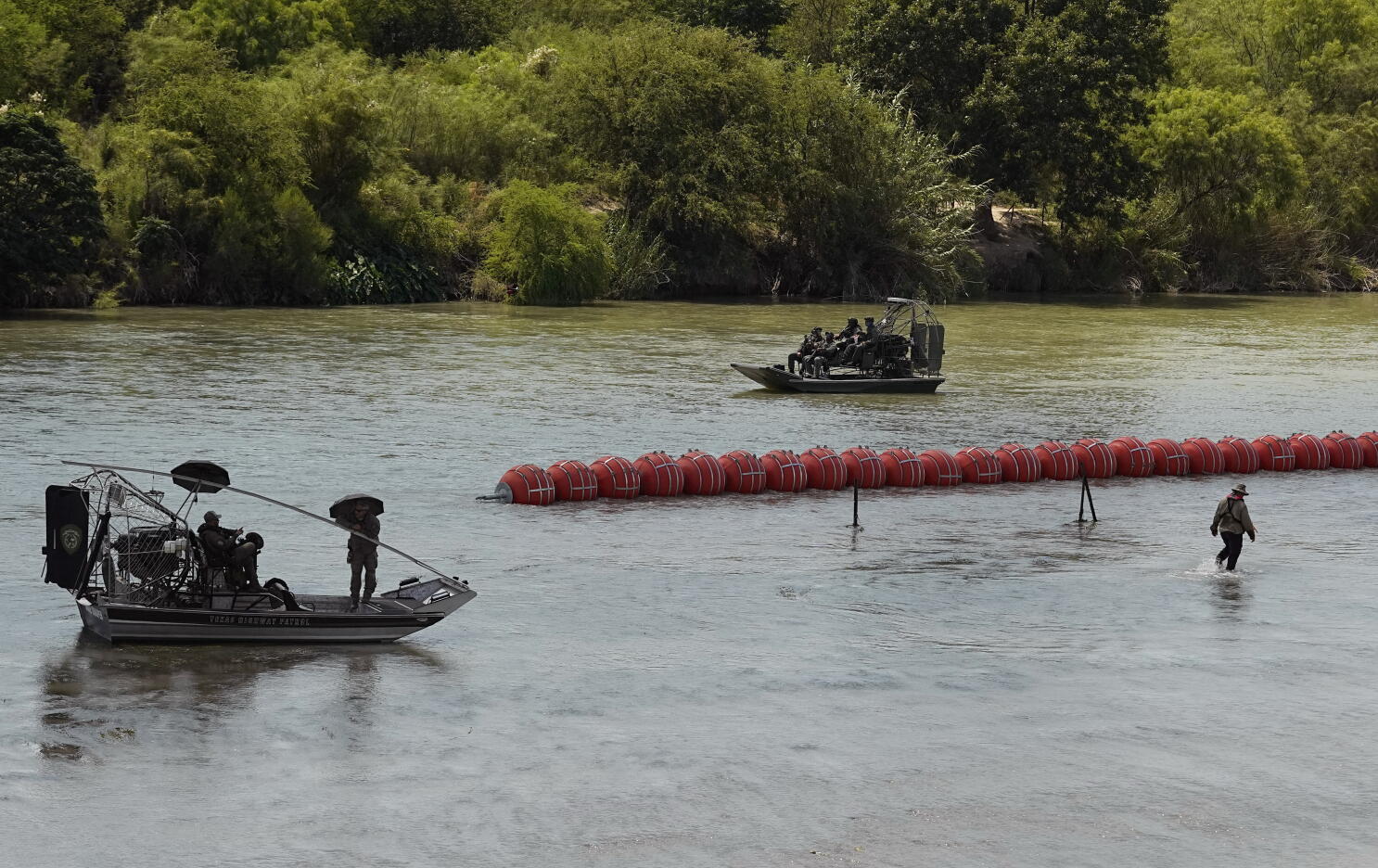
A brief exchange of gunfire on the Rio Grande has grown into a diplomatic standoff between Washington and Mexico City. On September 26, according to the US Coast Guard, personnel on a patrol near Garceno, Texas, came under fire from the Mexican side of the river during an interdiction operation and returned fire. Nobody was hurt and no equipment was damaged. Ten days later, the episode is the stated rationale for a build-up on both banks of the river: the United States has airlifted roughly 500 active-duty troops into the Rio Grande Valley, and Mexico has deployed about 500 soldiers and National Guard members of its own to the opposite bank, plus some 159 naval personnel, under a program it calls Operation Mirror.
What makes the story politically combustible is not the firefight itself, which was small, but the dispute over what it proves. US Ambassador Ronald Johnson said publicly on October 4 that Coast Guard personnel were fired upon. Mexican President Claudia Sheinbaum said on October 5 that her government has asked for the evidence because, in her words, it has none, and that Mexico's army, National Guard and navy detected no shots from Mexican territory. The two governments are now cooperating on patrols while openly disagreeing about the basic facts.
Background: A Border Already Under Pressure
The Garceno area lies in Starr County, Texas, across from the state of Tamaulipas, a stretch that one account describes as a long-documented corridor for smuggling and narcotics trafficking by transnational criminal groups. The Korea Times noted that the Mexican side is contested by the Northeast and Gulf cartels, both of which the United States designated as foreign terrorist organizations in February 2025. That designation, part of a wider Trump administration push to treat cartels as terrorist groups, has become a recurring feature of US pressure on Mexico over drugs and migration.
The Coast Guard's presence on the river is itself relatively new. Operation River Wall, launched in October 2025, added Coast Guard assets along roughly 260 miles of the Rio Grande in eastern Texas. Latin Times described the September 26 incident as the first known instance of Coast Guard personnel being in an active firefight in that corridor. Separately, Sheinbaum said Mexico's "Operation Mirror" coordination mechanism, in which both countries' forces monitor the same area from their respective sides, has operated since February 2025, which means the language of joint patrols predates the current dispute.
President Donald Trump has pressed Mexico since returning to office to curb drug trafficking and illegal immigration, and has offered military assistance, which Sheinbaum has repeatedly declined. Johnson, a retired Army colonel and former CIA officer confirmed as ambassador in April 2025, has said "all options will be on the table" if US citizens face direct danger, a phrase quoted in coverage of the current crisis.
Key Developments
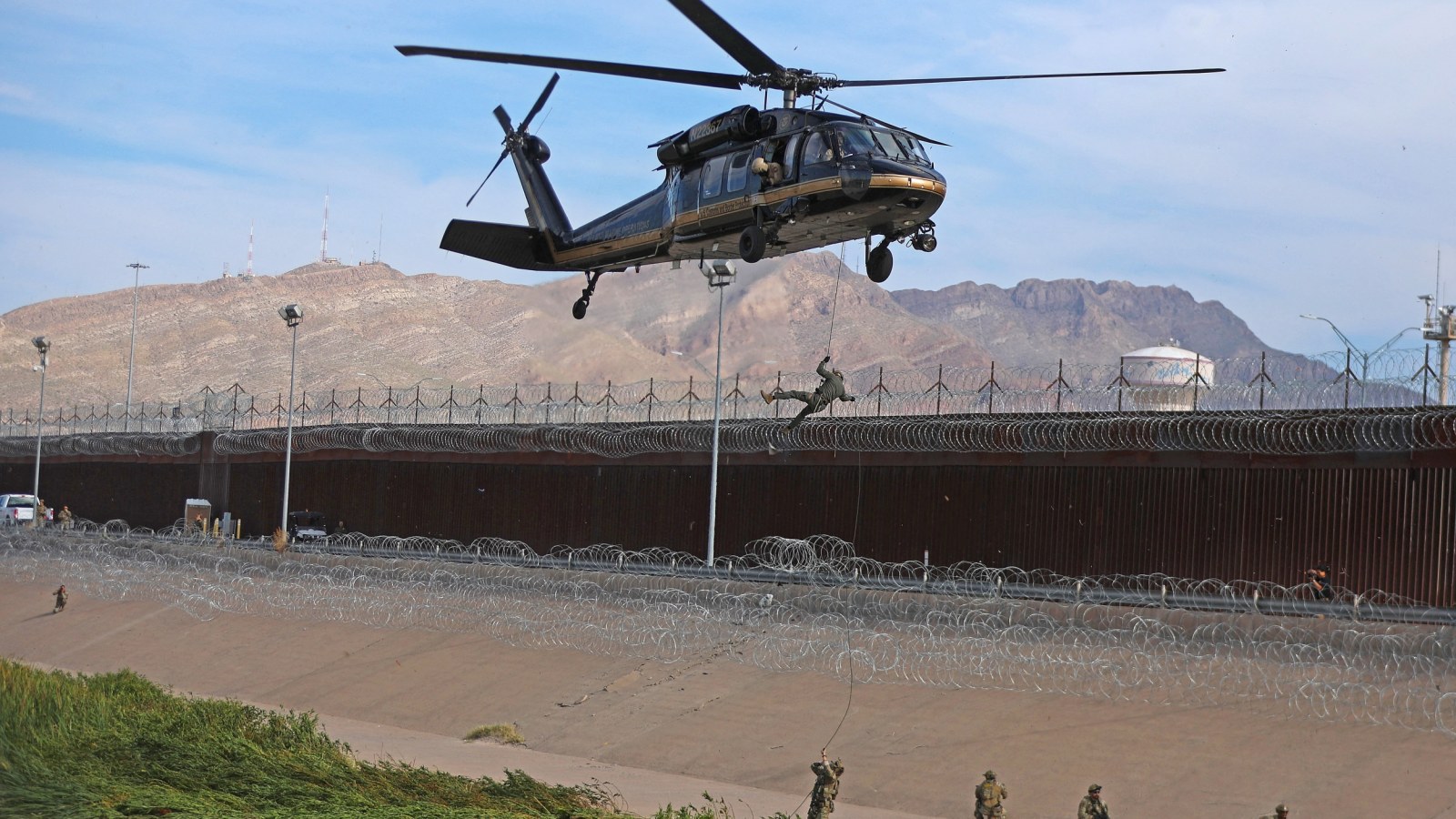
The Coast Guard reported the incident on or about September 26, saying shots came from the Mexican bank near Garceno while its personnel were conducting an operation that coverage describes as a joint interdiction of migrants. Public attention, however, came only after Johnson's October 4 post and the deployments that followed. Mexico began sending troops into five Tamaulipas municipalities on October 4. US Northern Command repositioned several hundred troops by Chinook helicopter to staging areas on river islands and key smuggling chokepoints, and one report says laser counter-drone systems were placed along 320 miles of the Rio Grande Valley. Those technical details come from secondary outlets and have not been independently confirmed by the Pentagon in the sources reviewed.
Reports differ on small points. The Korea Times, citing the timing of the US report, says Mexico deployed after the US reported gunfire "on Monday," while other outlets date the original incident to September 26; this article follows the September 26 date given by the Coast Guard account as relayed by several outlets. The troop numbers are consistently reported as around 500 on each side, with one outlet describing the combined figure as a thousand-troop surge.
Johnson said the Mexican forces would coordinate directly with American forces and that the two sides would "patrol both sides of our shared border, protect our communities, and make it more difficult for criminal and terrorist organizations to operate." That framing allows both governments to present the deployments as cooperation. Washington casts the move as a response to an attack on its personnel; Mexico City describes a routine bilateral mechanism aimed at drug and human trafficking and not at any specific allegation.
Neither government has said who fired, what evidence Washington holds, how long the deployments will last, or what results the patrols have produced. The investigation into who shot first was described as still active, and whether the fire was a deliberate provocation or opportunistic shooting by criminal actors remains unresolved.
The Legal and Sovereignty Questions
The dispute raises questions that go beyond a single incident. A legal analysis published by Diplomacy and Law argued that personnel facing lethal fire may use protective force under ordinary use-of-force rules, but that this does not establish that the United States suffered an "armed attack" under Article 51 of the UN Charter, the threshold that would support a claim of state self-defense. The author stressed that fire coming from Mexico and an attack by Mexico are not legally equivalent: shooting by cartel members acting independently would not create state responsibility, and an incident with no injuries or damage sits in ambiguous territory under the International Court of Justice's case law.
The same analysis made a point that matters for the political debate: designating cartels as foreign terrorist organizations does not by itself authorize US armed forces to conduct military operations inside Mexico, and any later raids, pursuits or sustained campaigns would need separate legal justification. This is the practical fear in Mexico City. A joint-patrol arrangement that begins as a response to one reported firefight could become a precedent for a larger US military role, particularly in a political climate in which the Trump administration has already used force against alleged drug traffickers elsewhere. Reporting from Democracy Now on October 6 noted that the Pentagon had just announced another strike on an alleged drug boat, bringing the claimed death toll from such strikes in the Caribbean and eastern Pacific to 238 since they began last year, which Amnesty International USA called extrajudicial killings. That is a different theater and a different legal question, but it informs how Mexican officials view US claims about narcotics and terrorism.
Reactions
Sheinbaum's response has been calibrated. She has not refused cooperation and has not accused Washington of fabricating the incident; she has asked for evidence and insisted that Mexican forces saw nothing. Her repeated line that "we have no evidence" lets her defend sovereignty at home, where any appearance of yielding to US military pressure is politically costly, while keeping the security relationship intact. Her decision to send 500 soldiers also deprives Washington of an argument that Mexico is doing nothing, and puts Mexican troops on the river alongside American ones, which complicates any unilateral US action.
On the US side, the response has been to emphasize both the threat and the cooperation. Johnson's posts, the repositioning of troops and the counter-drone systems signal seriousness, while the language about joint patrols leaves room for a diplomatic outcome. Hawkish commentary online has treated the incident as evidence of cartel aggression, while critics point to the absence of public evidence and to the pattern of the administration using border incidents to justify expanded military activity. Outlets with very different editorial lines have covered the event, which is one reason readers should treat characterizations with caution and rely on the narrow facts that are agreed: a reported firefight, no casualties, and parallel deployments.
What Comes Next
The first thing to watch is whether the United States produces evidence. A video, ballistic data or a statement from the Coast Guard setting out the location and direction of fire would narrow the factual dispute and could either vindicate the US account or support Mexico's. Silence would keep the matter alive as a point of friction in a relationship that is also managing trade negotiations and the broader fight over cartels.
The second is the duration and scope of the deployments. Temporary surges have a way of becoming permanent features of the border, and the open-ended nature of both deployments, which neither government has bounded in time, is a concern. A crucial indicator will be the rules of engagement for the joint patrols, in particular whether American personnel are permitted to pursue suspects across the river and what role Mexican commanders have in approving US actions.
The third is political. With US midterm elections in November, the White House has incentives to appear tough on border security, while Sheinbaum has incentives to appear unbowed. Both can plausibly benefit from a controlled standoff, which is some reassurance, but a second shooting, a casualty on either side or a cartel attack on a patrol could quickly change the calculation. For now the Rio Grande hosts two armies facing the same stretch of water, a joint communications line, and a disagreement about whether the shots that started it ever came from Mexico.
Published By | News Editor