Written By |
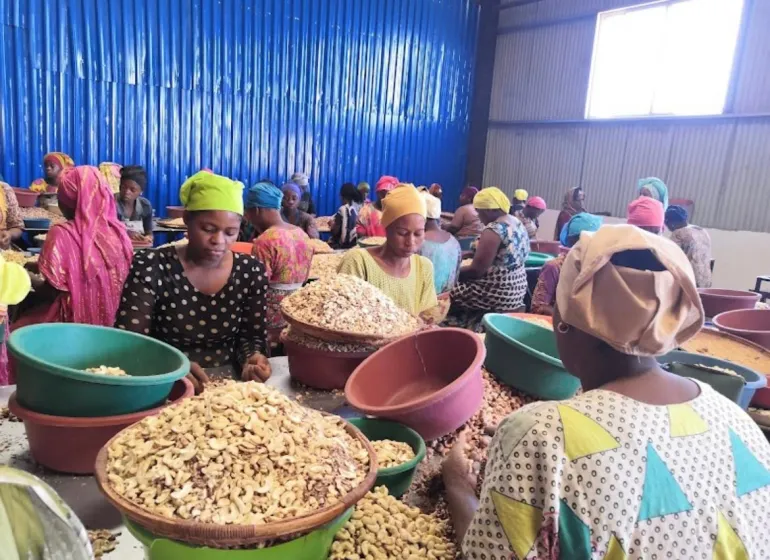
Workers at Mohamad El-Shafei’s cashew processing factory, Mayan Village, Mtwara region, Tanzania (Photo: Egab)
As Europe fortifies its borders, growing numbers of North Africans are moving southwards into other African countries
Cairo, Egypt – When Ahmed Ginah first left his village in Egypt’s northern Delta for the Tanzanian capital in 2017, he had little more than a dream. Four years later, he named his company after that very dream.
“When I came to Tanzania at 28, people didn’t understand why I was heading south,” said Ginah, who is jokingly referred to as the “Mayor of Egyptians in Dar es Salaam.” Back home, many of his friends and family saw sub-Saharan Africa through the lens of outdated stereotypes—famine, poverty, and disease.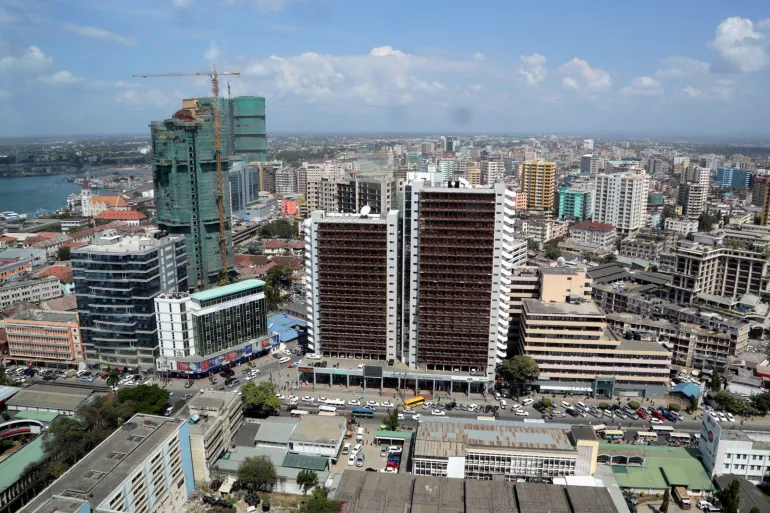
The skyline of Tanzania's port city of Dar-es-Salaam (Photo: Reuters)
But when Ginah arrived, he found something very different: opportunity.
In 2021, he founded Dream Trading, using $3,000 in savings to start importing and exporting aluminium household goods. Over time, he expanded into the steel industry.
Beyond his own business success, Ginah has become a guiding figure for fellow North Africans migrating southward. His daily routine is simple: each morning, his driver, Hamed, drops him at the Dream Trading warehouses. Later, he heads to City Mall in Dar es Salaam’s bustling Kariakoo neighborhood, where he’s a regular at a Somali café. There, over breakfast—mandazi (fried dough fritters) or chipsi mayai (a French fry omelette)—he meets with Egyptians and Tanzanians alike.
Most Egyptians arriving in Tanzania already have a relative or friend in the country. For those who don’t, Ginah often helps them find accommodation, sometimes offering jobs at Dream Trading or covering rent for new employees. He also guides them on where and how to work—and most importantly, connects them with reliable translators. “In rural areas, many people speak only Swahili,” Ginah explained. “A trusted translator helps avoid misunderstandings or falling victim to scams.”
But he has clear boundaries:
“I help those who come to work, not those who delegate everything to others,” he said. “Tanzania has so much to offer, but not to the lazy.”
Ginah’s story is one of many. Today, his company distributes goods across Africa, and he has helped dozens of young men from his village relocate and succeed in Tanzania. According to Egypt’s ambassador to Tanzania, Sherif Ismail, an estimated 70,000 Arabs—including around 1,200 Egyptians—now live in the country.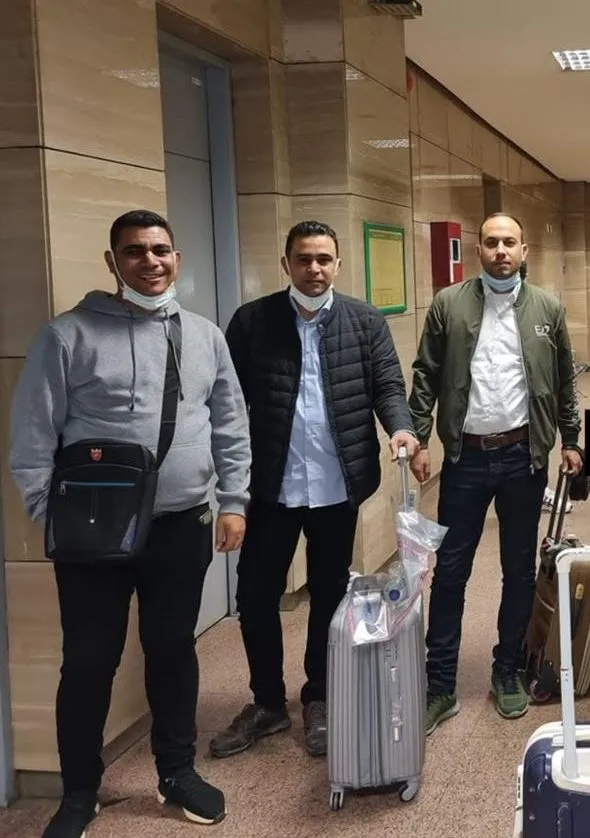
Ahmed Ginah, right, and two Egyptians recently arrived in Tanzania (Photo: Egab)
South-South migration on the rise
As Europe tightens its borders, more young Egyptians are turning to alternative destinations, says Ayman Zohry, a migration expert at the American University in Cairo.
The number of Egyptians in non-Arab African countries grew from 46,000 in 2017 to 54,000 by 2021. While many Egyptians still risk the dangerous journey across the Mediterranean—accounting for over 7% of Italy’s arrivals in 2023—others are heading south in search of safer, legal opportunities.
The EU’s recent €7.4 billion deal with Egypt aims partly to curb irregular migration. But this hasn’t stopped Egyptians from eyeing sub-Saharan Africa.
“There’s a new trend of youth seeking opportunity in Africa—especially in countries where Egypt has built diplomatic and commercial ties,” Zohry said. He describes it as “economic migration”—youth looking for new investment avenues in developing markets.
Still, he noted, this type of migration is often temporary or circular—migrants return home or move between countries based on opportunity.
This pattern plays out every Friday night at Julius Nyerere International Airport, when a flight departs Dar es Salaam for Cairo. During peak travel seasons like Eid al-Fitr or Eid al-Adha, entire families fly home—to invest their earnings, support relatives, build houses, or fulfill religious goals like the Hajj.
Egyptian President Abdel Fattah al-Sisi walks past a guard of honour at the Julius Nyerere International Airport in Dar-es-Salaam. (Photo: Reuters)
Welcoming environment
Egyptians are not alone. North African and Arab communities are growing across the continent, especially in South Africa, followed by Nigeria, Kenya, and Senegal. Ginah recounted a tale that’s now folklore among Egyptian youth: “In the 1990s, a young man visiting a friend in South Africa was arrested for a visa issue. He was broke, with only a few aluminium utensils—so he sold them to buy a ticket home. That’s when people realized there was a market for Egyptian household goods.”
Since then, Egyptian interests have expanded across Africa into manufacturing, agriculture, and mining.
After Egypt’s 2011 uprising, Ginah said many Egyptians turned to sub-Saharan Africa as Libya and the Gulf became less stable.
Tanzania, meanwhile, has worked to attract foreign investment. According to Makame Iddi Makame, chief of staff at Tanzania’s embassy in Cairo, investors benefit from tax exemptions, reduced customs duties, simplified business permits, and even deferred taxes for loss-making ventures.
“Tanzania offers economic stability, low inflation, and political peace—making it an attractive option for Egyptians skilled in fields like construction, agriculture, education, and IT,” Zohry noted.
Still, many North Africans hold a stigmatized view of sub-Saharan Africa, limiting migration compared to the Gulf or Europe.
But signs suggest that for some youth, the continent is becoming an appealing alternative.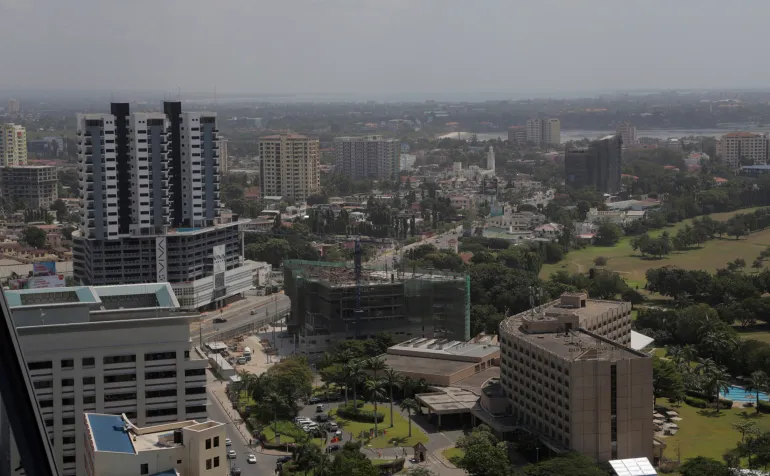
Dar-es-Salaam, Tanzania. (Photo: Reuters)
From cashews to community
Roughly 550 km southeast of Dar es Salaam, in Mayan village in the Mtwara region, Mohamed el-Shafei, 34, set up two cashew-processing factories in 2018. Cashews contribute up to 15% of Tanzania’s foreign exchange earnings, and el-Shafei saw an opportunity.
“Cashew sales are built on trust,” he said. “From delicate harvesting to precise processing, it requires experience and care.”
Today, his company employs 400 workers—Egyptians, Chinese, and Tanzanians—along with seasonal laborers. His products are exported across the Arab world and Turkey.
His path was unusual: after studying Chinese in Cairo, he moved to Beijing, where he befriended Vietnamese cashew traders who told him about Tanzania’s untapped market. With just EGP 200,000 (around $11,000 then), he imported two machines from China and launched Elshafei Investment Ltd. In 2023–2024, his company made 13 shipments worth about $720,000. El-Shafei eventually relocated his family to Dar es Salaam, where they live among a diverse Arab community with Yemeni, Omani, and Iranian roots. “We celebrate Tanzanian national holidays, Swahili Language Day, and Islamic festivals together—locals and Arabs alike,” he said.
A second home
For Ginah, Tanzania is now home. He lives in Dar es Salaam with his wife and children, blending easily into local society. “We share friendships with Tanzanians—at work, at mosques, in social spaces,” he said. But some moments are still hard. “When someone dies, the pain of alienation cuts deep. We all come together—emotionally and financially—to help with repatriation and support the family.”
Still, with loved ones around and technology keeping him connected, the ache of distance fades.
“Tanzania is where I built my life,” Ginah said. “It’s become a second home. As for returning to Egypt? I don’t know when—or if—I ever will.”
Source: Aljazeera in Collaboraion with Egab
READ ORIGINAL STORY HERE: The Egyptians finding a ‘second home’ after migrating south to Tanzania



