Written By | Health News Agencies
Michigan cases rocket 65% in three days to over 4,300 as CDC traces shredded lettuce from a single supplier to Taco Bell counters in five states — and nearly 7,000 Americans may already be sick
DETROIT / ATLANTA
There is a parasite loose in America's salad bowls, and it is spreading faster than health officials can count it.
In Michigan alone, the number of confirmed cyclosporiasis cases exploded from roughly 2,600 on Monday to more than 4,300 by Thursday morning — a jaw-dropping 65 percent surge in just three days, according to the Michigan Department of Health and Human Services. One hundred and two people have already been hospitalized in the state. Nationally, the Centers for Disease Control and Prevention says nearly 7,000 people may have been sickened since May 1, with 1,645 cases confirmed so far across 34 states and more than 5,100 additional illnesses still under investigation.
To put that in perspective: this time last year, the entire country had logged just 249 cyclosporiasis cases. This year's outbreak is running at more than six times that pace, and cases are still climbing.
At the center of the storm sits a familiar name: Taco Bell. On Wednesday, the CDC and FDA announced that shredded iceberg lettuce supplied by Taylor Farms and served at Taco Bell locations in Indiana, Kentucky, Michigan, Ohio and West Virginia has been directly linked to 1,644 of the confirmed illnesses. The fast-food giant has pulled the lettuce from its supply chain nationwide "indefinitely," while investigators race to determine whether the same contamination is behind the thousands of additional cases turning up far outside those five states — including the much larger wave now swamping Michigan on its own.
A GUT-WRENCHING SURGE
If you have never heard of Cyclospora cayetanensis, consider yourself lucky — for now. It's a single-celled parasite that hitches a ride on fresh produce, most infamously imported herbs, berries and leafy greens, and once swallowed sets up shop in the small intestine. The result, according to MDHHS, is about as miserable as foodborne illness gets: frequent, watery, "explosive" diarrhea that can strike between two and 14 days after exposure, alongside loss of appetite, unintended weight loss, abdominal cramping and bloating, nausea and a low-grade fever. Unlike a garden-variety stomach bug, cyclosporiasis doesn't politely resolve itself in 24 hours — untreated infections can drag on for weeks, even months, leaving sufferers exhausted and dehydrated.
Making matters worse, the parasite is a master of disguise on standard lab tests. "Routine stool tests may miss the parasite," MDHHS has warned repeatedly in its public updates, urging anyone with persistent watery diarrhea to explicitly ask their doctor to test for Cyclospora rather than assume a negative standard panel means they're in the clear.
The geography of Michigan's outbreak tells its own story. As of the state's latest count, Wayne County — home to Detroit — has logged 582 cases, Washtenaw County has at least 474, and Oakland County has 396, with illnesses reported continuously from late June through this week. That's a dense cluster of misery radiating out from southeast Michigan, exactly the kind of pattern epidemiologists look for when hunting a shared food source.
FOLLOWING THE LETTUCE
The investigative trail runs through the produce aisle. According to reporting from CBS News, the lettuce implicated in the Taco Bell cluster was grown in Mexico before being processed and shredded by Taylor Farms, one of the largest fresh-cut produce suppliers in North America, and distributed to restaurants across the affected states. The Washington Post reported Wednesday that CDC and FDA traceback data pointed investigators to Taylor Farms as a common link among sickened Taco Bell customers — though, notably, Taylor Farms' own public recall page, last updated July 14, still listed no active recalls for its products as of this week.
Taco Bell, for its part, moved quickly once the association became public. In a statement, the company said it had "voluntarily removed lettuce suspected in the outbreak from its supply chain nationwide, indefinitely," and would begin replacing it with product from unaffected suppliers within a day in the hardest-hit states. "While no official advisory has been issued, we believe public health is a shared responsibility among restaurants, their suppliers, and authorities, and we are proud to have consistently acted quickly and proactively to protect our guests," the company said.
But here's the uncomfortable wrinkle for anyone hoping this story wraps up neatly with a single supplier and a single restaurant chain: Michigan's outbreak, at over 4,300 cases, dwarfs the 1,644 cases nationally tied specifically to Taco Bell locations. That means thousands of Michiganders are getting sick from a source — or sources — investigators haven't yet pinned down. MDHHS has said its "current results point to lettuce or salad greens as a potential source," while stressing that "other food items cannot be completely ruled out." In other words: the Taco Bell lettuce may be one strand of a much bigger, messier web, and nobody in a lab coat is prepared to say the outbreak is contained.
WHY THIS SUMMER, WHY NOW
Cyclospora outbreaks are, unfortunately, nothing new in the U.S. — the parasite has plagued summer produce seasons for decades, with past outbreaks traced to imported basil, cilantro, snow peas and raspberries. The parasite doesn't spread directly from person to person; it needs to pass through soil or water and sit on produce for a period of time before it becomes infectious, which is part of why it so often rides in on fresh imported greens and herbs that arrive on U.S. shelves out of season.
What's different this year is the sheer scale. The CDC's Health Alert Network issued a formal advisory flagging "domestically acquired cyclosporiasis cases in multiple U.S. states" this summer, a phrase epidemiologists use when a pattern has grown too large and too widespread to treat as isolated local incidents. Federal investigators, along with counterparts in dozens of state health departments, are now running parallel probes — one focused narrowly on the Taco Bell/Taylor Farms cluster, and a much broader one trying to explain why case counts across the Midwest, and especially Michigan, have shattered every recent record.
EXPERT PERSPECTIVE
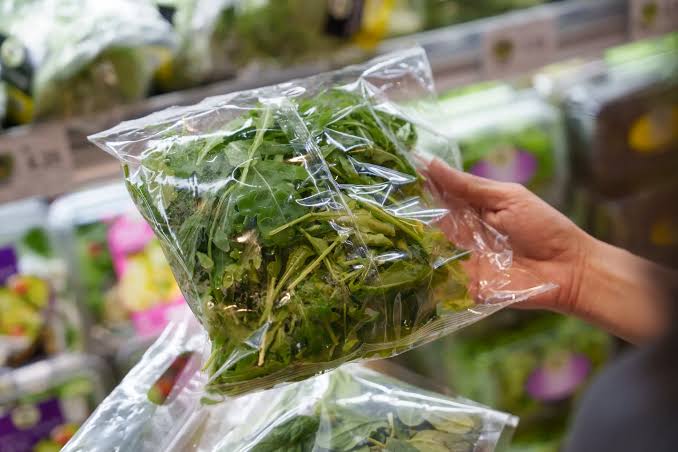
Dr. Natasha Bagdasarian, Michigan's chief medical executive, has been the public face of the state's response, repeatedly urging residents toward defensive kitchen habits rather than waiting for a definitive all-clear from investigators. Her department's guidance, updated as recently as Monday, tells Michiganders to buy whole heads of lettuce instead of pre-washed bagged greens or pre-mixed salad kits, to strip and discard the outer two to three layers of leaves before use, to thoroughly rinse the remaining inner leaves under clean running water, and — for greens that can tolerate it — to cook them to an internal temperature of at least 158°F (70°C), since heat is one of the few things that reliably kills the parasite.
That last point matters, because washing alone often isn't enough. Cyclospora oocysts are notoriously sticky and resistant to the kind of casual rinse most people give a head of lettuce before tossing it in a salad. Public health officials across the affected states are converging on the same blunt message: this summer, treat bagged salad greens with real suspicion, and don't assume a "pre-washed" label on the package means it's actually safe.
WHAT THIS MEANS FOR YOU
If you've eaten shredded iceberg lettuce at a Taco Bell in Indiana, Kentucky, Michigan, Ohio or West Virginia in the past two weeks — or bagged salad greens anywhere in the Midwest — and you've developed watery, recurring diarrhea, don't shrug it off as a routine stomach bug. Call your doctor, describe your symptoms and specifically request Cyclospora testing, since it won't necessarily show up on a standard panel. The infection is treatable with a course of antibiotics (typically trimethoprim-sulfamethoxazole) alongside rest and aggressive rehydration, but the sooner it's caught, the shorter and less miserable the illness tends to be.
More broadly, health officials are asking anyone in an affected state to be cautious with fresh, uncooked leafy greens for the time being — favoring whole heads over pre-cut bags, washing thoroughly, and cooking greens when that's a realistic option. None of the 1,645 confirmed cases nationally has been fatal, and only about 9 percent have required hospitalization, so this is not typically a life-threatening illness for healthy adults. But it is a genuinely wretched one, capable of causing weeks of debilitating symptoms and significant unintended weight loss, and it hits older adults, young children and anyone immunocompromised hardest.
THE BOTTOM LINE
Nearly 7,000 potential cases. A 65 percent case surge in Michigan in just three days. A fast-food giant yanking lettuce from its shelves nationwide. And still, no single, confirmed, contained source. This is a live outbreak, not a closed case — and until investigators can say with confidence exactly where the contamination started and where it stopped, doctors, health departments and the CDC all agree on one thing: don't trust that innocent-looking bag of pre-washed greens quite so blindly this summer.
The investigation continues, and MDHHS says it will keep updating case counts as new lab-confirmed illnesses come in — a number that, as of this week, is still climbing.



