Written By | International News Agencies
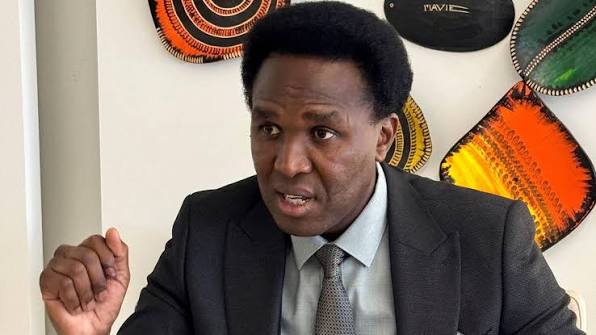
Venâncio Mondlane was notified on Aug. 25, 2026, that he will face five criminal charges arising from the protests that followed the October 2024 vote.
Maputo
Nearly two years after a disputed presidential election tipped Mozambique into the deadliest political unrest of its post-war era, the man who came second in that election is preparing to stand trial before the country's Supreme Court. Venâncio Mondlane was notified on Aug. 25, 2026, that he will face five criminal charges arising from the protests that followed the October 2024 vote. He is not under arrest and has not yet been tried, and he says he expects proceedings to begin within two or three months. No date has been announced.
The charges are public advocacy of crime, incitement to collective disobedience, public instigation to a crime, instigation to terrorism and incitement to terrorism. Prosecutors filed them in July 2025 over Mondlane's alleged role in the post-election unrest, attributing to him "material and moral authorship, in real concurrence of offences." He denies all of them. Under Mozambican law, the five alleged offences carry a potential sentence of more than 20 years' imprisonment.
Whether the case is understood as a criminal proceeding or as the continuation of an unresolved political dispute by other means is the question now running through Mozambican politics — and it is the question that will shape how the verdict, whenever it comes, is received.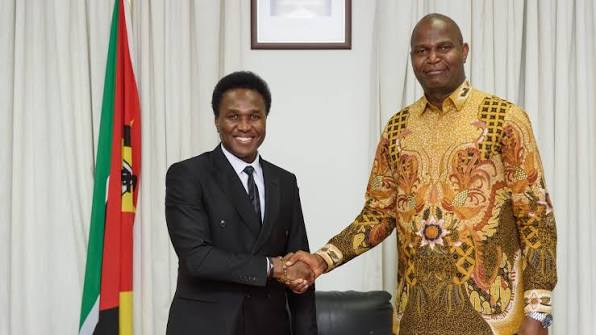
From the ballot box to the streets
Mondlane ran as an independent presidential candidate in the Oct. 9, 2024, election, backed by the Podemos party. He finished second to Daniel Chapo, the candidate of the ruling Mozambique Liberation Front, or Frelimo, which has governed Mozambique without interruption since independence in 1975.
The Constitutional Council confirmed Chapo as the winner with 65.17 percent of the vote to Mondlane's 24.19 percent. Mondlane rejected the result outright and said he had won; Podemos claimed, citing data from its own poll observers, that he had received 53 percent.
What followed was more than five months of demonstrations, strikes and widespread unrest across the country. Reuters reported that more than 300 people were killed; Lusa, the Portuguese news agency, has put the figure at 400. Either number makes it the bloodiest political episode Mozambique has experienced since the end of its civil war in 1992.
Mondlane left the country on Oct. 21, 2024, citing fears for his life. Two days earlier, on Oct. 19, his lawyer and adviser Elvino Dias and the Podemos spokesperson Paulo Guambe had been shot dead in Maputo. From exile he continued to reject the official result and to communicate with supporters, calling protests and strikes by social media and live broadcast — the same communications that prosecutors would later cite as the evidentiary core of their case.
He returned on Jan. 9, 2025, six days before Chapo's inauguration. Thousands of supporters gathered at Mavalane International Airport in Maputo to meet him. Police blocked access and used tear gas, and Reuters reported a heavy security presence. Mondlane was permitted to enter the country and leave the airport.
The government blamed him for inciting the unrest and said he should be held responsible for the damage done during the protests. Chapo, for his part, said Frelimo was open to talks with the opposition. The two men met in Maputo on March 23, 2025 — their first meeting since the election — and again on May 20. The day after the first meeting, Mondlane called for an end to the violence, and no further social unrest tied to the electoral dispute has been reported since. The meetings did not resolve the underlying dispute over the result.
The immunity question
The route by which the case reached the Supreme Court is itself contested, and it turns on an unusual constitutional feature.
Under the Mozambican constitution, the second-most-voted presidential candidate takes a seat on the Council of State, an advisory body to the president. Mondlane assumed that seat on Sept. 1, 2025. Council members carry immunity, and the law governing the Council specifies that they are tried by the Supreme Court rather than the ordinary courts — which is why a case brought by the Public Prosecutor's Office now sits before the country's highest bench.
Article 15 of that law provides that no member of the Council of State may be detained or arrested without the Council's authorization, except for a crime punishable by a long prison sentence and in flagrante delicto. A second paragraph provides that where a member is definitively indicted, the Council shall deliberate on whether that member should be suspended so the proceedings can continue.
The Council did so in a deliberation dated June 10, 2026, suspending Mondlane's immunity to allow case No. 52/2025-P to proceed. The decision was not made public until August, after Mondlane announced that he had been notified of his trial. He has challenged it, arguing that the Council of State lacks the legal authority to suspend the immunity of its own members.
That challenge sits awkwardly beside his own earlier position. In October 2025, Mondlane said he wanted his immunity lifted so that he could be tried, and declared himself "fully available" to face the court. In a video message posted to his social media channels after learning the files had reached the Supreme Court, he was defiant: "I am well, I have been waiting for this moment, I am ready to enter the courtroom, sit in the defendant's seat, and be judged for a noble cause — the cause of awakening a people." He added: "Let the trial take place — I know it will be the trial of the century in Mozambique."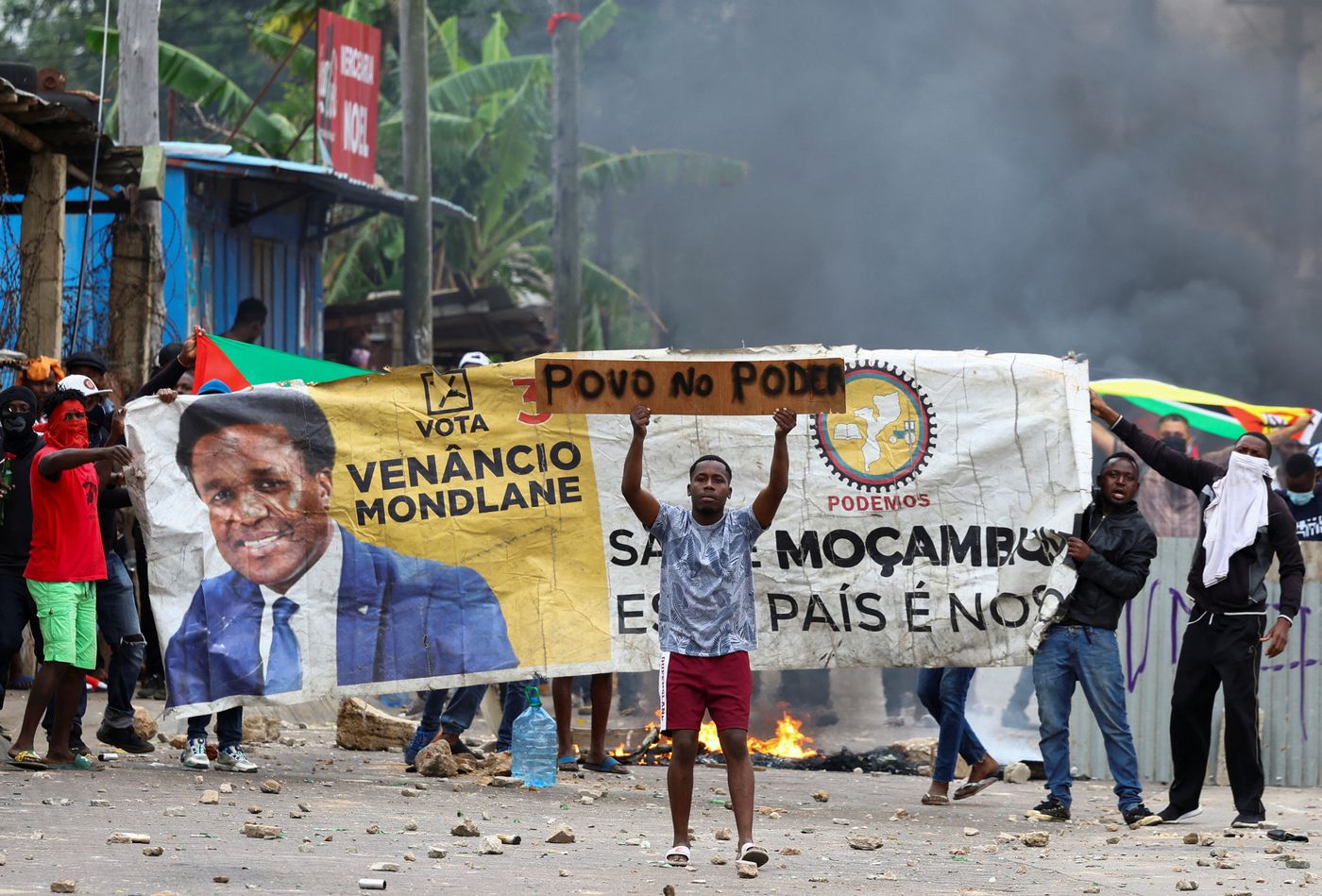
Two readings of the same case
Mozambican commentators are divided less over the facts than over what the trial signifies.
Salomão Moyana, a veteran journalist and political commentator, told Al Jazeera the case cuts two ways. "This trial is politically untimely, given the country's current political situation. But at the same time, it is legally timely for Venancio himself, because it gives him an opportunity to finally put these pending cases behind him." He also drew a distinction that has been widely lost in the public argument: "He is not being accused by the court; he is being accused by the Public Prosecutor's Office, by the Attorney General's Office. The court is there to adjudicate."
Andre Mulungo, an activist with the Centre for Democracy and Development, framed it as a structural failure. "The trial of Venancio Mondlane reflects a broader pattern of the judicialisation of politics in Mozambique," he said. "A crisis that is essentially political, marked by disputes over the election results and a lack of trust in electoral processes, cannot be resolved in the courts. Political problems require political solutions." He warned that perception itself carries a cost: "The way the situation is evolving, the case is being perceived by society not simply as an act of justice, but as the use of justice as a political weapon. It is precisely this perception that must be avoided, because it further undermines citizens' confidence in the institutions of justice."
What is actually at stake
The most concrete stake is electoral. The Institute for Security Studies noted in September 2025 that the charges could prevent Mondlane from contesting the 2029 presidential election. That is an assessment, not a judicial finding: Mondlane has not been convicted, and no trial has taken place.
The lawyer Esau Cossa sketched what he considers the likely outcome to Al Jazeera: "It seems to me that he will not be imprisoned, but he will not have a clean record and will then be made ineligible to run in 2029." If that is right, the trial's function would be disqualification rather than incarceration — a distinction with real political consequences, since a jailed Mondlane would be a martyr while a barred one would simply be absent from the ballot.
Mondlane has meanwhile been building an institutional vehicle. He founded a party under the name Anamalala — a Makhuwa expression from Nampula province meaning roughly "it's over," which became the slogan of his campaign and then of the protests. On Aug. 7 he announced that the name had been changed to Anamola, following a government request objecting to the original acronym's linguistic meaning. A conviction that leaves him ineligible would hand that party a leader who cannot be its candidate.
What to watch
Three markers will define the next phase. First, scheduling: Mondlane's estimate of two or three months would place the opening of proceedings between November 2026 and January 2027, but the Supreme Court has announced nothing, and delay is itself a political instrument in either direction. Second, the immunity appeal: if Mondlane's challenge to the Council of State's authority is taken up seriously, it could stall the case on a constitutional question that has never been tested. Third, the streets. Mozambique has been calm on this issue since March 2025, when Mondlane himself called for an end to the violence. He is the person best placed to keep it that way, and also the person with the most to gain from not doing so. His conduct as the trial approaches will indicate which of those he intends to be.



