The FDA just approved a triple-threat cancer drug that cut the risk of death or disease progression by 76% — and it was built specifically for the majority of breast cancer patients that targeted therapy left behind
WASHINGTON
For nearly a decade, the pharmaceutical industry has sold women with hormone receptor-positive, HER2-negative breast cancer a very specific kind of hope: targeted therapy, precision medicine, drugs engineered to attack the exact mutation driving their tumor. There was just one catch that rarely made the headlines. Those precision drugs only worked if you had the right mutation to begin with — and roughly 6 in 10 patients in this category don't.
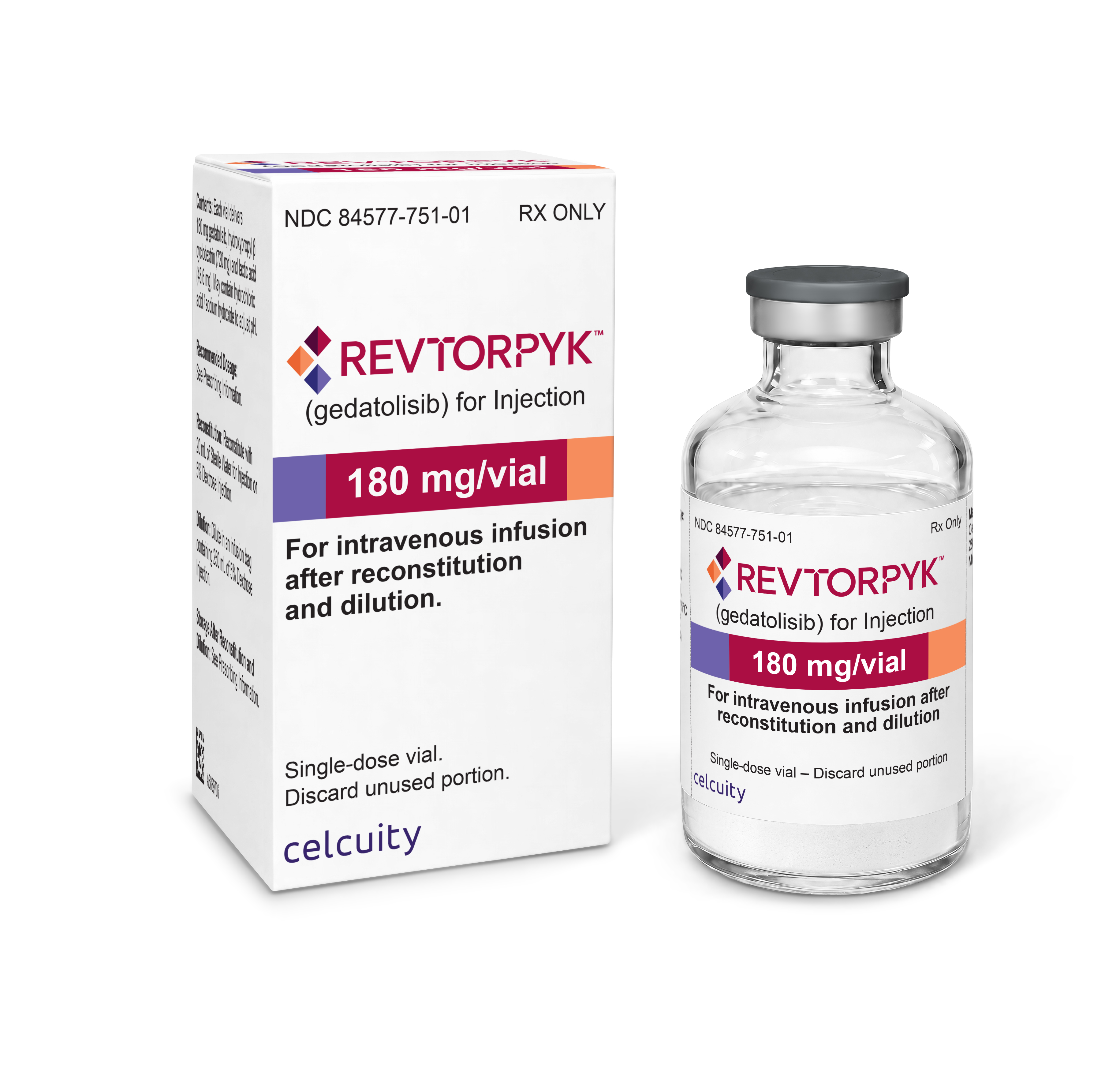
That gap just got a lot smaller. On July 14, 2026, the Food and Drug Administration approved Revtorpyk (gedatolisib), made by Minneapolis-based biotech Celcuity, as the first-ever targeted therapy specifically indicated for patients with PIK3CA "wild-type" HR-positive, HER2-negative advanced or metastatic breast cancer — medical shorthand for patients who do not carry a mutation in the PIK3CA gene, and who, until this week, had no PI3K-pathway-targeted drug approved for them at all.
In the pivotal Phase 3 VIKTORIA-1 trial, gedatolisib combined with the hormone therapy fulvestrant — with or without the drug palbociclib — slashed the risk of cancer progression or death by 67% and 76%, respectively, compared to fulvestrant alone. For a patient population that oncologists estimate at roughly 37,000 women diagnosed each year in the U.S. alone, it's the first time a drug built explicitly for their tumor biology has reached pharmacy shelves.
THE MUTATION THAT DETERMINED YOUR ODDS
To understand why this approval matters, you need to understand a quiet but consequential divide that has existed in breast cancer care since 2019, when Novartis's drug alpelisib (brand name Piqray) became the first PI3K inhibitor approved for HR+/HER2- advanced breast cancer. Piqray targeted a specific mutated protein in the PI3K signaling pathway — one of the cell's central growth-and-survival switches, and one that goes into overdrive in a significant share of breast tumors.
Piqray worked, and worked well, for patients whose tumors carried a PIK3CA mutation — roughly 40% of the HR+/HER2- population. But for the other 60%, the majority of patients, Piqray simply wasn't approved, because there was no evidence it worked without the mutation it was built to target. Truqap (capivasertib), a rival AKT inhibitor from AstraZeneca, later expanded eligibility slightly to include some additional pathway alterations, but the fundamental math didn't change much: most patients with this common form of breast cancer were locked out of PI3K-pathway-targeted treatment altogether, left to cycle through standard hormone therapies and chemotherapy as their disease progressed.
Gedatolisib was built differently. Rather than targeting one mutated piece of the PI3K pathway, it's a pan-PI3K and mTOR inhibitor — meaning it blocks all four class I PI3K isoforms (alpha, beta, delta and gamma) plus both mTOR complexes, mTORC1 and mTORC2, the downstream machinery the pathway relies on to keep driving tumor growth. That broader mechanism is precisely what allowed it to work in patients regardless of PIK3CA mutation status — turning a drug class that had been mutation-dependent for its entire existence into one that, for the first time, didn't require the "right" mutation to be effective.
THE NUMBERS BEHIND THE HEADLINE
The VIKTORIA-1 trial enrolled patients with HR+/HER2- advanced or metastatic breast cancer whose disease had progressed after treatment with a CDK4/6 inhibitor — a standard-of-care drug class that includes palbociclib, ribociclib and abemaciclib and is typically among the first treatments prescribed after an initial breast cancer diagnosis progresses. Patients were split by PIK3CA mutation status and randomized to receive fulvestrant alone, fulvestrant plus gedatolisib, or fulvestrant plus gedatolisib plus palbociclib.
In the PIK3CA wild-type cohort — the group that had never before had a targeted option — the results were stark. The triplet combination (gedatolisib plus fulvestrant plus palbociclib) reduced the risk of disease progression or death by 76% compared with fulvestrant alone. The doublet (gedatolisib plus fulvestrant, no palbociclib) reduced that risk by 67%. Objective response rates — the share of patients whose tumors measurably shrank — came in at 32% for the triplet and 28.3% for the doublet, compared with just 1% for patients on fulvestrant alone, according to trial data reported by AJMC and Targeted Oncology.
The trial also delivered a second, unexpected headline earlier this year: in the separate PIK3CA-mutant cohort, where gedatolisib went head-to-head against Novartis's incumbent drug Piqray, gedatolisib won. Patients on the gedatolisib triplet had a median progression-free survival of 11.1 months, compared to 5.6 months for patients on alpelisib plus fulvestrant — a 50% reduction in the risk of disease progression or death, according to results covered by BioPharma Dive and AJMC. It was, as one industry outlet put it, a rare case of a newcomer directly dethroning an established blockbuster in its own indication.
A GENTLER SIDE-EFFECT PROFILE
Cancer drugs that hit broad, multi-target pathways often come with broad, multi-system side effects, and gedatolisib is no exception — but its safety profile turned out to be a meaningful selling point relative to its rival. The most common treatment-related adverse effect was stomatitis, or mouth sores: reported in 69.2% of patients on the triplet regimen and 56.9% on the doublet, though the vast majority of cases were mild (grade 1) and manageable with preventive mouth-rinse protocols that have become standard practice for PI3K-pathway drugs. Rash occurred in roughly 28–32% of patients, diarrhea in 12–17%, and hyperglycemia — elevated blood sugar, a hallmark side effect of PI3K-pathway inhibition — in just 9–12%.
That last figure is where gedatolisib distinguished itself most clearly from Piqray. Because alpelisib selectively targets the PI3K-alpha isoform, which plays an outsized role in insulin signaling, hyperglycemia has long been one of its most troublesome and treatment-limiting side effects, occurring in nearly 58% of patients on alpelisib plus fulvestrant in comparative data. Gedatolisib's broader, multi-isoform blockade produced hyperglycemia in only 11–15% of patients — a difference oncologists have flagged as clinically meaningful, since blood sugar spikes are a common reason patients have to reduce their dose or stop PI3K-pathway treatment altogether. Diarrhea followed a similar pattern, showing up in 40.1% of alpelisib patients versus roughly 10–15% of gedatolisib patients.

WHAT THE COMPANY IS SAYING
Celcuity CEO Brian Sullivan framed the approval not just as a business milestone but as a shift in what patients with this diagnosis can reasonably expect from their treatment. Sullivan said the company hopes Revtorpyk can give patients "more time to feel like the disease is under control" so they can maintain "some semblance of a normal life" — language that reflects a broader industry pivot toward measuring cancer drugs not just by survival statistics but by quality of life during treatment.
Sullivan has also pitched gedatolisib's approach as a paradigm shift for how the PI3K pathway gets targeted in cancer more broadly, saying the company sees itself doing for pan-pathway inhibition "in a lot of ways" what earlier drugs did for single-mutation targeting — a comment industry watchers have read as a signal that Celcuity may pursue additional indications for gedatolisib beyond this initial breast cancer approval.
The approval has also fueled speculation, reported by Fierce Pharma, that Celcuity itself could become an acquisition target for a larger pharmaceutical company eager to add a validated, differentiated PI3K-pathway asset to its oncology pipeline — the kind of speculation that tends to follow any biotech that emerges from a pivotal trial with both an FDA approval and head-to-head superiority data over an established competitor in hand.
WHAT THIS MEANS FOR YOU
If you or someone you love has been diagnosed with HR-positive, HER2-negative advanced or metastatic breast cancer, the single most useful piece of information to bring to your next oncology appointment is your tumor's PIK3CA mutation status — a status that, until this week, mostly determined whether a PI3K-pathway drug was even on the table. Patients whose disease has progressed after a CDK4/6 inhibitor like palbociclib, ribociclib or abemaciclib should specifically ask whether Revtorpyk, used with fulvestrant and with or without palbociclib, is an appropriate next step, regardless of whether their mutation testing came back positive or negative for PIK3CA.
It's worth noting plainly what this approval is not: it is not a cure, and the FDA's approval covers a specific, previously-treated patient population rather than newly diagnosed patients. Side effects, while generally milder than with alpelisib, are still real and require monitoring — patients starting on gedatolisib should discuss preventive mouth-care routines with their care team given how common stomatitis was in trial participants. And as with any newly approved therapy, questions around long-term insurance coverage, out-of-pocket cost and pharmacy access typically take weeks or months to fully resolve after an FDA approval, so patients should expect some initial friction in actually obtaining the drug even after their oncologist prescribes it.
THE BOTTOM LINE
Breast cancer treatment over the past decade has increasingly sorted patients into winners and losers based on which mutations happened to be driving their tumor — a reality that, for the majority of HR+/HER2- patients without a PIK3CA mutation, meant watching a parade of "precision medicine" headlines that were never actually written for them. Revtorpyk's approval doesn't erase that history, but it does close one of its more glaring gaps, arriving with trial data strong enough to beat not just placebo but an established rival drug head-to-head.
For the roughly 37,000 American women diagnosed each year with this specific, historically underserved form of advanced breast cancer, July 14, 2026 marks the first time in the PI3K-inhibitor era that their mutation status stopped being the reason a drug wasn't available to them.
Published By | Features Editor