Written By | International News Agencies
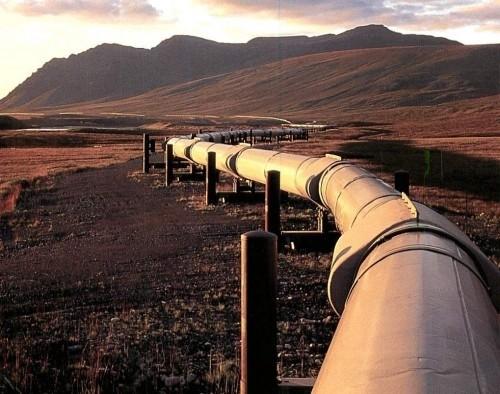
Chad's crude comes from the Doba basin in the south and travels roughly 1,070 kilometres by pipeline through Cameroon to Atlantic terminals
Economic & Social Transformation
Chad is one of the few African economies whose headline numbers depend on which institution you ask. In 2025 the World Bank estimated real GDP growth at 5.6 percent. The African Development Bank put the same year at 3.4 percent, down from 5.0 percent in 2024. Both institutions describe a country of about US$21 billion in output, a low debt burden, a deficit within regional limits and an economy anchored by crude oil. They also describe one of the poorest populations on earth. This article takes the gap between the two sets of books as its starting point, because it says something real about how little the region knows about the Chadian economy and why the country's reform programme matters more than its growth rate.
A modest balance sheet, on paper
By the World Bank's Macro Poverty Outlook, Chad's 2025 fiscal deficit was 1.7 percent of GDP on revenues of 17.8 percent of GDP, and public debt stood at 30.2 percent of GDP, projected to ease to 28.7 percent in 2026. The African Development Bank's outlook gives a 2025 deficit of 2.3 percent, down from 2.7 percent in 2024, and debt of about 32 percent of GDP at the end of 2024. Both sit comfortably under the 3 percent deficit benchmark of the Economic and Monetary Community of Central Africa (CEMAC). For a low-income, landlocked, conflict-exposed country, this is an unusually clean headline.
Inflation tells the same story of divergence. The World Bank records deflation of 2.6 percent in 2025, driven by lower food and transport prices, and projects 2.2 percent in 2026. The African Development Bank reports inflation falling to 3.9 percent from 5.1 percent. The International Monetary Fund, for its part, noted year-on-year inflation of minus 4.3 percent in November 2025. The sign of the number depends on the basket and the month, and none of these sources offers a reconciliation. Readers should treat the direction of travel, benign price pressure, as more reliable than any single figure.
The more telling statistic is the World Bank's non-oil primary deficit of 6.6 percent of GDP in 2025. The overall deficit looks small only because oil fills the gap. In 2024 oil contributed 14.3 percent of GDP, 51.8 percent of fiscal revenue and 65.3 percent of exports. Strip the barrels out and the state is spending far more than the rest of the economy can finance.
The oil route runs through Cameroon
Chad's crude comes from the Doba basin in the south and travels roughly 1,070 kilometres by pipeline through Cameroon to Atlantic terminals. That makes Chadian fiscal health a function of three things outside N'Djamena's control: the world oil price, the reliability of the pipeline corridor and the investment decisions of producers. The 2023 change in the ownership of ExxonMobil's Chadian assets, which passed to Savannah Energy, added uncertainty about long-term investment, even though the World Bank expects output to expand.
The upside scenario in the World Bank's outlook is explicit: higher global oil prices and effective implementation of the National Development Plan. The downside list is longer, covering regional insecurity, financial-sector fragilities, climate shocks and refugee inflows. For a government whose spending is anchored on a single commodity, the management of that volatility is the central job of fiscal policy.
The IMF programme and the regional bottleneck
The main reform anchor is a four-year Extended Credit Facility (ECF) with the IMF, approved by the Executive Board on 25 July 2025 for SDR 455.65 million, about US$655 million at the time of the staff announcement and equal to 325 percent of Chad's quota. In its 19 December 2025 statement on the first review, IMF staff reported a staff-level agreement and highlighted progress, including the reduction of CFAF 42 billion in contractor payment arrears and the clearance of CFAF 51 billion in external arrears. It also revised the 2026 growth forecast to 5.1 percent from 3.6 percent.
A staff-level agreement is not a disbursement, however. Commentary on the programme notes that the IMF board also needs regional policy commitments from CEMAC institutions, led by the regional central bank, BEAC, before it can complete the review. Another IMF mission visited N'Djamena from 4 to 15 May 2026, led by Julien Reynaud, and concluded it had made significant progress toward staff-level agreement on the first and second reviews combined. The press release lists an unusually broad set of counterparties, from the Ministry of Finance to the anti-corruption authority, the financial-investigation agency, the public-procurement regulator and the national statistics institute INSEED. The inclusion of the statistics office is telling given the data discrepancies above.
Chad's programme is therefore hostage to a regional process. Its fate depends not only on Chadian arrears clearance and budget execution, but on a regional pledge on reserves and external stability. BEAC has reportedly targeted completion of the regional review for December 2026 after further IMF missions in October. For Chadian policymakers this is a reminder that membership in a currency union gives monetary stability but also shares the timetable.
Poverty: a decade of growth without much change
The social record is the most sobering part of the picture. The World Bank estimates that 40.7 percent of Chadians live below the US$3.00-a-day line (2021 purchasing-power parity), about 8.5 million people in extreme poverty, and projects that share to fall only to 39.5 percent by 2028. The African Development Bank cites a national poverty rate of 42.3 percent and a rise in extreme poverty to 35.4 percent in 2023 from 31.2 percent in 2018. Chad ranks 190th out of 193 countries in the UN's Human Development Index for 2025, with maternal mortality of 860 per 100,000 live births and infant mortality of 78 per 1,000.
These figures imply that growth of five percent a year barely dents poverty when population growth is rapid, jobs are informal and the productive base is thin. The World Bank puts per-capita growth at 2.1 percent in 2025 against headline growth of 5.6 percent. At that pace, a family at the poverty line needs decades, not years, to cross it. The elasticity of poverty to growth is low because oil, which creates the growth, creates few jobs.
A development plan that needs private money
The National Development Plan is the government's roadmap for diversification. According to the African Development Bank, it requires about US$30 billion in total financing, of which 46 percent is expected from the private sector. Commitments of US$20.5 billion had been secured by November 2025. Pledges are not investments, and in a country where agriculture, livestock and small-scale trade employ most people, the real test is whether those commitments reach farms, feeder roads, power and storage rather than the capital's construction sites.
The agricultural sector is the most plausible source of non-oil growth. The African Development Bank expects its outlook of 3.6 percent growth in 2026 and 3.5 percent in 2027 to be driven by agriculture. The World Bank is more optimistic, at 5.2 percent in 2026 and 5.3 percent in 2027 and 2028. The difference between the two projections is again about oil and about how fast the new investment turns into output.
The Sudan refugee burden
Chad's fiscal and social position cannot be separated from the war in neighbouring Sudan. The IMF counts about 1.5 million refugees and asylum seekers in Chad, including 160,000 additional Sudanese arrivals since January 2025. Reporting on eastern Chad suggests almost one million people have crossed since April 2023, that more than 55,000 arrived during 2026 and that arrivals reached about 400 a day in late September. Only about 20 percent of the US$1.6 billion regional humanitarian appeal had been funded.
These numbers matter for the macroeconomic outlook in two ways. First, refugee hosting adds to local demand for food, water and services in some of the country's poorest provinces, with little offsetting fiscal space. Second, when donor funding falls short, the cost shifts to host communities and the Chadian budget. The World Bank lists refugee inflows as a named downside risk.
What to watch
Three questions will determine whether Chad's strong headline performance turns into lasting development. First, will the IMF board complete the first and second ECF reviews once BEAC delivers its regional commitments, and will the disbursements support the arrears clearance that is already under way? Second, can the government raise non-oil revenue and contain the non-oil primary deficit of 6.6 percent of GDP before an oil-price fall exposes it? Third, will statistical capacity improve enough that the World Bank, the African Development Bank and the IMF are describing the same economy?
The honest answer to what Chad's growth rate was in 2025 is that it lies somewhere between 3.4 and 5.6 percent. That uncertainty is not a trivial footnote. It is a measure of how much of the country's development story still depends on better data, a more diversified economy and a regional financial architecture that moves at the speed of its slowest member.



