Written By | Health News Agencies
As Uganda celebrates being declared Ebola-free, a monstrous sister outbreak of a rare, vaccine-resistant Ebola strain is tearing through Congo's jungles, killing nearly one in two people it infects
SCIENCE & HEALTH
While the world's attention drifted elsewhere, one of the deadliest Ebola outbreaks in modern history has been quietly detonating across the eastern Democratic Republic of the Congo — and the virus at the center of it doesn't respond to any vaccine on Earth.
As of this week, the numbers are almost too grim to process: 5,656 confirmed cases and 2,715 deaths in the DRC alone, a case fatality rate creeping toward 48 percent. That means for every two people who catch this thing, one of them dies. To put that in perspective, the Ebola strain that sparked the catastrophic 2014 West Africa epidemic — the one that killed over 11,000 people and terrified the entire planet — had a fatality rate of roughly 40 percent. This one is worse.
And yet, just this week, next-door Uganda threw open a very different chapter: health officials and the World Health Organization jointly announced that Uganda's own slice of the crisis was officially over, after the country passed the mandatory 42-day monitoring period — the final stretch of surveillance that must pass without a single new case before an outbreak can be declared finished. Uganda's Health Minister, Dr. Chris Baryomunsi, confirmed the country had recorded 20 cases in total, with 18 survivors and two deaths, and had successfully snuffed out transmission at its border.
It's a genuine win. But it is also, in the ugliest possible way, a study in contrasts — because barely a hundred miles away, across the DRC border, the same outbreak is spiraling further out of control, not winding down.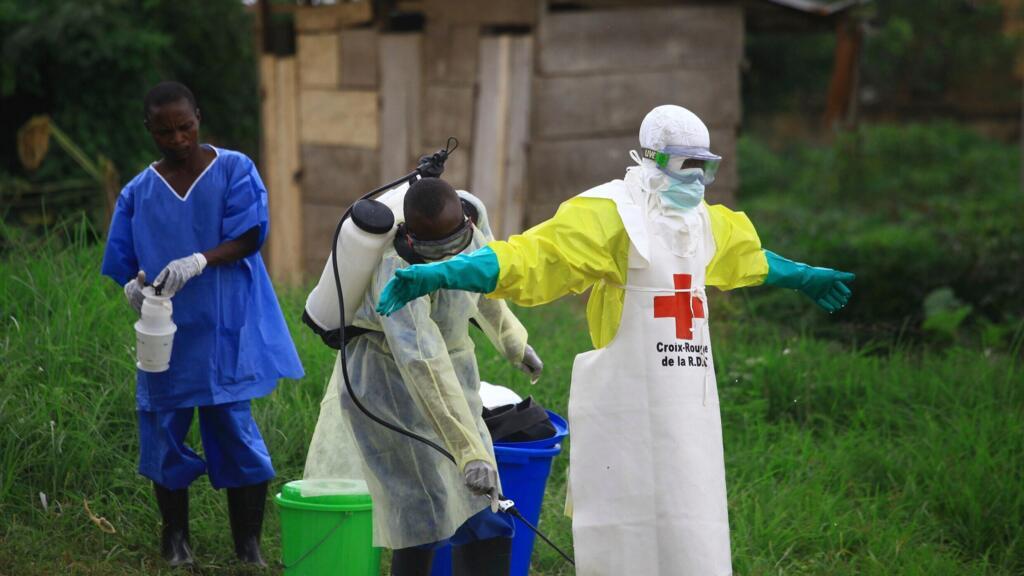
A virus without a cure, without a vaccine, and without mercy
Here's the detail that should terrify anyone paying attention: this isn't the "regular" Ebola virus — the Zaire strain — that the world spent the last decade building defenses against. This outbreak is caused by the Bundibugyo ebolavirus, a rarer and less-studied cousin of the virus, first identified back in 2007 in the Ugandan district it's named after.
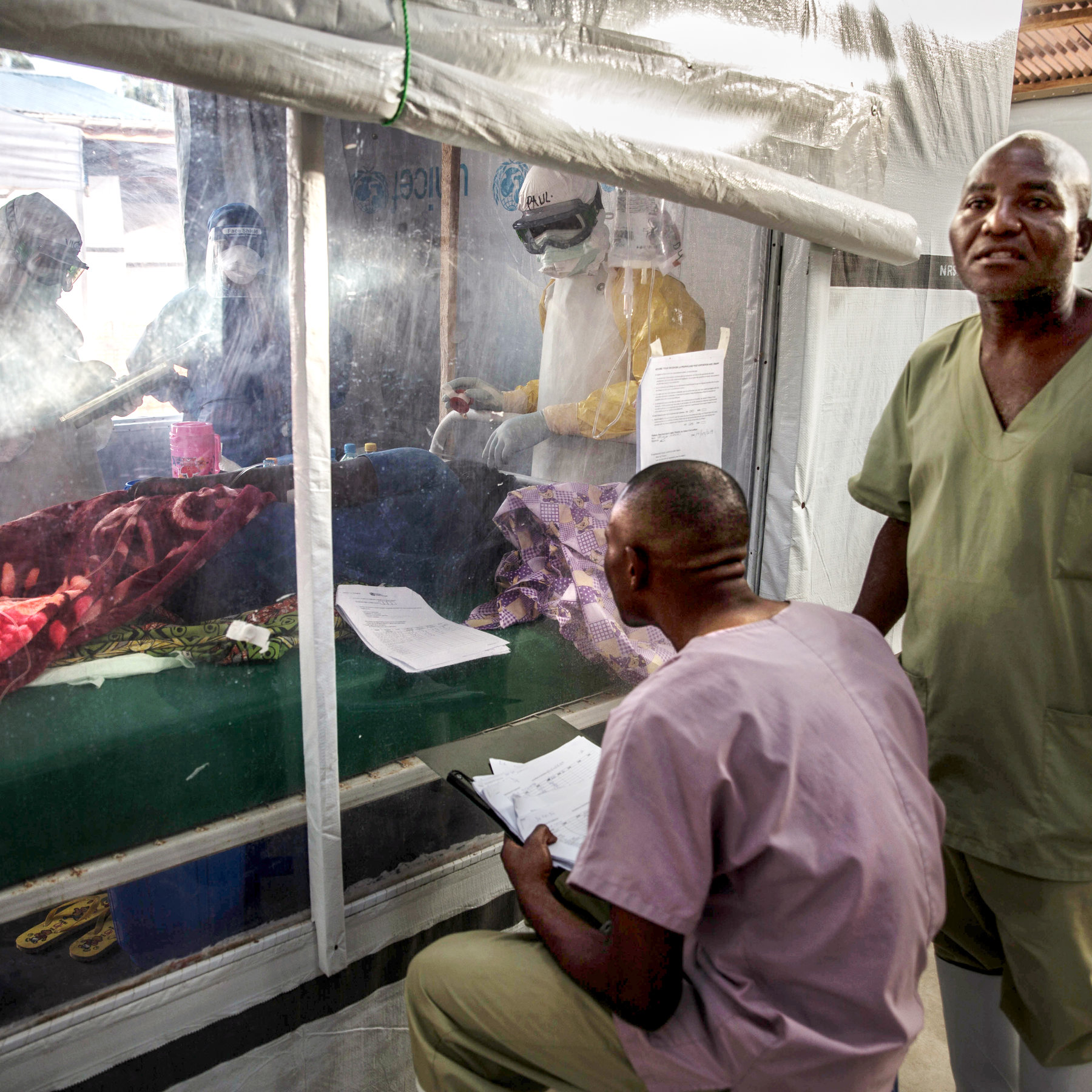
Every Ebola vaccine and treatment currently licensed anywhere on the planet — including the widely used Ervebo shot and monoclonal antibody treatments like Inmazeb — was developed and certified specifically against the Zaire strain. None of them carry regulatory approval for Bundibugyo. Doctors on the ground in the DRC are effectively fighting one of the deadliest pathogens known to science with only their bare hands, protective suits, supportive IV fluids, and hope.
WHO Director-General Dr. Tedros Adhanom Ghebreyesus did not mince words in a recent public statement, warning that "Eastern DRC now faces a catastrophic collision of disease and conflict," with the Ebola outbreak in Ituri province "outpacing the response" and adding bluntly that "the Ebola Bundibugyo virus has no approved vaccine nor treatment." He said stopping transmission now depends "entirely on humanitarian access" — a devastating admission that, in a region ripped apart by ongoing armed conflict, medical teams frequently cannot even reach the sick.
The World Health Organization declared the outbreak a Public Health Emergency of International Concern — the highest alarm level that exists under international law — on May 17, 2026. Three months later, instead of the emergency cooling off, it has metastasized. What began as a localized flare-up in Ituri province has now spread into 54 separate health zones across six provinces: Ituri, North Kivu, South Kivu, Haut-Uélé, Tshopo, and Bas-Uélé. Ituri remains the epicenter, with 4,716 cases and 2,119 deaths recorded across 28 of its 36 health zones. North Kivu, a province already infamous for being one of the most conflict-torn corners of the country, has logged 735 cases and 501 deaths.
A desperate scramble for a vaccine that might not even work
With no dedicated shot available, global health authorities are now improvising. A WHO expert panel has unanimously recommended fast-tracking a Phase III clinical trial of Ervebo — the Zaire-strain vaccine — to test whether it offers any cross-protection against the Bundibugyo strain. Scientists genuinely do not know if it will work. The viruses are related but genetically distinct enough that immunity built against one doesn't reliably transfer to the other.
In the meantime, the Democratic Republic of Congo is set to receive roughly 70,000 doses of the Ervebo vaccine, according to reporting this month, in what amounts to a calculated gamble: deploy the best tool available, even without proof it targets the right enemy, because doing nothing is worse. Talks to formally launch that clinical trial inside the DRC have been advancing through August, but bureaucratic, ethical, and logistical hurdles — vaccinating people in an active war zone, obtaining informed consent amid chaos, transporting cold-chain vaccines to roadless jungle health posts — mean no one is promising a fast fix.
Adding to the nightmare: earlier reporting this month described Ebola killing more than 1,700 people in the DRC as of early August, with Tedros personally returning to the region ahead of a scheduled WHO review on August 18. The death toll has climbed by roughly a thousand more since then, underlining just how fast this thing is moving.
Why this outbreak is different — and more dangerous
Public health experts and outlets like Doctors Without Borders have pointed out that the Bundibugyo strain outbreak is behaving differently than past Ebola crises in several worrying ways. It's spreading across an unusually large and fragmented geography, hopping between health zones separated by dense forest and minimal infrastructure. It's doing so in a region already gripped by armed conflict between government forces and multiple militia groups, which routinely blocks aid convoys, forces treatment centers to evacuate, and makes contact tracing — the single most important tool for stopping any Ebola outbreak — nearly impossible in large stretches of territory.
Health workers, already in short supply, face targeted violence, kidnapping risk, and impossible working conditions. Community mistrust of outside medical teams, a problem that has plagued past Congolese Ebola responses, compounds the danger: fearful families sometimes hide sick relatives rather than report them, allowing the virus to spread further before health authorities even learn a case exists.
Expert perspective
Frontline organizations have been unusually blunt about the stakes. Doctors Without Borders has described the Bundibugyo strain outbreak as fundamentally different from prior Ebola emergencies specifically because the medical toolkit that worked in West Africa and during DRC's Zaire-strain outbreaks in 2018-2020 simply doesn't apply here. Gavi, the vaccine alliance, has similarly emphasized that Bundibugyo "has no vaccine yet" and that the current scramble to test Ervebo represents uncharted scientific territory, not a known solution.
Tedros's own language — describing a "catastrophic collision of disease and conflict" — is about as urgent as WHO rhetoric gets, and it reflects a rare admission from the world's top health official that the response is currently losing ground rather than gaining it.
What this means for you
If you're reading this from outside Central Africa, your personal risk remains extremely low — Ebola spreads through direct contact with the bodily fluids of a symptomatic or deceased infected person, not through the air, and past outbreaks (even the catastrophic 2014 one) have shown that robust airport screening, contact tracing, and isolation protocols in wealthy countries have reliably prevented large-scale spread beyond affected regions.
That said, there are real reasons to pay attention. International travelers to eastern DRC, Uganda, or neighboring Central African Republic, Republic of Congo, and South Sudan should check current CDC and WHO travel guidance before any trip, as cross-border surveillance has been ramped up in all five nations. Healthcare and aid workers considering deployment to the region should be aware they'd be operating in an environment where the standard toolkit — approved vaccines and monoclonal antibodies — isn't certified to protect them. And for anyone who donates to global health causes, this outbreak represents one of the most acute, underfunded emergencies on the planet right now: WHO and NGOs on the ground have repeatedly flagged funding and access gaps as being just as deadly as the virus itself.
There's also a broader lesson here about the limits of our pandemic preparedness. The world spent a decade and billions of dollars building an Ebola response toolkit — and it turns out that toolkit only covers one of several dangerous Ebola species. Marburg virus, Sudan ebolavirus, and Bundibugyo ebolavirus all remain without dedicated, approved vaccines, a gap infectious disease specialists have warned about for years and one this outbreak is now exposing in the worst possible way.
The bottom line
Uganda's victory is real and worth celebrating — 20 cases, contained, with minimal loss of life, is a genuine public health success story born of fast action and international cooperation. But it shouldn't obscure the catastrophe unfolding next door. In the DRC, a rare, understudied strain of one of history's most feared viruses is spreading across six provinces, killing roughly half the people it infects, and doing so in a warzone where the world's best medical tools don't even apply. Scientists are racing to find out if an existing vaccine can be repurposed in time. Whether they succeed before the death toll climbs further is, right now, an open and terrifying question.



