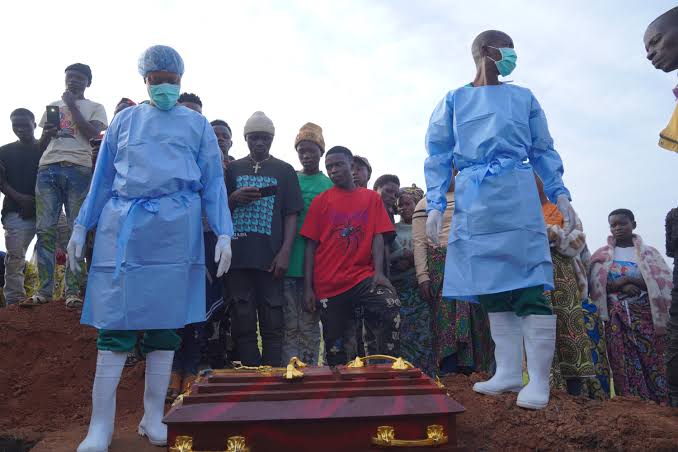
Goma, Democratic Republic of the Congo
The numbers arriving out of the Democratic Republic of the Congo this month read like a horror-movie script, except nobody is going to yell cut. As of the World Health Organization's latest count on August 12, 2026, 4,665 people have been confirmed infected with a rare and vicious strain of Ebola called Bundibugyo virus disease, and 2,184 of them are dead. That is a case fatality rate of 46.8 percent — meaning that for every two people who catch this thing, roughly one doesn't survive it. Add Uganda's cases and a single traveler diagnosed in France, and the running total climbs to 4,686 infections and 2,186 deaths, and rising by the day.
This is no longer just a bad outbreak. Health officials now say it is the largest Ebola epidemic ever recorded inside the DRC, eclipsing the devastating 2018-2020 North Kivu outbreak that killed more than 2,200 people over nearly two years. What makes this year's crisis so alarming isn't just its size — it's its speed. The week ending August 9 was the single worst week of the entire epidemic, with 579 new confirmed cases and 304 deaths recorded in just seven days. WHO Director-General Dr. Tedros Adhanom Ghebreyesus has described the pace of spread as “unprecedented,” and warned that unless testing, contact tracing and isolation are drastically scaled up, the death toll is “almost certain” to eclipse the 11,308 lives lost in the 2014-2016 West African Ebola epidemic — the deadliest in recorded history.
A Virus the World Wasn't Ready For
Here is the part that should worry you most: the vaccines and treatments that stopped previous Ebola outbreaks in their tracks don't fully work against this one. Ebola isn't a single virus — it's a family of related pathogens, and the strain driving this catastrophe, Bundibugyo ebolavirus (BDBV), is a genetically distinct cousin of the more familiar Zaire ebolavirus. The world's only licensed Ebola vaccine, Ervebo, and the monoclonal antibody treatments doctors have relied on since 2019, were built and certified specifically against the Zaire strain. Against Bundibugyo, their effectiveness is uncertain at best, leaving frontline responders essentially fighting a five-alarm fire with a hose that may or may not be hooked up to water.
Researchers are racing to test promising vaccine candidates that could work against BDBV, but nothing has been approved yet — which means, for now, containment depends almost entirely on old-fashioned shoe-leather public health: finding the sick, tracing everyone they touched, and isolating them before the chain of transmission continues. In a region gripped by armed conflict, mass displacement, and porous borders, that is proving brutally difficult.
How It Spiraled Across Six Provinces
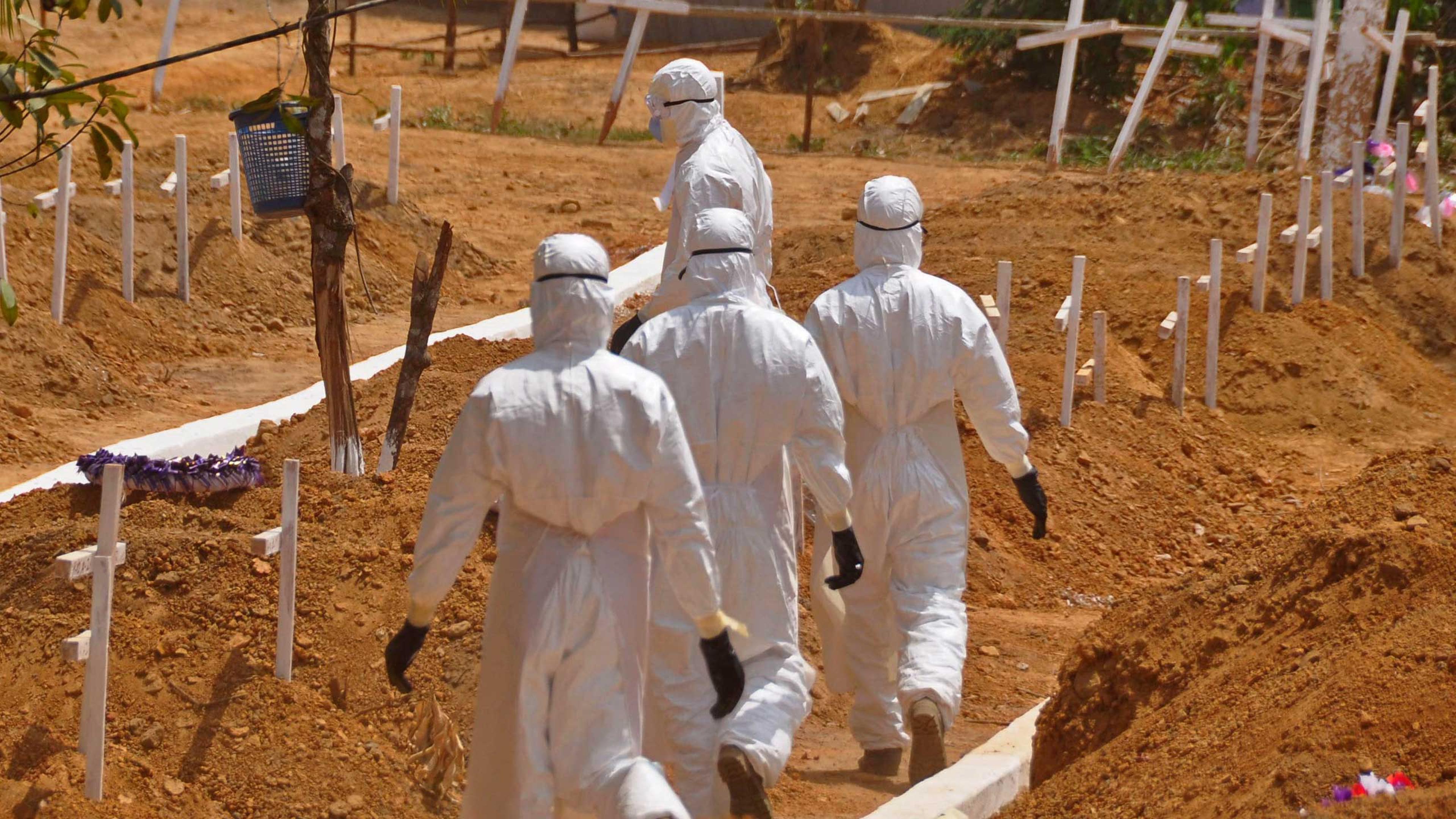
The outbreak was first detected in the Mongbwalu health zone of Ituri Province in the DRC's volatile east, an area long plagued by militia violence and mass displacement. On May 17, 2026, WHO officially declared the epidemic a Public Health Emergency of International Concern (PHEIC) — the organization's highest level of alarm, reserved for crises deemed to pose a serious risk to countries worldwide. That designation was supposed to unlock funding and coordinated international support. Three months later, the virus has instead spread into 54, and by some counts 55, separate health zones across six provinces: Ituri, North Kivu, South Kivu, Haut-Uélé, Tshopo, and — as of early August — the newly affected Bas-Uélé in the northeast, a sign the epidemic is pushing further from its original epicenter, not retreating from it.
Tedros has pointed to a grim cocktail of factors fueling the spread: ongoing insecurity from armed groups operating in the region, waves of displaced families fleeing violence, and constant population movement along the roads, rivers, and informal mining routes that crisscross the eastern DRC. Each of those factors makes the two pillars of outbreak control — finding cases and tracing their contacts — dramatically harder. Health workers attempting to reach remote villages have had to navigate active conflict zones, and families on the move can carry the virus into areas with little to no prior surveillance.
“The epidemic is far from being under control.” — Dr. Tedros Adhanom Ghebreyesus, WHO Director-General
Uganda's Uneasy Exhale
There is at least one sliver of good news in this grim picture. Neighboring Uganda, which recorded its own cluster of 20 confirmed cases and two deaths earlier this year, officially declared its outbreak over on July 28, 2026 — the milestone reached 12 days after the last confirmed patient was discharged and tested clear, following the standard 42-day countdown WHO uses to confirm an Ebola chain of transmission has truly ended. Eighteen of Uganda's 20 patients survived, a far better outcome than the DRC has managed, credited in large part to a rapid initial response and lessons learned from the country's prior Ebola outbreaks in 2000, 2007, 2012, and 2022.
But Uganda's relief comes with an asterisk. The country shares a long, mountainous, and heavily trafficked border with the DRC's eastern provinces, and health officials across the region are treating Uganda's “all clear” as fragile rather than final. Five Central African countries have moved to strengthen border surveillance in response to the DRC's continuing spread, screening travelers and reinforcing testing capacity at crossings, out of concern that the outbreak could reignite across borders the way it very nearly did the first time.
The Global Response, and Its Limits
WHO says it is scaling up support to both the DRC and Ugandan governments across nearly every front of outbreak response: bolstering disease surveillance, expanding contact tracing teams, shoring up clinical care capacity for the sick, delivering medical supplies to remote treatment centers, engaging local communities to combat mistrust and misinformation, and coordinating cross-border preparedness with neighboring nations. On August 18, 2026, WHO convened a second meeting of its International Health Regulations Emergency Committee specifically on the Bundibugyo epidemic — a sign of just how seriously the organization is treating the trajectory of this outbreak.
Still, funding and staffing on the ground remain stretched thin relative to the scale of what's unfolding. Aid organizations have repeatedly flagged that the response is under-resourced compared to previous major Ebola emergencies, even as case counts now outpace anything the DRC has seen before. That mismatch between the size of the crisis and the size of the response is precisely what has WHO leadership sounding the alarm this loudly, this publicly, this early in an outbreak that shows no sign of slowing down.
What This Means for You
If you're reading this from outside Central Africa, your personal risk right now remains low — Ebola does not spread through the air like flu or COVID-19; it requires direct contact with the blood, bodily fluids, or contaminated surfaces of someone who is actively sick or has recently died from the disease. The single confirmed case in France was linked to travel from an affected region and was swiftly contained, underscoring both that international spread is possible and that it can be managed when caught quickly.
The CDC has issued interim guidance for travelers returning from the DRC and Uganda, recommending health monitoring for symptoms — sudden fever, severe headache, muscle pain, vomiting, diarrhea, and in advanced cases, unexplained bleeding or bruising — for 21 days after potential exposure, since that is the outer edge of the virus's incubation period. If you or someone you know has recently traveled to an affected region and develops these symptoms, medical experts stress the importance of seeking care immediately and informing healthcare providers of the travel history before showing up in a crowded waiting room, so appropriate isolation precautions can be taken right away.
A Region That Has Seen This Before, But Never Like This
The eastern DRC is no stranger to Ebola. The region survived the 2018-2020 North Kivu outbreak, at the time the second-largest in history, fought in the middle of an active war zone against armed rebel groups who periodically attacked treatment centers and forced responders to suspend operations entirely in some areas. That outbreak eventually ended after claiming more than 2,280 lives over nearly two years. What's different this time is velocity: the current Bundibugyo epidemic has already surpassed that death toll in a fraction of the time, compressing years of tragedy into months. Public health veterans who worked the 2018-2020 response say they have never seen a chain of transmission accelerate this quickly in the region, even accounting for the added complication of an unfamiliar viral strain.
Compounding the danger is the sheer geography of the affected provinces. Ituri, North Kivu, and South Kivu sit at the heart of one of the world's most complex humanitarian emergencies, with millions of people already displaced by decades of intercommunal and militia violence long before Ebola entered the picture. Treatment centers have to be built, staffed, and supplied in areas where humanitarian convoys already face regular security risks, and community trust in outside health workers — hard-won during the 2018-2020 response — has in some pockets frayed again amid rumors and misinformation about the disease's origins and treatment.
The Bottom Line
This is now, by the numbers, the second-deadliest Ebola outbreak ever documented, trailing only the catastrophic 2014-2016 West African epidemic — and WHO's own director-general is warning it could still overtake that grim record. It is being driven by a strain the world's existing arsenal of vaccines and treatments wasn't built to fight, in a region where conflict and displacement are actively working against every tool public health officials have left. Uganda's successful containment shows the outbreak can be stopped when caught and resourced fast enough. The question now is whether the DRC, and the international community backing it, can do the same before the death toll climbs any higher.
For now, health agencies worldwide are watching the DRC's next few weeks as a bellwether. A slowdown in new cases would be the first sign in months that the tide might be turning. Another week like the one ending August 9 would be the clearest signal yet that this outbreak is still very much writing its own rules. Either way, the world is being reminded, in the starkest terms possible, that the next major infectious disease threat doesn't always announce itself with a brand-new pathogen — sometimes it's an old, familiar enemy wearing a disguise the response playbook wasn't written for.
Published By | Features Editor