Written By | News Agencies
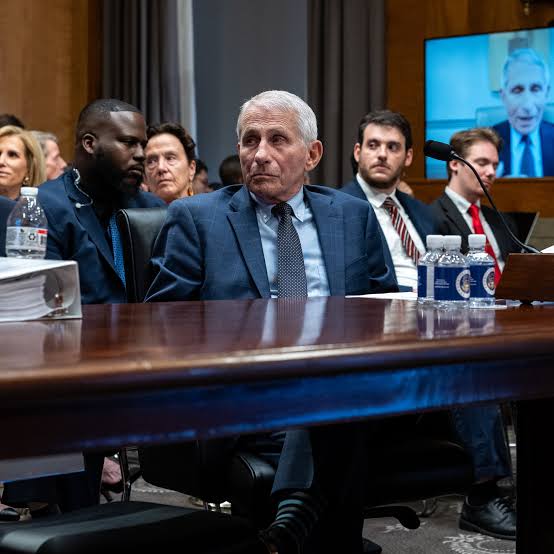
Dr. Anthony Fauci, the former director of the National Institute of Allergy and Infectious Diseases
Background
Dr. Anthony Fauci, the former director of the National Institute of Allergy and Infectious Diseases and the most visible face of the U.S. government's response to the COVID-19 pandemic, has spent much of 2026 at the center of a renewed congressional inquiry into the origins of the virus and the government-funded gain-of-function research that preceded it. The inquiry has been driven largely by Senator Rand Paul of Kentucky, a physician and long-time critic of Fauci who chairs the Senate Homeland Security and Governmental Affairs Committee. Paul has argued for years that federally funded research at the Wuhan Institute of Virology may have contributed to the pandemic's origins and that Fauci and other officials downplayed or obscured that possibility.
In the closing days of his administration, President Joe Biden granted Fauci a sweeping, ten-year, backward-looking pardon covering any offenses “arising from or in any manner related to” his government work between 2014 and January 19, 2025. Biden said the pardon was intended to shield Fauci from what he characterized as the risk of politically motivated prosecution under the incoming Trump administration. That pardon has since become a central and unusual legal flashpoint: Senator Paul has publicly obtained and released more than 1,000 pages of Fauci's personal diary entries from 2019 through 2022, and at a tense hearing in late July, Fauci invoked his Fifth Amendment right against self-incrimination more than one hundred times in response to lawmakers' questions about COVID-19's origins and gain-of-function research, at one point accusing Paul of an “unhinged obsession” with him.
Fauci's repeated use of the Fifth Amendment, despite already holding a presidential pardon covering the relevant period, immediately raised a novel legal question that Paul and other committee Republicans seized on: can a witness who has already received a pardon still validly claim a privilege against self-incrimination? Paul argued that the privilege exists specifically to protect witnesses from self-incrimination and that, having already been granted immunity from prosecution for the conduct in question, Fauci had no valid basis to refuse to answer — unless, Paul suggested, Fauci feared exposure for statements or conduct that might fall outside the pardon's scope, including the possibility of providing false testimony to Congress. Fauci's legal team has maintained that his fear of prosecution was well-founded regardless of the pardon, citing the pardon's limitations (it does not cover state-level charges or future false-statement allegations) and the explicit desire voiced by some Republicans to see him prosecuted.
Key Developments
On August 5, the Senate Homeland Security and Governmental Affairs Committee, chaired by Paul, voted 8-5 along party lines to hold Fauci in contempt of Congress. The vote followed the late-July hearing at which Fauci declined, on Fifth Amendment grounds, to answer more than a hundred questions about the origins of COVID-19 and gain-of-function research funded through NIH grants during his tenure. Committee Republicans framed the contempt vote narrowly, saying it responded specifically to Fauci's blanket refusal to testify rather than to his substantive pandemic-era decisions. Paul said the committee would hand-deliver the criminal contempt referral to both the U.S. Department of Justice and the U.S. Attorney's Office for the District of Columbia, leaving the decision on whether to pursue an actual prosecution in the hands of federal prosecutors.
The committee action is a formal referral rather than an immediate legal penalty; contempt of Congress findings from committees historically require further steps — potentially including a vote by the full Senate — before any criminal referral carries direct legal force, and it will ultimately be the Department of Justice's decision whether to convene a grand jury or otherwise act on the referral. Legal analysts covering the case have noted that the interplay between Fauci's Biden-era pardon and any new false-statement or contempt charges is legally untested territory, since the pardon does not cover statements made in 2026 testimony or any newly alleged conduct falling outside its 2014-2025 window.
The contempt vote arrived amid a broader atmosphere of aggressive congressional and executive-branch scrutiny of Biden-era pandemic officials. It followed years of Republican-led investigations into the origins of COVID-19, and it comes as separate state-level scrutiny has also emerged: Florida's attorney general has opened an independent investigation related to Fauci, a matter that state officials have suggested could test the limits of the federal pardon's protections in ways the congressional contempt referral cannot. The episode has also been compared by some commentators to other high-profile contempt fights in recent years, including cases in which associates of President Trump faced contempt-related consequences for refusing to cooperate with congressional inquiries, underscoring how the tool has become a recurring flashpoint in a highly polarized Congress.
Reactions
Committee Democrats voted unanimously against the contempt resolution and argued forcefully that the move set a damaging institutional precedent. Senator Gary Peters of Michigan, the committee's ranking Democrat, said that “criminal contempt is punitive. It does not compel a witness to answer questions or produce the documents we'd all like to see. What it will do is create a damaging precedent that future witnesses will use to resist legitimate congressional oversight.” Fauci's attorneys have similarly criticized the process, with his legal team describing the contempt push as a politically motivated escalation and maintaining that his invocation of the Fifth Amendment was legally sound and prudent given Republicans' explicit interest in seeing him face charges.
Senator Paul and committee Republicans have defended the vote as a necessary response to what they characterize as a stonewalling of legitimate oversight, arguing that Congress's investigative authority is meaningless if witnesses can refuse, en masse, to answer any question at all. Paul has continued to press the argument that Fauci's pardon undermines the legal basis for his repeated Fifth Amendment claims, a position that will likely be tested if the Justice Department decides to act on the referral. Outside legal commentators have been split: some agree that a pardon can weaken a subsequent Fifth Amendment claim for the specific conduct it covers, while others note that the privilege can still validly apply to any testimony that might expose a witness to prosecution for conduct or statements not covered by the pardon, including the testimony itself if it were later deemed false.
Public health figures and some scientists have voiced concern that the spectacle further erodes public trust in health institutions already damaged by years of pandemic-era political conflict, while Fauci's critics — including many who blame gain-of-function research policy for contributing to the pandemic's severity — have welcomed the committee's action as long-overdue accountability.
What's Next
The contempt referral now moves to the Department of Justice and the U.S. Attorney's Office for the District of Columbia, which will decide whether to pursue charges — a decision that could take weeks or months and that will likely hinge on novel legal questions about how Fauci's pardon interacts with his Fifth Amendment claims and any allegations of false testimony. Given the Trump administration's demonstrated interest in pursuing accountability for pandemic-era officials, prosecutors may face political pressure to act, though career DOJ officials will also have to weigh the legal soundness of any case given the pardon's broad scope.
Separately, Florida's state-level investigation into Fauci continues and could move on a different timeline than the federal process, since state charges would fall outside the reach of Biden's federal pardon. Congress may also pursue a full Senate vote on the contempt finding, which would raise the political stakes further and require senators outside the Homeland Security committee to go on record. Meanwhile, the underlying substantive dispute — over the origins of COVID-19, the extent and oversight of gain-of-function research funding, and what Fauci knew and when — remains unresolved, and further hearings, document releases, or diary excerpts are likely as the investigation continues into the fall.



