NEW YORK
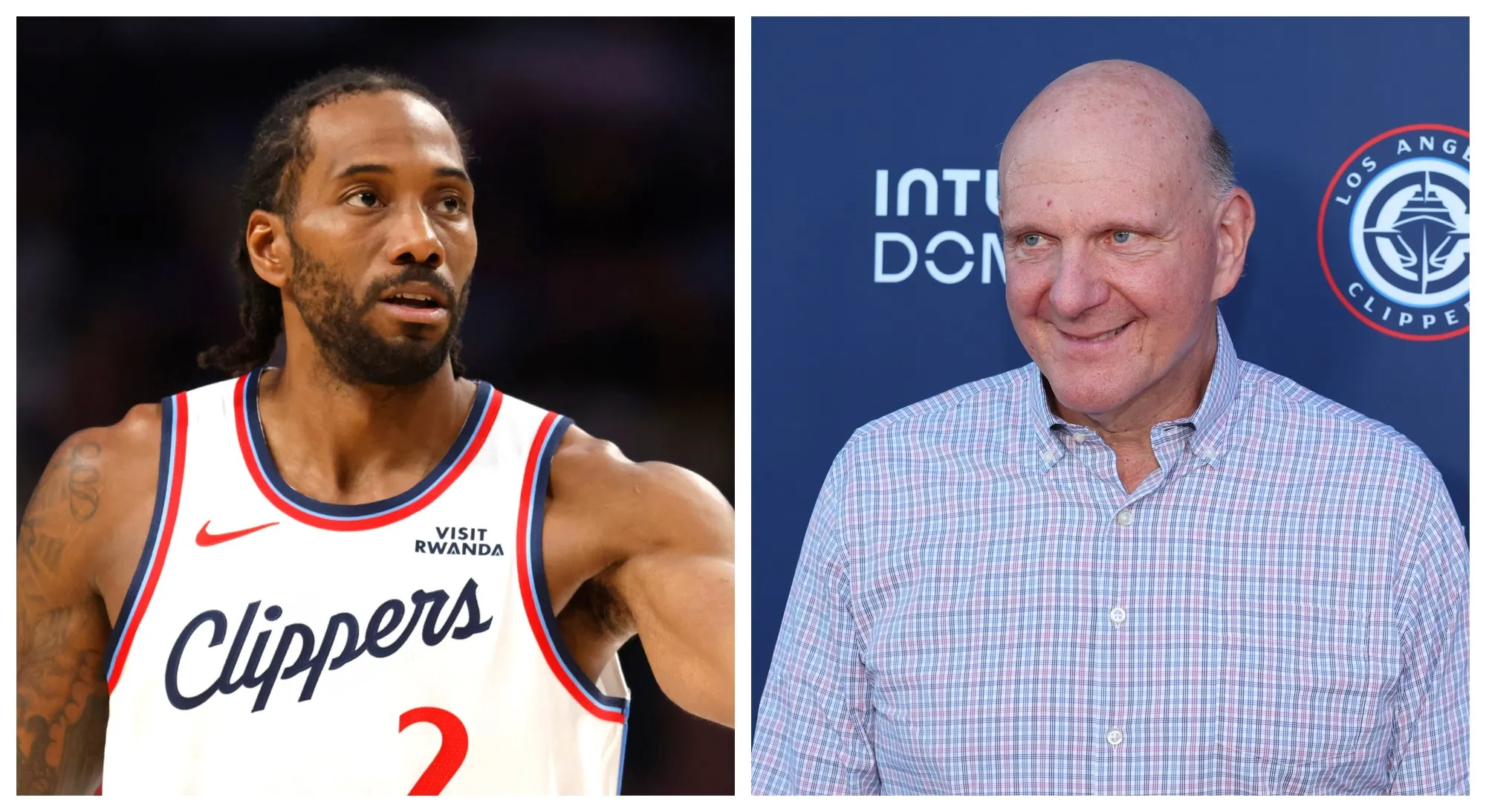
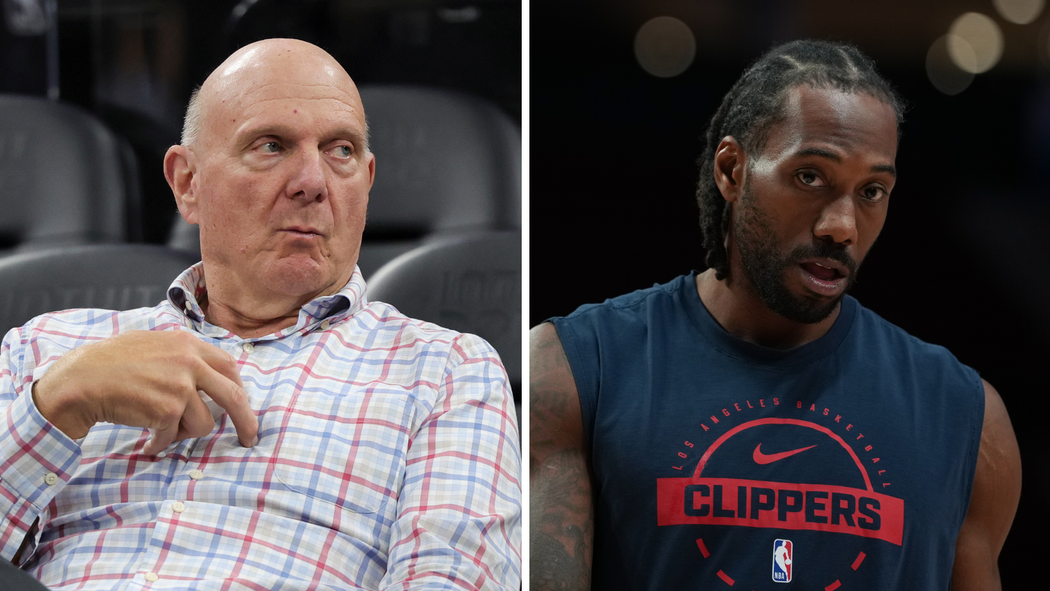
Steve Ballmer has spent eleven years trying to convince the basketball world that the Los Angeles Clippers are a serious franchise. He bought the team out of scandal in 2014, built it a $2 billion arena in Inglewood, and courted a championship-winning superstar. On Wednesday, the National Basketball Association told him he cannot come to work for a year.
The league announced the conclusion of its long-running investigation into how the Clippers signed and kept Kawhi Leonard, and the numbers were larger than almost anyone in the sport had braced for. A $30 million fine — the largest in NBA history. Five forfeited first-round draft picks, one in each year from 2029 through 2033. A one-year suspension for Ballmer from all league and team activities. A six-month unpaid suspension for president of basketball operations Lawrence Frank. A $700,000 payment from Leonard himself. And a five-year ban for Dennis Robertson, Leonard's uncle and former business manager, from conducting business with any NBA team or affiliate.
It is, by a wide margin, the most severe cap-circumvention penalty the league has ever imposed.

The tree-planting company at the centre of it
The story that produced Wednesday's penalties is stranger than any conventional cap scandal. It runs through Aspiration Partners, a Los Angeles fintech company that marketed itself on planting trees to offset customers' carbon footprints.
In September 2021, Ballmer personally invested $50 million in Aspiration. Shortly afterward, the Clippers and Aspiration announced a $300 million sponsorship partnership — one of the largest in American sports. In April 2022, Aspiration signed Kawhi Leonard to a $28 million endorsement deal structured as $7 million a year across four years, making him the highest-paid marketer on the company's books.
Investigators could find no evidence that Leonard ever publicly endorsed Aspiration. No campaign ran. No commercial aired. They did surface a scrapped concept that would have cast the notoriously private forward as a Groot-like figure, tying his love of comics to the company's tree-planting pledge. It was never made.
Aspiration filed for bankruptcy in 2025 still owing Leonard roughly $7 million of the $28 million and owing the Clippers $30 million — the largest single debt on its books. Co-founder Joseph Sanberg agreed in August 2025 to plead guilty to federal wire fraud charges tied to defrauding investors and lenders of $248 million.
The NBA's finding was that Aspiration was not an isolated case but the most conspicuous example of a pattern: the Clippers steering off-court endorsement money toward Leonard through corporate partners — the league also named Boingo Wireless, Daktronics and Lockton Insurance — in exchange for the team's business. In league terms, that is compensation. Compensation counts against the cap. Compensation routed through a sponsor does not.
Why the picks hurt more than the money
For a man whose fortune is measured in the tens of billions, a $30 million fine is a rounding error. Ballmer could write the cheque without checking his balance. That is precisely why the league did not stop there.
Five first-round picks, stripped across five consecutive drafts, is a structural penalty rather than a financial one. It removes the cheapest asset class in professional basketball — rookie-scale contracts — from a roster that will need exactly that in the back half of the decade. It also removes the Clippers' most valuable trade currency. Front offices do not rebuild with cash; they rebuild with picks. Los Angeles now has none of its own to move until 2034.
The suspension stings differently. Ballmer is not a passive owner — he sits courtside and is by his own admission the loudest man in his own building. Removing him for a full season is a public sanction of a public figure, and it is meant to be read that way by twenty-nine other governors.
"Deeply disappointed"
Commissioner Adam Silver, who spent months publicly promising to "get to the bottom of it," framed the ruling as a failure of institutional culture rather than a single bad deal. He said he was "deeply disappointed by the flagrant violations" of league rules, and pointed specifically to "the Clippers' institutional and leadership failures that led to this misconduct."
That language matters. The Clippers were already a prior offender in this exact category, sanctioned under previous ownership. A second finding of the same conduct is what turns a fine into a precedent.
The Clippers push back
The franchise's response was immediate and unusually combative. In a statement, the Clippers said they "vehemently reject" the league's findings and would "vigorously challenge these findings and penalties through every avenue available to us."
Leonard, for his part, has previously said publicly that the characterisation of his Aspiration agreement as a no-show deal is "not accurate."
What "every avenue" means in practice is unclear. The NBA constitution gives the commissioner broad and largely unreviewable authority over cap enforcement, and the arbitration paths open to an owner disputing a sanction are narrow by design. Legal analysts have suggested the more consequential fights may be civil rather than league-internal, given the parallel fraud litigation around Aspiration.
What this means if you follow the game
For Clippers supporters, the practical damage is a decade long. A team already balancing an ageing core against a new building has lost its draft flexibility through 2033 and will spend at least one season without its owner in the room.
For everyone else, the ruling redraws a line that had gone blurry. Endorsement money arranged by a team, paid by a team's business partner, to a team's player, is now unambiguously cap salary in the league's eyes. Agents who have spent years constructing exactly these arrangements in exactly this grey zone will be rewriting their playbooks this month. Expect the next collective bargaining conversation to include far more explicit language about third-party marketing.
And for anyone who has ever wondered whether the salary cap is real — whether the parity the NBA sells is anything more than marketing — Wednesday was the league's answer. It cost one of its owners a season and five drafts to deliver it.
Whether the Clippers can overturn any of it will define the next several months. Whether anyone else tries the same thing may define the next several years.
Published By | Sports Editor