Written By | International News Agencies
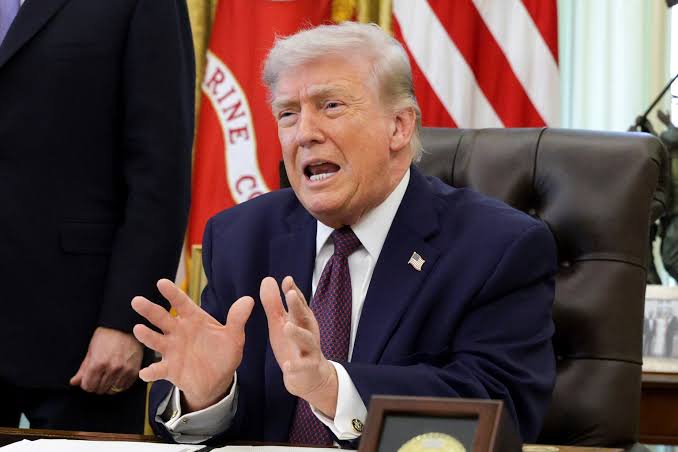
The Pentagon is weighing options to pull tens of thousands of American troops, along with aircraft, ships and weapons, out of Europe
World Politics
The Pentagon is weighing options to pull tens of thousands of American troops, along with aircraft, ships and weapons, out of Europe — a step that, if taken at the upper end of the range under discussion, would be the deepest cut to the United States' military presence on the continent since the drawdowns that followed the Cold War. NBC News first reported the deliberations on 17 September, citing seven current and former US and Western officials. Two days later the story had become the central anxiety of European capitals already braced for a difficult autumn, and it arrived alongside an explanation that officials in Washington have not tried very hard to disguise: this is, in part, the bill for Europe's refusal to let the United States fight its war against Iran from European soil.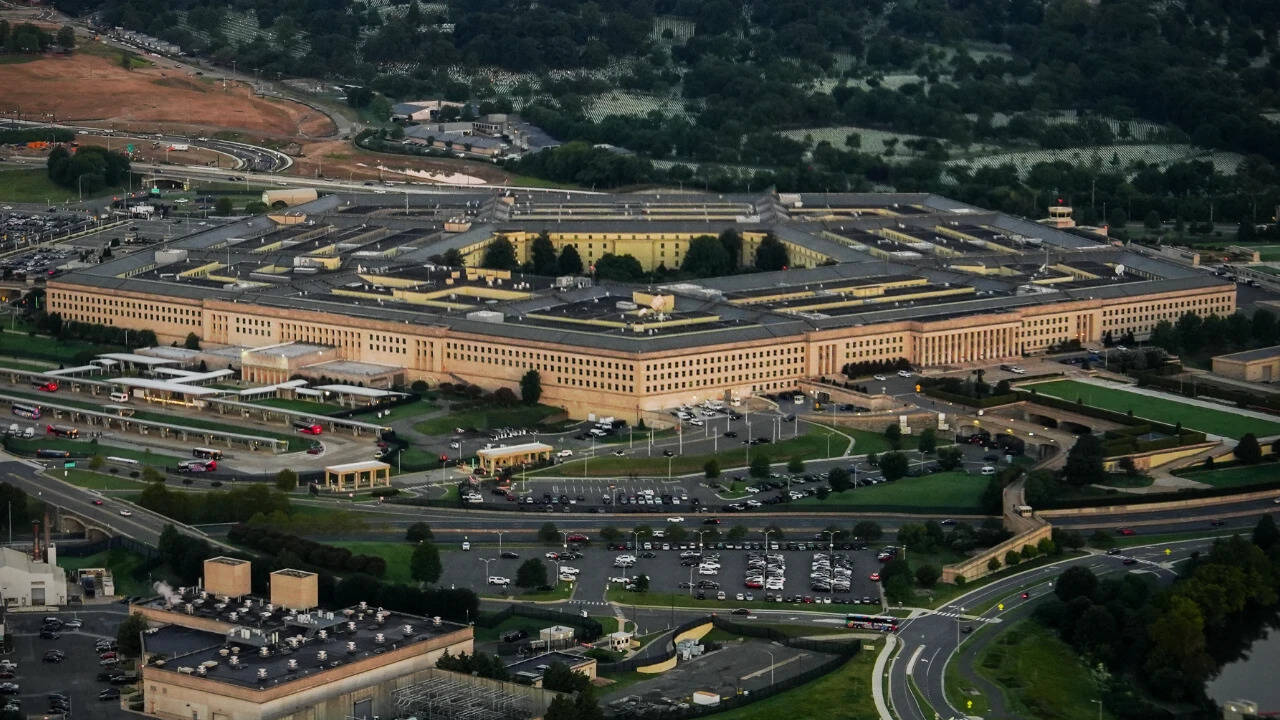
Background
Defense Secretary Pete Hegseth announced a review of US force posture in Europe at a NATO meeting in Brussels in June. He described its purpose in terms that left little ambiguity — changes "designed to ensure that NATO is moving fast and irreversibly toward Europe leasing and stepping up to take primary responsibility for the defence of Europe." In the same remarks he called European allies' refusal to grant American forces access, basing and overflight rights for strikes on Iran "shameful," saying those allies "put America's sons and daughters, our sons and daughters, at risk by denying them the predictable access, basing and overflight that never should have been in question at all."
The US-Israeli war against Iran began with strikes in late February that killed Supreme Leader Ayatollah Ali Khamenei and several senior Iranian officials. Several European governments, Spain and Italy among them, publicly opposed the campaign; Germany's chancellor Friedrich Merz criticised it, and in May Washington announced the withdrawal of some 5,000 US troops from Germany, a process still under way. President Donald Trump threatened at the time to go "a lot further." Secretary of State Marco Rubio reportedly blocked a larger cut of up to 25,000 then. Roughly half the 2,000 US soldiers stationed in Romania departed last year. The current review, in other words, is not a new idea so much as the formalisation of an eighteen-month trend.
Sources differ on the baseline. NBC and several outlets put the current American presence in Europe at about 80,000; Al Jazeera's explainer uses an estimate of 68,000. That discrepancy matters when the reported options are expressed as fractions. What the reporting agrees on is the shape of the choices: one option would remove roughly a third of US troops — on the higher baseline, about 25,000 — falling mainly on Germany, Italy and Spain. A second, more drastic scenario would take out as many as 40,000 personnel together with aircraft, ships and weapons systems. A third possibility is not a net withdrawal at all but a redistribution, moving forces from central and western Europe eastward toward NATO's frontier with Russia.
Key Developments
The review is on a defined clock. Gen. Alexus Grynkewich, commander of US European Command and NATO's Supreme Allied Commander Europe, was expected to present an initial force assessment on Friday 18 September. Senior commanders are to submit plans to Hegseth in the coming days; reporting places the conclusion of the review in late September or early October, with a final recommendation to Hegseth by early November — NBC cites 6 November — and a formal statement anticipated in November, after which any decision goes to Trump for approval.
The timing is difficult. It lands in a month when European governments have been reporting a steady drumbeat of Russian probing: Germany accused Russia of a drone attack on Leipzig airport at the start of September, a NATO jet shot down a suspected Russian drone over Lithuania on 15 September, and a Russian drone struck a Kyiv–Warsaw passenger train two kilometres from the Polish border days earlier. Poland's prime minister Donald Tusk has warned that Moscow is planning "accidental" strikes against countries supporting Ukraine. It also lands days after Trump announced a security agreement with Denmark and Greenland granting Washington what he described as permanent control over security arrangements on the island, and days before a UN General Assembly week at which the transatlantic relationship will be discussed in public and in corridors.
Nor is Europe the only theatre feeling the strain. The administration has steadily pulled assets toward the Iran conflict, including redeploying the last aircraft carrier remaining in the Pacific to the Middle East to relieve the USS Abraham Lincoln — a movement that has sharpened Taiwanese anxiety about American capacity and intent. In the Gulf, Washington has declined Saudi requests for direct strikes against the Houthis even as Riyadh itself came under ballistic missile attack this weekend. The picture that emerges is less of a pivot than of a force stretched thin and a political leadership increasingly willing to let allies absorb the difference.
Reactions
NATO Secretary General Mark Rutte has publicly sought to lower the temperature, saying he is "not worried" and that any adjustment will be done "in a step-by-step approach," with "no capability gaps in Europe because of this." That is the alliance's required line; European diplomats have been making a more pointed one privately. Bloomberg has reported allied governments urging Washington to coordinate any reduction rather than execute it unilaterally, warning that an uncoordinated withdrawal could destabilise NATO's eastern defences. One recurring European complaint is procedural as much as strategic: with normal channels degraded, officials fear learning of American troop movements from the press rather than from allied notification. Finland's defence minister Antti Häkkanen has called for a jointly agreed roadmap under which Europe assumes more responsibility gradually rather than abruptly.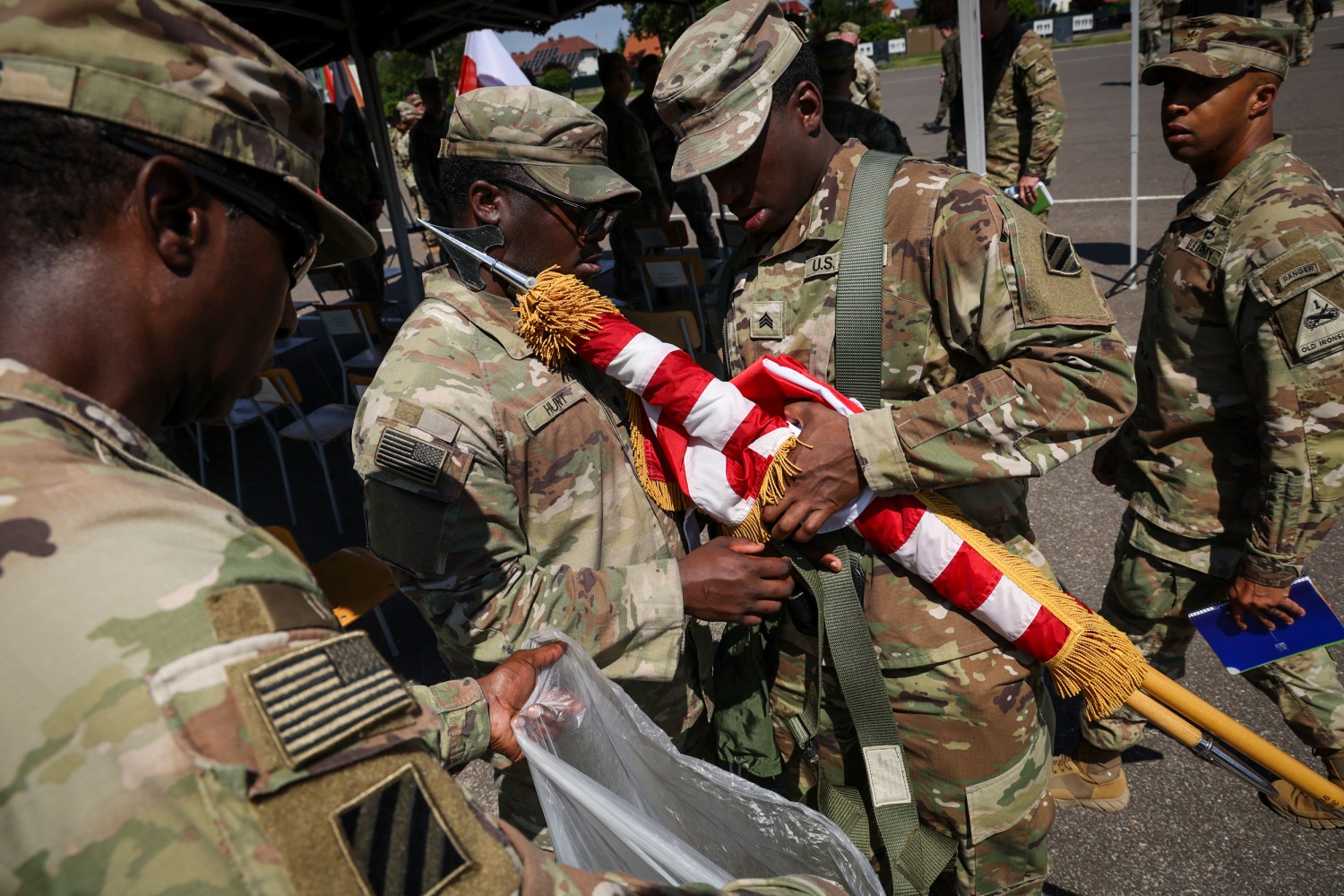
Ian Lesser of the German Marshall Fund told Al Jazeera that a large exit of troops and assets would undermine the credibility of American nuclear deterrence on the continent, and that while Russia is unlikely to attack a NATO member, Moscow "would certainly see advantages" in such a development. He also cautioned against treating all the options as equivalent: shifting forces from western Europe to the eastern flank, he argued, would be far less alarming, given how fast Germany and France are now building capability. The United States would lose something too — the ability to project power across and beyond Europe from forward bases it has used for seventy years.
The criticism is not confined to Europe or to Democrats. Senate Armed Services chairman Roger Wicker and House Armed Services chairman Mike Rogers, both Republicans, said after the German withdrawals began that the move risked sending "the wrong signal to Vladimir Putin." Lawmakers in both parties have voiced alarm at the larger figures now circulating.
The administration's counter-argument is one it has made since Trump's first term: that Europe has free-ridden on American security guarantees for decades. Trump has demanded NATO members spend 5 percent of GDP on defence; members agreed in 2025 to reach 3.5 percent by 2035, and many still fall short of the older 2 percent benchmark. Layered on top are the tariff dispute — a 15 percent US levy on European imports — and the year-long confrontation over Greenland. Trump has also called Canada's prospective "associate membership" of the European Union a potential "hostile act." The troop review is being read in Europe not as a discrete military decision but as one instrument among several.
What's Next
Three things are worth watching. The first is which option Grynkewich's assessment favours, and in particular whether the Pentagon proposes net reductions or an eastward redeployment; the difference between those two is the difference between a deterrence problem and a logistics exercise. The second is sequencing. European officials have said repeatedly that the danger lies less in the size of any cut than in its speed and its unilateralism — a phased, announced reduction matched to European capability growth is survivable in a way that a surprise is not. The third is Congress. With Republican committee chairmen already on record against smaller withdrawals, a 40,000-troop drawdown would test whether legislative resistance has any purchase on a defence policy run from the White House.
Nothing has been decided. The Pentagon has consistently said no final decision has been made, and the review's own timetable runs to November. But the direction of travel has been legible since June, and it is being read in Moscow as well as in Brussels. Europe spent 2026 discovering how much of its security rested on an American disposition it could not control; it will spend the autumn finding out what the answer costs.



