Written By |
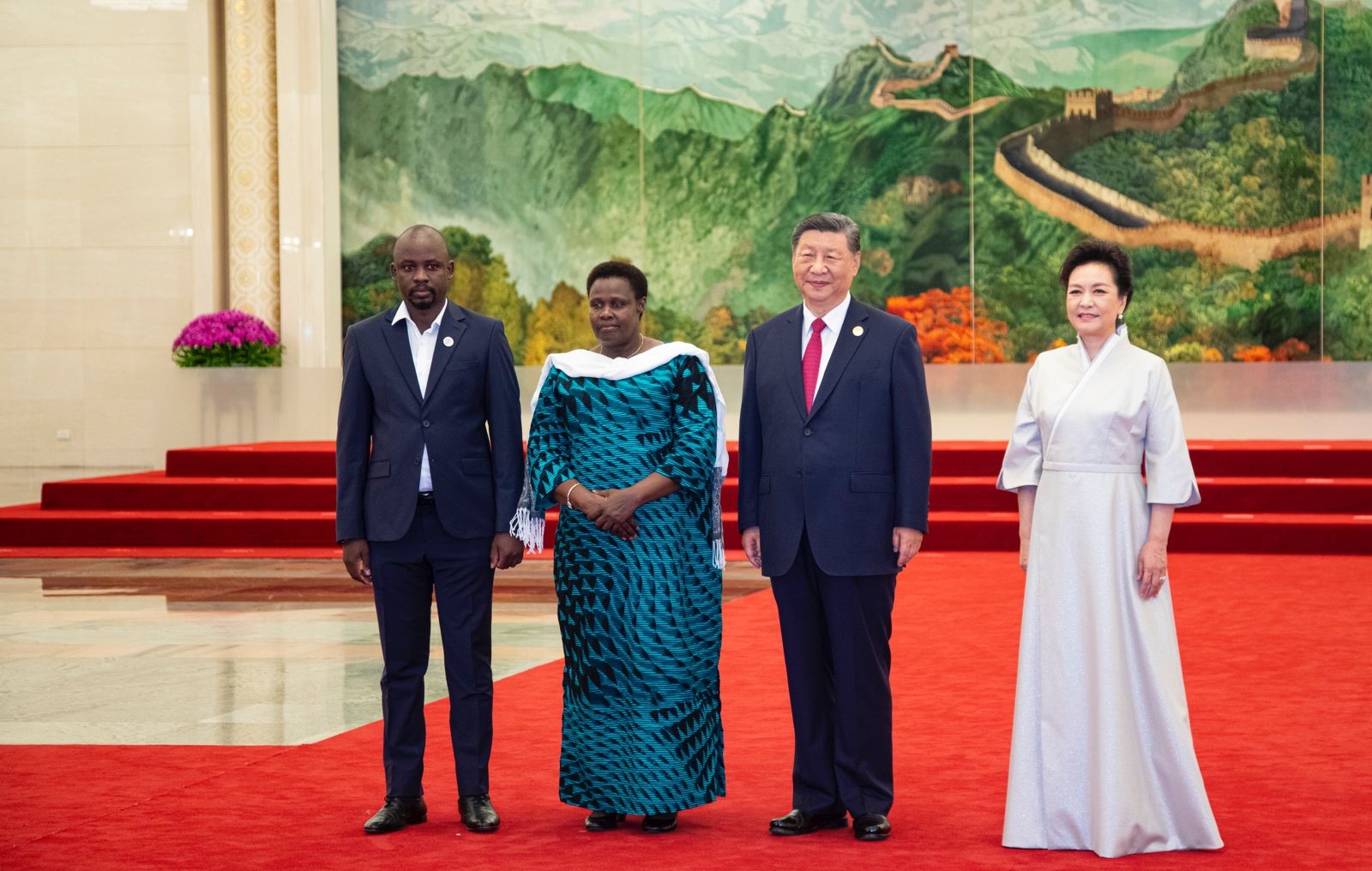
Vice President Alupo in company of her husband meets China's President Xi at the FOFAC summit
China’s influence across Africa remains strong, pulling powerfully at a time when others struggle to maintain their foothold. While France and the EU face rejection from Sahelian military juntas and Russia’s mercenary security services are viewed with distrust by pro-Western African governments, China has successfully navigated a neutral path, attracting African leaders and governments alike.
This week, delegations from over 50 African states traveled to Beijing for the China-Africa summit, officially known as the Forum on China-Africa Cooperation (FOCAC). The event attracted veteran leaders like Congo-Brazzaville’s Denis Sassou-Nguesso and first-time attendees like Senegal’s new head of state, Bassirou Diomaye Faye, who was given a front-row seat next to Chinese President Xi Jinping.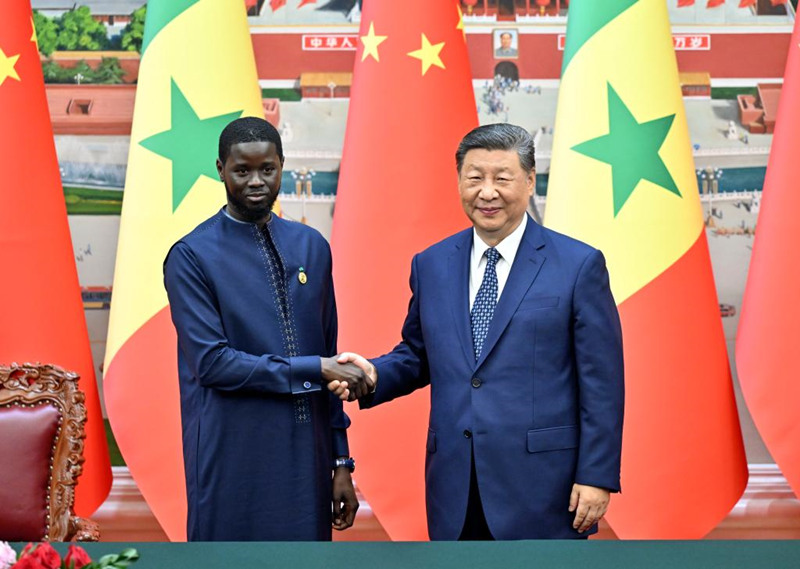
Senagal's President Bassirou Diomaye Faye, was given a front-row seat next to Chinese President Xi Jinping
For African governments weary of the pressure to choose sides in global conflicts, China offers a refreshingly neutral partner, willing to work with both Moscow’s allies and pro-Western, civilian-led governments. Although China is often accused of pursuing its economic self-interest—seeking raw materials in exchange for infrastructure development—and inducing African nations into debt, many leaders appreciate Beijing’s consistent engagement without political strings.
China’s commitment to building large-scale infrastructure projects, often sidelined by international development institutions and Western investors, continues to set it apart. For example, despite the July 2023 coup in Niger, China proceeded with the construction of a 2,000km oil pipeline to Benin. In Guinea, also under military rule, China is advancing on a 600km railway from one of the world’s largest iron ore deposits at Simandou, a project for which successive Guinean governments struggled to secure international support.
During the FOCAC summit, China announced $50.7 billion in funding for the next three years, with a strong emphasis on green energy transition. President Xi pledged to invest in Africa’s manufacturing sector, particularly in electric vehicles, marking a shift from traditional infrastructure projects to sustainable industry. Additionally, China committed to launching 30 clean energy projects and cooperating with Africa in the nuclear sector.
While this pivot toward green technology signals China’s broader ambitions, the summit also highlighted contentious environmental issues. For instance, accusations of overfishing by Chinese vessels in African waters were tactfully avoided. Instead, Sierra Leone’s Fisheries Minister Princess Dugba praised China for constructing a new fishing port.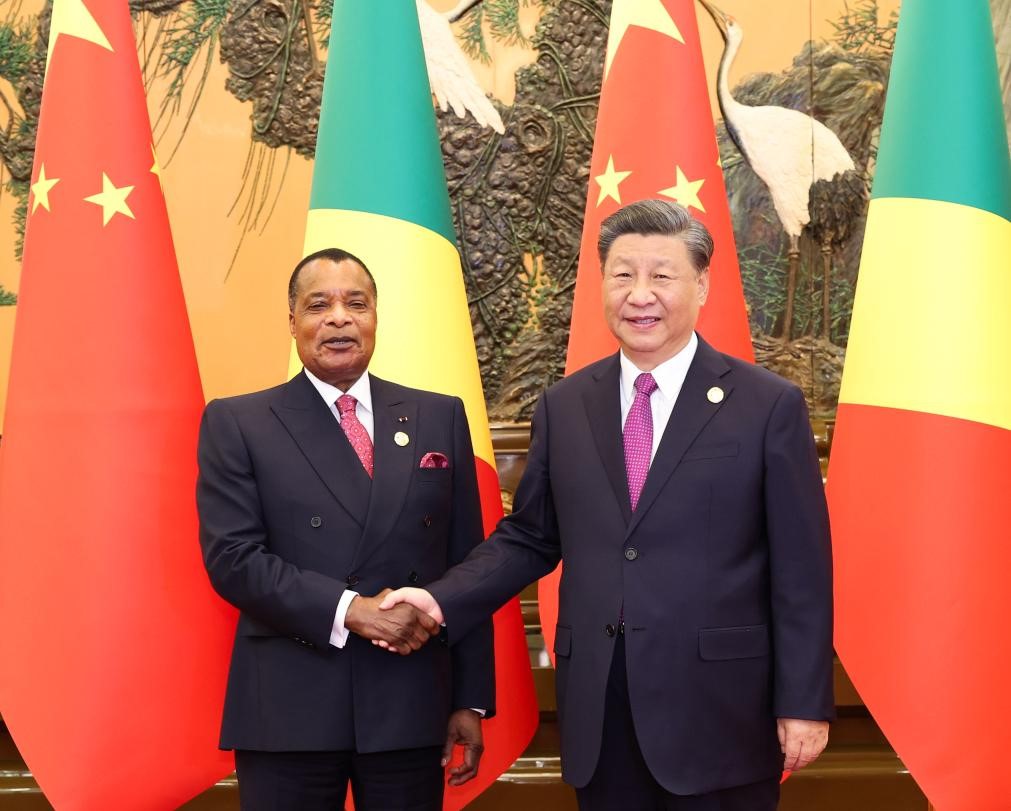
Congo-Brazzaville’s Denis Sassou-Nguesso at FOFAC summit
Throughout the summit, Xi Jinping emphasized China’s solidarity with Africa, noting that together, they represent a third of the world’s population. The event concluded with the adoption of the Beijing Declaration on building "a shared future in the new era" and the Beijing Action Plan for 2025-2027, outlining plans to triple infrastructure projects, create one million jobs, and foster cooperation across various sectors.
Despite the lofty promises, questions remain. Xi announced 360 billion yuan in financing, including 210 billion yuan in credit lines and 70 billion yuan in business investments, but it is unclear how these funds will be distributed and whether they will push some countries back into unsustainable debt. In 2016, Chinese lending to Africa peaked at $30 billion, with projects financed by China Eximbank on terms that were often less favorable than those from Western institutions like the IMF and World Bank.
China’s defenders argue that it has been willing to finance and build projects in Africa where other partners were reluctant to commit. While Western donors focus on "soft" investments in education, healthcare, and food security, China has taken the lead in heavy infrastructure. However, as the global economy slows, China has also joined international efforts to restructure debt.
The FOCAC summit signals a potential shift in China’s approach to Africa. Just as it filled a void in infrastructure development two decades ago, Beijing now aims to become a key partner in green technology and high-tech industries. The question remains whether this will lead to a true diversification of China-Africa relations or if the focus on traditional infrastructure will continue to dominate.
Source: BBC



