Written By | International News Agencies
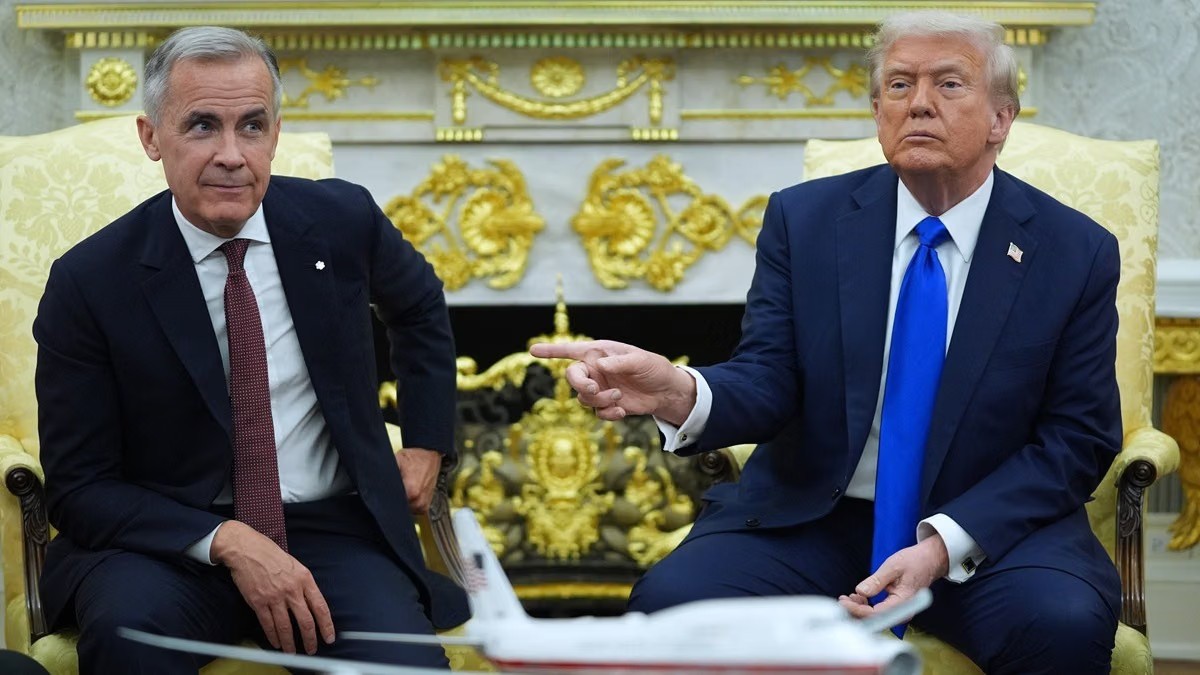
Talks between U.S. and Canadian negotiators fell apart on the night of August 21, mere hours before the tariffs were due to take effect at midnight
Background
For more than a year, the trading relationship between the United States and Canada has been sliding toward the kind of open confrontation that neither government wanted to admit was coming. The rupture reached a new and unprecedented point on the night of Friday, August 21, 2026, when negotiators for the two governments failed to reach an agreement in the final hours before a midnight deadline, triggering 50 percent tariffs on roughly $20 billion of Canadian exports to the United States. The breakdown marks the most serious escalation yet in a trade war that began in early 2025 and has steadily eroded what was, for generations, considered one of the world's most stable and mutually beneficial commercial partnerships.
The roots of the current crisis trace back to the Trump administration's use of Section 338 tariff authority and related trade powers over the past year and a half to press Canada on a range of grievances, including complaints that Ottawa's dairy supply-management system, digital services tax proposals, and provincial alcohol-purchasing rules discriminated against American producers. Canada, for its part, retaliated against earlier rounds of U.S. tariffs, and several provincial liquor boards pulled American alcohol from shelves entirely after Washington imposed a 25 percent tariff on Canadian goods last year. Ottawa also raised its own tariffs on Canadian steel and aluminum imports from countries other than the U.S., a signal it was willing to realign parts of its trade posture to accommodate American demands, even as it pushed back on others.
The relationship was further complicated last month when the Trump administration announced it would not automatically renew the United States-Mexico-Canada Agreement (USMCA), the successor to NAFTA that has underpinned North American trade since 2020. That decision triggered a formal joint review process written into the pact, effectively putting the entire architecture of continental trade under a cloud of uncertainty at precisely the moment Washington and Ottawa were also negotiating a narrower, sector-specific deal covering autos, energy, dairy, and alcohol — the deal that ultimately collapsed this week.
Trump had already moved once before to escalate tariffs on Canada, signing proclamations in July that set 50 percent duties on a range of goods including wine, dairy inputs, cement, and furniture, citing what the administration described as discriminatory treatment of U.S. autos, alcohol, and dairy products. Those tariffs were set to take effect August 19 but were pushed back as both sides continued talking, with Canadian Prime Minister Mark Carney and Trump holding direct conversations as recently as August 18 in an effort to strike a deal before the revised deadline arrived.
Key Developments
Talks between U.S. and Canadian negotiators fell apart on the night of August 21, mere hours before the tariffs were due to take effect at midnight. Multiple outlets, including Bloomberg, NPR, Axios, and the Associated Press, reported that both governments spent days working toward a draft agreement, only for the deal to unravel over what U.S. Trade Representative Jamieson Greer described as last-minute demands from Canadian negotiators that upended terms both sides had already worked out. Canadian officials offered a different account, with Prime Minister Carney saying the two countries "could not reach an agreement that would meet our objectives," and that Canada was unwilling to accept terms that would not adequately protect Canadian workers and industry.
With the deadline passed and no agreement in place, the 50 percent U.S. tariffs took effect early Saturday, August 22, covering roughly $20 billion in Canadian goods — a list that includes plywood, distilled spirits and other alcohol, electrical equipment, cement, furniture, and even hockey equipment, an inclusion that drew wry commentary given the sport's cultural significance in Canada. The tariffs apply on top of existing duties in several sectors, compounding the cost pressure on Canadian exporters already grappling with earlier rounds of U.S. trade action targeting steel, aluminum, and autos.
Carney responded within hours, declaring that Canada would match the U.S. tariffs "dollar for dollar to protect our workers and businesses." The Canadian government has not yet released the full list of American goods that will face retaliatory duties, but officials signaled that the response would be calibrated to mirror the roughly $20 billion scope of the U.S. action, continuing a pattern established earlier in the trade conflict when Ottawa matched prior U.S. tariff rounds with reciprocal measures of similar size.
The collapse also throws into sharper doubt the future of the USMCA itself. With Washington having already signaled last month that it would not automatically renew the pact, the formal review process is now unfolding against the backdrop of an active, unresolved tariff war between two of its three signatories — an awkward and unprecedented situation for an agreement built around the premise of preferential, largely tariff-free trade among the United States, Canada, and Mexico. Trade analysts note that Mexico, which has so far avoided the brunt of the latest escalation, is watching closely, since any structural changes to the USMCA affect all three countries' manufacturing and supply chains, particularly in the automotive sector.
Financial markets and industry groups reacted quickly. Canadian exporters in the alcohol, forestry, and electrical equipment sectors warned of immediate cost increases and potential layoffs, while U.S. importers cautioned that the tariffs would raise prices for American consumers on goods ranging from Canadian whisky to construction materials. Currency markets saw modest moves in the Canadian dollar as traders priced in the prospect of a prolonged standoff rather than a quick resolution.
Reactions
Prime Minister Carney has framed his response as a matter of national dignity as much as economic necessity. Canadian officials and commentators have noted that Carney faces intense domestic political pressure not to be seen as capitulating to Washington; public anger in Canada over the Trump administration's tariff policies has been building for well over a year, and analysts have suggested that any further concessions without meaningful reciprocal gains would risk a serious backlash against Carney's government, potentially reinforcing a narrative that Canada is vulnerable to being bullied by its largest trading partner.
On the American side, USTR Jamieson Greer placed the blame squarely on Canadian negotiators, saying they introduced eleventh-hour demands that unraveled days of painstaking work on a draft agreement. The White House has continued to frame its tariff strategy as a defense of American workers and industries that officials argue have faced years of unfair treatment from trading partners, a rationale the administration has applied broadly across its trade actions this year, including the sweeping Section 301 tariffs imposed on dozens of countries in July.
Canadian business associations, including groups representing the forestry, distilling, and electrical manufacturing sectors, expressed alarm at the sudden reimposition of steep tariffs, warning of job losses and disrupted supply chains just as companies had begun adjusting to the tariff environment established over the prior year. Some provincial premiers, particularly those in resource- and manufacturing-heavy regions with significant cross-border trade, have called for the federal government to provide domestic industry support to offset the impact, echoing calls made during earlier phases of the trade war.
Internationally, the collapse has drawn attention as a signal of how unstable even the United States' closest and most integrated trading relationships have become under the current tariff regime. Trade officials in Europe and Asia, who have themselves been negotiating with Washington over separate tariff disputes since the broader Section 301 action in July, are watching the U.S.-Canada breakdown as a bellwether for how the administration might handle other trade disputes as multiple negotiations reach critical junctures in the coming months.
What's Next
In the immediate term, attention turns to whether Canada follows through with the full dollar-for-dollar retaliatory package Carney has promised, and how quickly Ottawa can identify and implement a list of American goods to target. Previous rounds of Canadian retaliation have focused on politically symbolic and economically significant U.S. exports, including agricultural products, spirits, and consumer goods manufactured in politically important U.S. states and congressional districts, a strategy likely to be repeated in some form.
The broader question hanging over the standoff is what happens to the USMCA review process now underway. With the formal non-renewal notice already filed and the review clock running, both governments face pressure to either negotiate a new framework agreement or risk a more disorderly unwinding of North American trade integration that has underpinned auto manufacturing, agriculture, and energy markets across the continent for decades. Officials on both sides have signaled openness to further talks, but the acrimonious tone of the past week's collapse — with each side publicly blaming the other — suggests any resumption of negotiations will start from a more adversarial position than before.
There is also a domestic political dimension on both sides of the border. Carney's handling of the dispute will be closely watched as a test of his government's ability to stand firm against U.S. pressure without provoking further economic damage to Canadian industry. In the United States, the tariffs add to a growing list of trade actions — including the July measures affecting roughly sixty countries — that have become a subject of debate in Washington over their cumulative effect on consumer prices and inflation, an issue likely to feature prominently as the 2026 midterm election season continues.
For now, businesses and consumers on both sides of the border are bracing for higher costs, and diplomats in Ottawa and Washington face the task of finding a path back to the negotiating table without either side appearing to have blinked first. Given the pattern of near-miss deadlines and last-minute collapses that has characterized this relationship over the past year, few observers are willing to predict how long the current standoff will last, or whether it resolves before further tariff escalations are triggered.



