NIAMEY, Niger
Algerian President Abdelmadjid Tebboune has acknowledged that Algeria sent fighter jets to Niger in late August to help thwart what he called a coup attempt against the military government in Niamey, Al Jazeera reported on Oct. 3. The disclosure recasts a deployment that Algeria's defense ministry had described only as support for Niger's army. It also confirms what the events of Aug. 28-29 suggested: that Niger's ruling junta, which seized power in 2023, survived a serious armed challenge from within its own ranks, and that it did so with help from two outside powers whose interests in the Sahel do not align.
The night of Aug. 28-29
According to reporting compiled by Atalayar and Wikipedia's account of the episode, soldiers mutinied at Air Base 101, which sits beside Niamey's Diori Hamani International Airport. They seized colleagues and fired on strategic sites in the capital, among them the area around the presidential palace and the headquarters of state broadcaster ORTN, where television transmission was briefly disrupted. Wikipedia's account says the mutineers called themselves the Armed Forces for the Restoration of the Fatherland; that name could not be confirmed against a second source.
Defense Minister Gen. Salifou Mody announced on state television on the morning of Aug. 29 that the situation was under control. "Security forces intervened and were able to contain the situation and gradually regain control of the targeted sites," he said, according to Africa Press. The Sahel Brief reported that junta leader Gen. Abdourahamane Tiani also declared the situation "under control."
The Presidential Guard retook the base with help from Russia's Africa Corps, according to multiple international outlets cited by The Sahel Brief, and Russia's ambassador, Viktor Voropaev, confirmed that account. Atalayar put the Russian contingent at 200 to 300 personnel, deploying armored vehicles and tactical air support at the Nigerien government's request.
Conflicting casualty figures
The human toll remains unclear, and published accounts differ. Atalayar, citing state broadcasts, said the uprising involved "hundreds of soldiers" and left dozens dead and numerous mutineers arrested. Wikipedia's summary lists at least three Presidential Guard members killed, with several mutineers killed or captured and multiple civilians injured, and notes that no official toll was given. It also says authorities held a funeral for three slain Presidential Guard members on Aug. 31. The Sahel Brief noted that specific casualty figures and arrests remained unreported as of Sept. 1.
Readers should treat any total with caution. The government has not published a verified count in the sources reviewed for this story.
Algeria's jets
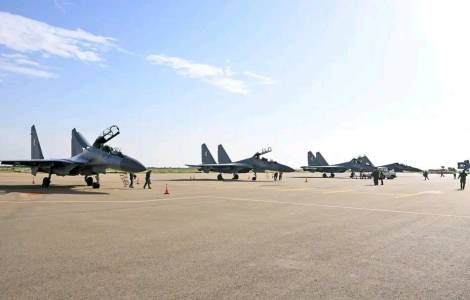
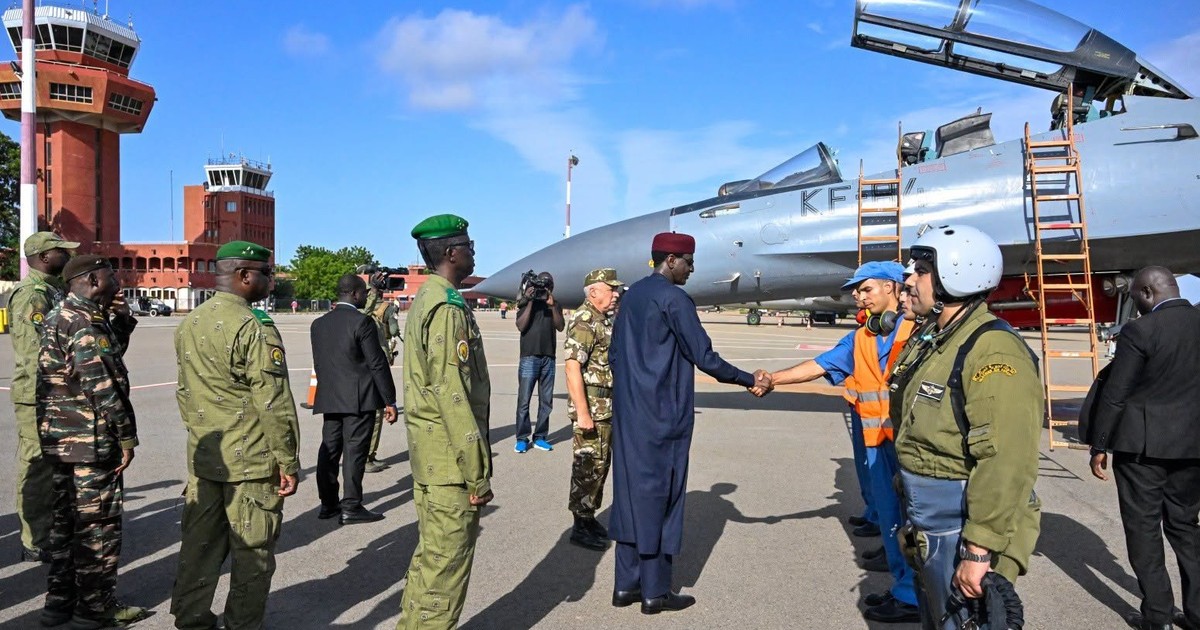
On Aug. 30, a day after the mutiny was put down, Algeria sent four Su-30MKA fighters and one Il-78 aerial tanker to Niamey, according to GlobalMilitary.net. Algeria's Ministry of National Defense said the aircraft were dispatched "in response to a request from Nigerien authorities, on the instructions of President Abdelmadjid Tebboune" to support Niger's army against efforts to destabilize it. The ministry gave no details on how long the aircraft would stay, where they would be based or what they would do.
The flight covers roughly 2,600 kilometers from Algiers to Niamey. GlobalMilitary.net noted that Algeria's 2020 constitutional revision lifted a 1976 ban on deploying forces abroad, and AeroTime, as quoted by the outlet, called the move "a rare overseas combat deployment for Algeria." Three weeks earlier, Algeria had transferred helicopters and equipment to Niger, the same report said.
The timing is notable. Niger's prime minister, Ali Mahamane Lamine Zeine, led a ministerial delegation to Algeria on Aug. 26-27 to deepen bilateral cooperation and returned to Niamey the night before the mutiny, Africa Press reported. Algeria's foreign minister, Ahmed Attaf, reaffirmed his country's commitment to regional institutional stability, according to Atalayar.
The Sahel Brief reported that Nigerien state media framed the arrival of the jets as routine bilateral cooperation, attended by top defense officials, and that one local outlet linked it to the mutiny, a connection other reporting did not initially substantiate. Tebboune's Oct. 3 remarks, as relayed by Al Jazeera and Africa Press, now supply that link. According to Africa Press, he said the jets were sent to counter a coup attempt in Niamey.
Why the mutiny happened
Atalayar traced the unrest to grievances among troops serving in the southwest, in areas such as Ouallam, Téra and Dosso, who face persistent combat against jihadist insurgents. It cited an early-August ambush that killed 18 soldiers and security breaches near the airport. Wikipedia's account similarly points to resource disparities between the better-equipped Presidential Guard and frontline units.
These grievances are not unique to Niger. Across the Sahel, military governments that took power promising to defeat insurgencies have struggled to deliver, and soldiers who bear the fighting often resent the units that protect the capital. In Niger's case, the 2023 coup that brought Tiani to power removed civilian leadership but did not resolve the security crisis that helped justify it.
Russia and Algeria: uneasy co-guarantors
Atalayar framed the episode as intensifying a military rivalry between Russia and Algeria in the Sahel. The framing deserves care, since the sources show the two acting on the same side in this instance, both helping Tiani's government survive. But the broader context supports the idea of competing influence.
Niger's alliance system now rests on three pillars, according to Atalayar: Russian guarantees, Algerian support and its partnership with Mali and Burkina Faso in the Alliance of Sahel States. France and the United States, which once operated from Base 101, have withdrawn. An expert quoted by Wikipedia said, "the Russians saved the day," a verdict that leaves Moscow with both credit and leverage in Niamey.
Algeria's relationship with the Sahel's military governments has not always been smooth. In April 2025, Al Jazeera reported that Algeria closed its airspace to Malian aircraft amid a drone dispute, and that the Alliance of Sahel States recalled ambassadors as tensions with Algiers rose. That an Algerian president is now publicly describing combat aircraft sent to defend the junta in Niamey shows how far the Niger-Algeria relationship has moved, in an area where Algiers has a direct stake: the two countries share a long border, and Algerian officials regard stability there as vital to national security, as Africa Press noted.
Regional reaction
Wikipedia's account says Burkina Faso and Mali expressed solidarity with Tiani's government, as did Algeria, Egypt, Libya and Qatar. Nigeria expressed concern and urged a return to constitutional order.
Analysis: a government that survived, but how well
The central fact is that a junta built on the loyalty of the armed forces faced an armed revolt from within them and needed foreign help to win. Whether Tiani's position has been weakened or hardened depends on what happens next, and the evidence so far points both ways.
On one hand, the government prevailed in about 24 hours, according to GlobalMilitary.net, and it can now point to the rapid, decisive support of friendly states. Public displays of regional solidarity strengthen its claim to legitimacy among its Sahelian partners.
On the other hand, dependence on foreign forces is a vulnerability. Russian troops were decisive in retaking Base 101, per The Sahel Brief and Atalayar. A government that relies on external guarantors to defend its capital has less room to refuse their demands, and the presence of an Algerian air contingent adds a second outside stakeholder with its own priorities. The mutineers' grievances, moreover, remain unaddressed in any reporting reviewed here: frontline soldiers are still fighting an insurgency that has been killing them.
Tebboune's decision to speak openly now carries its own signal. By publicly claiming a role in defeating a coup, Algiers is asserting itself as a security actor in the Sahel, not merely a neighbor. That may reassure Niamey. It may also invite scrutiny from other neighbors, and from Russia, over who really guarantees Niger's security.
What to watch
Key questions include whether Niger releases an official casualty count and details of the trials or detentions of mutineers; whether the Algerian jets remain in Niamey, since the defense ministry never gave a timeline; whether the junta reorganizes the Presidential Guard or the frontline commands in response to the grievances Atalayar describes; and how Russia positions its Africa Corps presence after being credited with saving the government. Another early-August-style ambush against Nigerien troops would test whether the mutiny's underlying causes are being addressed.
For now, Niger's government has demonstrated that it can survive a rebellion. It has also demonstrated how many hands it needed to do so.
Published By | News Editor