Written By | Business Experts
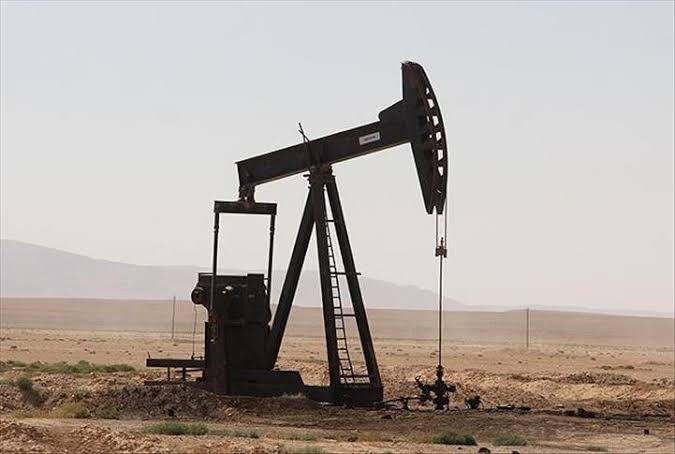
South Sudan's economy is among the most oil-dependent in the world, with the sector accounting for roughly 80 percent of GDP and the overwhelming share of government revenue and export earnings.
JUBA
By almost any headline measure, South Sudan should be one of the world's fastest-growing economies in 2026. The World Bank's latest Global Economic Prospects report projects real GDP growth of 48.8 percent this year, following a 23.8 percent contraction the year before, while the African Development Bank forecasts a still-extraordinary 12.1 percent expansion for calendar 2026 and puts fiscal-year growth at 22.0 percent in 2025/26. Yet these numbers describe a rebound from collapse, not a healthy economy. They are a statistical mirror image of how far South Sudan fell in 2023 and 2024, and they sit alongside a humanitarian and fiscal picture that is arguably worse than at any point since independence in 2011. Understanding both halves of this paradox — the oil-driven bounce and the deepening crisis beneath it — is essential to reading Africa's youngest nation in mid-2026.
A Growth Number Built Entirely on Oil
South Sudan's economy is among the most oil-dependent in the world, with the sector accounting for roughly 80 percent of GDP and the overwhelming share of government revenue and export earnings. That concentration is both the source of the current rebound and the reason for the preceding crash. In February 2024, fighting in neighboring Sudan damaged the Dar Blend pipeline that carries South Sudanese crude to Port Sudan for export, the country's only viable route to international markets. Exports collapsed from roughly 160,000 barrels per day to about 60,000, and real GDP contracted by 27.6 percent in fiscal year 2023/24, according to World Bank data. Oil production has since recovered to around 156,000–157,000 barrels per day in early FY2025/26, supported by a tripartite security agreement reached on December 11, 2025, between South Sudan's People's Defence Forces and Sudan's rival factions — the Sudan Armed Forces and the Rapid Support Forces — to jointly protect the export corridor. That security arrangement, fragile as it is, is the single largest driver of the 2026 growth projections.
The fragility is the point. The UN Commission on Human Rights warned on February 27, 2026, that South Sudan's leaders are "systematically dismantling" the 2018 Revitalized Agreement on the Resolution of the Conflict in South Sudan (R-ARCSS), the power-sharing framework that ended the country's civil war. Any renewed breakdown in the peace architecture, or a fresh disruption in Sudan's own civil war, would immediately threaten the pipeline again — and with it, the entire 2026 growth story. The IMF and AfDB both flag spillover from the Sudan conflict and internal political instability as the primary downside risks to the outlook.
Fiscal Fragility Behind the Rebound
Even with oil exports resuming, South Sudan's public finances remain acutely strained. The World Bank's South Sudan Economic Monitor found the fiscal deficit widened to 6.7 percent of GDP in fiscal year 2025, driven largely by increased spending from the Ministry of Presidential Affairs, while civil servants were left with salary arrears of eight to thirteen months as of January 2026. Public debt is estimated at roughly 58 percent of GDP for FY2024/25, a level the IMF characterizes as carrying large debt vulnerabilities. Annual average inflation, proxied by food-price inflation, reached 234 percent in FY2025 — among the highest rates anywhere in the world — before the IMF's country team projected a moderation toward 21.8 percent in 2025/26 and 16.8 percent in 2026/27 as oil-financed food imports and domestic production improve.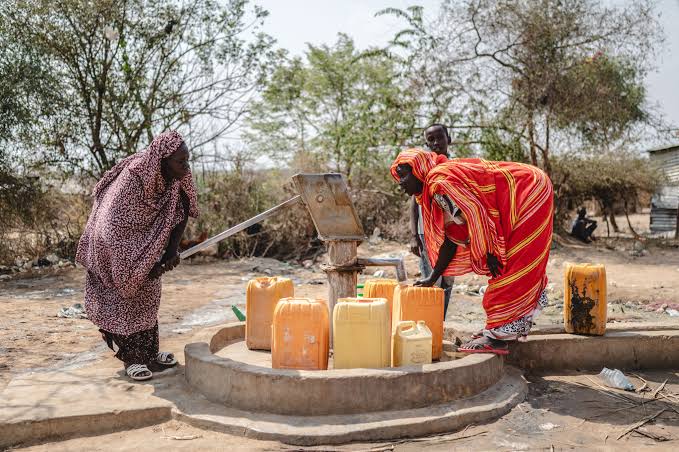
In June 2025, IMF staff reached a staff-level agreement with Juba on a nine-month Staff-Monitored Program (SMP), a lighter-touch arrangement than a lending facility that is intended to help the government rebuild a track record of policy implementation — including strengthening public financial management, improving oil-revenue transparency, and continuing non-oil tax reforms introduced under the FY2024/25 budget. The Fund's own assessment is candid about the sequencing problem: recovered oil revenue is expected to "gradually ease liquidity constraints" and permit "cautious repayment of salary arrears," but only gradually, and only if the security situation around the pipeline and the broader peace agreement holds.
Poverty and Hunger at Record Levels
The human cost embedded in these macro figures is severe. The World Bank now estimates that 87 percent of South Sudan's population lived in extreme poverty in 2025, up from 84 percent in 2024, while other national poverty-line estimates put the share as high as 92 percent. The World Food Programme's latest food-security analysis found that 7.8 million people — 56 percent of the population — face high levels of acute food insecurity between April and July 2026, one of the highest shares recorded anywhere in the world this year. Within that group, the number of people in Catastrophe (IPC Phase 5), the most severe classification, rose to an estimated 73,300, a 160 percent increase from the prior assessment. More than two million children are expected to suffer acute malnutrition during the 2026 lean season, and UNICEF and WFP jointly warn that conflict, displacement and access constraints are compounding the effects of flooding and below-capacity harvests.
The WFP's response plan for 2026 aims to reach 3.3 million of the most vulnerable people with emergency food, nutrition, school meals and cash assistance, but the agency has flagged a critical funding shortfall of US$355 million for the year — a gap that, if unaddressed, will force further rationing of an already stretched response. More broadly, over 10 million people, roughly two-thirds of South Sudan's population, are projected to require some form of humanitarian assistance in 2026, according to World Bank monitoring.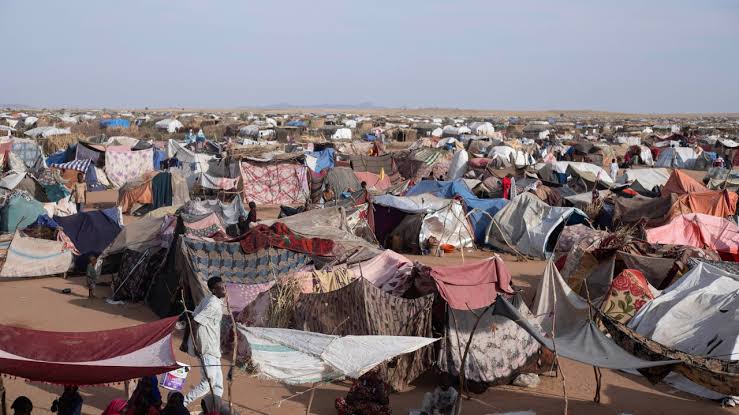
A Narrow Path Toward Diversification
South Sudan's development partners are pushing, with limited success so far, for economic diversification away from oil. The IMF's SMP conditionality emphasizes continued implementation of non-oil tax policy reforms and revenue-administration improvements introduced in the FY2024/25 budget, aimed at reducing the near-total dependence on hydrocarbon receipts. The AfDB's country strategy similarly highlights agriculture — a sector with substantial underused potential given South Sudan's fertile land and river systems — as the most plausible near-term diversification lever, alongside improved public financial management and governance reforms tied to the peace agreement's implementation. As a member of the East African Community, South Sudan also has a nominal pathway to deeper regional trade integration, though conflict-driven instability, weak infrastructure and a fragile banking sector continue to constrain private investment outside the oil enclave.
For now, the country's economic story in 2026 is really two stories running in parallel: a headline growth rebound mechanically produced by the resumption of oil flows through a single vulnerable pipeline, and a humanitarian emergency — measured in salary arrears, currency depreciation, acute malnutrition and famine risk — that oil revenue alone has not come close to resolving. Whether the tripartite security deal holds, whether the SMP evolves into a fuller IMF-supported program, and whether the R-ARCSS peace framework survives 2026 will together determine which of those two stories defines South Sudan's trajectory beyond this year.



