Written By |
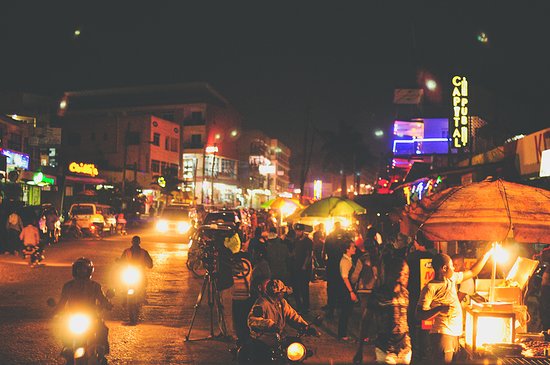
Kampala at night [courtesy photo]
By Evan Sande Ndahura
When night falls on Kampala, the streets that should symbolize the heartbeat of Uganda’s capital turn into corridors of moral decay. Electric poles, verandahs, and dimly lit corridors become stages for open acts of prostitution — a vice that the law of this country expressly forbids, yet one that walks freely under the watch of indifferent enforcers.
The Law Speaks — But No One Listens
Uganda’s Penal Code Act, Cap. 128, under Section 125, criminalizes living on the earnings of prostitution. Subsection (1) reads: “Every person who knowingly lives wholly or in part on the earnings of prostitution and every person who in any place solicits or importunes for immoral purposes commits an offence and is liable, on conviction, to imprisonment for a term of seven years.”
Further, Section 126 prohibits the operation of brothels, prescribing a similar punishment. Section 128 goes even further to outlaw prostitution itself.
On paper, these provisions form a clear moral and legal stance — a commitment to protect the dignity of human life and curb immorality. But in practice, the streets tell a different story: a story of legal paralysis and selective enforcement.
A Personal Encounter in the Heart of Kampala
My lamentations about Uganda’s slumbering morality began years ago. In 2015, as I walked with my wife from a wedding meeting at Papyrus Terrace (famously known as “High Table”) opposite Mabirizi Complex, we passed through Kikuubo — one of Kampala’s busiest commercial streets.
It was around 10 p.m. when a young woman’s voice pierced the night: “Sir, if you’re done with her, please take me too. I’m hungry and not expensive — only ten thousand shillings is enough for me.” My wife, startled and confused, asked, “Who is that woman?” I laughed bitterly and said, “That’s a prostitute.” But laughter couldn’t hide my shame. Every corridor and pillar was occupied by half-naked women — our city’s daughters reduced to street merchandise.
Years later, in 2025 a night before this article, a similar scene replayed itself along the Kabusu–Ndeba road near Rubaga Church. The same seductive voices, the same darkness, the same horror. It was as though time had stood still, and the law had gone blind.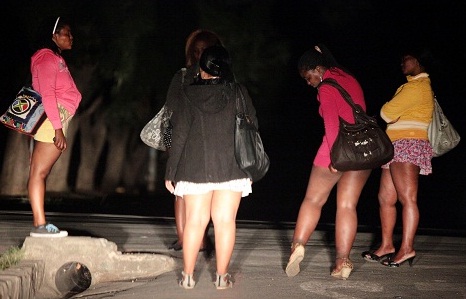
Ladies of the night [courtesy photo]
Websites and Digital Brothels: A New Face of Vice
If one thinks prostitution is confined to dimly lit streets, a quick search on the internet proves otherwise. A simple Google query reveals websites like: Kampala Hot Girls, Uganda Hot Girls. These online platforms openly advertise “escorts” and “call girls,” complete with prices, WhatsApp numbers, and location maps. This is not hidden crime — it is commercialized vice operating in daylight. The question then becomes: Are the individuals running these operations above the law? Or have the enforcers joined the enterprise they are supposed to end?
The Custodians of Law: Sleeping or Compromised?
Uganda’s written laws are clear, but their custodians — from the police to municipal authorities — seem either overwhelmed, compromised, or indifferent. Occasional “crackdowns” on sex workers do occur, but they are often cosmetic, targeting only the powerless street girls while ignoring the powerful operators behind them.
The Anti-Pornography Act (2014), too, was meant to address public indecency, but its enforcement has been marred by selective morality and corruption.
The Ripple Effects: HIV, Broken Families, and Exploitation
The unchecked rise of prostitution is not merely a moral issue; it is a public health crisis. According to UNAIDS (2024), commercial sex remains one of the leading contributors to new HIV infections in Uganda, especially among urban youth. Many of the girls, some as young as 16, are victims of poverty, unemployment, and gender-based violence. In areas like Kisenyi, Bwaise, and Katwe, brothels double as lodges and drinking spots where sexual encounters are traded for as little as UGX 5,000. The result is a generation caught between economic desperation and moral decay. Families are breaking, marriages are collapsing, and young men are being enticed into lifestyles of moral ruin.
Why the Law Fails: Challenges in Enforcement
1. Corruption among law enforcers – Police raids often end with bribes, not justice.
2. Lack of rehabilitation programs – Arresting sex workers without offering alternative livelihoods only fuels the cycle.
3. Weak moral and civic education – Society has normalized indecency, especially through social media and nightlife culture.
4. Economic desperation – High unemployment rates drive many young women into prostitution for survival.
5. Digital anonymity – The rise of online platforms and encrypted apps makes it harder to trace or prosecute digital sex trade operators.
Many of the girls, some as young as 16, are victims of poverty, unemployment, and gender-based violence
The Way Forward: What Must Be Done
1. Strengthen enforcement units — Establish a special anti-prostitution task force within the Uganda Police with a clear mandate and accountability mechanisms.
2. Regulate nightlife and digital platforms — The Uganda Communications Commission (UCC) should monitor and block sites promoting prostitution.
3. Provide economic alternatives — Government and NGOs should expand vocational and rehabilitation programs targeting young women at risk.
4. Public awareness and moral reawakening — Churches, schools, and community leaders must restore moral consciousness.
5. Update outdated laws — Amendments to the Penal Code Act should explicitly address online prostitution and modern forms of exploitation.
In a nutshell: The Law Must Rise from Its Sleep
Uganda’s moral fabric is being torn apart not because of a lack of laws, but because of the absence of will to enforce them. As long as prostitution continues to thrive openly on our streets and online platforms, our society risks losing its moral compass.
The time has come for law enforcement, policymakers, and the public to reclaim the night — to ensure that our daughters are protected, our streets are safe, and our written laws are not just ink on paper but shields of justice in action.
Torch Media Africa



