SCIENCE & HEALTH
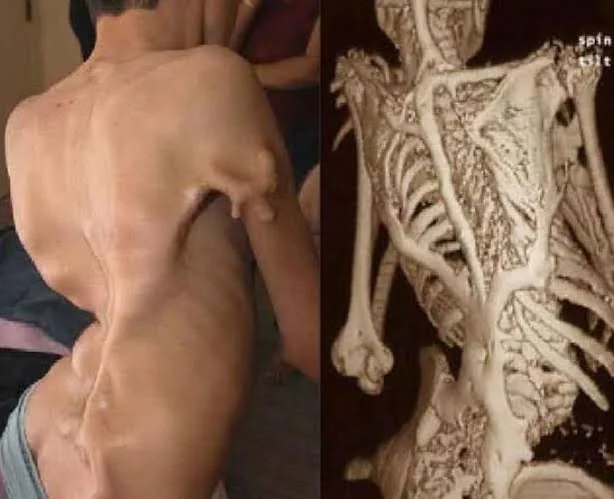
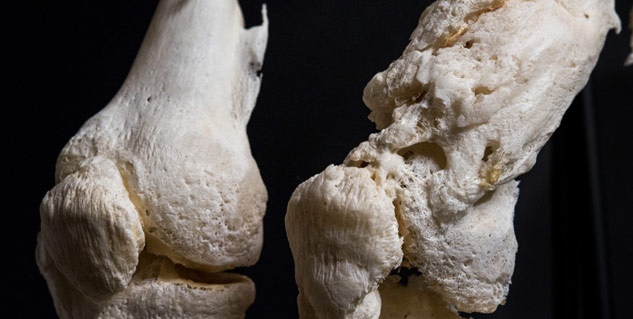
Imagine waking up one morning and a bruise on your shoulder doesn't heal — it hardens. Over weeks, it calcifies into solid bone, fusing your shoulder joint shut forever. A fall, a flu shot, even a routine dental procedure could trigger the same process somewhere else in your body. Piece by piece, year by year, your own muscles, tendons, and ligaments quietly rebuild themselves into a second, useless skeleton, locking your joints in place until you can no longer lift your arms, turn your head, or open your jaw.
This is the reality for the roughly 900 known patients in the United States living with fibrodysplasia ossificans progressiva, or FOP — one of the rarest and cruelest diseases in medicine, sometimes called "Stone Man Syndrome." On August 19, 2026, the FDA handed those patients and their families a long-awaited weapon: approval of Regeneron's Pasatru (garetosmab-grts), a new antibody drug that clinical trial data suggests can slash the formation of new bone lesions by as much as 94% — numbers doctors are calling the most impressive ever recorded for this disease.
"This is the first and only FDA-approved treatment demonstrating a reduction in new heterotopic ossification lesions and clinician-assessed flare-ups in a placebo-controlled trial," Regeneron said in announcing the approval, a carefully worded claim that nonetheless reflects a genuine milestone in a field that has had almost nothing to offer for decades.
A Disease That Builds a Prison From the Inside
FOP is caused by a mutation in a gene that controls a protein pathway involved in bone growth, and it affects roughly 1 in 2 million people worldwide — rare enough that many patients spend years being misdiagnosed, sometimes undergoing needless biopsies of the mysterious "lumps" that form on their bodies, a mistake that can actually trigger the very bone growth doctors are trying to investigate.
The disease follows a grim, predictable geography inside the body: heterotopic ossification — bone growing where it shouldn't — typically starts in the upper back and neck muscles before spreading outward to the shoulders, hips, knees, and jaw, moving from the body's center toward its limbs. Flare-ups can be triggered by something as minor as an intramuscular injection, a bump, a viral illness, or even overexertion, meaning patients and their families often live in a state of constant vigilance, avoiding anything that might provoke the next flare.
By age 30, most patients are completely immobile. Average life expectancy hovers between 40 and 50 years, with thoracic insufficiency syndrome — essentially, the ribcage itself calcifying and slowly restricting the lungs — and pneumonia among the most common causes of death. Beyond the physical toll, patients in advanced stages often lose the ability to speak clearly, chew food, or hear properly, as the disease progressively locks their jaws and encases their bodies.
There is no cure. Until recently, there was barely any treatment at all.
How Pasatru Works — And Why the Trial Data Turned Heads
Pasatru is a fully human monoclonal antibody engineered to block a protein called Activin A, which researchers identified as a key driver of the abnormal bone formation seen in FOP patients. In simple terms, if the mutated gene in FOP patients is a car with its accelerator stuck to the floor, Activin A is the fuel line — and Pasatru cuts it off.
The FDA's approval rested on results from the Phase 3 OPTIMA trial, and the numbers are striking even to clinicians accustomed to modest, incremental wins in rare-disease research. Patients receiving the 3 mg/kg dose of the drug saw a 94% reduction in new heterotopic ossification lesions compared to placebo — just one new lesion, versus 19 in the placebo group, over the trial period. Patients on the higher 10 mg/kg dose saw a 90% reduction, with two new lesions compared to the same 19 in the control arm.
For context, that outperforms the only other FDA-approved FOP treatment on the market: Ipsen's Sohonos (palovarotene), approved in 2023, which demonstrated roughly a 60% reduction in new lesions in its own pivotal trial. Regeneron's arrival gives physicians — and more importantly, patients — a second option in a disease area that had exactly one drug just three years ago, and one whose efficacy the new data appears to significantly exceed.
Beyond lesion counts, the trial also tracked clinician-assessed flare-ups, the painful, swelling episodes that often precede new bone formation and that patients dread most because they signal another piece of their body is about to be lost to calcification. Pasatru significantly reduced these flare-ups as well, according to the trial data underpinning the approval.
The Trade-Offs: Side Effects and a Staggering Price Tag
No drug this powerful comes without complications, and Pasatru's side-effect profile reflects the aggressive biological pathway it's targeting. The most common adverse reactions reported in trial patients included abscesses, acne, increased hair growth, madarosis (loss of eyebrows), oral ulcers, epistaxis (nosebleeds), folliculitis, paronychia (a painful nail infection), and rash. The FDA's label carries warnings about the risk of fetal harm during pregnancy, skin and soft tissue infections serious enough to require hospitalization, and nosebleeds severe enough to need medical intervention.
Then there's the price. Pasatru's annual list price ranges from roughly $693,000 to $2.1 million, depending on a patient's body weight and the dose required — with the average patient at the higher dose facing a price tag near $1.4 million per year. It's a figure that places Pasatru firmly in the rarefied, and controversial, tier of ultra-rare-disease drugs whose pricing reflects both the extraordinarily small patient population (a few hundred people, not millions) and the enormous cost of developing a therapy for a market this small.
For a disease affecting fewer than a thousand Americans, insurers and health systems will now face difficult questions about access, particularly given that a competing product already exists on the market at what is presumably a lower, though still substantial, price point.
Voices From a Community That's Waited Decades
For a patient population this small, every new treatment option carries outsized emotional weight. FOP patient communities and advocacy organizations have spent years pushing for research investment in a disease so rare that pharmaceutical companies historically had little financial incentive to pursue it — a dynamic that ultra-rare disease designations and FDA fast-track programs exist specifically to correct.
Regeneron pursued garetosmab through the FDA's expedited pathways, reflecting the severity and rarity of the condition it targets. The drug's approval was framed by the company not merely as a commercial milestone but as validation of a scientific bet: that targeting Activin A directly, rather than the downstream bone-formation signaling that Sohonos targets, could produce a more dramatic clinical effect. The trial results suggest that bet paid off.
Patient advocacy voices in the rare-disease space have long emphasized that for FOP families, the calculus around new treatments isn't abstract — it's about whether a child will still be able to lift a spoon to their mouth in five years, or whether a jaw fusing shut can be delayed long enough for other breakthroughs to arrive. A 90-plus percent reduction in new bone lesions is not a statistic to this community; it's the difference between years of remaining mobility and a much faster slide toward the disease's most devastating stages.
What This Means for You
Unless you or someone you love has been diagnosed with FOP, this approval won't change your daily life — the disease is far too rare for that. But the ripple effects of a milestone like this extend well beyond the roughly 900 Americans currently living with the condition.
Breakthroughs in ultra-rare diseases like FOP often serve as proving grounds for biological pathways — in this case, Activin A inhibition — that may later prove relevant to far more common conditions involving bone density, muscle wasting, or abnormal tissue growth. Drugs developed to block Activin A signaling are already being studied in contexts ranging from certain cancers to muscle-wasting disorders, meaning the science validated in this tiny patient population could eventually inform treatments reaching a much wider swath of the public.
For patients and families currently navigating an FOP diagnosis, the message is more direct: there is now a second, seemingly more effective treatment option, and it's worth an urgent conversation with a specialist familiar with the OPTIMA trial data about whether Pasatru is appropriate, alongside a frank discussion of cost, insurance coverage, and the drug's side-effect profile.
The Bigger Picture
FOP has long stood as one of medicine's cruelest natural experiments — a single gene mutation that reveals, in devastating detail, exactly how the body's bone-building machinery can spiral out of control. For decades, that mutation offered scientists a lesson but patients almost nothing in the way of hope.
That equation has now shifted twice in three years: first with Sohonos in 2023, and now with Pasatru's dramatically stronger trial results in 2026. Two approved treatments in a disease space that had zero just a few years ago is, in the world of ultra-rare disorders, nothing short of remarkable — even if the price tags attached to that progress remain hard to swallow.
For the roughly 900 people in America whose bodies are quietly building a second skeleton, cell by cell, year by year, the arrival of Pasatru doesn't mean a cure. But for the first time, it means options — and for a disease this merciless, options are their own kind of miracle.
Published By | Features Editor