Lusaka, Zambia
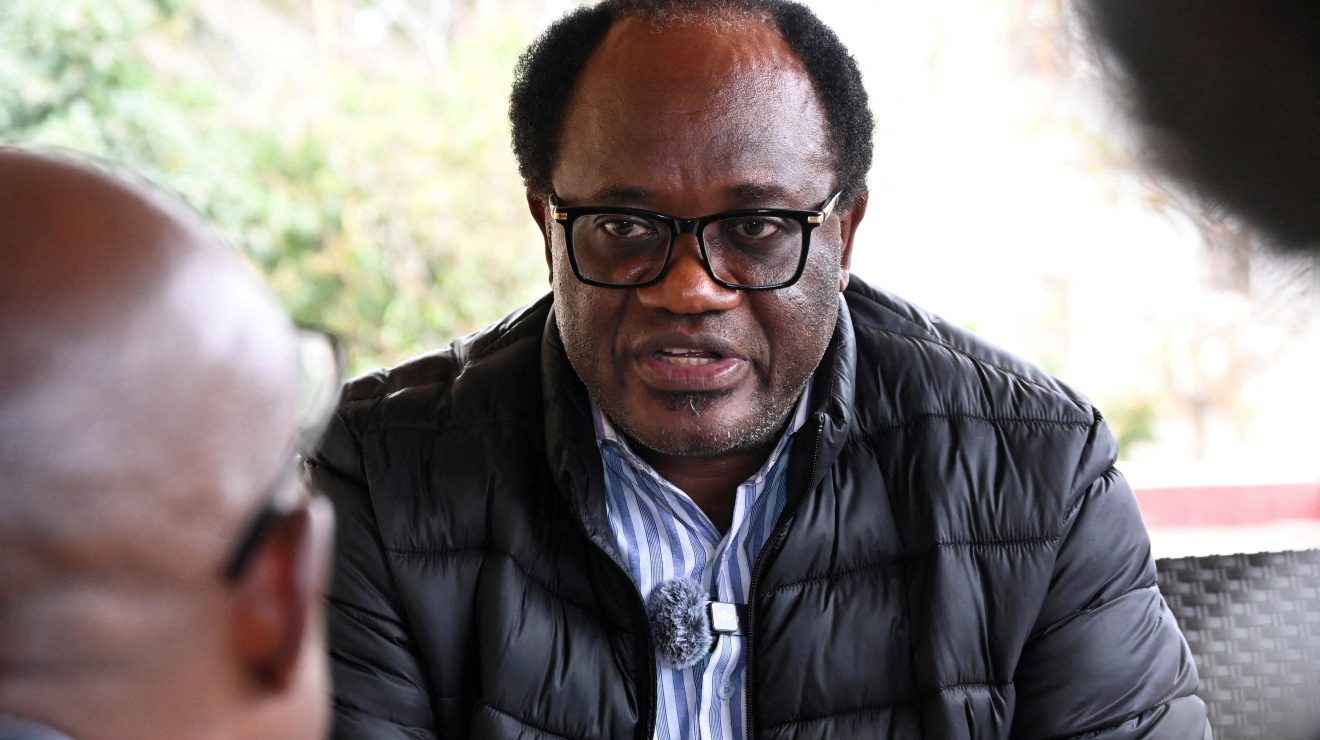
Zambia's main opposition leader, Brian Mundubile, surrendered to police on August 27 and was taken into custody on suspicion of treason, capping two weeks in which he sheltered inside a United Nations building in Lusaka after security forces raided his home the day after a disputed presidential election. His running mate, Makebi Zulu, turned himself in alongside him. The two men each recorded what police called "warn and caution statements" — a formal step that typically precedes charges — and remained in custody as of Thursday evening.
The arrests mark the most serious escalation yet in a political crisis that has unfolded since Zambia's August 13 general election, in which incumbent President Hakainde Hichilema was declared the winner with roughly 60 percent of the vote. Mundubile, who ran as the presidential candidate of the Tonse Alliance under the banner of the National Reconciliation Party for Unity and Prosperity, has rejected the result and alleged serious irregularities in the count. Hichilema is due to be inaugurated for a second five-year term next week, a ceremony that will now take place with his chief rival in police custody facing the country's gravest criminal charge.

A vote marred by violence and disputed tallies
Zambia has, for the most part, built a reputation over the past two decades as one of southern Africa's more reliable democracies, with the copper-rich nation seeing the presidency change hands peacefully between rival parties in 2011, 2021 and now, disputedly, 2026. This year's election broke from that pattern. Vote counting was suspended for hours at several stations amid outbreaks of violence and what the Electoral Commission of Zambia described as the theft of ballot boxes; the commission has not said who it believes was responsible. Mundubile has pointed to those disruptions, along with what he says was the unauthorized removal of vote tally papers from a number of polling stations, as evidence that the declared result cannot be trusted.
The day after the election, security forces raided Mundubile's residence. Authorities said the operation resulted in the arrest of 11 people and the discovery of AK-47 assault rifles and other military-grade equipment on the property; officials framed the raid as a response to an emerging threat to national security and have since suggested the opposition was laying the groundwork for an insurgency. Mundubile, who was present during the raid, has flatly denied that characterization. He said the people gathered at his home, including opposition officials, were unarmed and that security officers opened fire on them without provocation. Authorities, for their part, said their officers were fired upon first and returned fire in self-defense.
The raid's most consequential casualty was Mutotwe Kafwaya, a former Zambian cabinet minister and opposition official, who was fatally shot during the operation. The circumstances of his death remain disputed, with the government's and the opposition's accounts directly contradicting each other. Amnesty International has since called Kafwaya's killing "deeply alarming" and urged an independent investigation. It was in the raid's immediate aftermath that Mundubile said he went into hiding, fearing for his life, before he and Zulu ultimately sought shelter at a United Nations facility in the capital — a striking image of an opposition presidential candidate seeking the protection of an international body from his own country's security services.
International concern, government insistence on due process
The arrests and the broader crackdown have drawn concern from the United Nations' senior human rights official. Volker Türk, the U.N. High Commissioner for Human Rights, said in a statement last week that he was troubled by the arrests of Zambian opposition figures, some of whom had already been detained before the election even took place. Following Thursday's developments, U.N. spokesperson Stéphane Dujarric said the world body had received assurances from the Zambian government that Mundubile and Zulu "will be treated in full respect of applicable rights and obligations under national and international law on due process and a fair trial," adding that the U.N. intended to monitor the situation closely.
The Hichilema government has not publicly detailed the specific evidentiary basis for the treason allegations beyond pointing to the weapons recovered in the raid and the 11 arrests that followed it. Zambian authorities maintain that the 11 individuals detained at Mundubile's property are themselves in custody facing treason charges related to what officials describe as a plot to threaten national security. Whether Mundubile and Zulu will be formally charged, and on what specific counts, remained unclear as of Thursday; a "warn and caution statement" under Zambian police procedure is typically a precursor to — but not the same as — the filing of formal charges in court.

A test for Hichilema's democratic credentials
Hichilema came to power in 2021 on the strength of a landslide victory over then-incumbent Edgar Lungu, a win that was celebrated internationally as evidence of the resilience of Zambian democracy and of the peaceful, opposition-friendly transfer of power that many neighboring states have struggled to replicate. His government's handling of this year's disputed election, and now the treason case against his principal challenger, will be scrutinized as a test of whether that reputation survives a second term secured under far murkier circumstances than his first.
Mundubile's own political trajectory complicates the narrative for both sides. A longtime member of the Patriotic Front who once served as government chief whip and, later, as the country's Leader of the Opposition, Mundubile was pushed out of the PF leadership in a factional dispute in late 2023, following the death of former President Edgar Lungu in June 2025 and a subsequent split within the Tonse Alliance that Lungu had once chaired. Mundubile ultimately emerged in January 2026 as the alliance's chosen presidential candidate, contesting the election under the National Reconciliation Party for Unity and Prosperity after a legal dispute over his original party ticket. His running mate, Makebi Zulu, brought his own PF Pamodzi Alliance faction into the coalition. That the two men most associated with unifying a previously fractured opposition are now the ones facing treason allegations will likely be read by government critics as a targeted move against the figures best positioned to challenge Hichilema, rather than a genuine national security response.
Government supporters, meanwhile, are likely to point to the recovered weapons and the 11 arrests as justification for treating the matter with the gravity of a security threat rather than an ordinary political dispute — though the disputed circumstances of Kafwaya's killing, and the fact that unarmed opposition figures were reportedly present when it occurred, complicate that framing considerably.
What to watch next
Several threads will determine how this crisis develops in the days ahead. The first is whether Zambian prosecutors move from "warn and caution" statements to formal treason charges against Mundubile and Zulu, and if so, what specific evidence they present. Treason is among the most serious charges in Zambian law, and a formal prosecution — as opposed to continued investigative detention — would mark a significant hardening of the government's posture.
The second is Hichilema's inauguration, expected next week, which will proceed with his most prominent political rival behind bars. How the ceremony is received domestically and by international observers, particularly the African Union and the Southern African Development Community, both of which have historically monitored Zambian elections, will shape perceptions of the vote's legitimacy going forward.
The third is the fate of the independent investigation that Amnesty International and other rights groups are demanding into Kafwaya's death. An impartial inquiry — one that Zambian authorities have not yet committed to — could either corroborate the government's account of an armed confrontation or substantiate opposition claims that security forces killed an unarmed political official, with significant implications for public trust in the security services.
Finally, the case will be watched closely across a region where several governments have faced accusations of using security and legal apparatuses against opposition figures following contested elections. Zambia's example, given its post-2021 standing as a rare recent success story for African democratic transitions, carries outsized symbolic weight. A treason prosecution of a defeated presidential candidate — however the underlying facts eventually sort out — risks becoming a cautionary marker for how quickly a reputation for peaceful democratic competition can come under strain.
Published By | News Editor