Economic & Social Transformation
For two decades Angola has been the textbook case of a petro-state: a country whose budgets, exchange rate and political mood rose and fell with the price of a barrel. In 2026 the story is more interesting. Officials in Luanda now speak of a post-oil economy, inflation has fallen sharply, the debt ratio has been cut by more than a fifth of GDP in two years, and a rail corridor to the copper belt is finally attracting real money. Yet the International Monetary Fund's own language remains sober. This article examines how much of Angola's transformation is structural, how much is cyclical, and where the social evidence lags behind the headline numbers.
A Rebound That Owes Something to Oil
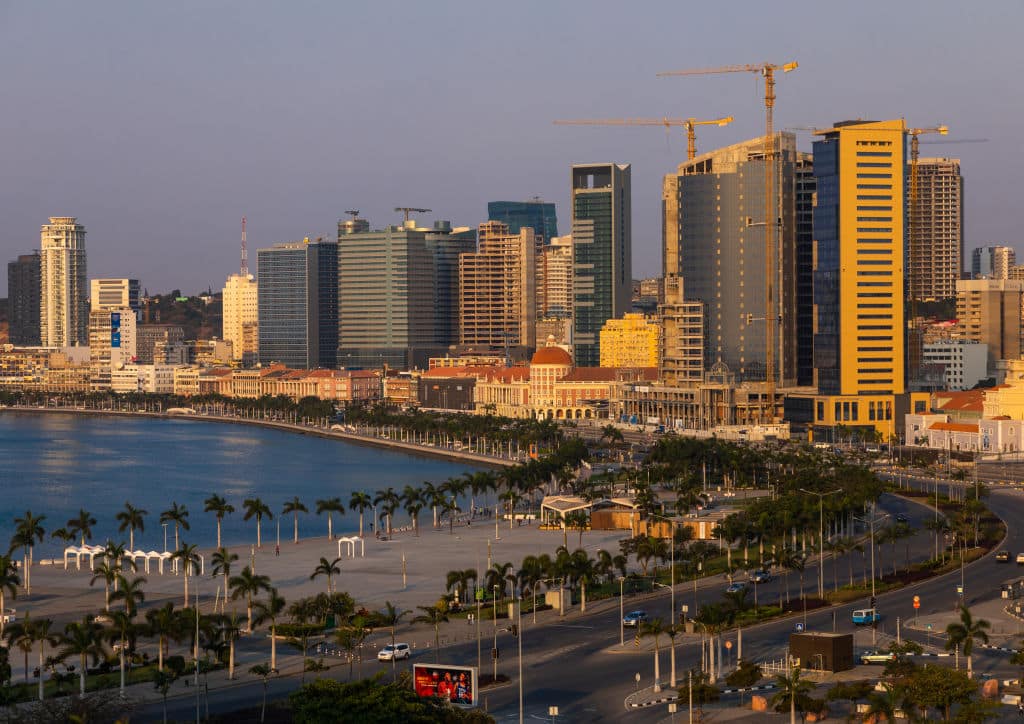
Angola's nominal GDP is estimated at roughly $152 billion, a figure that reportedly put it slightly ahead of Kenya's $147 billion in 2026, a comparison the IMF has linked to a surge in global crude prices. Government figures cited by Further Africa and CNBC Africa show year-on-year growth of 5.3 percent in the first quarter of 2026, up from 3.13 percent for full-year 2025. The non-oil sector is described as roughly 80 percent of GDP, and Economic Coordination Minister José de Lima Massano has characterised the reform programme as opening "a new development cycle" that is "irreversible".
The caveat is that oil has not gone away. Estimates put crude at 25 to 29 percent of GDP, around 57 to 60 percent of fiscal revenue and 94 to 95 percent of exports. The IMF's 2026 Article IV consultation, concluded by its Executive Board on 1 May 2026, states plainly that a significant decline in oil production weakened both fiscal and external positions, that oil revenues fell sharply, and that "the medium-term outlook remains subdued reflecting a structural decline in oil revenues". Forecasts diverge accordingly: the IMF projection cited in press coverage for 2026 growth is 2.3 percent, while the African Development Bank projects 2.9 percent for 2026 and 3.3 percent for 2027, after 3.1 percent in 2025 and 5.0 percent in 2024. The AfDB also records a 3.2 percent contraction of the oil sector in 2025 and real GDP per capita growth of just 0.1 percent, meaning the average Angolan was barely better off last year.
Disinflation and the Debt Turnaround
The most visible macroeconomic gain is price stability. Government data show inflation falling from 27.5 percent at the end of 2024 to 15.7 percent at the end of 2025 and 10.11 percent year on year in June 2026. The AfDB, using annual averages, records 28.2 percent in 2024 and 20.4 percent in 2025, and notes that the Banco Nacional de Angola cut its policy rate to 19.0 percent in September 2025 and 18.5 percent in November 2025. The IMF advises that exchange-rate flexibility should absorb shocks while monetary policy sustains the disinflationary trend, a reminder that the kwanza's adjustment in recent years is part of what brought inflation down from its peak.
Debt has followed a similar path, though measurement matters. Angolan authorities cite public debt of 46.94 percent of GDP in 2025, compared with 68.56 percent in 2023, or roughly $66 billion in nominal terms. The AfDB puts the 2025 ratio at 49.2 percent and projects 48.2 percent for 2026 and 2027, with a fiscal deficit of 3.0 percent of GDP in 2025 (up from 1.4 percent in 2024) that it expects to stay below 3 percent. The government's own 2025 budget deficit figure is 4.1 percent of GDP. Whichever series one prefers, the direction is clear: the debt-to-GDP ratio has fallen sharply, helped by a stronger currency valuation effect and nominal growth, and sovereign bond yields, though still above 9 percent according to the AfDB, reflect improved market access. The problem is the cost. The AfDB estimates annual financing needs at about $14 billion, and the IMF warns that elevated fiscal financing needs are crowding out both social spending and private credit.
Building a Non-Oil Revenue Base
A durable transformation requires revenue that does not depend on the barrel. Here there is measurable progress. The AfDB reports non-oil revenue of 9.9 percent of GDP in 2025, up from 5.7 percent in 2023, and the government projects non-oil revenue of about 10.6 trillion kwanzas, roughly $11.4 billion, in 2026. Non-oil foreign direct investment has also climbed, from $123.9 million in 2023 to $353.5 million in 2024 and $959.4 million in 2025, according to figures reported by Further Africa. These are still small sums beside a $152 billion economy, but the trajectory, nearly eightfold in two years, is what reformers point to when they claim the model is changing.
The financial sector is not yet a strong partner in that shift. Banking assets equal only 21.0 percent of GDP and private credit just 8.3 percent, per the AfDB. Banks are well capitalised, with a capital adequacy ratio of 24.4 percent, but non-performing loans stand at 14.4 percent, and the appetite to lend is muted when government paper offers attractive yields. Diaspora remittances exceed $1 billion a year, a further source of foreign exchange that could be better channelled into productive finance.
The Lobito Corridor and the Agriculture Bet
The flagship diversification project is the Lobito Corridor, a rail route of roughly 1,300 kilometres linking the Atlantic port of Lobito to the copper and cobalt regions of the Democratic Republic of Congo and Zambia. A financing package of about $753 million has been reported, including a $553 million loan component from the U.S. International Development Finance Corporation and $200 million from the Development Bank of Southern Africa. In August 2026 the AfDB approved a $255 million loan and a $10 million grant supporting Zambia's participation in the corridor. For Angola, the strategic hope is that a transport artery built for minerals becomes an economic corridor that also carries food, manufactured goods and services.
That is precisely the logic behind the $311.4 million agriculture programme launched on 19 August 2026 along the corridor's eastern reaches. Funded by $211.4 million from the AfDB and $100 million from the Angolan government, the five-year programme covers six eastern provinces: Lunda Norte, Lunda Sul, Moxico, Moxico Leste, Cuando and Cubango. It targets 240,000 farming households, about 1.2 million people, 55 percent of them women, with 150,000 hectares of new farmland, 2,500 hectares of rehabilitated climate-resilient irrigation, 3,000 farmer field schools, six agribusiness centres and 400 kilometres of feeder roads. It expects 7,500 direct jobs, half for women and a third for youth. The crops span cereals, soybeans, groundnuts, cassava, coffee, cocoa, palm oil, rice and wheat. Reporting on the programme notes that Angola imported around $791 million of rice, wheat, soybeans and maize in 2021, which frames the import-substitution opportunity.
The Social Ledger: Where Growth Has Not Yet Arrived
The social indicators show why macroeconomic stabilisation is only a first step. The AfDB puts the poverty rate at 40.6 percent in 2025 and the Gini coefficient at 0.51, among the higher inequality readings on the continent. Youth unemployment is 43.3 percent, and 78.6 percent of the workforce is informal. Angola ranks 148th of 193 countries on the Human Development Index, maternal mortality is 183 per 100,000 live births and child mortality is 50.5 per 1,000.
There are encouraging signs. Government figures show severe food insecurity falling from 19.5 percent in 2024 to 11.7 percent in 2025, and overall unemployment reported at 21.3 percent in 2025 compared with 31.5 percent the year before. These are large moves and should be treated with care, since definitions and survey methods shape such data and independent verification is limited. The essential point is that a country can post a 5 percent quarter while four in ten citizens remain poor. Turning corridor investment and cheaper credit into jobs for the young, most of them in informal work today, is the test that will decide whether the current cycle is remembered as a transformation or a commodity upswing.
What to Watch
Three questions will shape the next eighteen months. First, whether oil output stabilises, since the IMF anticipates a structural decline and any further fall would pressure both revenue and reserves, currently about 7.8 months of import cover according to the AfDB. Second, whether non-oil revenue keeps climbing towards double digits of GDP, allowing the state to fund education and health rather than debt service. Third, whether the Lobito Corridor delivers local content, meaning Angolan farms, processors and logistics firms, rather than merely moving other countries' minerals through Angolan territory. The IMF's recommended agenda of governance, business climate, financial inclusion and diversification is unglamorous, but it is the same list that separates commodity booms from lasting development.
Angola's numbers in 2026 are better than at any point since the 2014 oil-price collapse, and its officials have earned some credit for stabilising a currency and a debt profile that looked precarious. The next act is harder. It requires converting macroeconomic stability into productive jobs, and doing so while oil, the source of that stability, slowly declines.
Published By | Business News Editor