Written By | Sports Desk
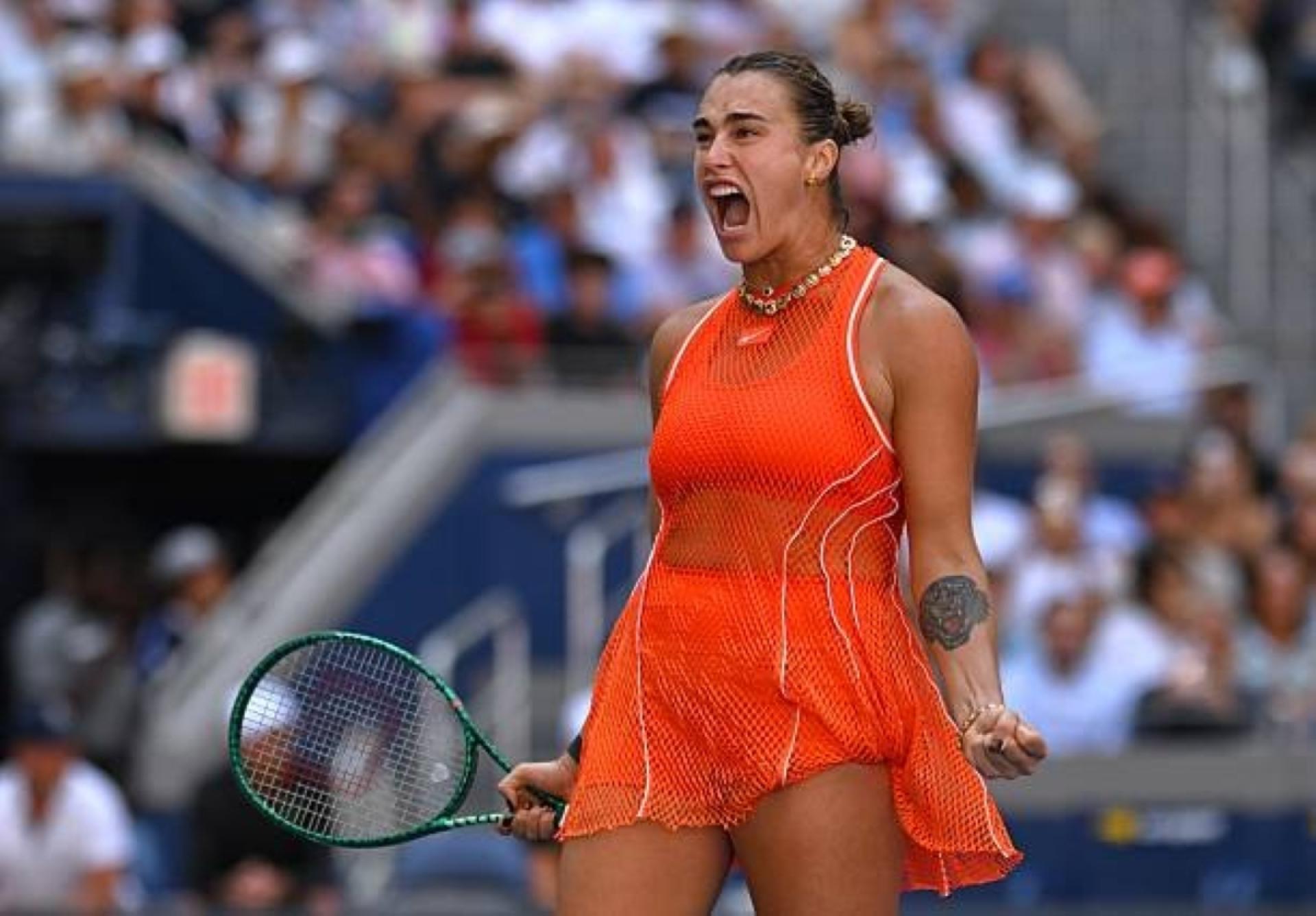
Aryna Sabalenka is chasing a US Open three-peat no woman has completed since Serena Williams.
NEW YORK
There is a peculiar cruelty to the arithmetic of professional tennis. Somewhere in the middle of this fortnight, while Aryna Sabalenka was carving her way through a draw she has owned for two straight years, a column of numbers in a WTA spreadsheet quietly stopped adding up in her favour. By Monday morning she will no longer be the top-ranked woman in the sport. It will not matter if she wins Saturday's US Open final in straight sets. It will not matter if she loses it in fifty-eight minutes.
Elena Rybakina, who walks onto Arthur Ashe Stadium at 4 p.m. as the second seed, becomes world No. 1 on Monday regardless of the result — the first time in her career she has held the ranking, and the end of a 99-week reign for Sabalenka that has outlasted two coaching changes, a mid-season slump and an entire generation of challengers. The trophy will be handed out at roughly 6 p.m. The crown was handed over days ago, off camera, by an algorithm.
Ninety-nine weeks, and the maths that ended them
Rankings in tennis are a rolling fifty-two-week ledger: you defend what you earned a year ago or you lose it. Sabalenka arrived in New York with the heaviest possible defence — champion in 2024, champion in 2025, a mountain of points to protect and nothing to gain by protecting them. Rybakina arrived with the opposite ledger. Her Australian Open title in January, won against Sabalenka herself, sat on the books as pure profit.
It tipped on Thursday night, when Rybakina came from a set down to beat Coco Gauff 3-6, 6-4, 6-4 in a semi-final that the Ashe crowd spent two hours trying to shout her out of. "Amazing match. Very close match," she said afterwards, in the flat, almost apologetic register that has become her signature. "Super happy, proud. I don't know, can't find other words, but definitely very happy and proud."
Sabalenka's route was cleaner. She beat Jessica Pegula 7-5, 6-2 in the first semi-final, taking control after a scrappy opening set and finishing with 29 winners and seven aces. She has dropped a single set all tournament. On paper it is the most commanding fortnight of her season — which is precisely what makes the ranking handover sting.
"I was super desperate," Sabalenka admitted of her mindset coming into the tournament. "I lost a tough match on grass against Jess, and I wasn't really performing well in the middle part of the season. So it kind of feels for me, talking about Grand Slams, like a last push of the season. I wanted badly to go to the finals, and of course, I want to go all the way."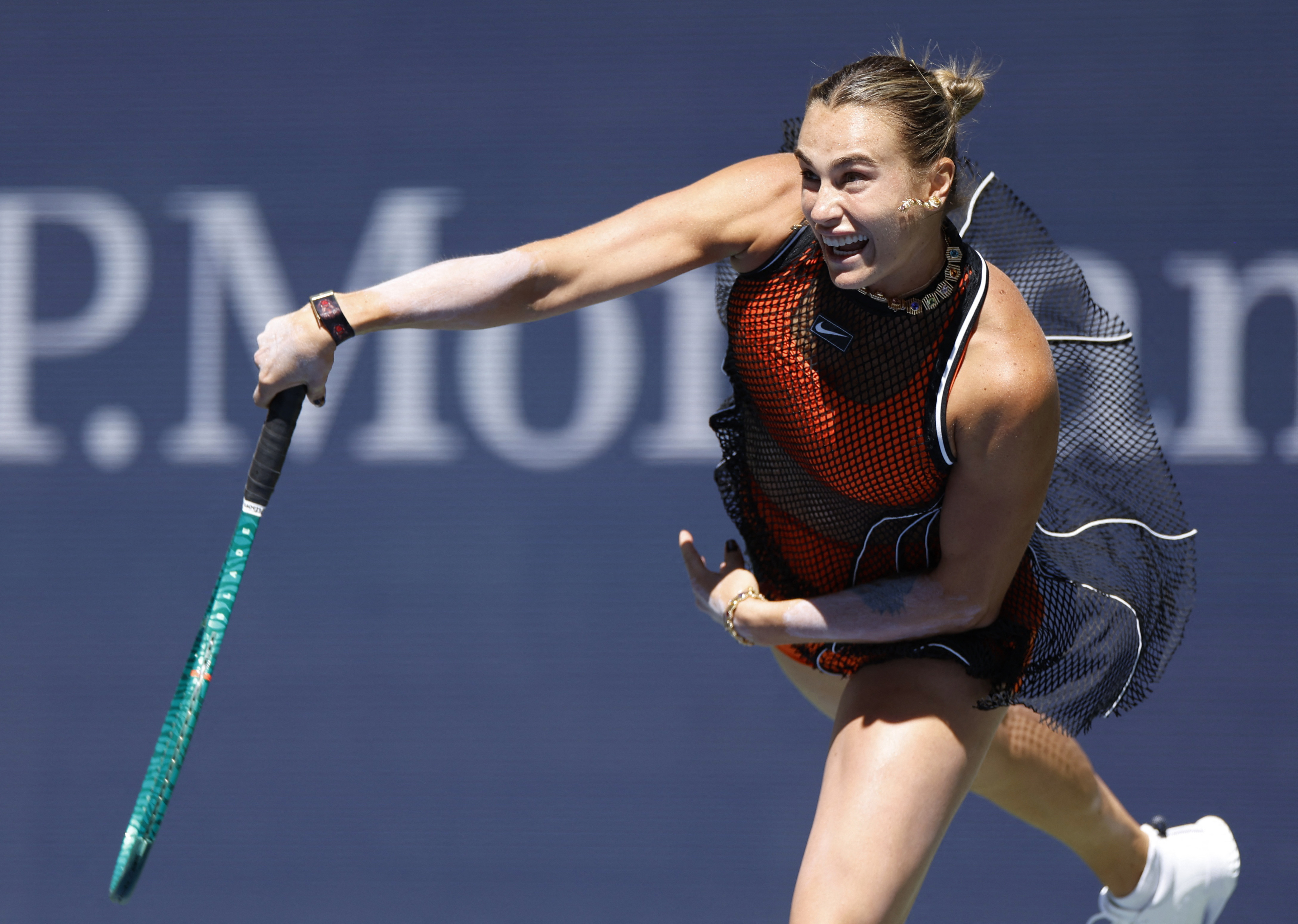
Eighteen meetings, and a rivalry nobody named
This will be their eighteenth match against one another. Sabalenka leads 10-7. It is also their third major final, and they have split the previous two — which means the pair have quietly assembled one of the most substantial rivalries in modern women's tennis without ever being marketed as one. There is no nickname for it. There is no rivalry montage. There are just two enormous ball-strikers who keep ending up on opposite sides of the same net in the biggest matches of the year.
Stylistically they are near-mirrors, which is part of why the rivalry has never acquired a narrative hook. Both hit flat and early. Both serve big enough to end points before a rally begins. When they meet, the match is usually decided by which of them blinks first on a second serve at 4-4.
The difference is temperament, and that is the axis on which Saturday probably turns. Sabalenka is a player of visible weather — fist pumps, self-directed monologues, the occasional racquet sacrificed to the cause. Rybakina's face does not change between an ace and a double fault, a trait that has been variously described as ice-cold and, less charitably, disengaged. In a stadium of 24,000 people who will almost certainly be pulling for the two-time defending champion, the woman who does not appear to hear the crowd has a structural advantage.
Serena's shadow, and $5.5 million
The record on the table is a real one. No woman has won three consecutive US Open singles titles since Serena Williams took the 2012, 2013 and 2014 editions. Before Williams it was Chris Evert in the 1970s. It is a short and severe list, and Sabalenka has spent the fortnight being reminded of it in every press conference.
There is money too, and a great deal of it. The 2026 US Open is running a total player compensation pool of roughly $108 million, a figure the USTA arrived at after two years of public pressure from players over revenue share. The singles champions take home $5.5 million each; the runners-up receive $2.8 million — very nearly double, the largest such gap in the tournament's history.
What this means if you are watching from a sofa
It means you are watching a final with two separate scoreboards, and only one of them is on the wall. If Sabalenka wins, she joins Serena Williams on a list of three, and does it in the same week she loses the No. 1 ranking — a combination that has almost no precedent and will make for a genuinely awkward trophy ceremony. If Rybakina wins, she completes a calendar year in which she beat the same opponent in two major finals, takes the ranking, and still probably does not get called the best player in the world for another six months.
It also means the women's tour heads into its autumn swing with its hierarchy genuinely unsettled for the first time in two years. Sabalenka and Rybakina have now traded the sport's two most valuable assets — the No. 1 ranking and the last Grand Slam title of the season — inside a single week.
The match starts at 4 p.m. Eastern on ESPN. The ranking changes on Monday. For roughly forty-eight hours in between, women's tennis will have a champion and a No. 1 who are not necessarily the same person, which is either an accounting quirk or the most honest description of the sport's current state anyone has managed all year.



