ENTERTAINMENT DESK
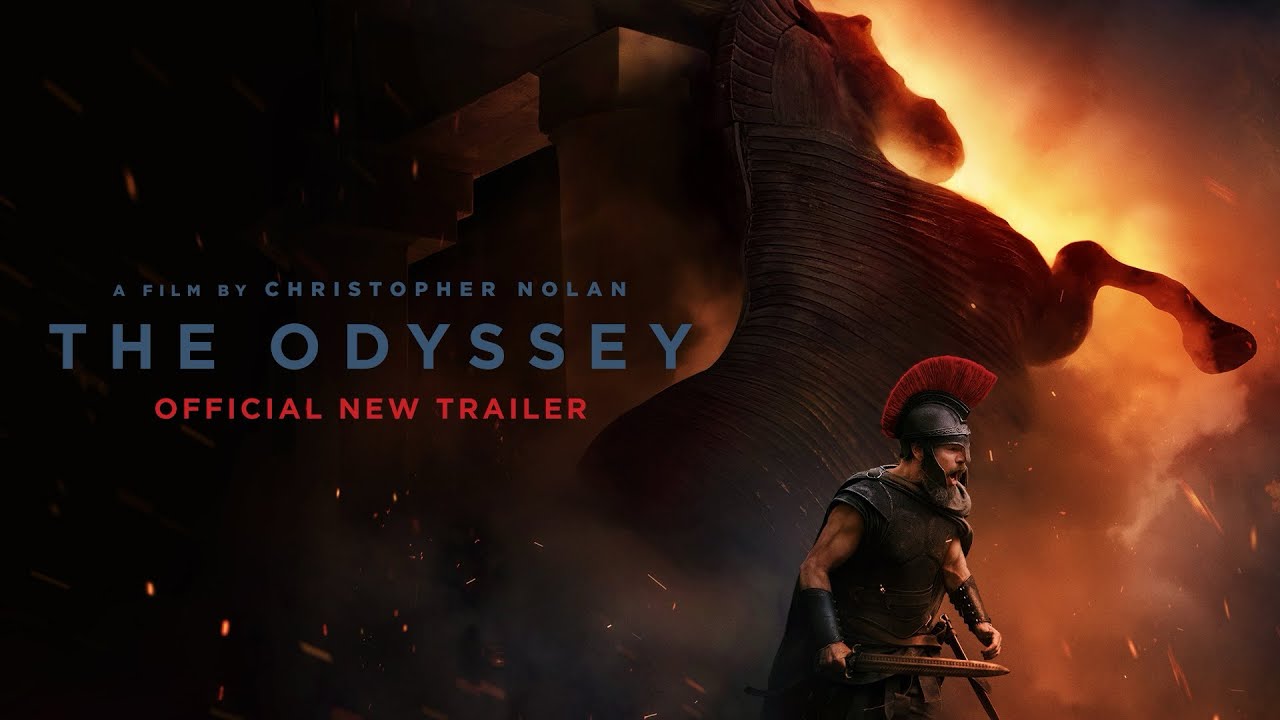
Christopher Nolan has spent two decades convincing studios to bet enormous sums on unconventional bets — a movie that runs backwards, a three-hour biopic of a theoretical physicist, a war film with almost no dialogue in its first act. His latest gamble might be his strangest yet: a $250 million-plus adaptation of "The Odyssey," Homer’s foundational epic poem, shot entirely on IMAX film cameras across multiple countries with an ensemble cast so large that Universal Pictures needed a dedicated character guide just to keep audiences oriented. Three weeks after release, the bet looks to have paid off spectacularly.
The film, led by Matt Damon as the wandering king Odysseus and Anne Hathaway as his steadfast wife Penelope, opened domestically to an estimated $124.5 million — the second-biggest live-action opening of 2026, trailing only a handful of franchise tentpoles — and $264.1 million worldwide, Nolan’s best opening weekend of his career. It has since held with unusual strength, pulling in roughly $87 million in a recent weekend alone, a drop-off far shallower than most modern blockbusters manage past their debut.
A Cast Built Like an Ensemble Epic
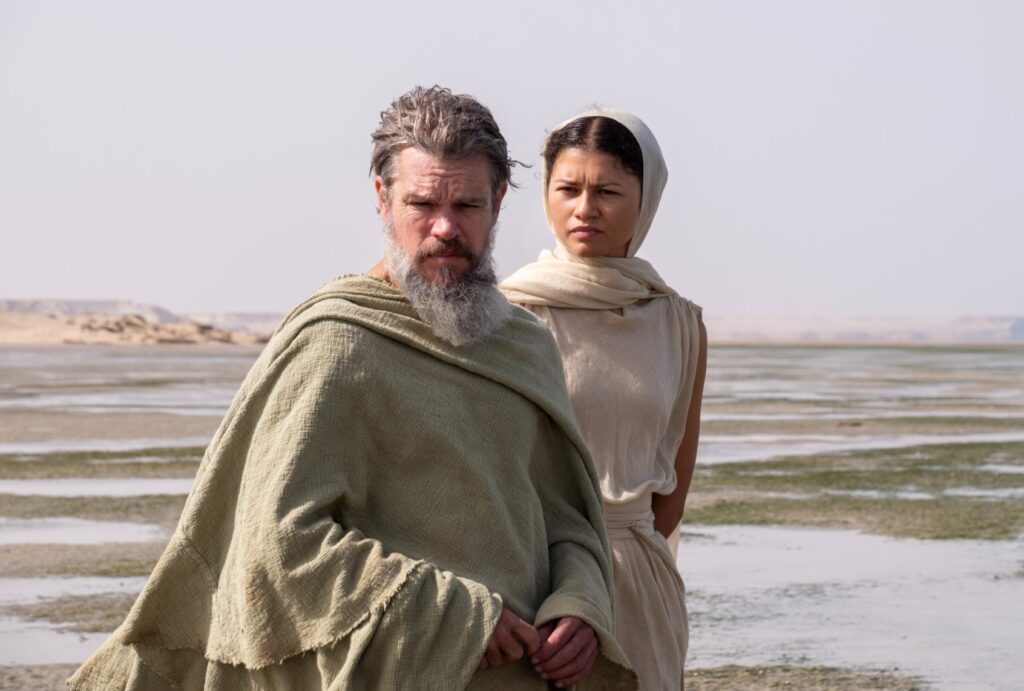
Alongside Damon and Hathaway, the film features Tom Holland as Telemachus, Odysseus’s son grown into a young man during his father’s decade-long absence; Zendaya as the goddess Athena; and Robert Pattinson as Antinous, the most menacing of the suitors laying siege to Penelope’s household. The supporting cast reads like an awards-season fever dream: Lupita Nyong’o, Charlize Theron, Samantha Morton, Jon Bernthal, Himesh Patel, Corey Hawkins, Mia Goth, Elliot Page and John Leguizamo, among others, populate the sprawling mythological landscape Odysseus crosses on his ten-year voyage home — past the Cyclops Polyphemus, the deadly lure of the Sirens, and the sorceress Circe.
That scale was by design. Nolan has said in press interviews around the release that he wanted "The Odyssey" to feel less like a single protagonist’s journey and more like an entire world in motion — a choice that required a cast deep enough to give even minor mythological figures real weight on screen. Holland, who has described the shoot as "the job of a lifetime, without a doubt," told reporters he believed the finished film would be "unlike anything we’ve ever seen" — a claim that, unusually for pre-release hype, critics have largely backed up.
"There has never been an indisputably great screen version of Homer’s Odyssey. Nolan gets closer than anyone before him — and does it while making 2,700-year-old material feel urgent rather than dutiful." — The Hollywood Reporter, in its review of the film
The Numbers Behind the Myth
The film currently holds a 95 percent approval rating from critics on Rotten Tomatoes — the best of Nolan’s career, edging out both "The Dark Knight" and "Memento," which had long stood as his high-water marks — alongside an A CinemaScore from opening-weekend audiences, a grade reserved for films that leave paying crowds genuinely satisfied rather than merely impressed. On a 3,900-screen domestic release, it claimed the year’s biggest live-action opening among films not built on pre-existing franchise machinery, and Universal’s largest-ever launch for an R-rated title.
The film’s continued strength has also fed into one of the more remarkable box office data points of the year: a recent weekend in which "The Odyssey" and Marvel’s "Spider-Man: Brand New Day" combined to produce roughly $430 million at the domestic box office, the single biggest collective weekend in North American box office history. That two such different films — a $300 million-grossing superhero sequel and an R-rated art-house-scaled epic about a Greek king rowing home from war — could anchor the same record-setting weekend has been read industry-wide as evidence that audiences, given genuinely distinct theatrical experiences, will still show up in force for both.
Why an Ancient Poem Is Resonating Now
Industry analysts have offered a few theories for why "The Odyssey" has connected so strongly with 2026 audiences beyond the Nolan-brand pull. The film arrives amid a broader run of large-scale mythological and historical epics reaching screens this year, suggesting studios and audiences alike are hungry for stories with scope and stakes that feel bigger than the franchise universes that have dominated the last decade. Unlike much of that recent wave, though, "The Odyssey" was shot with the tactile, in-camera practicality that has become Nolan’s signature — real oceans, real sets, minimal reliance on digital backdrops — a choice audiences and critics alike have pointed to as central to why the film feels weighty rather than weightless.
There is also the simple durability of the source material itself. Homer’s "Odyssey" has survived, in one form or another, for nearly three millennia precisely because its core concerns — a long and uncertain journey home, a marriage tested by time and distance, a father and son forced to become strangers before they can reunite — remain legible across almost any cultural moment. Nolan’s film leans into that universality rather than modernizing it away, filming the Cyclops and the Sirens as genuine, terrifying set pieces rather than knowing winks at the audience.
What This Means for Moviegoers
For readers wondering whether the hype justifies a trip to the theater, the consensus from critics and industry trackers alike is a rare, near-unanimous yes — and there is a practical case for going now rather than waiting for streaming. Nolan has long insisted his films are built for theatrical presentation, particularly the IMAX film format used throughout "The Odyssey," and industry data consistently shows steep drop-offs in visual and audio fidelity for large-format films once they migrate to home viewing. With the film still playing on a wide number of premium-format screens three weeks into release, this is very much a title benefiting from being seen exactly as its director intended.
More broadly, "The Odyssey"’s success offers a data point worth watching for anyone curious about where big-budget filmmaking goes next: proof, at a moment when studios have leaned overwhelmingly on sequels, reboots and extended cinematic universes, that a director with enough clout and a story old enough to belong to no one in particular can still turn out one of the year’s biggest theatrical events. Odysseus took ten years to get home. Audiences, it turns out, needed about three weeks to catch on — and they are still buying tickets.
Published By | Entertainment Editor