Written By | Health News Agencies
New York City's second deadly Legionnaires' cluster of the summer is spreading through Melrose and Morrisania
HEALTH NEWS
It does not come through your tap. It does not come through your air conditioner. It does not pass from person to person. It falls out of the sky as a fine, invisible mist from a machine on somebody else's roof — and if you are over fifty, or you smoke, or your lungs or kidneys or immune system are already compromised, breathing it in can kill you.
As of Friday, fourteen people in the South Bronx have been confirmed with Legionnaires' disease. Two of them are dead.
The New York City Department of Health and Mental Hygiene is nine days into an investigation of a community cluster centred on two ZIP codes — 10451 and 10456, covering parts of Melrose and Morrisania — and the picture keeps getting worse. On 10 September, when the department first announced the cluster, there were five confirmed cases and one death. By midweek there were eleven cases and three people in hospital. On Thursday 17 September, Health Commissioner Dr. Alister F. Martin confirmed the second death.
"We mourn the loss of each New Yorker, and our hearts are with their loved ones as they navigate this difficult time," Martin said.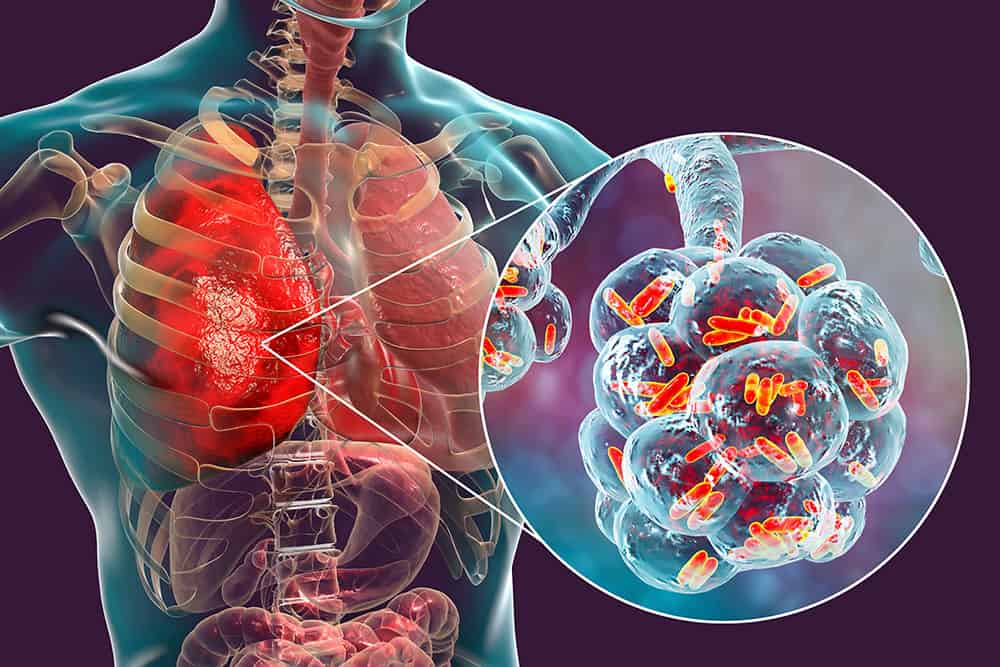
TEN TOWERS, ONE VERY FAMOUS ROOFLINE
Health Department water ecologists sampled 24 cooling towers across the affected ZIP codes. Ten of them came back positive for Legionella bacteria DNA.
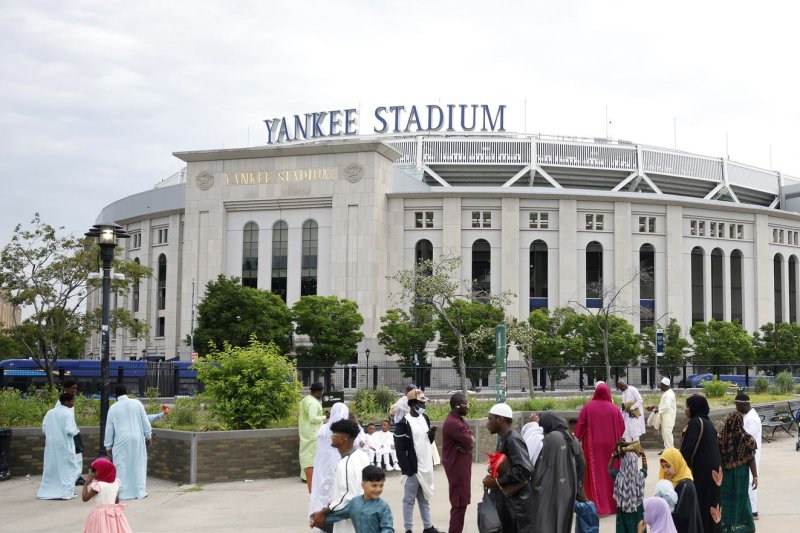
Among the ten: Lincoln Hospital, Boricua College — and Yankee Stadium.
All ten towers have since undergone remediation, meaning they were drained, cleaned and disinfected. But the finding put one of the most recognisable buildings in American sport into the middle of a public health emergency, and the Yankees moved quickly to draw a line under it.
"No current cases have been associated with Yankee Stadium," the organisation said in a statement. "Additionally, the New York City Department of Health has not at any point this month asked us to postpone our games."
That distinction matters and deserves to be stated clearly rather than buried: a positive tower is not the same as a proven source. The initial testing detects Legionella DNA, which tells you the bacteria's genetic material was present in the water sample. It does not tell you the organism was alive, in what quantity, or whether it matches the strain making people ill.
That is what the next phase is for. The department is now running culture testing, growing samples in a laboratory to determine whether live Legionella was present when the water was collected. It takes up to two weeks. Only then can investigators begin matching environmental isolates against patient samples to identify which tower, if any, is the culprit.
In the meantime, Martin says the city is going back over ground it has already covered.
"We are conducting inspections of all of the regional positive cooling towers independent of the last inspection," he told residents. "Basically this means that we're going above and beyond to check and see what has been going on in this town."
A TOWN HALL FULL OF PEOPLE WHO HAVE HEARD IT BEFORE
On 15 September the Health Department convened a town hall at Metropolitan College to brief the neighbourhood. It did not go entirely to plan.
Residents pushed back hard — not on the science, but on enforcement. Several asked whether existing citywide cooling tower regulations are actually being policed, particularly at privately owned buildings where the systems are maintained by landlords rather than public agencies. Assemblymember Chantel Jackson raised the same concern.
Bruce Burgos, who is immunocompromised and lives with a lung condition, said afterwards that the meeting had not eased his fears. He is exactly the person the disease hunts: for someone in his position, walking a few blocks through a plume of contaminated mist is not a theoretical risk.
State Senator José M. Serrano put the outbreak in a wider frame.
"Communities like the ones I represent in the South Bronx face disproportionate negative health disparities that make our residents far more susceptible to severe disease if they contract Legionnaires'," Serrano said. "These disparities and preventable diseases like hypertension and diabetes create additional challenges whenever our city faces a health emergency. This is why we must continue to focus on the underlying health issues we face and prioritize access to primary health care and mandate cultural competency in our health care professions."
Assemblymember Landon Dais, who represents the 77th District, acknowledged the frustration. "We will continue working closely with the City and the Health Department, and my office will continue to be out in the district, canvassing and engaging with local residents, so that everyone is informed and knows the signs and symptoms of Legionnaires'," he said.
Resident Julian DeJesus went somewhere else entirely — to the weather. Record-high summer temperatures have made this a banner season for a bacterium that thrives in warm water.
"I believe that we all as a city have to come up with the common solutions for the things that we all share in common, which is remarkably heating and ventilation because everyday it's going to get hotter and hotter," DeJesus said.
THE SECOND CLUSTER OF A VERY BAD SUMMER
This is not New York's first Legionnaires' emergency of 2026. It is its second.
In July, a community cluster was identified on Manhattan's Upper East Side. By the time it was contained it had produced more than 90 cases and eleven deaths — one of the worst Legionnaires' outbreaks the city has recorded in a decade.
Multiple clusters in a single season are not unprecedented here. The Health Department notes that New York recorded two community clusters in 2015, two in 2017 and two in 2018 — and three in 2016.
In the wake of the Upper East Side deaths, Mayor Zohran Kwame Mamdani and the Health Department announced a package of new measures earlier this month. The department will expand its existing address-based cooling tower lookup tool into a citywide map, letting any New Yorker see registered towers across the five boroughs and review each one's inspection history, including compliance with Legionella sampling requirements. A scientific advisory panel is being convened to evaluate emerging cooling tower technology and alternative cooling systems. And the health and buildings departments will work jointly to identify unregistered towers and register new ones before they come online.
Martin has repeatedly returned to that last theme — that the long-term answer may be engineering rather than enforcement. "I think it's important that we all have a conversation, and we all can come up with some sort of plan to prevent this from happening because any person that gets sick is a loss for New York," DeJesus said at the town hall, and the commissioner has made much the same point about researching cooling systems that do not aerosolise water at all.
THE GHOST OF 2015
The reason the South Bronx reacts to the word "Legionnaires'" the way it does is written into the neighbourhood's recent history.
Between 2 July and 3 August 2015, a single cooling tower in the South Bronx produced one of the largest and deadliest Legionnaires' outbreaks in United States history: 138 adults infected, 128 of them hospitalised, and 16 dead.
The response was ferocious. On 6 August 2015 the health commissioner ordered every cooling tower in New York City that had not been disinfected in the previous 30 days to be evaluated for contamination and disinfected within two weeks. On 10 August the City Council introduced legislation requiring all cooling towers to be registered with the Department of Buildings and inspected at least every 90 days while in operation. Eight days later it was law — Local Law 77.
Later genomic work published by the CDC found something sobering about that outbreak: the strain responsible was not an exotic import. Analysis of environmental samples and clinical isolates showed that sporadic cases before, during and after the outbreak traced back to a slowly evolving, single-ancestor strain that was already endemic in the city's water systems. The bacterium did not arrive. It was always there, waiting for the right rooftop.
WHY THIS KEEPS HAPPENING
Legionnaires' disease is not a relic. It is a growth industry.
Reported cases in the United States have increased more than fivefold since 2000. The crude national incidence rate peaked in 2018 at 3.04 cases per 100,000 population, dipped during the first year of the COVID-19 pandemic when surveillance and healthcare-seeking collapsed, and rebounded from 2021 onward.
Epidemiologists point to a convergence of causes rather than any single villain. The population is ageing, and age is the single biggest risk factor. More people are on immunosuppressing medications than ever before. American plumbing and water infrastructure is old and getting older, creating stagnant, tepid reservoirs where Legionella flourishes. And the climate is warming, extending the season during which cooling towers run hot and hard. Some of the rise is also better detection — urinary antigen testing is now routine where it once was not — but few researchers believe surveillance explains the whole curve.
Cooling towers, the specific culprit in urban clusters like this one, are the perfect incubator. They sit on rooftops, pull heat out of a building's air conditioning by evaporating water, and in doing so throw a fine mist into the open air. Warm water, biofilm-friendly surfaces, and a delivery mechanism that reaches straight into the human lung.
WHAT THIS MEANS FOR YOU
If you live, work or have visited ZIP codes 10451 or 10456 since late August and you develop flu-like symptoms — fever, chills, cough, muscle aches, difficulty breathing — contact a healthcare provider immediately and say where you have been. That last part matters enormously. Legionnaires' looks like ordinary pneumonia, and the specific test is not run unless somebody thinks to ask for it. The Health Department has issued a formal alert to providers precisely because of this.
Caught early, Legionnaires' disease is treatable with antibiotics. Caught late, it kills roughly one in ten of the people it hospitalises.
Know whether you are in the higher-risk group: aged 50 or over; a current or former smoker, including vaping; living with chronic heart, lung, kidney or liver disease; diabetic; or immunocompromised. Most people exposed to Legionella never get sick at all. Illness generally follows high or repeated exposure, and it disproportionately lands on people whose defences are already thin.
And be clear about what is safe, because fear in an outbreak does its own damage. It is safe to drink the tap water. It is safe to shower. It is safe to run your air conditioner, including window units — cooling tower mist disperses in the outdoor air and does not enter a building's indoor air conditioning or plumbing. Legionnaires' disease is not contagious. You cannot catch it from a neighbour, a bus seat or a family member.
Finally, if you own or manage a building with a cooling tower, the enforcement question raised at that town hall is aimed squarely at you. Registration and quarterly inspection have been legally required in New York City since August 2015. When the city's new public map goes live, your compliance history goes with it.
THE PART NOBODY HAS ANSWERED YET
Two weeks of culture testing stand between the South Bronx and an answer about which rooftop, if any, did this. Remediation has already been carried out on all ten positive towers, which is the right public health call and also, awkwardly, destroys evidence. It is entirely possible this cluster is eventually closed without a definitively identified source — as many are.
What is not in doubt is the pattern. Two clusters in one New York summer. Eleven dead on the Upper East Side, two and counting in the Bronx. A disease rising fivefold nationally across a quarter-century. A city whose legal framework for cooling towers was written in eight days of panic in 2015 and has been tested every summer since.
Bruce Burgos walked out of that town hall still frightened, and on the evidence available he is entitled to be. The bacteria are endemic. The towers are on ten thousand roofs. The summers are getting hotter. And the mist does not knock.



