ANTANANARIVO, Madagascar
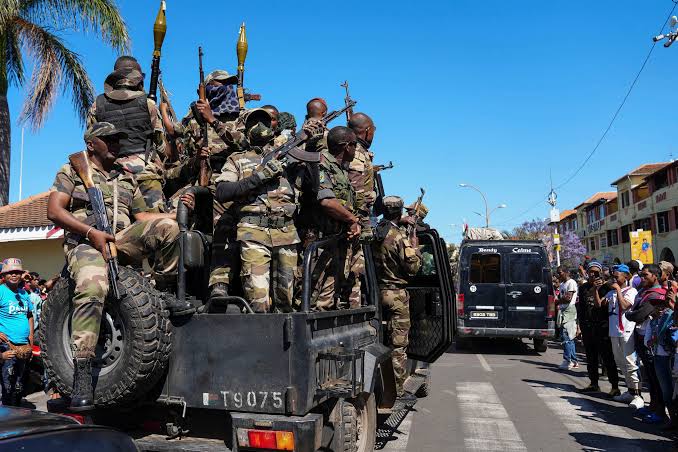
A surge of violent, largely unsolved kidnappings in Madagascar's capital has become the sharpest domestic test yet for the transitional government installed after last year's military takeover, exposing both the fragility of public order under Colonel Michael Randrianirina and the deep distrust many Malagasy still harbor toward the soldiers now running their country. Authorities estimate that more than 200 people have been kidnapped or gone missing in the past seven months, with the crisis concentrated in and around Antananarivo and its roughly 33.5 million-person population left rattled by attacks that increasingly occur in broad daylight on busy streets.
The wave of abductions, which Randrianirina has labeled "acts of terrorism" and his prime minister has called "war," is unfolding as the transitional government tries to balance a security clampdown with a fragile political project: a promised national dialogue and eventual return to elected rule that regional bodies have made a condition of readmitting Madagascar to their ranks.
Background: from Gen Z protests to a colonel's coup
Madagascar's current political order traces back to September 2025, when youth-led demonstrations — organized loosely under the "Gen Z" banner that has powered similar movements elsewhere in Africa and Asia — erupted over chronic shortages of water and electricity, entrenched poverty and allegations of corruption under President Andry Rajoelina. At the time, only about 36% of Madagascar's population had access to electricity, with rural coverage as low as 7% to 12% and cities including Antananarivo enduring daily outages of six to 12 hours, according to figures cited by the Institute for Security Studies.
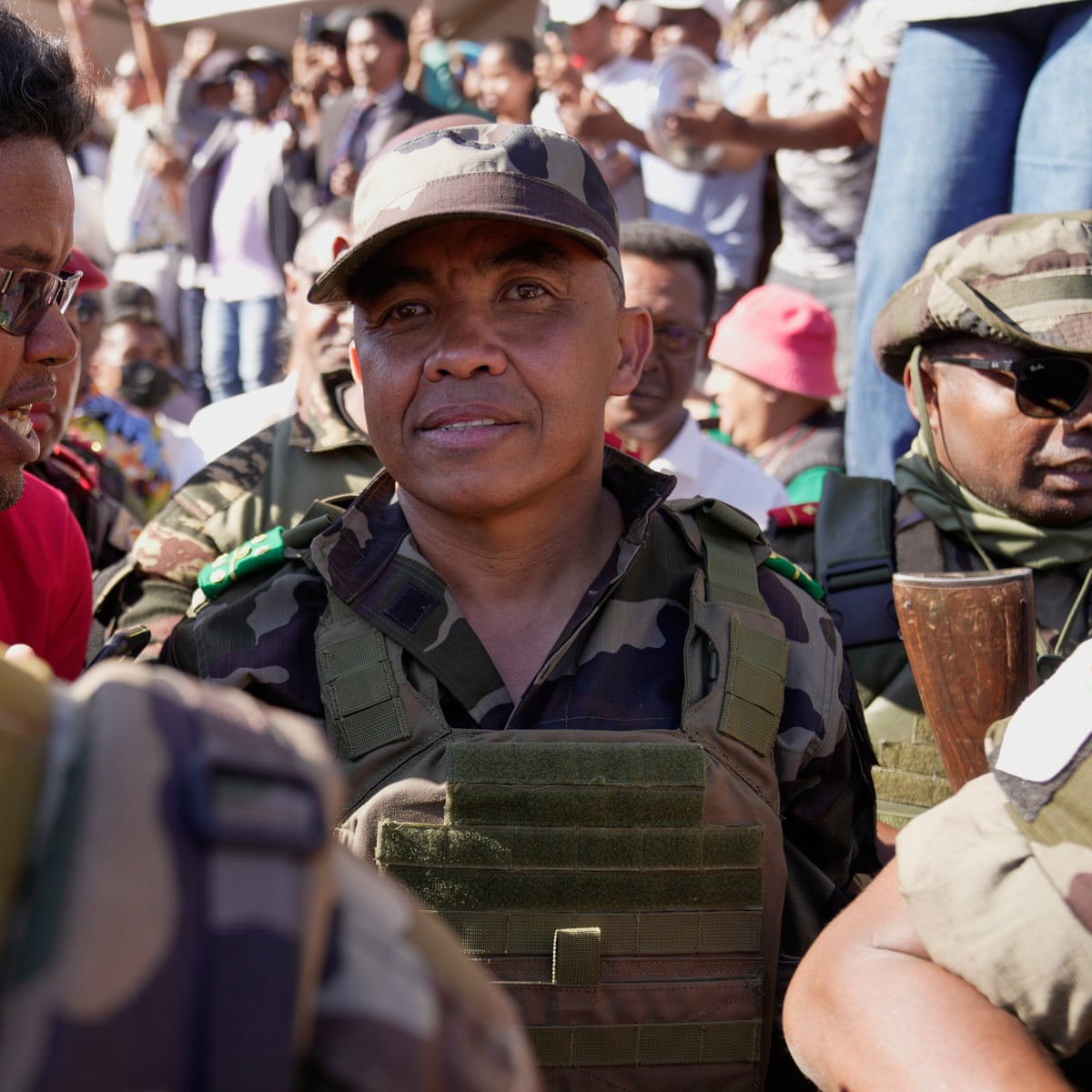
The protests escalated quickly. On Oct. 14, 2025, an elite military unit known as CAPSAT suspended the constitution and seized power after parliament voted to impeach Rajoelina, who fled the country. Madagascar's High Constitutional Court subsequently invited CAPSAT's leader, Col. Michael Randrianirina, to exercise the functions of head of state, initially calling for elections within 60 days — a timeline later superseded by a 24-month transition roadmap that envisions presidential elections in 2027. Randrianirina was sworn in as president in mid-October, and the African Union suspended Madagascar's membership the same day, with AU Commission Chairperson Mahamoud Ali Youssouf confirming the move took effect immediately. The Southern African Development Community has since pressed Randrianirina to launch what it called a "Malagasy-owned and -led inclusive national dialogue" and to facilitate the peaceful return of political exiles — conditions the transitional government has formally accepted, submitting a dialogue roadmap by a Feb. 28, 2026, deadline set by regional leaders.
The transition has been anything but smooth internally. In March 2026, Randrianirina abruptly dismissed his first prime minister, Herintsalama Rajaonarivelo, and dissolved the entire cabinet without publicly stating a reason, before naming Mamitiana Rajaonarison — the country's former anti-corruption chief and a career gendarmerie officer — as his replacement within about a week. The reshuffle, like the original cabinet, again excluded representatives of the Gen Z movement whose protests had precipitated Rajoelina's fall, a decision that fueled skepticism among youth activists about how genuinely inclusive the promised political opening would be. That skepticism has only deepened following an April 2026 announcement that 13 people had been charged in connection with an alleged plot to assassinate Randrianirina, and a separate fuel crisis that same month, when the government declared a 15-day state of energy emergency — later extended — after the 2026 Iran war disrupted oil imports through the Strait of Hormuz, on which Madagascar's fuel supply chain via Oman heavily depends.
The kidnapping crisis: a "war" without suspects
Against that backdrop of institutional churn, the kidnapping wave gripping Antananarivo has emerged as what analysts describe as an existential credibility test for the transitional government. According to reporting by the Institute for Security Studies published Aug. 5, Madagascar authorities estimate that more than 200 people have been kidnapped or gone missing over the past seven months, though officials and researchers caution the true figure is likely higher and difficult to verify precisely. Of that total, 175 victims have been recovered by police, six were found dead, and 19 remain missing. Incidents accelerated sharply in the second quarter of the year: the period from May through July accounted for more than 60% of all recorded cases since January, according to the ISS analysis by senior researcher Martin Ewi.
Mass kidnapping is a relatively new phenomenon in Madagascar. Before 2021, such incidents were rare and largely confined to wealthy families targeted for ransom. Around 2021, criminal gangs — often drawn from dahalo, the traditional cattle-rustling networks of Madagascar's rural interior — began expanding into kidnapping for ransom, with a notable wave striking the Anjozorobe district roughly 90 kilometers from the capital in 2024 before a crackdown of arrests and long prison sentences restored a measure of calm. The current wave is different in character: it is concentrated in the capital and nearby towns rather than remote rural areas, often occurs in broad daylight, and in a number of cases has not involved a ransom demand at all. Some victims have been tortured, raped or mutilated, according to the ISS report, and retaliatory violence by victims' families has further inflamed tensions. It remains unclear whether a single organized network or multiple unrelated groups are responsible, given inconsistencies in methods and treatment of victims across cases.
Randrianirina has publicly characterized the abductions as "acts of terrorism," while his prime minister has vowed to treat the response as a "war" against those responsible. Security forces have made at least 16 arrests, including one woman, but investigators have not identified any organizing masterminds, a gap that has fueled widespread speculation both online and in the streets of the capital. Some Malagasy suspect a political motive — either an opposition effort to destabilize the transitional government or, according to a competing theory circulating on social media, an attempt by supporters of the exiled Rajoelina to foment enough instability to justify or enable his return, since Rajoelina is believed to be leading a campaign for his own political comeback. The ISS report was explicit that no evidence links Rajoelina to any of the kidnappings and that the allegation could not be independently verified. Other explanations point to the coincidence of the crisis with Famadihana, a Malagasy tradition of exhumation and reburial rites that requires families to raise money for ceremonies honoring the dead, potentially creating financial motives for opportunistic abductions, as well as broader links to transnational organized crime and human trafficking. Madagascar was flagged with 49 detected trafficking victims in the 2026 Human Trafficking Rate Index and ranked 31st on last year's Africa Organised Crime Index among countries most affected by the practice.
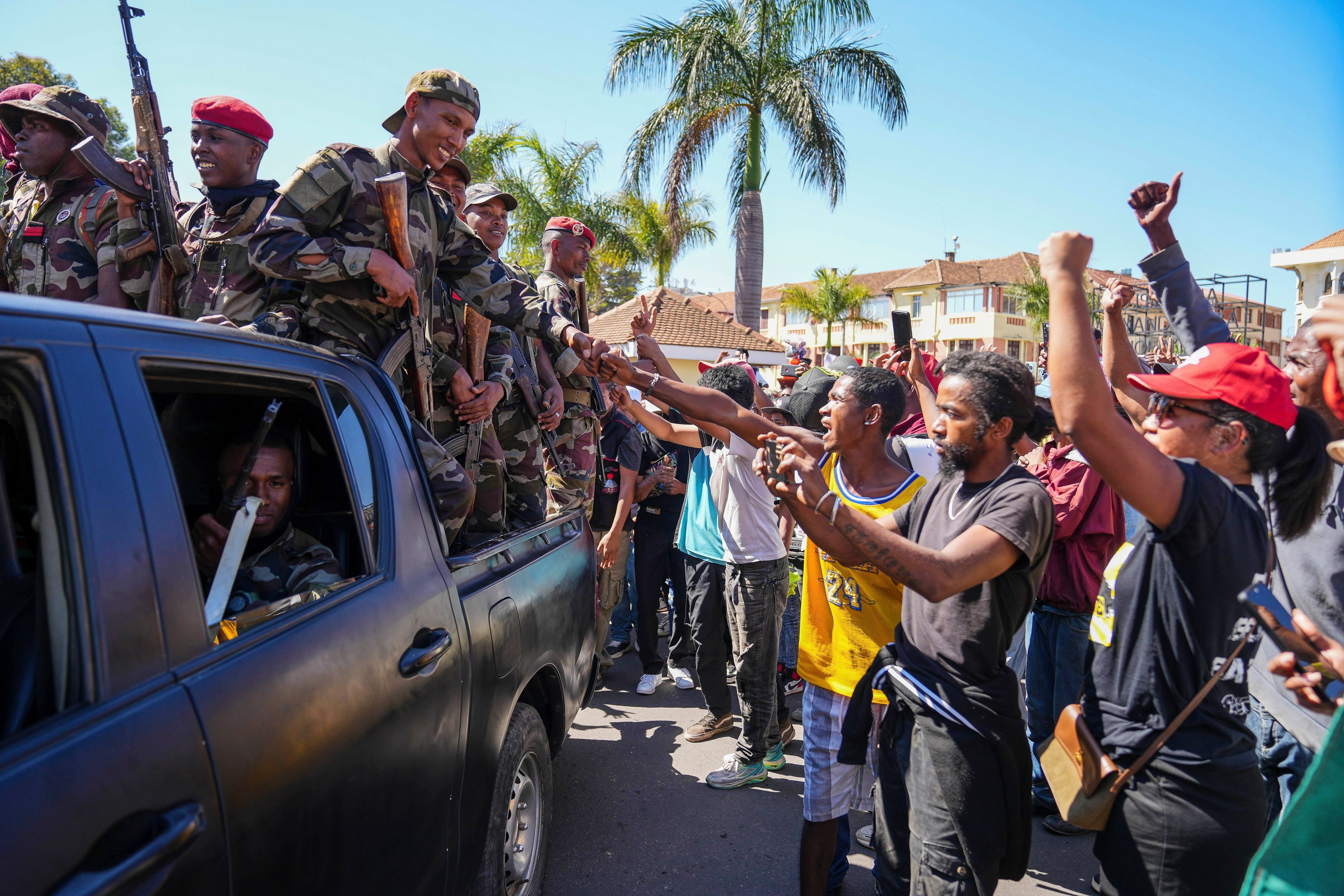
In response, Randrianirina has deployed the military onto Antananarivo's streets to patrol and pursue perpetrators, while also framing the crisis as requiring broader societal engagement. In July, he launched what officials described as national consultations and dialogue, designated Fridays as a day to celebrate Malagasy culture with mandatory traditional dress, and decreed July 24 a national Day of Remembrance for kidnapping victims. Those symbolic and security measures have not satisfied many critics. The Catholic Bishops' Conference of Madagascar has publicly called on the transitional government to do more than deploy troops, and Afrobarometer survey data cited by the ISS shows that Malagasy citizens broadly reject military rule and doubt that police, in their current form, can address the country's security threats professionally and without further abuses.

Analysis: security failure as political liability
The kidnapping crisis lands at a particularly precarious moment for Randrianirina's government. Having taken power on the strength of a popular uprising against Rajoelina's failure to deliver basic services and security, the transitional authorities now face a comparable failure of their own — an inability, nearly a year into their rule, to identify who is responsible for a wave of abductions striking at the heart of the capital they control. That failure carries a distinctly political charge regardless of whether any of the competing theories about the kidnappers' motives prove true: a government installed by soldiers, and still operating under an AU suspension pending proof of a credible transition, cannot easily separate a law-and-order crisis from questions about its own legitimacy and competence.
The involvement of the military in the government's response — patrols in the capital rather than, primarily, an intelligence-led criminal investigation — also risks reinforcing rather than dispelling the very skepticism about militarized rule that the Afrobarometer data suggests is already widespread. If the crackdown produces further arrests without credible prosecutions or a public accounting of who organized the abductions, the transitional government risks a corrosive combination: a public that feels less safe than before the coup, still living through fuel emergencies and unresolved reform promises, and international bodies like the AU and SADC that continue to withhold full recognition pending a dialogue process that has, so far, produced roadmaps and declarations more than tangible political inclusion.
Outlook: what to watch
Several threads will determine whether Madagascar's transition can absorb this shock or is further destabilized by it. First, whether the 16 arrests made so far lead to prosecutions that credibly identify organizers, or dissolve into the kind of inconclusive outcome that has bred public skepticism to date. Second, whether the national dialogue Randrianirina launched in July produces meaningful engagement with excluded constituencies, including the Gen Z movement that remains absent from his cabinet, or continues to be viewed as a box-checking exercise aimed at satisfying SADC and AU conditions for reintegration. Third, whether the kidnapping crisis feeds into Rajoelina's efforts to engineer a political comeback from exile, an outcome that would mark a dramatic reversal of the transition's founding premise. And finally, whether Madagascar's AU suspension shows any sign of being reconsidered as the transition approaches the midpoint of its 24-month timetable toward 2027 elections — a decision that will hinge less on security statistics than on whether regional bodies judge the dialogue process, and not just the security response, to be genuine.
Published By | News Editor