SCIENCE & TECH
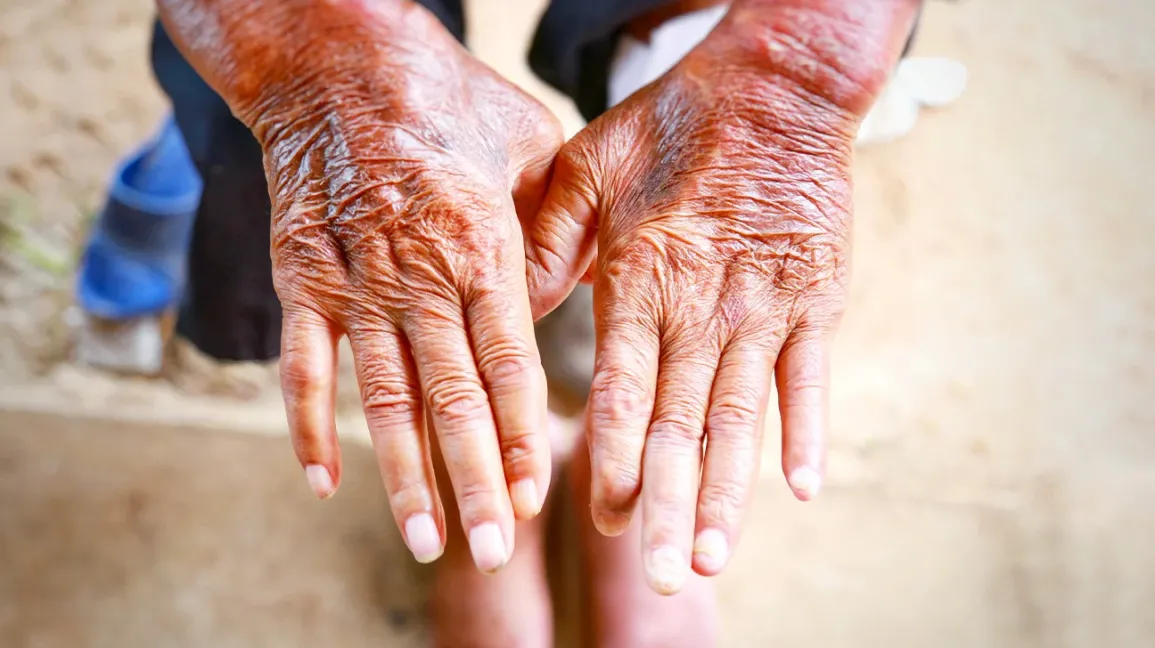
Imagine waking up one morning and your eyelids have turned a strange shade of violet, like a bruise that never heals. Then the rash spreads — across your knuckles, your elbows, your chest, your back — hot and itchy and unmistakably wrong. Within weeks, you can't lift your arms to brush your hair. Climbing a single flight of stairs leaves you gasping and shaking. Doctors run tests, and eventually deliver a diagnosis that sounds almost medieval: dermatomyositis, a disease so rare that fewer than 5,000 Americans are currently known to have it, and so poorly served by modern medicine that, until this week, not a single drug had ever been built specifically to treat it.
That changed on Wednesday, August 27, 2026, when the U.S. Food and Drug Administration approved LISRAYA (brepocitinib), a once-daily oral pill from Priovant Therapeutics, a Roivant Sciences company. It is, in the words of the FDA itself, the first oral drug ever indicated to treat dermatomyositis in adults — and doctors who treat the disease are calling it nothing short of historic.
"Today's approval of LISRAYA marks a historic moment for the dermatomyositis community and reflects years of extraordinary work and sacrifice by the team at Priovant, our partners, and, above all, the investigators and patients who participated in the brepocitinib development program," said Ben Zimmer, Chief Executive Officer of Priovant, in a statement announcing the approval.
For a disease that has essentially been treated with hand-me-down medications for the better part of a century, that sentiment is not corporate spin. It's a genuine turning point.
WHAT DERMATOMYOSITIS ACTUALLY DOES TO A BODY
Dermatomyositis is one of a family of rare inflammatory diseases called the idiopathic inflammatory myopathies, in which the body's own immune system turns on healthy muscle and skin tissue. The disease typically announces itself in one of two ways: a distinctive violet or dusky-red rash, often first appearing on the eyelids and knuckles before spreading to the elbows, knees, chest and back, and progressive weakness in the muscles closest to the trunk of the body — the hips, thighs, shoulders, upper arms and neck.
Unlike a pulled muscle or general fatigue, the weakness in dermatomyositis is relentless and specific. Patients describe being unable to rise from a chair without using their arms, unable to lift a bag of groceries onto a counter, unable to raise their arms overhead to wash their hair. In severe cases, the disease can affect the muscles used for swallowing and breathing, turning a meal or a flight of stairs into a genuinely dangerous undertaking. The disease tends to strike in two waves: children between 5 and 15, and adults between 40 and 60, and it hits women disproportionately harder than men.
There is no cure. For decades, the standard playbook for dermatomyositis has been a grab bag of therapies developed for entirely different diseases: high-dose corticosteroids that come with their own brutal side effects — weight gain, bone thinning, diabetes, cataracts, mood swings — plus immunosuppressants like methotrexate and azathioprine, and infusions like IVIG, all borrowed from the treatment playbooks of lupus, rheumatoid arthritis and other autoimmune conditions. None of them were designed with dermatomyositis biology in mind. Many patients spend months or years cycling through combinations, tapering steroids down only to relapse and have to climb the dose back up, watching their bodies absorb collateral damage from medications that were never really built for what they have.

INSIDE THE TRIAL THAT CHANGED EVERYTHING
LISRAYA works differently. Brepocitinib is a first-in-class oral inhibitor of two related immune-signaling enzymes, TYK2 and JAK1, which sit at the center of the inflammatory pathways believed to drive dermatomyositis. By blocking those signals, the drug aims to calm the underlying autoimmune attack rather than simply suppressing the immune system broadly, the way steroids and older immunosuppressants do.
The approval rests on results from the Phase 3 VALOR trial, described by the companies as the largest clinical trial ever conducted in dermatomyositis. Over 52 weeks, patients taking the 30 mg dose of brepocitinib showed dramatically better outcomes than those on placebo. On the trial's primary measure — a composite score called the Total Improvement Score, or TIS, which tracks muscle strength, skin disease, physical function and more — patients on LISRAYA reached a mean score of 46.5 at week 52, compared with just 31.2 for the placebo group, a statistically significant gap (p=0.0006) that showed up as early as week four and held for the entire year of treatment.
Even more strikingly for patients desperate to get off steroids, 55% of LISRAYA patients achieved moderate-or-better improvement on the TIS while using minimal or no steroids at all, compared with just 30% of those on placebo. Among patients who started the trial on at least 7.5 mg per day of steroids, 62% on LISRAYA managed to taper down to 2.5 mg per day or less, versus only 38% on placebo — and 45% of LISRAYA patients discontinued steroids entirely, compared with 29% on placebo.
For a patient population that has spent years trapped in a punishing cycle of steroid dependence, that steroid-sparing effect may end up mattering just as much as the muscle and skin improvements themselves.
A DECADES-LONG DROUGHT, FINALLY BROKEN
To understand why rheumatologists and dermatologists are treating this approval as a watershed moment, it helps to understand just how long the drought has been. Dermatomyositis was first clinically described in the late 19th century. In the 130-plus years since, treatment has barely evolved beyond steroids and repurposed immunosuppressants. Patient advocacy groups like The Myositis Association have spent years pushing for dedicated drug development in a disease so rare that pharmaceutical companies have historically had little financial incentive to invest the hundreds of millions of dollars required to run a proper Phase 3 trial.
That calculus has shifted in recent years as biotech companies increasingly chase "orphan drug" designations — a regulatory pathway that offers financial incentives, extended market exclusivity and faster review timelines for treatments targeting diseases affecting fewer than 200,000 Americans. LISRAYA's approval follows a Priority Review from the FDA, a designation reserved for therapies that would provide a significant improvement over existing treatments — recognition, in effect, that dermatomyositis patients had nothing built for them and needed something badly.
Recognizing that cost could otherwise put a newly approved specialty drug out of reach for many patients, Priovant has rolled out a LISRAYA My Compass Support program, through which eligible insured patients may pay as little as $0 per month out of pocket. The company has not published a public list price for the drug, though specialty autoimmune therapies of this class typically carry annual costs in the tens of thousands of dollars before insurance and assistance programs are applied.
WHAT DOCTORS ARE SAYING
Rheumatologists who treat myositis patients have been anticipating this approval since the VALOR trial's topline results were first released, and the reaction across the field has been described as one of cautious excitement tempered by the reality that not every patient responds the same way to any drug — even one this promising. JAK inhibitors as a drug class, which include medications like tofacitinib and upadacitinib used in rheumatoid arthritis and other autoimmune conditions, have also drawn regulatory scrutiny over the years for potential risks including blood clots, serious infections and certain cancers in some patient populations, and prescribers will be watching how those class-wide safety signals play out for brepocitinib in dermatomyositis patients specifically as real-world use expands beyond the trial population.
Still, for a disease community that has waited more than a century for a purpose-built therapy, the arrival of any FDA-sanctioned, dermatomyositis-specific option represents a fundamentally new chapter. Patient advocacy organizations have described the approval as opening the door to a future where dermatomyositis is treated with precision medicine rather than borrowed prescriptions.
WHAT THIS MEANS FOR YOU
If you or someone you love has dermatomyositis, this approval means a genuinely new class of treatment is now sitting on pharmacy shelves rather than locked away in a clinical trial. It's not a cure, and it won't work identically for every patient, but the VALOR data suggests it can meaningfully improve strength, clear skin disease and — critically — let patients reduce or eliminate the steroids that have quietly done as much long-term damage to some patients' bodies as the disease itself.
If you don't have dermatomyositis but know someone who does, or who suffers from a rash and unexplained muscle weakness that hasn't been properly diagnosed, this is a moment to encourage a conversation with a rheumatologist or dermatologist. Dermatomyositis is frequently misdiagnosed or diagnosed late, in part because its symptoms — a rash, some fatigue, difficulty with everyday tasks — can be mistaken for far more common and far less serious conditions.
More broadly, LISRAYA's approval is being watched closely across the rare disease and autoimmune drug development world as a signal that pharmaceutical companies are increasingly willing to invest in ultra-rare, previously underserved conditions when the regulatory incentives and scientific pathways align. Expect to see brepocitinib and drugs like it studied in adjacent inflammatory myopathies in the years ahead.
CONCLUSION
For more than a century, dermatomyositis patients have been treated with medicine's leftovers — powerful but blunt instruments borrowed from other diseases, dosed and adjusted by trial and error, often at significant cost to the rest of the body. This week's approval of LISRAYA doesn't erase that history, and it won't be a perfect solution for every patient who takes it. But for a rare disease community that has spent generations waiting for someone to build something just for them, the message from Wednesday's FDA decision is unmistakable: help, finally, has arrived — in pill form, once a day.
Published By | Features Editor