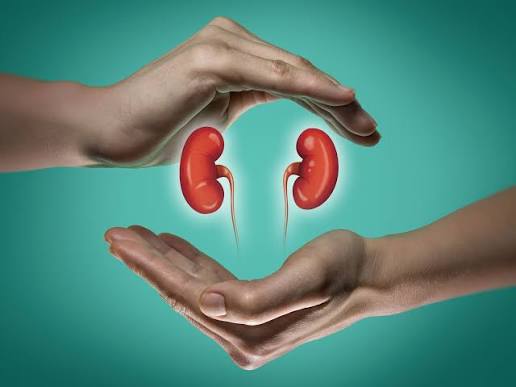
The largest study of its kind just tracked more than 720,000 Americans seeking a new kidney — and found that most quietly fall out of the system long before they reach the operating room. Where you live, how much you earn, and even whether you're married may decide whether you live or die.
NEW YORK
Imagine being told your kidneys are failing. Imagine being told there is a cure — not a lifetime tethered to a dialysis machine, but a transplant that could give you back your energy, your freedom, and years of your life. Now imagine being referred for that transplant, getting your hopes up, and then simply... disappearing into a bureaucratic void, never even beginning the evaluation, let alone reaching the waiting list. According to a sweeping new national study, that is precisely what happens to nearly half of the Americans who seek a new kidney.
The findings, published June 20 in the Journal of the American Society of Nephrology and presented at the American Transplant Congress, represent the most detailed map ever drawn of where patients fall out of the kidney transplant pipeline. And the picture it paints is bleak: of the more than 720,000 patients tracked after being referred for a transplant, only about one in five ever completed the evaluation needed to join the waitlist. The rest — the overwhelming majority — slipped away at some point along a journey that is supposed to end in a life-saving surgery.

A study of staggering scale
Led by researchers at NYU Langone Health, the study is remarkable not just for its conclusions but for its sheer size. The team analyzed data from 720,348 patients referred for kidney transplantation, drawing on Epic Cosmos — an enormous dataset built from more than 300 million electronic health records spanning over 1,850 hospitals, including more than a third of all U.S. transplant centers. That scope allowed the researchers to follow patients across the entire arc of the transplant process, from the moment of referral through evaluation and, for the lucky few, onto the waitlist itself.
The numbers are unforgiving. Only 19 percent of referred patients completed the evaluation required to be considered for a transplant. A staggering 48 percent — nearly half — never even started the evaluation process at all. In other words, for a huge share of kidney failure patients, being 'referred for a transplant' turns out to be a door that opens onto another door, and then another, most of which are never walked through.
'Our findings suggest that a substantial proportion of people who need a new kidney fall out of the process long before they reach the waitlist, let alone make it to the operating room,' said study lead author Dr. Conor Donnelly. 'Which transplant center you go to, where you live, and even whether you are married all appear to influence your chances of moving forward to the waitlist for a new kidney.'
The hidden geography of who gets a kidney
Perhaps the most disturbing part of the study is what it reveals about who gets left behind — because it is not random. The researchers found that certain groups of patients were far less likely to start or complete a transplant evaluation. Those who were unmarried, who had severe obesity, or who lived in rural areas were consistently less likely to advance. Older patients, poorer patients, and those who spoke Spanish as their first language were especially unlikely to progress. And patients treated at smaller centers, or at programs located in the South, faced steeper odds as well.
Read together, these findings describe a system in which a patient's medical need for a kidney is only one factor — and sometimes not the decisive one — in determining whether they actually get evaluated for one. A married patient with a partner to drive them to appointments, remind them of paperwork, and advocate on their behalf has a measurable advantage over someone navigating the labyrinth alone. A patient near a large urban transplant center has an edge over one hundreds of miles away in a rural county. A native English speaker moves through the system more smoothly than someone who must fight through it in a second language. None of these differences have anything to do with how badly a person needs a new kidney, or how well a transplant would work for them.

Why the stakes could not be higher
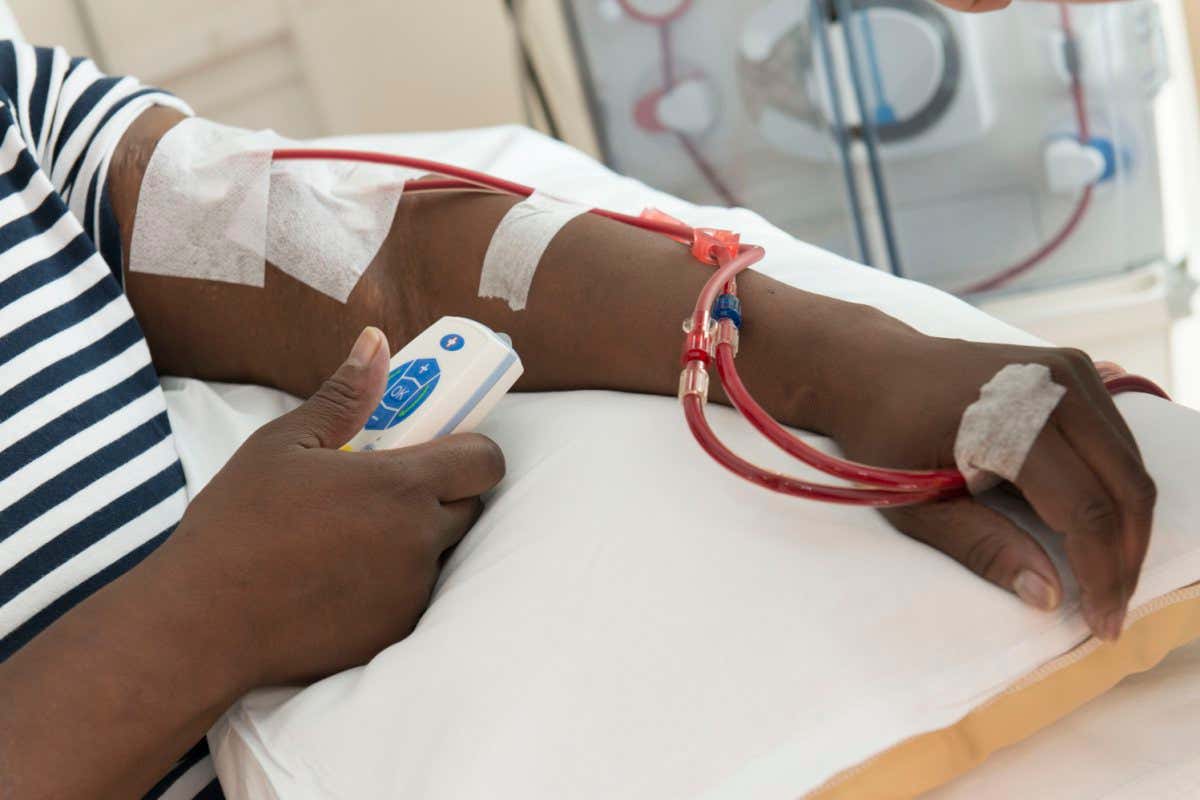
To grasp why this matters so much, consider the brutal reality of kidney failure in America. As of early 2025, more than half a million Americans were on dialysis, the grueling treatment in which a machine filters the blood several times a week because the kidneys no longer can. Dialysis keeps people alive, but it is punishing: it consumes hours, saps energy, restricts diet and travel, and carries its own steep mortality. A transplant, by contrast, generally offers longer survival and a dramatically better quality of life.
Yet the gap between need and supply is enormous. More than 90,000 Americans currently sit on the kidney transplant waiting list — and that list represents only the patients who successfully made it that far. In 2024, only about 28,000 of them, roughly one in four, actually received a kidney. Every year, around 5,000 candidates die while still waiting. And of the roughly 131,000 Americans newly diagnosed with kidney failure in a recent year, nearly 97 percent began dialysis rather than receiving a preemptive transplant.
The new study adds a devastating wrinkle to these already-grim statistics: the official waitlist, long treated as the front line of the kidney shortage, is actually the tail end of a much larger process of attrition. By the time patients appear on that list, most of the people who needed a kidney have already vanished — not because a transplant would not have helped them, but because they never made it through the maze of referrals, appointments, tests, and paperwork that stands between a diagnosis and a place in line.

Expert perspective
Transplant specialists have long suspected that the waitlist tells only part of the story, but the scale of this study crystallizes the problem in a way earlier research could not. The transplant evaluation is famously demanding: it can involve a battery of medical tests, cardiac workups, psychological and social assessments, insurance verification, and repeated visits to a transplant center that may be far from home. Each step is a potential exit point. A missed appointment, a failed test, an unpaid bill, a lack of transportation, or simply a patient who gives up in exhaustion — any of these can end the journey.
Experts note that the disparities the study uncovered point to fixable, structural failures rather than immutable medical facts. If unmarried patients fall out more often, that suggests a need for navigators and social support to fill the role a spouse might otherwise play. If rural and Spanish-speaking patients struggle, that points to the value of telehealth evaluations, interpreter services, and satellite clinics. If smaller centers and Southern programs show worse outcomes, that raises questions about resources, staffing, and referral practices that policymakers can actually address. In short, the researchers argue, the leaks in the pipeline are not inevitable — they are the product of how the system is built, and systems can be rebuilt.
There is also a growing recognition that some of the criteria used to screen transplant candidates may be overly restrictive or inconsistently applied. Standards around obesity, for example, vary from center to center, meaning a patient rejected at one program might have been accepted at another. The study's finding that a patient's choice of center strongly influences their odds lends weight to calls for more standardized, transparent, and equitable evaluation practices nationwide.
What this means for you
If you or a loved one is facing kidney failure, the single most important lesson from this research is that a referral is not a guarantee — and the system will not necessarily carry you forward on its own. Be your own advocate, or find someone to advocate for you. Ask your nephrologist directly whether you have been referred for a transplant evaluation, and if so, to which center and when. Do not assume that being 'referred' means the process is underway; follow up relentlessly to confirm that your evaluation has actually started.
Consider getting evaluated at more than one transplant center, since standards and waiting times can differ dramatically from program to program — a candidate turned away or delayed at one may find an open door at another. Enlist help: a family member, friend, or hospital social worker can track appointments, arrange transportation, wrangle paperwork, and keep you from falling through the cracks during a process that can stretch on for months. If language is a barrier, insist on interpreter services, which centers are obligated to provide. And ask about living donation, which can bypass the waitlist entirely and typically offers better outcomes than waiting years for a deceased-donor kidney.
For everyone else, the study is a call to look harder at a quiet injustice. The kidney shortage is usually framed as a problem of too few organs. This research suggests it is also, in large part, a problem of too many barriers — of eligible patients lost not to a lack of kidneys but to a lack of navigation, support, and equity in how the system treats them. Fixing the second problem may not require a single additional organ; it may simply require making sure the people who need one can actually reach the line.
The road ahead
The value of a study this large is that it turns anecdote into evidence. Transplant advocates have told stories for years about patients lost in the shuffle — the man who couldn't get a ride to his appointments, the woman whose paperwork stalled, the family that never understood the next step. Now there are numbers behind those stories, numbers big enough that they cannot be waved away: nearly half of referred patients never start, and only one in five finishes. That is not a handful of unlucky cases. That is the shape of the system itself.
The researchers hope their findings will push transplant centers, insurers, and policymakers to focus not only on the well-known scarcity of donor organs but on the earlier, less visible losses — the patients who fall away before they are ever counted. Concrete fixes exist: patient navigators, telehealth evaluations, standardized eligibility criteria, interpreter access, and support for the socially isolated. None of them require a scientific breakthrough. They require the will to look at a broken pipeline and decide to repair it. For the tens of thousands of Americans on dialysis right now, dreaming of a life beyond the machine, that repair cannot come soon enough.
Published By | Features Editor