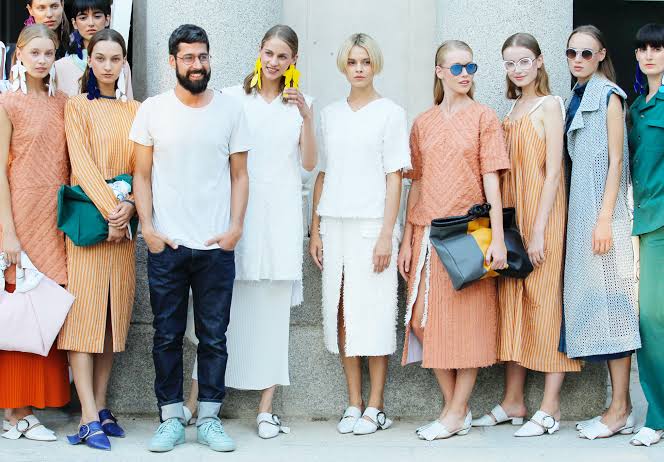
From factory floors in Paços de Ferreira to runway debuts in Porto, the rebranded Portugal Fashion Experience is staking a claim as one of Europe's most interesting emerging fashion capitals — even without European funding behind it this year.
PORTO, PORTUGAL
A Fashion Week Reborn
Portugal Fashion kicked off its 2026 edition Wednesday under a new name and a notably leaner budget: Portugal Fashion Experience, a four-day event running July 1 through 4 across Porto, Matosinhos, and — for the first time — the coastal town of Ílhavo. The rebrand follows a hiatus forced by economic uncertainty and, this year, the organization moving forward without the European funding that has historically underwritten the event, a decision local press described as a deliberate statement of independence for an industry eager to prove it can stand on its own.
The new format blends runway presentations with an industrial tour, a business summit, a startup competition, and a showroom — a structural shift that signals Portugal's fashion establishment wants the week to be judged not just on runway spectacle but on its capacity to generate real business for the country's textile manufacturers, many of whom supply luxury houses across Europe without ever getting public credit for it.
Day One: Factories First
True to that recalibrated mission, Wednesday's opening day began not with a runway but with an industrial tour through Paços de Ferreira, a municipality long known as a manufacturing hub for Portugal's garment and footwear sector. Attendees, including buyers, journalists, and industry executives, toured reference production units and spoke directly with the workers and technicians who form the backbone of the country's fashion manufacturing base — a deliberate effort to put craft and production, not just design, at the center of the week's narrative.
The afternoon shifted to policy and business strategy, with the second edition of the Portugal Fashion Summit convening at the headquarters of ANJE, Portugal's National Association of Young Entrepreneurs, under the theme "Crafting the Future of Fashion." The summit, supported by the Compete 2030 program and its SIAC co-financing mechanism, was structured around three panels: "Fashion Brands: The Hard Business of Staying Relevant," "Portuguese Fashion in the Global Eye: Perception & Future Positioning," and "Innovation Begins in the Past: Craft, Identity & Differentiation." The summit also hosts the Portugal Fashion Innovation Challenge, a competition inviting startups to pitch solutions across fashion, textiles, retail, sustainability, and luxury consumer experience.
What's Coming the Rest of the Week
Thursday moves the action to Ílhavo and Matosinhos, blending fashion with regional heritage and featuring moments tied to designers David Catalán and Maria Gambina. In Matosinhos, the historic former Vasco da Gama Canning Factory will host the BLOOM Contest 2026, powered by Salsa Jeans, a showcase built specifically to launch young Portuguese design talent, before the day closes with a runway show from Marques'Almeida, the Portuguese-British label that has become one of the country's most internationally recognized fashion exports.
Friday and Saturday return the event to Porto proper, staged at M-ODU: Matadouro, Outro Destino Urbano — a former slaughterhouse turned cultural venue — where established Portuguese names will share the runway with emerging labels and graduates of the Portugal Fashion Incubator program. Confirmed designers across the week include De Pino, making his Portugal Fashion debut after building his career in Paris; Malteza, founded by Joana Maltez; and A-LINE, under the artistic direction of Diogo Miranda, alongside Pé de Chumbo, Ernest W. Baker, Nopin, Miguel Vieira, AHCOR, Judy Sanderson, Veehana, Re(Veste), Susana Bettencourt, Estelita Mendonça, Hugo Costa, and Davii.

Why This Matters Beyond Portugal
Portugal's fashion and textile sector has spent the past decade quietly building a reputation as a manufacturing powerhouse for European luxury, producing everything from denim to knitwear for major international houses. What Portugal Fashion Experience is attempting is a shift in narrative — from being known purely as a production hub to being recognized as a source of original design talent capable of competing on the same international stage as Paris, Milan, or Copenhagen.
That ambition explains the deliberate structure of this year's event: pairing runway shows with a genuine business summit and an industrial tour is a bet that buyers and press will leave with a fuller understanding of Portugal's fashion ecosystem, not just a folder of lookbook photos. It's a formula other mid-sized fashion capitals — from Lisbon to Copenhagen to Tbilisi — have experimented with in recent years, as fashion weeks worldwide compete for relevance against a shrinking calendar of must-attend events.
What This Means for Shoppers and Industry Watchers
For everyday fashion consumers, the immediate takeaway is a fresh crop of names worth watching, particularly Marques'Almeida, already a recognizable name on international red carpets and in fashion-forward retail, and De Pino, whose Paris-honed perspective could make him one of the week's genuine breakout stories. For industry professionals, the more significant story may be the summit itself — a rare structured conversation about how a national fashion industry stays relevant and financially sustainable in a moment when mid-tier fashion weeks worldwide are struggling to justify their place on an oversaturated global calendar.
The Bottom Line
Portugal Fashion Experience 2026 is less interested in dazzling front-row spectacle than in proving that a national fashion industry can rebuild itself around craft, business strategy, and homegrown talent — without waiting for outside funding to make the case. Over four days spanning three cities, the event is quietly arguing that fashion's next interesting chapter might not come from the world's usual capitals at all.
Published By | Features Editor