Written By |
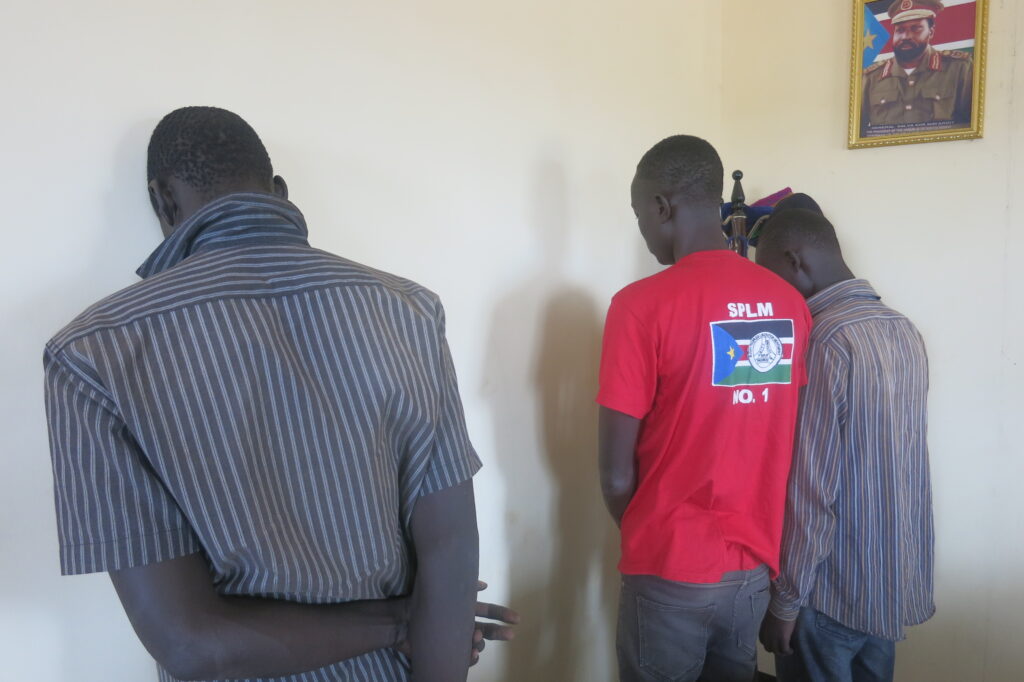
3 young men accused of beheading 2 women in Kapuri at a police station in Juba’s Gudele suburb in April 2029 (Photo Radio Tamazuj)
JUBA - South Sudan, Africa's youngest nation with an estimated population of 12 million, has seen a surge in youth involvement in gambling and gang violence. The increasing participation of young people in these criminal activities has led to the loss of lives and widespread destruction of property, often due to revenge attacks.
Many of the youths engaged in gang activities were school dropouts, a consequence of the 2016 violence that ravaged the country. One such individual, Jacob Okwi, also known as "Hard Boy," explained that he turned to gang life after feeling abandoned by relatives who failed to support him and his sister after their father's death.
“When my father died in the 2016 crisis, my younger sister and I were left to live with relatives. Life was hard, and we were deprived of basic needs like education and healthcare. One day, I borrowed money to start afresh with my sister, and from that point, the gang became my family,” Okwi said in an interview with Radio Tamazuj.
Okwi expressed no regret for joining a gang, noting that it gave him a sense of belonging and stability. He even managed to send his sister to secondary school, thanks to the group's financial support. Although he has been arrested several times, his gang always bails him out, reinforcing the bond between them.
“I don’t regret joining the gang because it gave me a home for me and my sister. I’ve chosen a risky life, but my group always supports me. That’s what family is about,” he added.
However, Okwi called on the Revitalized Transitional Government of National Unity (R-TGoNU) to introduce laws that hold parents and guardians accountable for neglecting their responsibilities. He also urged the government to implement youth empowerment programs to prevent more young people from joining gangs.
James Brown, another former gang member, shared how peer pressure led him into gang life, which in turn led to substance abuse and strained family relationships. Brown eventually left the gang, and his life has since improved. “My friends influenced me to join the gang, and I got involved in drugs and alcohol, which damaged my relationship with my family. But since I quit, I’ve become more responsible and am now taking care of my family,” Brown shared.
Brown’s testimony serves as a beacon of hope for young men and women still trapped in gang life. The executive director of the Community Empowerment for Progress Organization (CEPO), Edmund Yakani, attributes the rise in youth crime to a lack of jobs and meaningful activities to engage them.
Parents like Joseph Bilal, whose son is deeply involved in gang life, expressed frustration and fear. Bilal recounted instances where his son threatened to harm him or call on his gang members to attack him, underscoring the dangerous influence these groups have over their members.
“You try to discipline your child, and they turn the tables, threatening you instead. My son has even threatened to cut me with a machete or bring his gang to deal with me,” Bilal lamented.
Former gang members, like one who chose to remain anonymous, have narrowly escaped death at the hands of rival groups. He called on the government to develop policies that foster peace and security in communities, as many residents live in constant fear of gang violence.
“It’s the duty of the government to implement policies that discourage gang activities and empower young people. Many neighborhoods are in fear due to gang threats,” he said.
Flora Kiden Yohana of Resurrection Ministries Worldwide emphasized the need for churches to take a leading role in addressing gang violence. She believes that both the government and religious institutions must work together to guide young people toward positive activities.
“Our young people are turning to gangs because of the challenges they face. It’s the responsibility of the church, the government, and the community to steer them in the right direction,” Yohana said.
Ronald Jacob Lorido, Chief of the Juba Na Bari North quarter council, echoed concerns about the rise of gang violence, recounting a personal attack by gang members in his office. However, his community managed to restore peace by engaging the gangs in dialogue.
Police Spokesperson Col. John Kassara Koang Nhial underscored the importance of collaboration between law enforcement and the media to maintain security. He emphasized that safety is a collective responsibility that requires coordinated efforts.
Gang activity has expanded beyond Juba to cities such as Yei, Wau, Yambio, and Bor, spreading fear among residents. However, some communities are taking proactive steps to rehabilitate deviant youth and restore peace. Grassroots organizations, law enforcement agencies, and faith-based groups are working together to provide social intervention and prevent further gang involvement.
As the situation unfolds, it is evident that collaborative efforts from all sectors of society are crucial to addressing gang violence and ensuring a safer future for South Sudanese youth.
Source: Radio Tamazuj



